Primary Image
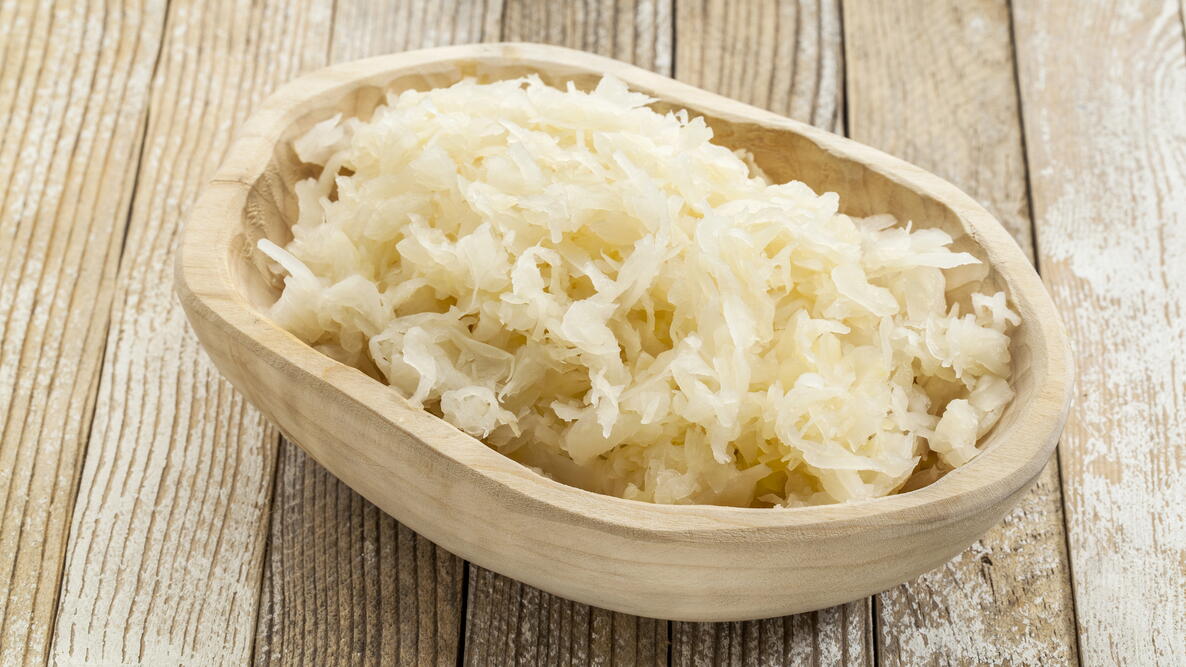
Caption
Learn how to make a delicicous bowl of sauerkraut from fresh cabbage.
Image Credit:
Crestock



Introduction to Preserving
Freezing
Making Quick Pickles
Making Quick Jams: Refrigerator or Freezer Jam
Vinegars
Water-Bath Canning
How to Can Tomatoes
How to Can Pickles
How to Can Jam and Jelly
Drying
Salting and Brining
Fermenting





So, I have gone into The Household Searchlight cookbook, 12th printing 1939. This book was made the readers of The Household Magazine.
The process is much easier and quite simple compared to your process.
Cheers.
"Chop cabbage until very fine. Pack in quart jars. Allowed 2 teaspoons salt to each quart cabbage. Pour hot water over cabbage, filling jars two shoulders. Seal. Sauerkraut will be ready for you after two weeks. -
I have a jar I sealed yesterday using the simple method here from days of old. - Mrs. Ethel Hixon, Topeka, Kan.
You state not to use metal, then state use a potato masher. Are there wooden potato mashers? Also if you process in a water bath, doesn't it lose its probiotic benefits?
Help! First attempt. I have four pounds of cabbage crammed into what I thought was a gallon crock. It turns out to be a 2 quart crock, which would suggest 2.5 pounds of cabbage. I am three days in. Should I abort and start over? This is tightly packed -- will it still perk, or is it going to end up being sorry bad cabbage at the end?

Hi, Mike. If all of the cabbage fit in the container and its rim is at least 4 or 5 inches above the cabbage, it should be ok.
Oh, my, I am shocked you aren’t promoting the excellent probiotic qualities of homemade sauerkraut. For many years I would make kraut in my Marshall pottery five gallon crock every summer and then would can it for long term storage. We seldom ate it all before a new season began, and by ‘cooking’ the fermented cabbage, the resulting product lost the wonderful flavor of raw sauerkraut. At the time, I failed to realize I was ‘murdering’ the wonderful health benefits of uncooked sauerkraut.
I would encourage those of you who are serious about creating a delicious, healthy food rich with friendly bacteria to hold off making sauerkraut in large quantities, but rather use quart jars with fermenting lids (such as Pickle Pipes or The Easy Fermenter brands) and DO NOT can the final product! One tablespoon of raw sauerkraut far exceeds the benefit of taking several probiotic capsules to promote gut health.
When should I add caraway seeds & in what amount?
I have seen them, I have one, but it's not exactly an official potato masher , They were used for canning and packing the product . My grandma had one and I got it. And yes, it will mash up potatoes in a pinch. If there are any official type wooden potato mashers, I haven't seen one.
Check Amazon. Several for under $10.
You mention wooden spoon and/or potato masher...."wooden potato masher"??? I have a metal can I use a metal potato masher? Never saw a wooden potato masher? Please clarify! Thank You!!
I think this is the complicated version of making kraut.
The 1937 Household Searchlight Cookbook has a recipe from Kansas that's COMPLETELY simpler.
chopped cabbage until very fine. Pack and quart jars. Allowed 2 teaspoons salt to each quart cabbage.. pour hot water over cabbage, filling jars to shoulders. Seal. Sauerkraut will be ready for use after two weeks.
- « Previous
- 1
- 2
- …
- 10
- Next »
📣The Gardening Club Just Got Better! 3 Deliveries, 10% Store Discount, and more!

Comments