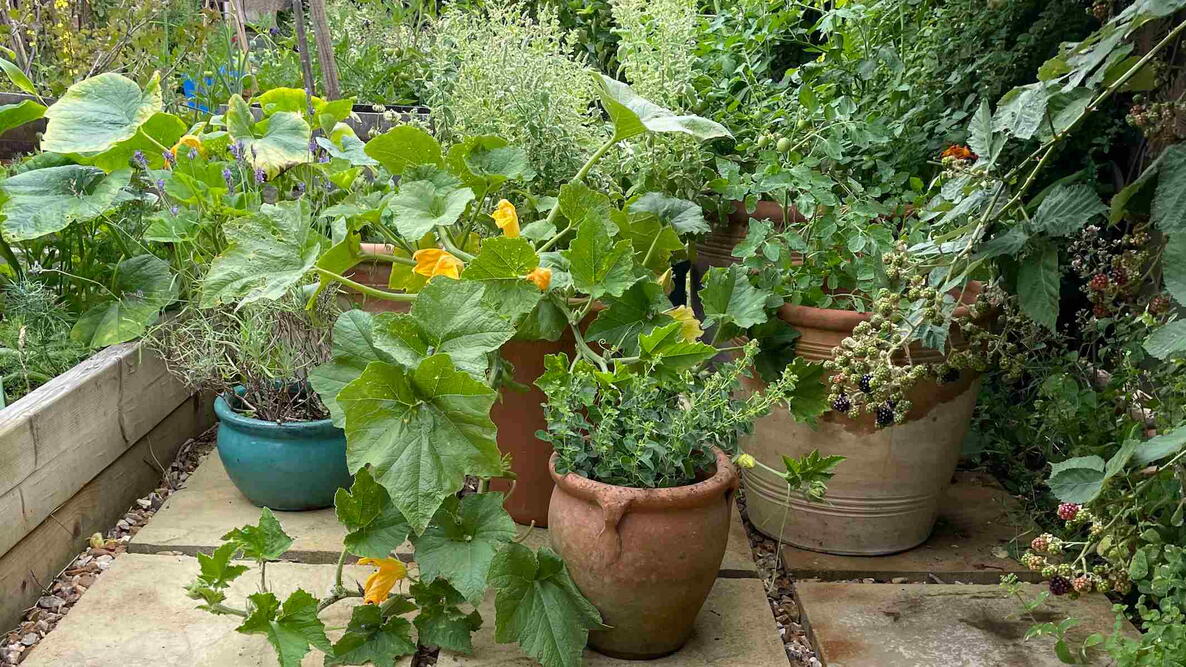

This Vegetable Container Garden Plan shows how you can grow a productive, flexible garden almost anywhere using pots and containers. The containers can be grouped together, spaced apart to capture sunlight, or rearranged as the season progresses. Growing vegetables doesn’t require a backyard—or even a patch of ground. This plan is perfect for patios, balconies, and small spaces.
In This Article
Part of Our Garden Plan Collection
This vegetable container garden layout is part of our Garden Plan Collection, a free library of tested, beginner-friendly garden layouts and plans designed to help gardeners grow confidently—no matter their space, experience, or living situation.
What’s Included
- A flexible 8-container vegetable garden plan adaptable to patios, balconies, and small yards.
- Guidance for matching vegetables to appropriate pot or container sizes.
- Ideas for growing vegetables, salads, potatoes, and fruit in pots.
- Tips for reusing containers season after season.
- Real gardener experience from decades of container growing using these plans.
| Feature | Details |
|---|---|
| Garden Type: | Vegetable Container Garden (8 pots) |
| Difficulty Level | Beginner |
| Hardiness Zones: | 3–10 (grown as annuals or moved indoors as needed) |
| Sun Exposure: | Full Sun to Partial Sun |
| Seasonality: | Spring through Fall (year-round with protection) |
| Soil Type: | High-quality potting mix with good drainage |
| Watering Needs: | Regular; containers dry out faster than garden soil |
| Special Features: | Portable, reusable, ideal for small or urban spaces |
| Garden Size: | Adaptable; shown with 8 containers in a small-space layout |
| Fun Fact | Many vegetables actually grow better in containers because you control the soil, drainage, and sun exposure. |

Container Vegetable Garden Layout
This example vegetable container garden plan shows how eight containers can be arranged to grow a wide variety of crops in a small space.

Grow fresh vegetables almost anywhere with this beginner-friendly container vegetable garden layout plan.
The size and depth of each container determine what you can grow. Large, deep pots support fruiting vegetables like tomatoes and peppers, while smaller containers are perfect for salad greens, herbs, and quick crops. See our Vegetable Container Size Chart.
The Container Plant List
This example plant list shows a flexible mix of crops commonly grown in containers. You can swap plants based on your climate, taste, and available pot sizes.
| Plant Name | Spacings | Quantity | Sow Indoors | Sow/Plant Outdoors |
|---|---|---|---|---|
| Blackberry | Single: 2’ 11”, In-Row: 2’ 11”, 2’ 11” row gap | 5 | — | April → mid May |
| Lavender | Single: 1’ 4”, In-Row: 1’ 2”, 1’ 2” row gap | 3 | Mid March → mid May | May → end of June |
| Mint | Single: 8”, In-Row: 6”, 10” row gap | 3 | — | Mid May → mid June |
| Nasturtium | Single: 1’ 0”, In-Row: 1’ 0”, 1’ 0” row gap | 3 | Mid April → mid May | Mid May |
| Oregano | Single: 8”, In-Row: 6”, 10” row gap | 3 | April → mid May | Mid May → mid June |
| Pumpkin | Single: 2’ 11”, In-Row: 2’ 11”, 2’ 11” row gap | 2 | May → mid May | Mid May → end of June |
| Tomato (Large) | Single: 1’ 8”, In-Row: 1’ 6”, 2’ 0” row gap | 2 | Mid March → mid May | Mid May → end of June |
| Tomato (Small) | Single: 1’ 8”, In-Row: 1’ 6”, 2’ 0” row gap | 5 | Mid March → mid May | Mid May → end of June |
See growing guides for every plant here: Almanac Vegetable Growing Guides.
What to Grow in a Vegetable Container Garden
One of the strengths of container gardening is flexibility. You’re not locked into a fixed planting list. These crops are especially well-suited to container growing:
Salad Crops
Salad leaves can be grown in just about any pot, and because of this, there is a huge range to choose from. Leaf lettuce, spinach, arugula, and other salad greens grow beautifully in containers and can be harvested repeatedly as “cut-and-come-again” crops.
Potatoes
Potatoes can be grown in just about anything, too. Dustbins and sacks are brilliant for them, as long as there are good drainage holes in the bottom. I succession plant into my pots; first the potatoes, then the tomatoes are moved from the greenhouse to the pots, and then in the fall I sow my winter salads.
Fruiting Vegetables
Tomatoes, peppers, cucumbers, and squash can all be grown in large containers, especially when supported with stakes or trellises.
Herbs
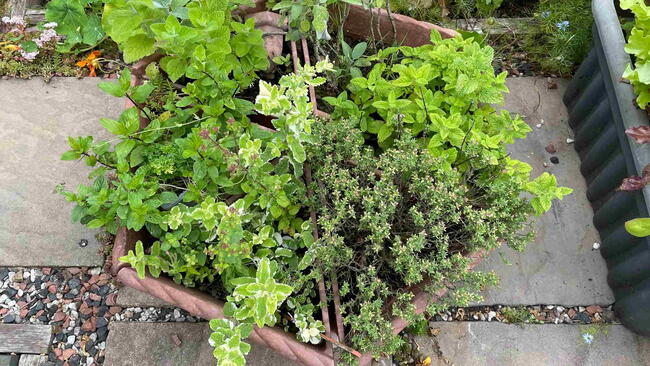
Basil, parsley, chives, thyme, and many other herbs grow well in pots and are easy to keep close to the kitchen.
Fruit in Containers
You can even grow fruit trees! Dwarf fruit trees grown on dwarfing rootstocks make it possible to create a mini orchard in containers, even on patios or paved areas.
Learn more in our complete Vegetable Container Gardening Guide.
Why This Vegetable Container Garden Plan Works
This plan works because it embraces the strengths of container gardening: flexibility, portability, and control. By matching plants to appropriate container sizes, refreshing soil regularly, and using succession planting, a container garden can be just as productive as an in-ground plot—and sometimes even more so.
Growing vegetables in containers comes with many advantages:
- Containers are portable and easy to move.
- Containers make it easier to garden around poor or contaminated soil.
- Soil can be refreshed, replaced, or reused as needed.
- Plants can be moved indoors when frost threatens.
- Gardening is possible on patios, balconies, rooftops, urban settings, and paved areas.
- The main drawback is that containers dry out more quickly than garden beds, so regular watering is essential—especially in warm weather.
See the pros and cons of row gardening versus raised bed versus container gardening.
Reusing Containers Through the Seasons
One of the great strengths of container gardening is the reusability of pots. A container that held tomatoes in summer can be replanted with spinach and lettuce in the fall.
As confidence grows, many gardeners begin to experiment beyond traditional pots. Crates, tubs, sacks, and other household items can all be repurposed as planters—as long as they have good drainage holes. This flexibility allows for creative, low-cost gardening and constantly evolving layouts.
Gardener Spotlight: Susie H’s Experience
My own gardening endeavors started when I was a student, with a small but loved container garden in a tiny yard in the middle of a large city, crammed next to a highway wall. In the ensuing 40 years of gardening, I have grown pretty much everything that can be grown in pots and have enjoyed every minute. If you live in a small space or you change addresses, I highly recommend containers because they are portable.
I love using all kinds of pots; even a humble crate can be reused, and tins are fun and easy to repurpose into a quirky display. Plus, you can reuse your pots! When my tomatoes are finished, I replant with spinach and lettuce for a fall harvest.
The Almanac Garden Planner has been very helpful because it shows the area needed for each crop so I can tally my choices against the containers I have available.

FAQs for Container Vegetable Garden Layout
Q: Do vegetables really grow well in containers?
A: Most do. With adequate sunlight, proper container size, and regular watering, many vegetables grow extremely well in pots.
Q: Do I need special soil for container gardening?
A: Yes. Use a high-quality potting mix designed for containers—garden soil is too heavy and drains poorly in pots.
Q: How often should container vegetables be watered?
A: Water when the top inch of soil feels dry. During hot weather, some containers may need watering daily.
Q: Can containers be reused year after year?
A: Absolutely. Refresh the soil each season and clean containers before replanting.
Q: Can I garden year-round in containers?
A: In mild climates or with protection, yes. Containers can also be moved indoors or into greenhouses.
Other Garden Layouts to Explore
If you’re looking to try a different approach, explore these additional plans:
- Raised-Bed Vegetable Plan - for gardeners who want a productive, low-maintenance kitchen-style garden
- Square-Foot Garden - perfect for beginners who want a productive, compact raised bed garden with minimal fuss
- Herb Garden - for flavor in the kitchen, fragrance in the home, and healing in daily life
- Vegetable Garden - a 4×8-foot raised bed vegetable garden plan is ideal for beginners
More References

Vegetable Garden Plans
Flower Garden Plans
More Like This

Comments