
Wondering when the next eclipse is? Find every solar and lunar eclipse in 2026 and 2027, including dates, times, where each event will be visible, and how to watch safely.
Solar eclipses can be seen only from certain parts of Earth, while lunar eclipses are visible from anywhere the Moon is above the horizon. Use the calendars below to see what’s coming up—and which eclipses may be visible where you live.
2026 Solar and Lunar Eclipse Calendar
There are four eclipses in 2026—two solar and two lunar. The table gives the most useful North American visibility and timing information at a glance.
| Date | Type | North American Visibility | Key Time (ET) |
|---|---|---|---|
| February 17 | Annular solar eclipse | Not visible | N/A |
| March 3 | Total lunar eclipse | Visible across North America; best in central and western regions | Totality: 6:04–7:02 A.M. EST |
| August 12 | Total solar eclipse | Partial eclipse in most of Canada and parts of the northern U.S. | 11:34 A.M.–3:57 P.M. EDT |
| August 27–28 | Partial lunar eclipse | Visible across most of North America | Maximum: 12:12 A.M. EDT on August 28 |
February 17, 2026: Annular Solar Eclipse
North American visibility: Not visible from North America.
What to expect: The annular eclipse is visible from parts of East Antarctica. A partial solar eclipse is visible from most of Antarctica, southern Argentina and Chile, and southern Africa.
August 12, 2026: Total Solar Eclipse
Why it’s notable: This is the first total solar eclipse anywhere on Earth since April 8, 2024, and the first visible from mainland Europe since 1999.
Where it’s visible: The path of totality crosses far northern Russia, Greenland, western Iceland, northern and eastern Spain, and a tiny corner of Portugal. Totality is not visible from North America, but a partial eclipse can be seen from most of Canada and parts of the northern United States. Nearly all of Europe and parts of northwestern Africa will also see a partial eclipse.
Key time: The eclipse runs from approximately 11:34 A.M. to 3:57 P.M. EDT, with greatest eclipse at about 1:46 P.M. EDT. Local viewing times and the amount of the Sun covered vary by location.
Watch live: NASA’s eclipse coverage begins at 1:15 P.M. EDT, with live views from along the path of totality and commentary from NASA experts. Watch the August 12 total solar eclipse live on NASA+.
What to expect: Within the path of totality, the Moon will completely cover the Sun for up to about 2 minutes and 19 seconds. In Spain, totality occurs with the Sun low in the western sky, so viewers will need a clear view of the horizon.
Eye protection is required: Never look directly at the uneclipsed or partially eclipsed Sun without approved eclipse glasses or another safe solar-viewing method. Eclipse glasses may be removed only during totality—and only by viewers within the path of totality.

August 27–28, 2026: Partial Lunar Eclipse
North American visibility: Visible across most of North America. For much of the United States and Canada, the Moon will ride high in the evening sky. In parts of the West, the eclipse will already be underway when the Moon rises.
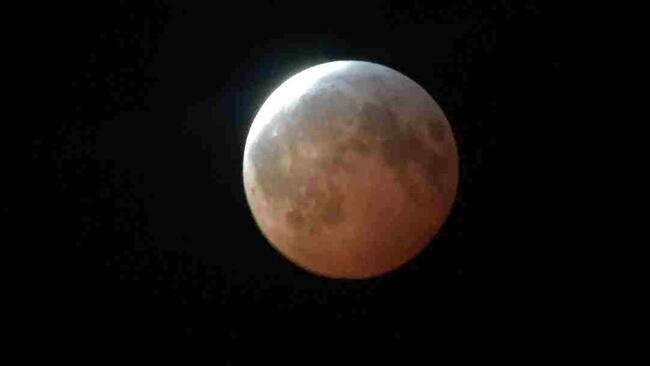
What to expect: At maximum eclipse, Earth’s shadow will cover about 96% of the Moon’s face, leaving only a narrow bright sliver. The darkened Moon may glow orange, copper, or red—much like a Blood Moon.
Key time: Maximum eclipse occurs at 12:12 A.M. EDT on August 28; 11:12 P.M. CDT, 10:12 P.M. MDT, and 9:12 P.M. PDT on August 27.
No special glasses are needed. A lunar eclipse is completely safe to watch with your eyes alone.
See the full August 2026 lunar eclipse guide for viewing times, visibility, and what to expect.
2027 Solar and Lunar Eclipse Calendar
There are five eclipses in 2027—two solar and three lunar. Three are penumbral lunar eclipses, the subtlest kind, in which the Moon passes through the faint outer part of Earth’s shadow.
| Date | Type | North American Visibility | Key Time (ET) |
|---|---|---|---|
| February 6 | Annular solar eclipse | Not visible | — |
| February 20 | Penumbral lunar eclipse | Partly visible from most of North America; not visible from Alaska or the West Coast | 4:10–8:15 P.M. EST |
| July 18 | Penumbral lunar eclipse | Not visible | — |
| August 2 | Total solar eclipse | Brief partial eclipse at sunrise in parts of northeastern Canada | Varies by location |
| August 17 | Penumbral lunar eclipse | Visible across North America | 1:22–5:06 A.M. EDT |
February 6, 2027: Annular Solar Eclipse
North American visibility: Not visible from North America.
What to expect: The annular eclipse is visible from Argentina and Chile. A partial solar eclipse is visible from Antarctica, South America, and western and southern Africa.
February 20, 2027: Penumbral Lunar Eclipse
North American visibility: Only partly visible from most of North America. The eclipse will already be underway as the Moon rises and is not visible from Alaska or the West Coast.
What to expect: A penumbral eclipse causes only a slight dimming as the Moon passes through the faint outer part of Earth’s shadow. The change may be difficult to notice.
Key time: The Moon enters the penumbra at 4:10 P.M. EST and leaves at 8:15 P.M. EST.
July 18, 2027: Penumbral Lunar Eclipse
North American visibility: Not visible from North America.
What to expect: This subtle eclipse is visible from Asia, Australia, and East Africa.
August 2, 2027: Total Solar Eclipse
North American visibility: The total eclipse is not visible from most of North America. A partial eclipse is briefly visible at sunrise from parts of northeastern Canada, including Newfoundland and Labrador.
What to expect: Totality is visible from parts of Algeria, Egypt, Libya, Morocco, Saudi Arabia, Somalia, Spain, and Yemen. A partial eclipse is visible across Africa, Europe, the Middle East, and western and southern Asia.
Eye protection is required wherever the Sun is only partially eclipsed.
August 17, 2027: Penumbral Lunar Eclipse
North American visibility: Visible from North America.
What to expect: The Moon may appear only slightly dimmer than usual as it passes through Earth’s faint outer shadow.
Key time: The Moon enters the penumbra at 1:22 A.M. EDT on August 17 (10:22 P.M. PDT on August 16) and leaves at 5:06 A.M. EDT (2:06 A.M. PDT).
How to Safely View a Solar Eclipse
Never look directly at the Sun without proper eye protection. Even during a partial or annular eclipse, the Sun can permanently damage your eyes.
- Use eclipse glasses or a handheld solar viewer that complies with the ISO 12312-2 safety standard.
- Use an indirect method, such as a pinhole projector.
- Regular sunglasses are not safe for eclipse viewing.
- Never look through binoculars, a camera lens, or a telescope unless a proper solar filter is securely attached to the front of the instrument.
Learn more about solar eclipse safety.
Lunar eclipses are completely safe to view with the naked eye. No special glasses are needed.
What Is the Difference Between a Solar and Lunar Eclipse?
Both types of eclipses occur when the Sun, Moon, and Earth line up—but the order of the three objects changes what we see.
| Feature | Solar Eclipse | Lunar Eclipse |
|---|---|---|
| What happens | The Moon passes between the Sun and Earth | Earth passes between the Sun and Moon |
| Moon phase | New Moon | Full Moon |
| Where it is visible | Only from the part of Earth crossed by the Moon’s shadow | From the night side of Earth wherever the Moon is above the horizon |
| Eye safety | Proper eye protection is required except during the brief total phase of a total solar eclipse | Safe to watch with the naked eye |
.jpg)
Types of Eclipses Explained
Knowing the type of eclipse tells you how much of the Sun or Moon will be covered—and what to watch for.

Total Eclipse
- Total solar eclipse: The Moon completely covers the Sun for viewers in the path of totality, briefly darkening the daytime sky.
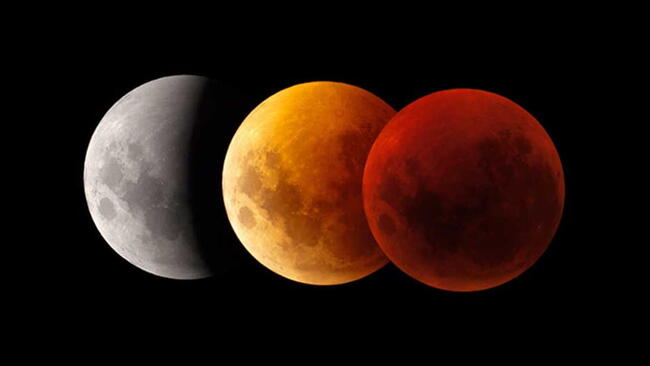
- Total lunar eclipse: The entire Moon passes through Earth’s darkest shadow and may glow orange or copper-red. This is often nicknamed a Blood Moon.
Partial Eclipse
- Partial solar eclipse: The Moon covers only part of the Sun, making the Sun appear crescent-shaped or as though a “bite” has been taken from it.
- Partial lunar eclipse: Only part of the Moon passes through Earth’s dark inner shadow.
Annular Solar Eclipse
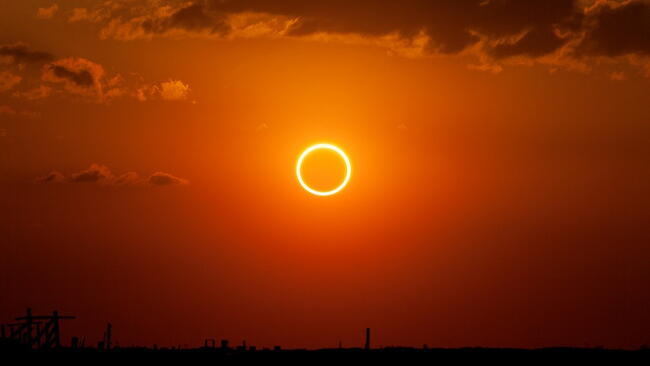
The Moon passes directly in front of the Sun but appears too small to cover it completely. A bright ring of sunlight—the “ring of fire”—remains visible around the Moon.
Learn more about the types of solar eclipses.
Penumbral Lunar Eclipse
This is the subtlest lunar eclipse. The Moon passes through the faint outer part of Earth’s shadow, called the penumbra, and may appear only slightly dimmer than usual.
Frequently Asked Questions About Eclipses
What is a solar eclipse?
A solar eclipse occurs when the Moon passes between the Sun and Earth, blocking all or part of the Sun from view.
What is a lunar eclipse?
A lunar eclipse occurs when Earth passes between the Sun and the full Moon, causing Earth’s shadow to fall across the Moon.
Are lunar eclipses safe to watch?
Yes. Lunar eclipses are completely safe to view with the naked eye. No special glasses are needed.
Do solar eclipses require eye protection?
Yes. Except during the brief total phase of a total solar eclipse, never look directly at the Sun without approved eclipse glasses or another safe viewing method.
Why aren’t eclipses visible everywhere?
During a solar eclipse, the Moon casts a relatively narrow shadow on Earth, so visibility depends on your location. A lunar eclipse can be seen from the night side of Earth wherever the Moon is above the horizon.
Why don’t all lunar eclipses look the same?
The Moon’s path through Earth’s shadow changes from one eclipse to another. Atmospheric dust, clouds, and volcanic activity can also affect how dark or reddish the Moon appears.
More About Eclipses

More Like This

Comments