
This backyard vegetable garden plan (5 x 10 feet) is designed for gardeners who want a manageable, attractive in-ground garden without needing a large yard. The layout combines vegetables, culinary herbs, and fruit into a single productive bed that works well in most regions. It’s a great choice for beginner and intermediate gardeners who want variety, beauty, and steady harvests from a small backyard space.
In This Article
Part of Our Garden Plan Collection
This backyard vegetable garden layout is part of our Garden Plan Collection, a free library of tested vegetable and flower garden layouts designed to help gardeners grow confidently. Each plan focuses on practical design, clear plant choices, and real-world growing conditions to reduce guesswork and support success.
What’s Included
- Complete 5×10 ft backyard vegetable garden plan
- Beginner-friendly plant list with quantity required and zone guidance
- Step-by-step instructions for growing a backyard vegetable garden
| Feature | Details |
|---|---|
| Garden Type | Backyard Vegetable Garden (In-ground) |
| Difficulty Level | Beginner |
| Hardiness Zones | Varies by plant (generally Zones 3–9) |
| Sun Exposure | Full Sun to Light Shade |
| Seasonality | Spring through Fall |
| Soil Type | Well-drained garden soil |
| Watering Needs | Regular, consistent moisture |
| Special Features | Mixed vegetables, herbs, and fruit |
| Garden Size | 5 × 10 feet |
| Design Style | Semicircular layout with stepping-stone access |
Backyard Vegetable Garden Layout (5 × 10 Feet)
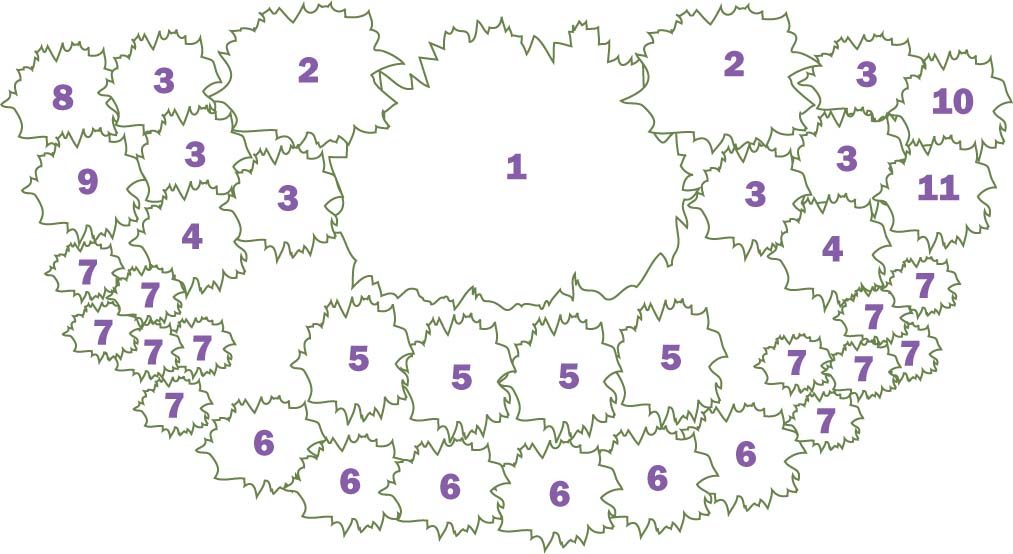
This backyard garden layout is designed to maximize growing space while allowing easy access to plants. The semicircular shape adds visual interest and makes harvesting more comfortable in a compact in-ground bed. It performs best in full sun to light shade with well-drained soil. For easy access during planting and harvest, we recommend adding a pair of stepping stones within the garden bed.

Garden Plant List
| Plant Name | Quantity | Type |
|---|---|---|
| Rhubarb | 1 | Perennial |
| Kale | 2 | Annual |
| Chard | 6 | Annual |
| Pepper | 2 | Annual |
| Purple basil | 4 | Annual |
| Alpine Strawberry | 6 | Perennial |
| Lettuce | 12 | Annual |
| Sage | 1 | Perennial |
| English Thyme | 1 | Perennial |
| Rosemary | 1 | Annual or Perennial |
| Parsley | 1 | Annual |
Backyard Garden Plant Information
- Rhubarb (perennial): Rhubarb forms large clumps of inedible, deep-green leaves held on edible, stout, pink-to-red stalks. It is about 3 feet tall and wide and grows in zones 3 to 8. In warmer climates, try globe artichoke (Cynara scolymus) instead. One plant.
- Kale (annual): Thick, upright stems carry edible, crinkled leaves. Most varieties have pale-green leaves; you can also try “Lacinato,” which has deeply veined, narrow, blue-green leaves, and “Redbor,” which has bright purple-pink stalks and frilly, purple-green leaves that turn violet in cool weather. It grows to about 3 feet tall. Two plants.
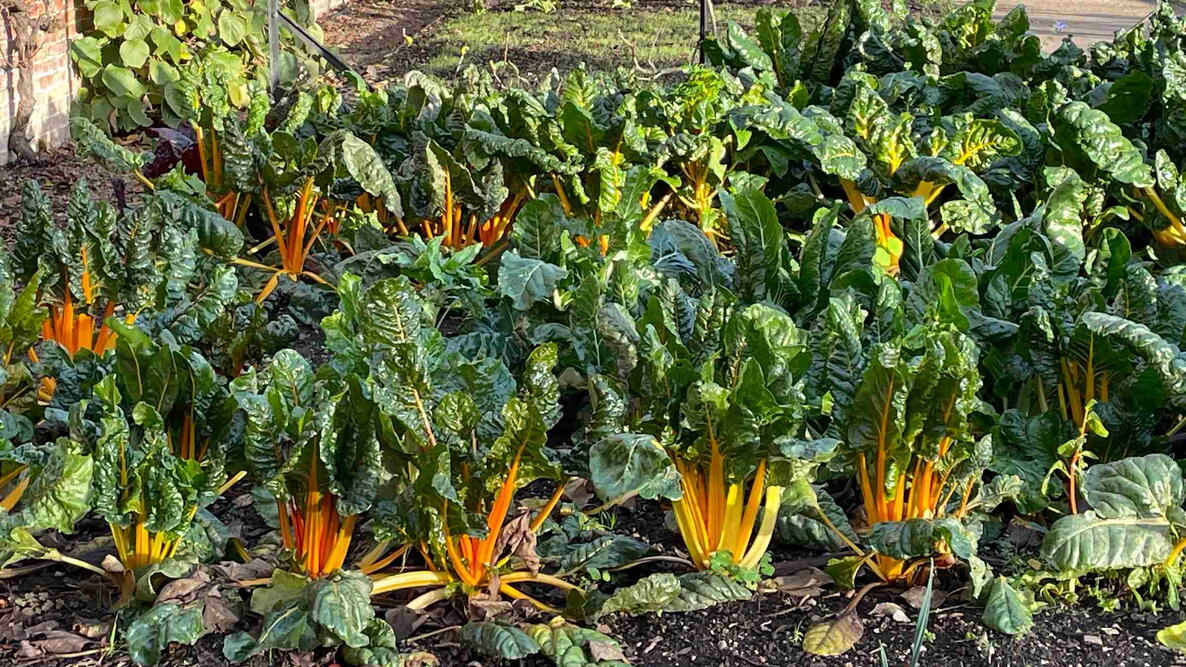
- Chard (annual): Choose clumps of rich-green leaves or the “Bright Lights” seed strain, which produces a rainbow of stalk colors (white, yellow, pink, red, orange, and magenta). Its leaves and stalks are edible and grow to be 12 to 18 inches tall. Six plants.
- Pepper (annual): Upright, bushy plants, with small white or purple flowers that mature into colorful fruit. Sweet peppers produce large green fruit that turn yellow, orange, or red when ripe; hot peppers produce smaller, spicier fruit. It is about 3 feet tall. Two plants.
- Purple basil (annual): Fragrant and flavorful deep-purple leaves are carried on bushy, upright plants. ‘Osmin’ and ‘Dark Opal’ have smooth leaves; ‘Purple Ruffles’ has crinkled leaves. Pinch off flower spikes to encourage branching and more leaves. It is about 2 feet tall. Four plants.
- Alpine strawberry (perennial): Bushy, non-spreading mounds of three-part, deep-green leaves produce small white flowers from late spring to frost that mature into small, bright-red, or cream-color fruits with big flavor. It is about 10 inches tall and grows in Zones 5 to 9. Six plants.
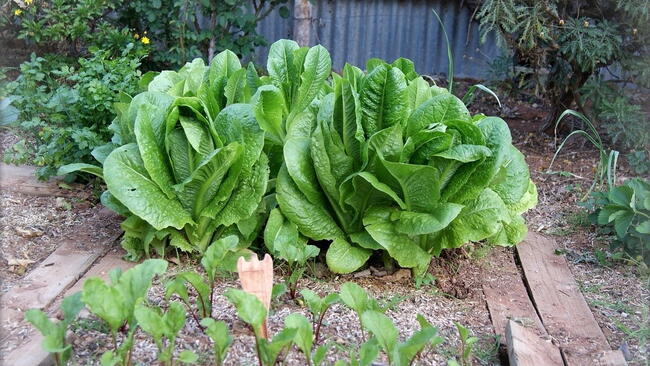
- Lettuce (annual): Crisp, flavorful leaves make for great salads. Colors and shapes vary widely. Try lobe-edge, bright-green ‘Oakleaf’ and wavy, deep-red ‘Merlot’. Plants stand about 6 inches tall in leaf; remove plants when they flower. 12 plants.
- Sage (perennial): Bushy clumps with aromatic and flavorful gray-green leaves and spikes of bluish flowers. Look for cultivars with purplish (‘Purpurea’), green and yellow (‘Icterina’), or green, purple, and white (‘Tricolor’) leaves. It is about 2 feet tall and grows in Zones 4 to 8. One plant.
- English thyme (perennial): Dense clumps boast tiny, fragrant, and flavorful leaves and clusters of white to pink flowers. English thyme is a culinary classic. Also, look for lemon, lime, coconut, or caraway thyme. It is 6 to 12 inches tall and grows in Zones 5 to 9. One plant.
- Rosemary (annual or perennial): Upright stems have spicy, needlelike foliage and small, blue flowers. In warm climates, it can become a shrub. Rosemary matures at about 2 feet tall. If you live north of Zone 7, overwinter the plant indoors or set out a new one each spring. One plant.
- Parsley (annual): Ferny mounds of rich-green leaves that may be flat (Italian) or frilly (curly); garnishes almost anything. It grows to be about 8 inches tall. One plant.
Growing a Backyard Vegetable Garden
- Choose a sunny spot. Most vegetables need at least 6 hours of sun daily; light afternoon shade is acceptable in hot climates.
- Prepare the soil. Loosen the soil and mix in compost to improve drainage and fertility.
- Plant by season. Start cool-season crops in spring and add warm-season plants after the last frost.
- Water consistently. Keep soil evenly moist, especially during dry spells.
- Harvest often. Regular harvesting encourages continued production.
FAQs for This Backyard Garden Plan
Q: Can I make this garden larger or smaller?
A: Yes. This layout can be scaled up or down, but keep taller plants toward the back and maintain good spacing for airflow.
Q: Do I need raised beds for this plan?
A: No. This plan is designed for an in-ground backyard garden bed, but it can be adapted to raised beds with similar dimensions.
Q: Can I swap plants?
A: Absolutely. Replace crops based on your climate, taste preferences, or availability—just maintain similar spacing and sun needs.
Q: Is this plan suitable for beginners?
A: Yes. The layout is simple, manageable, and designed to grow well in many regions.

Wit & Wisdom
A vegetable garden teaches patience twice: once while waiting for plants to grow, and again while convincing yourself not to pick them too early.
Remember to water the soil level, not the leaves!
The smallest harvest still counts as success if it came from your own soil.
“We may think we are nurturing our garden, but of course it’s our garden that is nurturing us.” — Jenny Uglow (b. 1949)

Other Garden Layouts to Explore
This plan is designed for an in-ground backyard vegetable garden. It’s best for gardeners who want a single, mixed planting rather than multiple raised beds or containers. If you prefer raised beds, container gardening, or square-foot layouts, explore our other vegetable garden plans below:
- Square-Foot Garden Plan — A compact, highly organized method for small spaces.
- Vegetable Container Garden Plan — Perfect for patios, decks, and balconies.
More References

Vegetable Garden Plans
Flower Garden Plans
More Like This

Hi John,
Grasshoppers are very hard to control. Eggs overwinter in the soil and grasshopper nymphs emerge in the spring. The best time to try to control them is during the nymph stage. Some natural predators that eat the nymphs are chickens, guinea hens, larks and bluebirds. NOLO Bait or Semaspore (a microbial pathogen) infect and kill some grasshopper species, if applied early in the season.

Comments