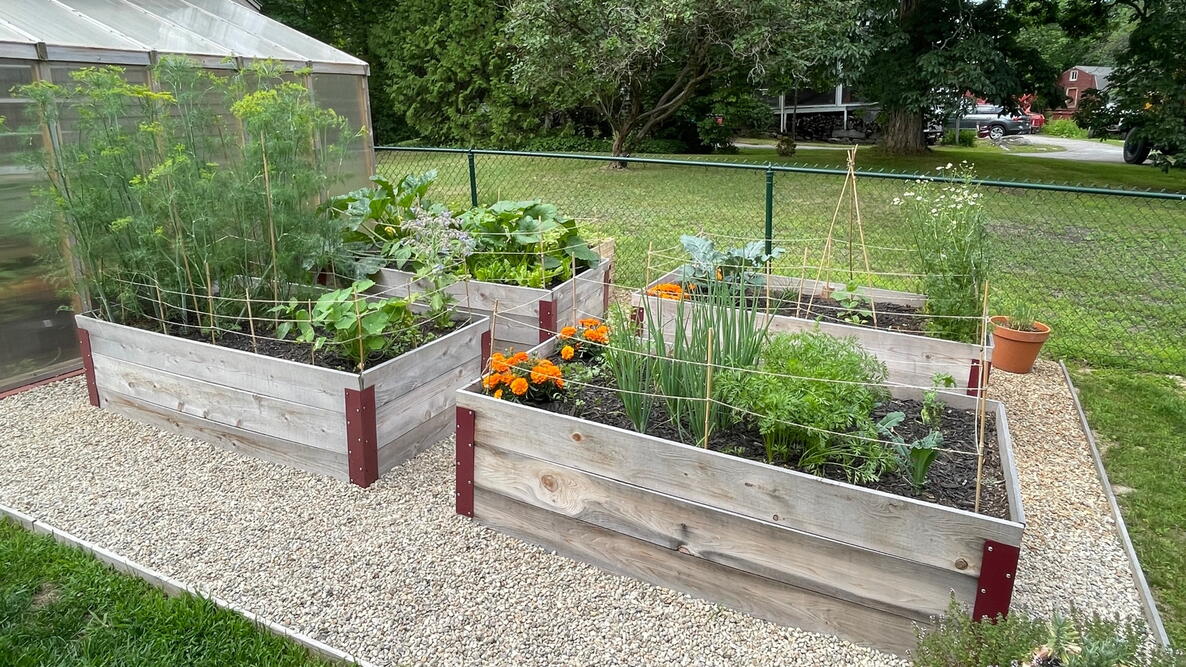
Caption
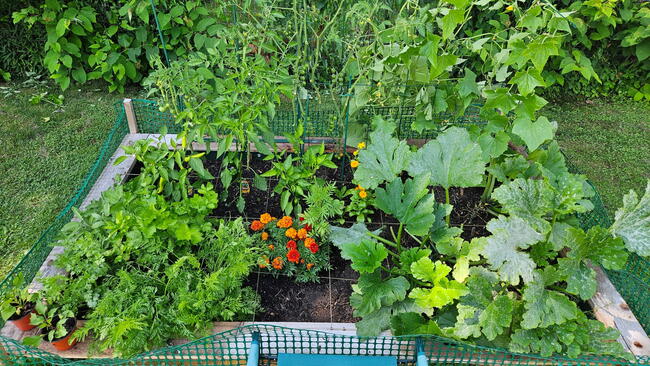
M. Spalding’s raised-bed vegetable garden—four cedar boxes bursting with organic produce.

This raised bed vegetable garden layout is ideal for gardeners who want more space to grow without taking on a large, overwhelming project. The plan includes four 4×8 raised beds plus one dedicated long tomato-and-basil bed for warm-season crops.
It’s large enough to grow a satisfying mix of vegetables, herbs, and flowers—without feeling overwhelming. With clearly defined beds and paths, this raised bed vegetable garden gives you space to expand your harvest, try more varieties, and still keep garden care manageable throughout the season.
In This Article
Part of Our Garden Plan Collection
This plan is part of our Garden Plan and Layout Collection, a free library of tested raised bed garden designs for raised beds, in-ground plots, and small spaces. Each layout is built to maximize harvests.
What’s Included
- Four coordinated 4×8 raised beds arranged to support a variety of crops
- One dedicated long tomato-and-basil bed for warm-season production
- Complete plant lists with spacing, sowing, and harvest timing
- Practical setup guidance for soil preparation, watering, and seasonal care
- A real gardener’s experience using the full multi-bed layout
| Feature | Details |
|---|---|
| Garden Type: | Multi-Bed Raised Vegetable Garden (4 beds + tomato bed) |
| Difficulty Level | Easy to Moderate |
| Hardiness Zones: | 4–9 (timing varies by zone) |
| Sun Exposure: | Full Sun |
| Seasonality: | Spring through Fall |
| Soil Type: | Rich, well-draining raised bed mix |
| Watering Needs: | Regular, consistent moisture |
| Special Features: | Companion planting, crop rotation friendly, pollinator-supportive |
| Garden Size: | Four 4×8-ft raised beds plus one long tomato bed |
| Fun Fact | Designed to provide steady harvests for a family throughout the season. |
Complete Raised Bed Vegetable Garden Layout
This multi-bed layout organizes crops across four 4×8 raised beds plus a dedicated long tomato bed. Having multiple beds makes crop rotation easier over time and gives larger plants the space they need to thrive.

Use the Almanac Garden Planner to recreate or customize this design.
The Plant List
See growing guides for every plant here: Almanac Vegetable Growing Guides.
| Plant Name | Spacings | Quantity | Sow Indoors | Sow/Plant Outdoors |
|---|---|---|---|---|
| Asparagus | Single: 1’ 6”, In-Row: 1’ 6”, 1’ 6” row gap | 2 | February → end of March | April → mid May |
| Basil | Single: 8”, In-Row: 6”, 10” row gap | 4 | Mid April → end of May | Mid May → end of June |
| Beans (Bush Snap) | Single: 10”, In-Row: 6”, 1’ 2” row gap | 6 | May → mid May | Mid May → mid June |
| Carrot | Single: 4”, In-Row: 4”, 6” row gap | 24 | — | Mid April → end of June |
| Cucumber | Single: 2’ 0”, In-Row: 2’ 0”, 2’ 0” row gap | 1 | May → mid May | Mid May → mid June |
| Dill | Single: 8”, In-Row: 6”, 10” row gap | 8 | May → mid May | Mid May → end of June |
| Marigold | Single: 8”, In-Row: 8”, 8” row gap | 9 | Mid March → mid May | Mid May → end of June |
| Onions (Green) | Single: 4”, In-Row: 4”, 4” row gap | 27 | February → mid April | April → end of June |
| Parsley | Single: 6”, In-Row: 4”, 10” row gap | 10 | April → mid May | Mid May → end of June |
| Parsnip | Single: 8”, In-Row: 8”, 1’ 0” row gap | 8 | — | Mid April → mid June |
| Pepper | Single: 1’ 2”, In-Row: 1’ 0”, 1’ 4” row gap | 2 | Mid March → mid May | Mid May → end of June |
| Radish | Single: 4”, In-Row: 4”, 8” row gap | 27 | — | Mid April → mid October |
| Spinach | Single: 8”, In-Row: 6”, 1’ 0” row gap | 8 | — | April → end of September |
| Squash (Winter) | Single: 2’ 11”, In-Row: 2’ 11”, 2’ 11” row gap | 1 | May → mid May | Mid May → end of June |
| Tomato (Large) | Single: 1’ 8”, In-Row: 1’ 6”, 2’ 0” row gap | 2 | Mid March → mid May | Mid May → end of June |
| Tomato (Small) | Single: 1’ 8”, In-Row: 1’ 6”, 2’ 0” row gap | 3 | Mid March → mid May | Mid May → end of June |
| Zucchini | Single: 2’ 0”, In-Row: 2’ 0”, 2’ 0” row gap | 1 | May → mid May | Mid May → end of June |
Why This Layout Works
This raised bed vegetable garden layout gives you a productive, organized setup without needing a large yard. Multiple 4×8 beds keep planting, watering, and harvesting simple—so you can grow a wide mix of vegetables, herbs, and flowers without everything competing in one space.
The separate tomato-and-basil bed is designed for warm-season crops that need extra room, sun, and airflow to produce well.
With defined beds and paths, you’ll also spend less time weeding, avoid compacting soil, and stay on top of garden care all season.
Tips for a Productive Raised Bed Vegetable Garden
- Start with rich, loose soil. Raised beds grow best in a high-quality mix with plenty of compost for nutrients and good drainage.
- Plant by timing. Start with cool-season crops in spring, then add warm-season plants (like tomatoes) after frost danger passes.
- Give big plants room. Tomatoes, squash, and cucumbers need extra spacing and airflow for healthier growth.
- Mulch to save time. Mulch reduces weeds and helps beds hold moisture more consistently.
- Water consistently. Raised beds dry out faster than in-ground gardens—steady moisture prevents stress and bitter flavors.
- Harvest often. Picking regularly keeps many crops producing longer (especially beans, greens, and herbs).
Learn more about raised bed gardening.


Gardener Spotlight: M. Spalding’s Experience
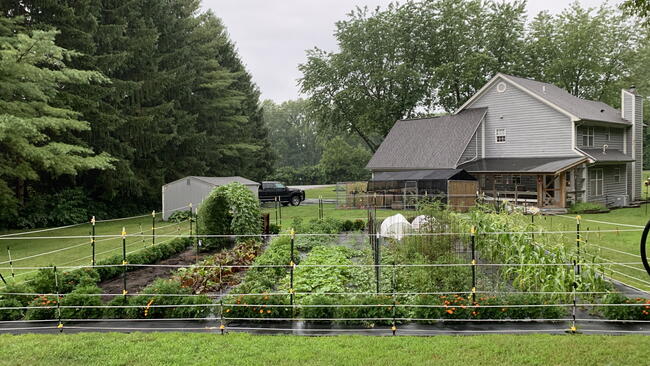
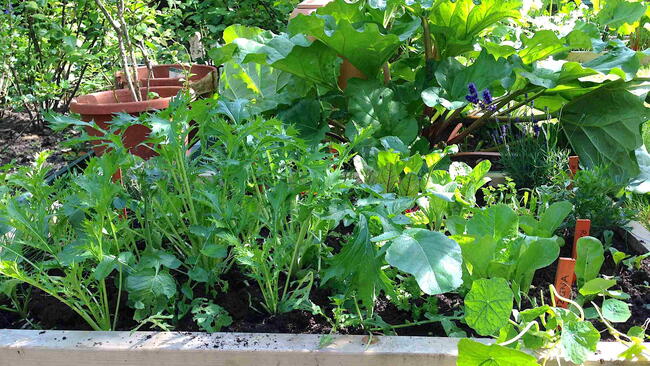
“This garden is for my family and me. My partner built the cedar-raised beds, and the bed where tomatoes grew was inside a greenhouse all summer. The lettuce was prolific, as were the mini cukes. We had lots of healthy bush beans all summer, next to the zucchini. The few carrots I transplanted were a little funny-looking, but they still tasted great! I planted nasturtium and dill with the asparagus, and that produced really well. We had used the companion planting feature for the first time and had almost no pests! Coincidence?”
— M. Spalding
Spalding’s experience highlights what many gardeners like about raised beds: strong yields, easier maintenance, and fewer pest surprises when the garden is well planned and closely observed.
“Every garden teaches you something new—sometimes it’s patience, sometimes it’s when to give up on broccoli.”
FAQs About Raised Bed Vegetable Gardens
What is the best size for a raised bed vegetable garden?
A common, practical size is a 4×8-foot bed. It’s large enough to grow a mix of vegetables, but still narrow enough to reach the center from the sides without stepping on the soil.
How many raised beds do I need to grow vegetables?
It depends on how much you want to grow. One 4×8 bed can produce a lot, but multiple beds make it easier to grow a wider variety—greens, herbs, root crops, and warm-season vegetables—without overcrowding.
What soil should I use in raised beds?
Raised beds do best with a loose, well-draining mix that’s rich in organic matter. Many gardeners use a blend of compost and quality topsoil so roots can grow easily and plants stay well fed.
Do raised beds need more water than in-ground gardens?
Often, yes. Raised beds drain well and warm quickly, but they can dry out faster—especially in summer. Consistent watering and mulch help keep moisture steady.
Can I customize this raised bed garden layout?
Yes. Swap crops based on your climate and what you like to eat, then keep spacing similar. You can also adjust this plan using our Almanac Garden Planner.
More References
- Free Planting Calendar
- DIY: How to Build a Raised Bed
- Soil Calculator for Raised Beds
- Vegetable Gardening for Beginners
- Companion Planting Guide for Vegetables
Wit & Wisdom
“Gardening is cheaper than therapy—and you get tomatoes.”
Companion planting isn’t new—Native American gardeners perfected it centuries ago with the “Three Sisters”: corn, beans, and squash.
Raised beds warm up faster in spring and stay tidier all season—and your knees will thank you.
More Garden Plans
If you’re looking to try a different approach, check out these alternative garden plans:
- Raised Bed Vegetable Garden - for gardeners who want a productive, low-maintenance kitchen-style garden.
- Square-Foot Garden - perfect for beginners who want a productive, compact raised bed garden with minimal fuss.
- In-Ground Vegetable Garden Plan - for gardeners starting from scratch who want a classic, productive garden.
- Vegetable Container Garden Plan - to grow a productive, flexible garden almost anywhere using pots and containers.

Vegetable Garden Plans
Flower Garden Plans
More Like This

Comments