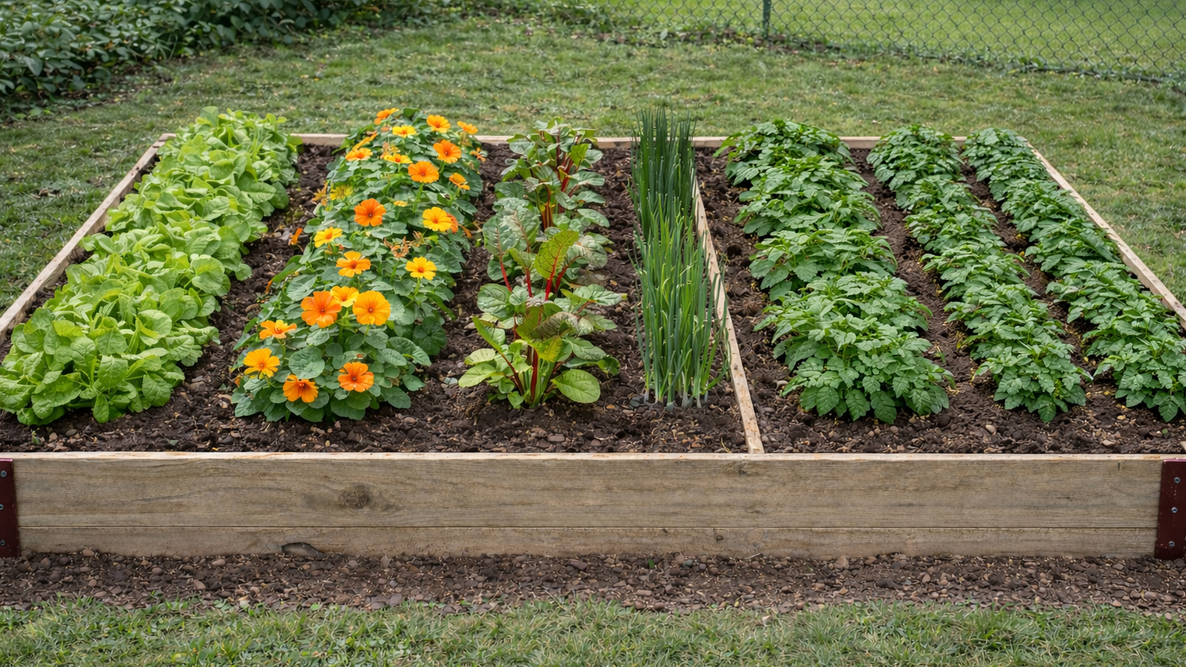
Caption
A simple 4×8 beginner vegetable garden layout with easy-to-grow crops arranged in rows for proper spacing and sun exposure.

This easy beginner vegetable garden layout uses just one 4×8-foot space to grow a starter pack of reliable, low-maintenance vegetables. It’s simple to set up, manageable to maintain, and perfect for your first season.
You can build a 4×8 raised bed—or simply measure out a 4×8 section in your yard and plant directly in the ground using the same spacing. If you’re deciding what method to use, see our overview of gardening methods (raised beds vs. in-ground vs. containers).
In This Article
Part of Our Garden Plan Collection
This plan is part of our Garden Plan and Layout Collection, a free library of tested raised bed garden designs for raised beds, in-ground plots, and small spaces. Each layout is built to maximize harvests.
What’s Included
- One 4×8-foot garden plan to grow reliable, low-maintenance vegetables
- Simple to set up, manageable to maintain, and perfect for your first season
- Complete plant lists with spacing, sowing, and harvest timing
- Practical setup guidance for soil preparation, watering, and seasonal care
- A real gardener’s experience using this layout
| Feature | Details |
|---|---|
| Garden Type: | First-time gardeners; small spaces |
| Difficulty Level | Easy |
| Hardiness Zones: | 4–9 (timing varies by Zone) |
| Sun Exposure: | Full sun (6–8 hours daily) |
| Seasonality: | Spring through Summer |
| Soil Type: | Rich, well-draining raised bed mix |
| Watering Needs: | Regular, consistent moisture |
| Special Features: | Companion planting, pollinator-supportive |
| Garden Size: | Four 4×8-ft raised bed |
| Fun Fact | Designed to provide steady harvests for a family throughout the season. |
Beginner Vegetable Garden Layout
Place taller crops toward the back (north side) of the bed so they don’t shade smaller plants. Keep spacing consistent and avoid overcrowding.

Want to customize this layout for your space? Use the Almanac Garden Planner to adjust spacing, swap crops, and build your own version.
The Plant List
For full growing instructions, see our Vegetable Growing Guides. For example, here’s our guide on how to grow lettuce.
| Plant Name | Spacing | Quantity | Sow Indoors | Sow/Plant Outdoors |
|---|---|---|---|---|
| Beans (Bush Snap) | 10” apart (rows 14” apart) | 8 | Early-to-mid May | Mid May → mid June |
| Lettuce (Leaf) | 4” apart (rows 6” apart) | 11 | March → mid April | April → mid September |
| Nasturtium (companion flower) | 12” apart | 4 | Mid April → mid May | After last frost |
| Onion | 6” apart (rows 8” apart) | 11 | February → mid April | April → mid June |
| Green Onions | 4” apart (rows 4” apart) | 11 | February → mid April | April → June |
| Potatoes (Early) | 16” apart (rows 20” apart) | 3 | — | Plant in spring (after soil is workable) |
| Swiss Chard | 14” apart | 4 | April | Mid April → mid August |
Planting dates vary by location. Use our Frost Date Calculator to find your last frost date, then check your exact timing in the Planting Calendar.
Why This Plan Works for Beginners
This plan keeps things simple. Instead of planting too many crops, it focuses on a handful of dependable vegetables that grow well together—so you can enjoy steady harvests without feeling overwhelmed.
With just 32 square feet to manage, watering, weeding, and harvesting stay realistic. The vegetables included are forgiving, meaning small mistakes won’t ruin your season.
Companion flowers, such as nasturtiums, can help attract pollinators and support a healthier garden overall. Learn more in our Companion Planting Guide for Vegetables.
Simple Tips for First-Time Gardeners
- Start with healthy soil. Mix compost into your soil before planting. See how to prepare garden soil for planting.
- Follow your frost dates. Warm-season plants go out after the danger of frost has passed. Use the Frost Date Calculator.
- Water consistently. Keep soil evenly moist, especially when plants are young.
- Give plants space. Crowded plants struggle—spacing matters more than people think.
- Harvest regularly. Picking often encourages beans and greens to keep producing.
Want a full beginner walk-through? See our guide on how to start a vegetable garden.
Frequently Asked Questions: Beginner Vegetable Layouts
How much can you grow in a 4×8 vegetable garden?
A 4×8 garden bed gives you 32 square feet of growing space, which is enough to grow a surprising amount of food. With proper spacing, you can harvest leafy greens, root vegetables, beans, onions, and even potatoes from a single bed. This size is ideal for beginners because it’s productive but still easy to maintain.
Is a 4×8 garden bed big enough for beginners?
Yes. A 4×8 bed is one of the best sizes for first-time gardeners. It’s small enough to manage comfortably but large enough to grow a mix of vegetables for steady harvests throughout the season.
What vegetables grow best in a beginner garden layout?
Reliable, fast-growing crops work best for beginners. Leaf lettuce, bush beans, green onions, Swiss chard, early potatoes, and companion flowers such as nasturtiums are all forgiving and productive choices.
Do I have to build a raised bed?
No. You can build a raised bed for better drainage and easier maintenance, or simply measure out a 4×8-foot section in your yard and plant directly in the ground using the same layout and spacing.
How many plants fit in a 4×8 raised bed?
The number depends on spacing, but this beginner layout comfortably fits a mix of about 40–50 plants, including greens, onions, beans, and potatoes. Proper spacing is important to avoid overcrowding and improve airflow.
Can I customize this beginner garden plan?
Yes. You can swap vegetables based on your climate or preferences. Just keep spacing similar and group plants with similar sunlight and watering needs. You can also customize this layout using our Garden Planner.
More Garden Plans
If you’re looking to try a different approach, check out these alternative garden plans:
- Raised Bed Vegetable Garden - for gardeners who want a productive, low-maintenance kitchen-style garden.
- Square-Foot Garden - perfect for beginners who want a productive, compact raised bed garden with minimal fuss.
- In-Ground Vegetable Garden Plan - for gardeners starting from scratch who want a classic, productive garden.
- Vegetable Container Garden Plan - grow a productive, flexible garden almost anywhere using pots and containers.

Vegetable Garden Plans
Flower Garden Plans
More Like This

Comments