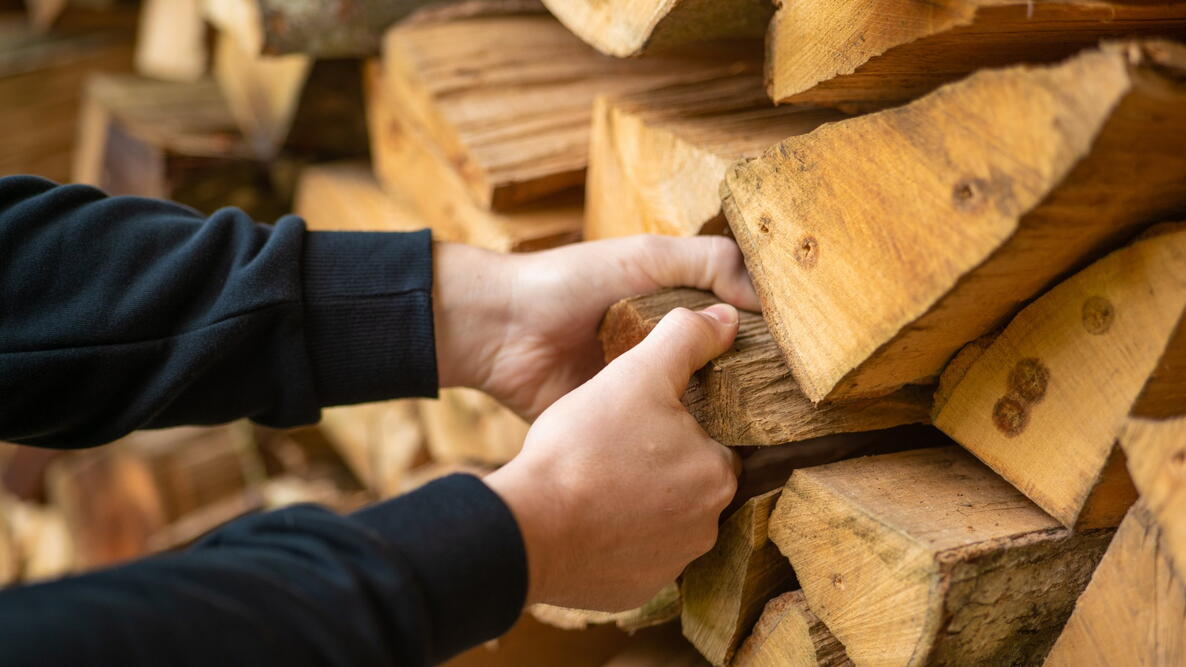

Do you use firewood to heat your home? Here is a list of the best types of firewood to burn—sorted by high, medium, and low heat value—and a few important wood-burning tips.
What Makes for Good Firewood?
What makes some types of firewood better for burning than others? It comes down to two factors: density and water content. The denser and drier the firewood, the better it will burn and the more heat it can produce in your woodstove, fireplace, or wood furnace.
Hardwood vs. Softwood
Hardwoods generally make for better firewood than softwoods because of their density and comparatively low levels of sap or pitch.
| Hardwoods | Softwoods |
|---|---|
| Alder Ash Aspen Beech Birch Cottonwood Elm Fruit trees (Apple, Cherry) Hickory Ironwood Maple Mesquite Oak | Cedar Fir Hemlock Pine Redwood Spruce Tamarack (Larch) |
Best Firewoods by Heat Value
Not all hardwoods or softwoods are created equal; some burn far better than others or produce more heat. Below are some of the best firewood rated by their heat value, which measures how much heat they put off.
High Heat Value
1 cord = 200 to 250 gallons of fuel oil
- American beech
- Apple
- Ironwood
- Mesquite
- Red oak
- Shagbark hickory
- Sugar maple
- White ash
- White oak
- Yellow birch
Medium Heat Value
1 cord = 150 to 200 gallons of fuel oil
- American elm
- Black cherry
- Douglas fir
- Red maple
- Silver maple
- Tamarack
- White birch
Low Heat Value
1 cord = 100 to 150 gallons of fuel oil
- Aspen
- Cottonwood
- Hemlock
- Lodgepole pine
- Red alder
- Redwood
- Sitka spruce
- Western red cedar
- White pine
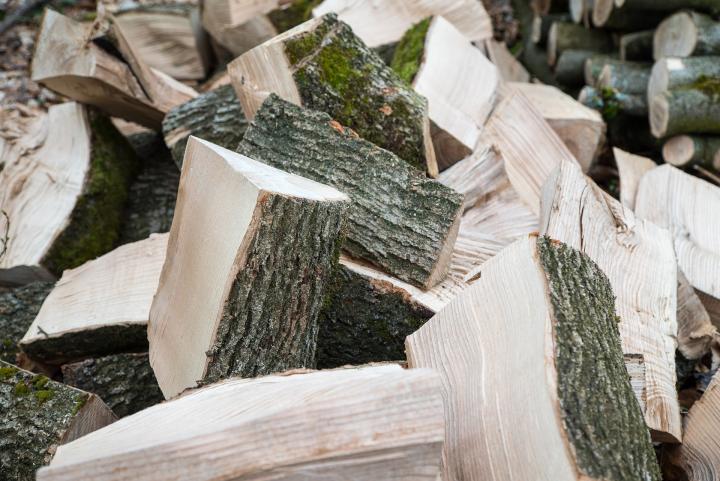
What is the heat value?
Heat value refers to the amount of heat a wood produces when burned. Heat value varies based on the type of wood: A cord of wood with “high heat value” provides the heat equivalent to that produced by burning 200 to 250 gallons of heating oil. Other heat values are listed above. Learn how to save money on your heating bill this year.
Firewood Measurements: Cord vs. Rick
A Cord of Wood
The cord is the standard measure of volume used for stacked wood. The volume of one cord of wood is 128 cubic feet of stacked wood. Generally, a cord is laid out in stacks measuring 4 feet wide, 4 feet tall, and 8 feet long (4’ x 4’ x 8’). Due to the air space between the stacked wood, the volume of solid wood in a cord may be only 70 to 90 cubic feet.
A Rick of Wood
Usually, a cord comprises a few stacks of wood. One stack of a cord is called a “rick” or a “face cord. Generally, a rick is 4 feet tall by 8 feet long, and the width of a rick will depend on the length of the individual pieces of firewood. Because of this variability in width, a rick could be equal to 1/4 of a cord, 1/2 a cord, or more.
Firewood-Burning Tips
- Cutting wood: Freshly cut wood contains up to 50 percent moisture and must be seasoned (dried) to 20 to 25 percent moisture content before burning. Wood containing more than 25 percent moisture is wet (or green) and should never be burned in a fireplace or wood stove.
- Splitting wood: Wet wood is easier to split than dry wood. Wood must be split into pieces and stacked out of the rain for at least six months to season properly.
- Seasoning firewood: If steam bubbles and hisses out of the end grain as the firewood heats up on the fire, the wood is wet or green and needs to be seasoned longer before burning. Well-seasoned firewood generally has darkened ends with visible cracks or splits. It is relatively lightweight and makes a sharp, distinctive “clink” when two pieces strike each other.
- Use the ash: The ash from your woodstove has many uses! Check out these tips for utilizing wood ash.
- Buy local: Only buy firewood from local sources. Buying and moving firewood from elsewhere (especially from state to state) is not only frowned upon, it may also be illegal. Transporting firewood from one place to another increases the chance of spreading invasive pests and diseases.
Frequently Asked Questions
Which firewood burns the hottest?
Woods like hickory, oak, ironwood, and sugar maple are top performers in the high-heat category.
How long does firewood need to season?
Most wood needs 6–12 months of drying time to reach 20–25% moisture.
How can you tell if firewood is seasoned?
Look for darkened ends, cracks, a lightweight feel, and a hollow “clink” sound when knocked together.
Can you burn softwood in a woodstove?
Yes, but softwoods burn faster and can create more creosote, so they’re best for kindling or short-duration fires.
Why shouldn’t firewood be transported long distances?
Moving wood can spread insects and diseases like the emerald ash borer.
Do you burn wood? What is your favorite firewood to burn?

More Like This


Comments