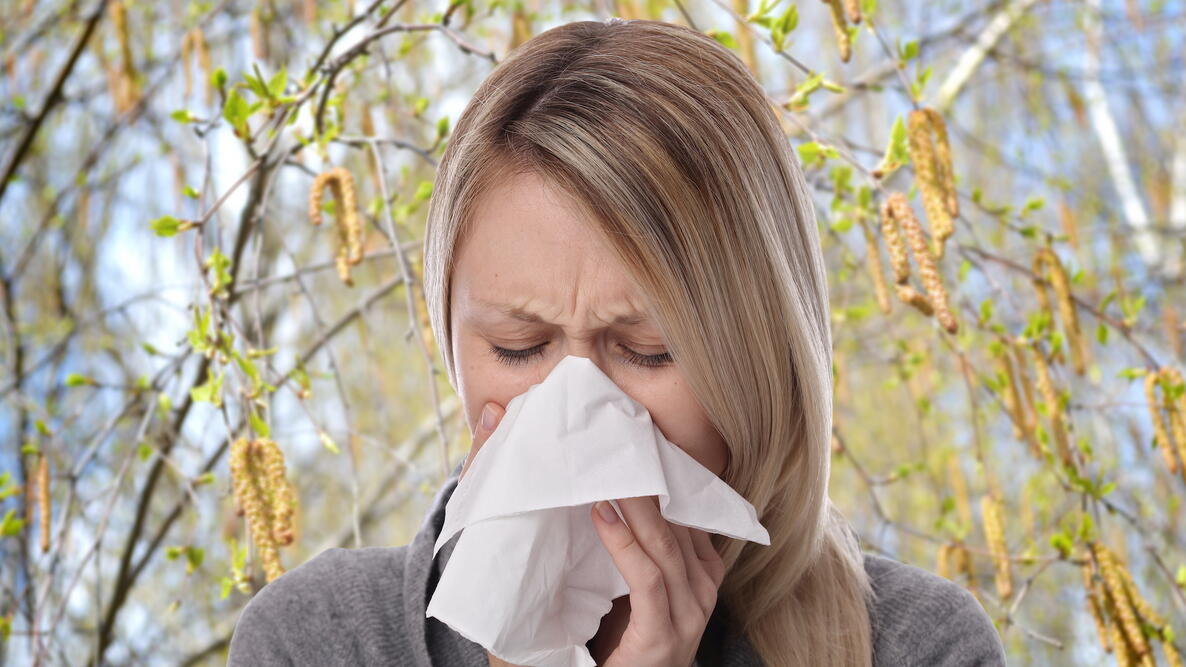

Spring brings beautiful trees and flowers, but it also wreaks havoc on those with allergies. Learn which of those trees cause allergies, five tips to limit discomfort, and the connection between weather, plants, and allergies!
What Causes Seasonal Allergies?
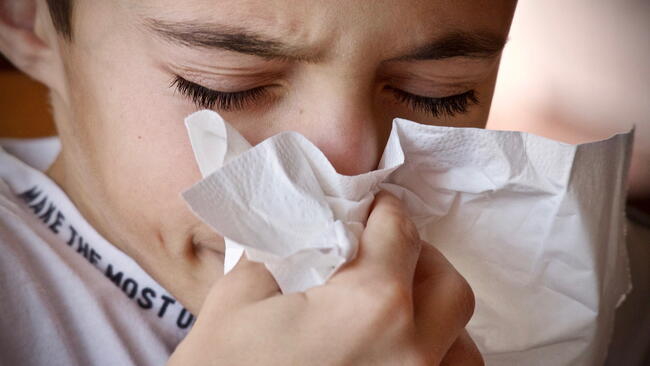
The biggest seasonal allergy trigger is pollen. March and April are the months when tree pollen begins to take off in the United States. Your immune system mistakes the pollen entering your nose as a danger, which causes the release of natural histamines, triggering the symptoms that allergy sufferers know all too well: sneezing, itchy eyes, coughing, and a runny nose.
Which Plants Cause the Worst Allergies?
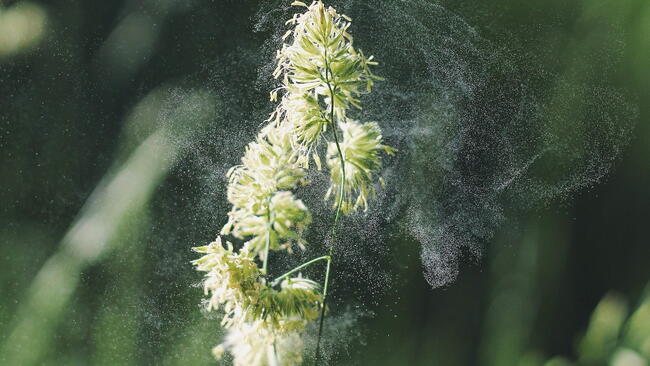
It’s the wind-pollinated plants that cause the most problems for allergy sufferers. These plants’ small, dull, inconspicuous flowers produce clouds of tiny, light pollen grains that are blown aloft for great distances and can easily penetrate window screens.
To increase the chances that at least some pollen grains will reach the appropriate female flowers, plants produce many more grains than are needed—and some end up on our hair, on our clothes, and, alas, in our eyes and nasal passages.
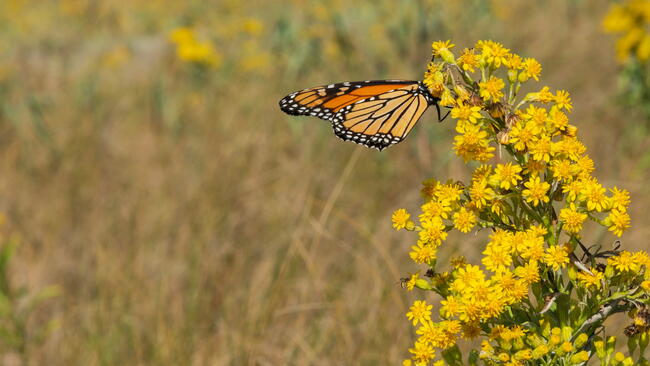
Insect-pollinated plants, on the other hand, have brighter flowers and heavy, sticky pollen grains that tend to stay put and cause few allergies. Instead of the wind, they rely on pollinators like bees, butterflies, and hummingbirds to move their pollen from one flower to another.
The Biggest Offenders
Pollen counts are highest in the spring and fall. Trees, grasses, and weeds are responsible for most windblown pollen. The worst offenders are:
- Oak, maple, beech, elm, cedar, mulberry, sycamore, hickory, birch, poplar, and box elder trees, which all produce pollen in the spring.
- Most lawn grasses; grass pollen emerges in the spring and continues through summer.
- Common weeds such as lamb’s quarter, pigweed, and ragweed, which may produce a million pollen grains on just one plant. Some weed pollen begins in the summer; ragweed, a major allergen, causes problems in late summer and fall.
- Not an offender: Goldenrod, which blooms along with ragweed, is often blamed for allergies but causes few problems because it relies on pollinators to spread its pollen, not the wind.
There has been a huge increase in hay fever sufferers in recent years, partly due to a growing interest in fruitless and seedless “litter-free” trees that won’t drop as much debris on the lawn or sidewalk. Many of these are male trees that may be litter-free but are definitely not pollen-free. To make matters worse, fewer female trees are being planted, so less pollen is being caught. Instead, it falls to the ground, where it can be stirred up by mowers and foot traffic.
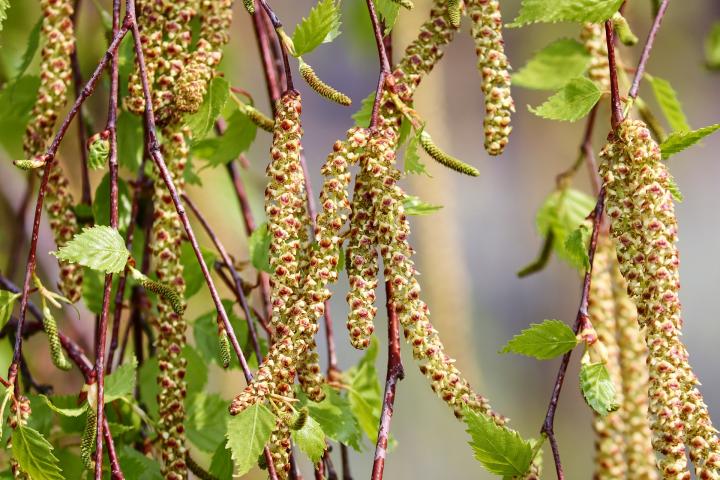
High-Allergen vs. Low-Allergen Trees and Plants for Spring
| Category | High-Allergen Plants | Low-Allergen Plants | Notes / Tips |
|---|---|---|---|
| Trees | Oak, Maple, Birch, Elm, Cedar, Sycamore, Hickory, Box Elder, Poplar, Mulberry | Dogwood, Redbud, Serviceberry, Flowering Crabapple (female trees), Japanese Maple | Male trees produce more pollen; choosing female trees reduces allergies |
| Grasses | Kentucky Bluegrass, Timothy, Ryegrass, Bermuda Grass | Microclover, White Clover, Insect-pollinated ground covers | Traditional lawn grasses are wind-pollinated; clover is low-maintenance and less allergenic |
| Weeds | Ragweed, Lamb’s Quarter, Pigweed | Goldenrod (pollinator-dependent), Plantain | Ragweed is a major fall allergen; goldenrod is often mis-blamed |
| Flowering Plants | Marigolds, Daisies, Sunflowers, Zinnias | Snapdragons, Impatiens, Begonias, Lobelia, Petunias | Bright, showy flowers are insect-pollinated and produce less airborne pollen |
| Shrubs / Climbers | Honeysuckle, Lilac, Mock Orange, Trumpet Vine | Hydrangea, Weigela, Clematis, Hosta, Forsythia | Insect-pollinated shrubs rarely trigger allergies |
See the best and worst plants for allergies!
Key Takeaways:
- Wind-pollinated plants = high allergen risk.
- Insect-pollinated plants = generally allergy-friendly.
- Female trees and low-allergen ground covers = great for gardeners who want beauty without sneezes.
- Check your local hardiness zone to select plants that thrive in your region.
How Weather Affects Allergy Season
Allergy seasons are generally worse when there are earlier-than-expected temperature increases. Warmer temperatures mean that plants bloom earlier, filling the skies with pollen—lots and lots of pollen.
Specifically, these are the conditions that affect the severity of an allergy season:
- A Warm Winter: Winter allergies are usually mold allergies. When winter is warm, there is usually a record amount of mold. Winter has just ended, and the mold is still around.
- A Warm Spring: Warm, early spring temperatures encourage plants to bloom early. Trees release their pollen as soon as it starts to warm.
- Dry Weather: Rain usually washes pollen out of the skies; in dry weather, we do not benefit from “nature’s shower.”
- Windy Weather: If you live in a windy area, pollen is more easily carried through the air when pollen counts are high.
You can avoid the worst if you prepare early. Start medicines a couple weeks before allergy season in your area, and check this National Allergy Map to keep tabs on pollen counts. Then take a deep breath and go outside and enjoy the beautiful flowers!
5 Tips to Reduce Allergy Discomfort
For gardeners or anyone who has allergies but loves the outdoors, there are steps that can be taken to limit discomfort:
- Plan your outdoor activities when pollen counts are lowest, such as in the late afternoon or during cool, wet weather.
- Be especially wary during the morning, when pollen is often emitted in larger amounts.
- Dry, windy days distribute pollen farther, whereas rain washes it from the air, lowering pollen counts (but encouraging mold, which causes some people more headaches).
- Plant only all-female trees and shrubs.
- Limit grassy areas by planting insect-pollinated ground covers.
By carefully choosing the right plants and gardening when pollen counts are low, you can make your space a healthier and more enjoyable place to be, which is nothing to sneeze at!
→ See home remedies for spring allergies and suffering sinuses.
More Like This


Comments