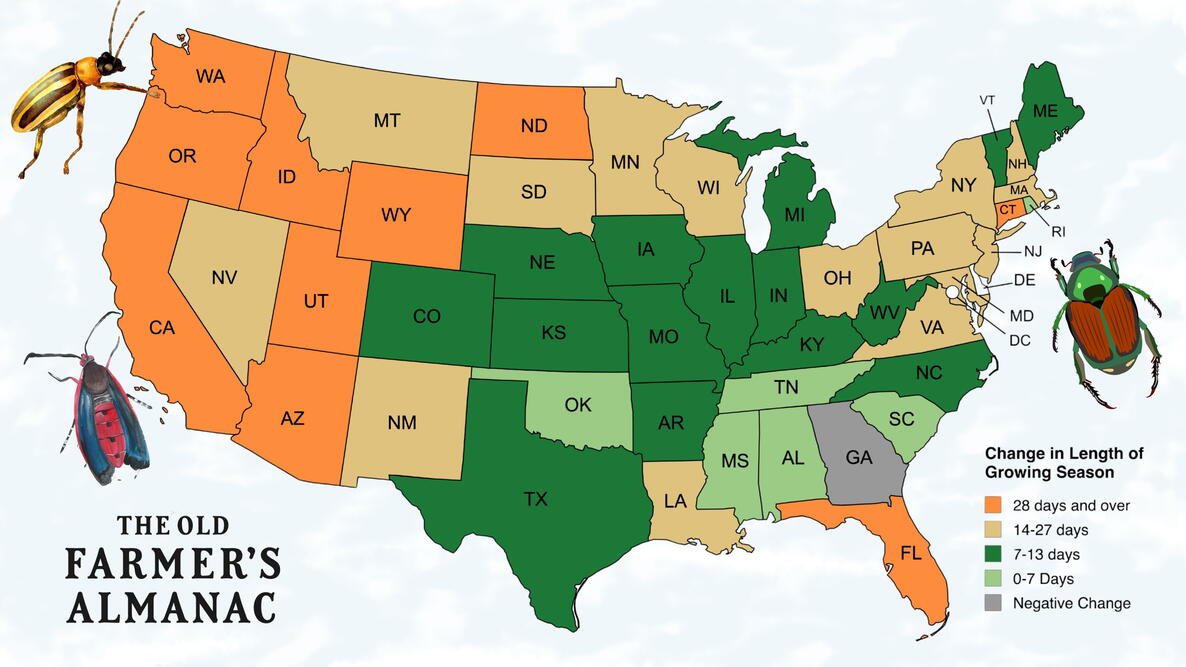
Are garden pests showing up earlier—and sticking around longer? See what our map reveals about the changing pest season where you live.
Across much of the United States, longer growing seasons can mean more time to ripen tomatoes and peppers. But they may also give common garden pests a longer window to stay active—and, in some areas, expand their range.
Where Growing Seasons Have Lengthened Most

Share this map with credit: Almanac.com/PestSeason
The map above shows how the length of the growing season has changed across the United States between 1895 and 2023. A growing season is the period between the last spring frost and the first fall frost.
While growing seasons have become longer across most of the country, the changes haven’t been the same everywhere. A few interesting patterns stand out:
- The biggest increases occurred in the West. California saw the largest increase, followed by Washington, Arizona, Utah, North Dakota, and Wyoming.
- Many western states gained about a month—or more—of additional growing time. That gives gardeners more time to plant, harvest, and enjoy their gardens.
- The Deep South tells a different story. Florida gained about 4 weeks, while neighboring Alabama saw virtually no change, and Mississippi gained less than a day. Georgia stands out as the only state with a clear decrease in growing season length.
| State | Additional Days | Additional Weeks |
|---|---|---|
| California | 47.2 | 6.7 |
| Washington | 40.3 | 5.8 |
| Arizona | 34.9 | 5.0 |
| Utah | 33.4 | 4.8 |
| North Dakota | 32.5 | 4.6 |
| Wyoming | 32.3 | 4.6 |
| Oregon | 31.7 | 4.5 |
| Connecticut | 29.3 | 4.2 |
| Idaho | 28.7 | 4.1 |
| Florida | 28.2 | 4.0 |
What can you do with an extra few weeks in the garden? It might be enough time for peppers to fully ripen, tomatoes to keep producing well into fall, or late-blooming flowers to brighten the garden a little longer before the first frost.
The Biggest Changes Are Recent
“A particularly large and steady increase occurred over the last 30 years of the study period.”
—Source: U.S. EPA

The chart shows what’s changed. While growing seasons have generally become longer over time, most of that change has happened in recent decades. Frost-free seasons are now noticeably longer than the historical average across much of the country.
For home gardeners, that can mean more time to harvest tomatoes, peppers, beans, and late-season flowers. But those extra growing days can also give many common garden pests a longer season to feed, reproduce, and remain active.
More Time for Plants—and Pests
Insects don’t use calendars—they respond to temperature and seasonal conditions. When warm weather arrives earlier or lasts longer, some pests become active sooner, remain active later, and may have more opportunities to reproduce.
A longer growing season doesn’t guarantee more pests. Rainfall, beneficial insects, and even the health of your plants all help keep nature in balance. But the lengthening season does mean you’ll want to keep an eye on the garden a little longer each year.
The good news is that most garden pests are easiest to manage before they become established. Regular walk-throughs can help you spot problems early, when they’re often much easier to control.
What Gardeners Can Do Right Now
You can’t stop every garden pest, but you can keep small problems from becoming major infestations. Most pests are easiest to manage when you catch them early—and a 5-minute walk through the garden once a week is often the best tool for pest control there is.
- Cover young plants. Use row covers to protect seedlings and young plants from pests such as squash bugs and squash vine borers. Remove covers once crops that need pollination begin to flower.
- Inspect plants every week. Look under leaves for insect eggs; watch for holes, wilting, or chewed foliage; and remove damaged leaves before pests spread.
- Deal with pests while they’re few. A sharp spray from the hose often takes care of aphids without you needing to reach for insecticides. Hand-pick larger insects. Remove heavily infested leaves before populations explode.
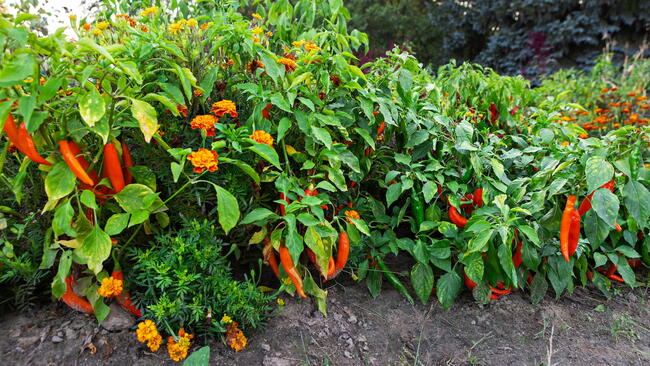
- Invite beneficial insects. Plant flowers such as alyssum, dill, fennel, calendula, and marigolds to attract ladybugs, lacewings, hoverflies, and tiny parasitic wasps that naturally help control pests.
- Companion plant whenever possible. Mixing flowers, herbs, and vegetables together creates a healthier, more diverse garden that can discourage some pests while supporting beneficial insects.
- Try simple, nonchemical solutions first. Protect seedlings with cutworm collars. Drop Japanese beetles into a bucket of soapy water early in the morning, when they’re sluggish. Use beer traps for slugs.
- Build healthy soil. Healthy, well-fed plants are naturally more resilient and better able to withstand insect feeding than stressed plants.
- Use sprays only when needed. Even organic products can affect beneficial insects. Choose targeted products, follow label directions, and spray in the evening after pollinators are less active. Here are five of our DIY insect sprays.
- Work with nature—not against it. A healthy garden always has some insects. The goal isn’t to eliminate every bug but to keep pests below the level where they cause serious damage.
Remember: Most pest problems are much easier to stop when you spot the first few insects—not the first hundred.
Garden Pests to Watch
Not every insect responds to changing growing conditions in the same way. But many garden pests may benefit from longer periods of warm weather, which can give them more time to feed, reproduce, and remain active.
Here are three familiar garden pests that may become more troublesome during longer growing seasons.
Squash Vine Borers
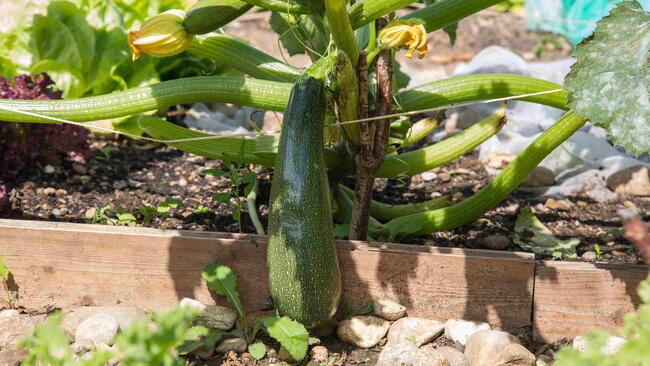
If you’ve ever admired a healthy zucchini plant one day and found it wilted the next, squash vine borers may be to blame. The larvae of the adult moths tunnel through stems, cutting off the flow of water and nutrients.
In regions with longer growing seasons, gardeners may need to monitor susceptible crops for a longer period and stay alert for signs of damage throughout the summer.

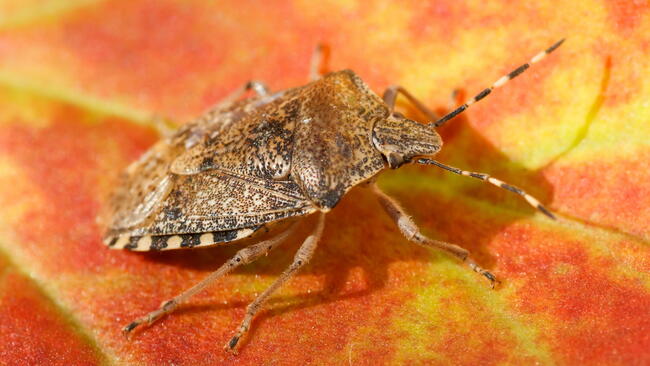
Brown Marmorated Stink Bugs
Just when your tomatoes are finally ripening, stink bugs often arrive for a taste of their own. The brown marmorated stink bug pierces fruits and vegetables with its needle-like mouthparts, leaving behind corky spots, discoloration, and damaged harvests.
Originally introduced from Asia, these highly invasive insects have spread across much of the United States and remain a frustrating late-season pest for many gardeners.

Japanese Beetles
Japanese beetles are among the most recognizable garden pests in North America, affecting vegetables, fruit, flowers, shrubs, and trees. Few insects can strip a rose bush faster than Japanese beetles.
Their feeding leaves behind the familiar “skeletonized” appearance of leaves, where only the veins remain. Large populations can quickly turn healthy foliage into lace-like remnants.

The good news? Longer growing seasons don’t guarantee more pest damage. Paying attention early—and responding quickly—is still the best defense.
Not Sure What’s Wrong With Your Plant?
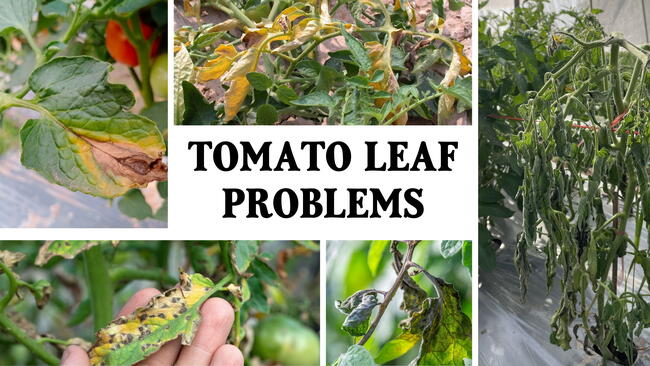
Yellow leaves? Holes in zucchini leaves? Spots on tomatoes? Wilting stems? Mystery bugs? You don’t have to guess.
🔍 Try the Plant Problem ID Tool →
- Select your plant.
- Choose the affected area (leaves, fruit, stems, roots, or flowers).
- Describe the symptoms you’re seeing.
The tool identifies likely pests, diseases, and nutrient problems. It links to treatment and prevention advice so you can take action quickly.
Whether you’re dealing with squash vine borers, stink bugs, tomato diseases, or something you’ve never seen before, it’s a fast way to narrow down the possible causes and find solutions.

More Like This

Comments