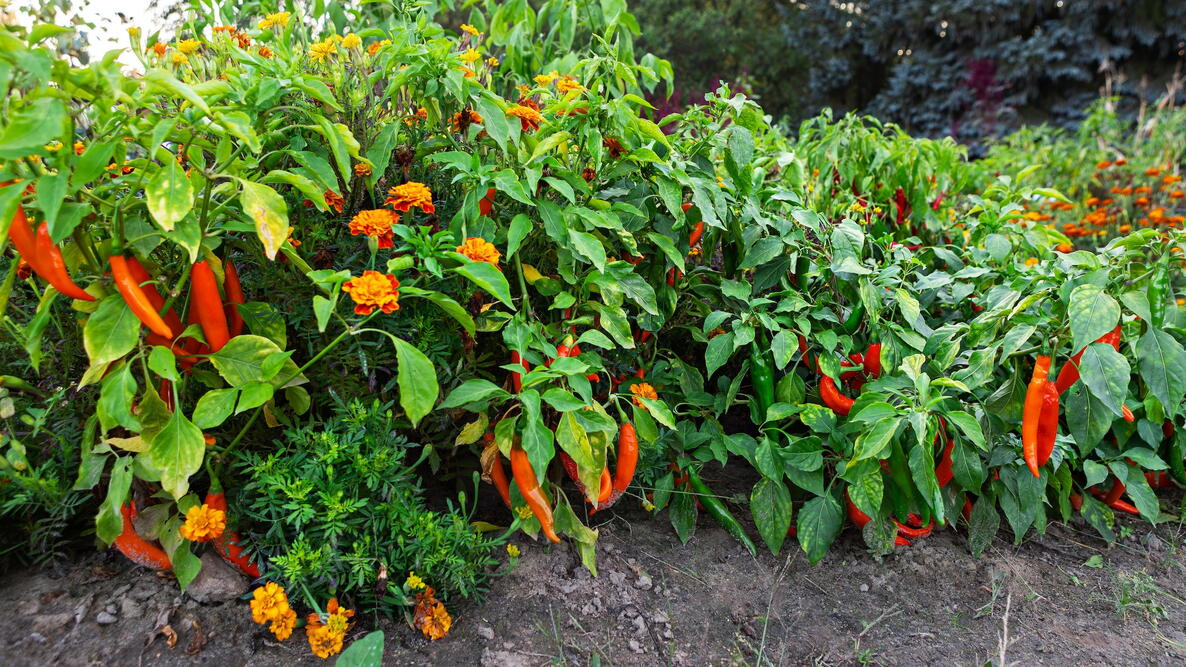

While peppers are simple enough to grow in garden beds or pots, these heat-loving plants grow best when they’re planted beside companion plants that lend a helping hand to their growth. From pest-repelling herbs to pollinator-friendly flowers, here are some of our favorite companion plants for peppers. We also cover a few plants to avoid if you want a bigger harvest this season.
Key Takeaways
- The right companion plants make gardening easier by repelling insect pests, improving soil quality, and boosting yields.
- Some of the best pepper companion plants include: basil, alliums (garlic, chives, shallots, scallions, and onions), cilantro, nasturtiums, and oregano.
- You can use companion planting with any type of pepper, including mild bell peppers and fiery hot chili peppers.
- Peppers should not be planted alongside other nightshades, fennel, or brassica plants.
Benefits of Companion Planting for Peppers
I’ve been growing peppers in my garden for years, but in the first few growing seasons, I struggled with poor pollination and lost more bell peppers than I could count to deer! This inspired me to explore growing peppers with companion plants, and the results have made it a regular part of my gardening routine.
Not only do pepper companion plants repel insect pests and make peppers more resistant to disease, but some can also deter deer and rabbit activity.
The best plant pairings will also reduce weed growth or improve soil quality, helping peppers grow better. What’s more, the right companion plants usually have the same basic care needs as peppers, which makes them easy to grow together in the garden.

Companion Plants for Peppers
Peppers can be interplanted with companion plants or grown in succession with them to maximize your garden’s productivity. In general, the same companion plants work well for all sorts of peppers, including mild bell peppers and fiery hot chili peppers:
- Basil
- Alliums (garlic, chives, shallots, scallions, and onions)
- Cilantro
- Nasturtiums
- Oregano
- Marigolds
- Root vegetables (carrots, radishes, and beets)
- Spinach
- Snapdragons
- Legumes

Basil
Growing basil and tomatoes together in the garden is one of the most classic companion plant pairings. But basil also grows well alongside peppers, as these two plants share similar care needs. Taller peppers also provide much-needed shade to tender basil leaves during the peak of summer heat, while basil’s strong scent repels several pepper pests, including whiteflies and thrips.

Alliums
When it comes to companion plants for peppers, alliums are at the top of my personal list. Garlic, chives, shallots, scallions, and standard onions all have a strong sulfur-like aroma that repels a variety of pepper pests—including deer, which have been the major threat to the peppers in my garden. Onions and peppers are also both essential ingredients for homemade salsa, while allium flowers attract pollinators to pepper plants and increase harvest yields.
Cilantro
Peppers and cilantro are classic salsa ingredients that naturally pair well together. If you allow cilantro plants to flower, they’ll also draw in pollinators and beneficial insects, like hoverflies, that feed on pepper pests. If you want to gather an ongoing harvest of cilantro while taking advantage of this herb’s pest-repelling qualities, succession-plant cilantro seeds at 2- to 3-week intervals so the older plants can flower while the newer plantings remain harvestable.

Nasturtiums
Bright orange and yellow nasturtium flowers bring vibrant color to veggie beds, but these edible flowers also perk up pepper health. They are trap crops that draw aphids away from peppers and other veggies. These plants also attract pollinators and other beneficial insects. Trailing varieties of nasturtium can be used as a living mulch to keep weeds from encroaching around your peppers.

Oregano
Many fragrant herbs can be used for natural pest control, but oregano is particularly effective, repelling most garden pests. If you allow oregano to flower, it will also attract pollinators and beneficial insects that pollinate pepper flowers and keep pests at bay. Just keep in mind that oregano is a perennial herb and will come back each season, while pepper plants won’t.

Marigolds
Marigolds are used as companion plants for many vegetables because their brightly colored blooms attract pollinators and beneficial insects, such as lacewings, ladybugs, and parasitic wasps. However, if you plant them at least 2 months before you sow peppers, these plants can also repel nematodes in the soil. Marigolds also grow readily from seed and can be grown in containers or garden beds, depending on your available space.
Root Vegetables
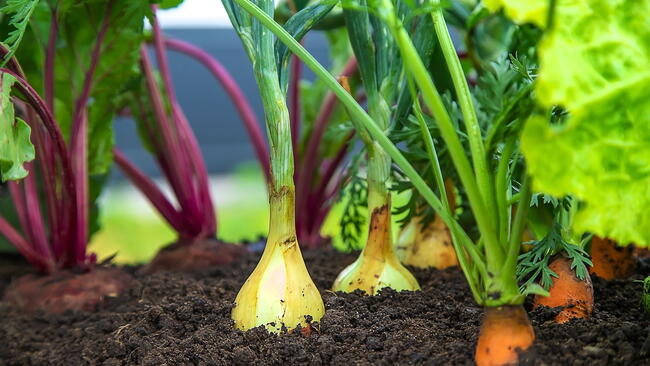
Carrots, radishes, beets, and other root crops tolerate chilly weather and grow relatively fast. Sowing these plants early in the season, before you plant peppers, can extend your harvest window and let you gather more food from your garden before your pepper plants start producing. If you prefer, you can also interplant root veggies around the base of pepper plants, as these plants won’t compete with peppers for sunlight access and their large roots aerate the soil when you harvest them.

Spinach
Cold-tolerant spinach plants can also be grown in succession with peppers in spring and fall to keep your garden productive when pepper plants aren’t harvestable. Growing spinach beneath the leaves of peppers also provides spinach with light shade and can keep it from bolting too quickly during a spell of warm weather.
Snapdragons
Many annual flowers can be interplanted with peppers to attract pollinators and beneficial insects. However, snapdragons are particularly good for this task, as they grow quickly from seed, prefer the same basic growing conditions as peppers, and stay small enough that they won’t crowd out your vegetables.

Legumes
Beans, peas, and other legumes fix nitrogen into the soil and improve soil health over time. Growing these plants near your peppers can provide additional nitrogen, helping them grow better and produce more. Depending on your garden, you can choose vining or pole-type legumes trained on trellises, or you can purchase bush-type legumes that have a more upright growth habit and work well in containers.

Want to see how peppers fit into your whole garden? Browse our Companion Planting Chart for the best plant pairings at a glance.

What Not to Grow with Peppers
Although peppers grow well with many vegetables, herbs, and flowers, you can run into trouble if you grow peppers with the following plants:
| Competitor | Why Avoid? |
|---|---|
| Tomatoes and Potatoes | Like peppers, tomatoes and potatoes belong to the nightshade family and growing them close to peppers can increase pest activity and allow pests and diseases to spread between your plants. |
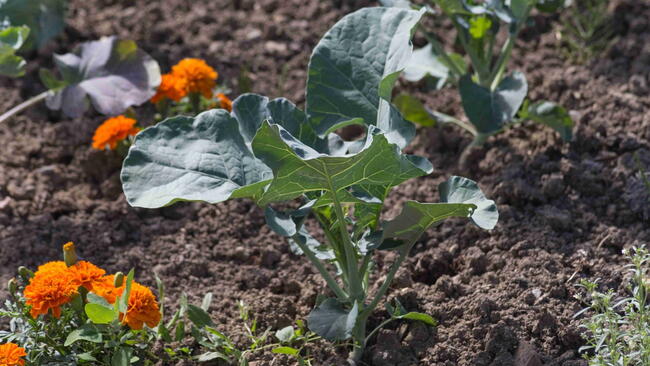
| Brassicas | Cauliflower, brussels sprouts, broccoli, and other plants in the Brassica family can compete with peppers for nutrients and can cause pepper plants to become stunted. |
| Fennel | Fennel releases allelopathic compounds into the soil, making it hard for other plants, including peppers, to grow nearby. |
FAQ
What should you not plant near peppers?
You should not plant peppers alongside other nightshades, fennel, or Brassica plants, as these can stunt growth.
Can peppers and cucumbers be planted together?
Peppers and cucumbers can be planted together, as they have similar growing needs. These plants both demand a lot of nutrients, though, so you may need to fertilize them a bit more if they’re grown in proximity.
Can peppers and tomatoes be planted together?
Peppers and tomatoes can technically be grown together, as they have similar care needs. However, it’s best to keep these plants apart in the garden, as they are prone to the same pests and diseases.

More Like This

Comments