Caption
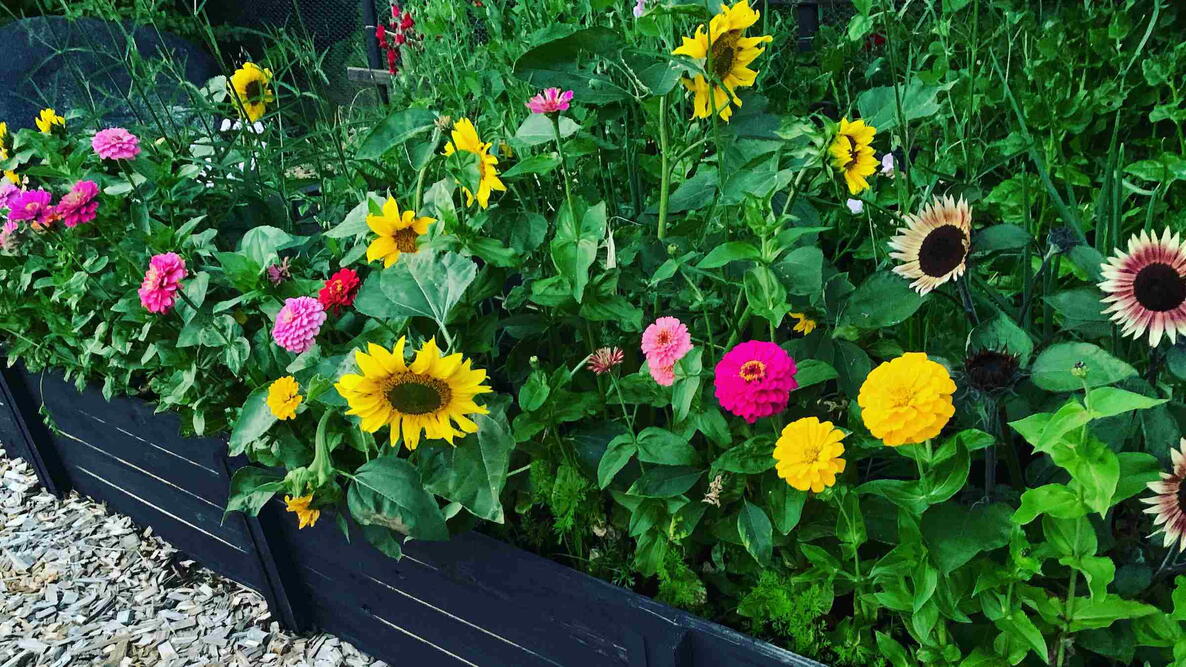
A vibrant annual raised bed cut flower garden featuring colorful zinnias and sunflowers in full summer bloom—perfect for creating endless bouquets

This Raised-Bed Cut-Flower Garden Plan creates a dedicated space just for cutting flowers, so your blooms won’t compete with vegetables or mixed garden borders. Think of it as a mini flower farm at home. Using three raised beds, this layout is designed to provide a steady supply of fresh flowers for bouquets and vases from spring through fall—perfect for your home, sharing with friends, or giving as gifts.
In This Article
Part of Our Garden Plan Collection
This plan is one of many in our free Garden Plan Library, with tested layouts for vegetables, flowers, and mixed gardens. Each plan shows what to plant, when, and how—so you can grow with confidence, whether you’re aiming for fresh produce, beautiful bouquets, or both.
What This Plan Delivers
- A raised-bed cut-flower garden layout for fresh flowers from spring through fall.
- A clear plant list to help you shop for seeds.
- A planting schedule and spacing guidance for consistent blooms.
- Step-by-step instructions for soil preparation, planting, watering, and care.
- Real gardener insights using this exact layout and plan.
| Feature | Details |
|---|---|
| Garden Type: | Raised-Bed Annual Cut-Flower |
| Difficulty Level: | Beginner |
| Hardiness Zones: | 4–9 |
| Sun Exposure: | Full sun |
| Seasonality: | Spring through fall |
| Soil Type: | Rich, well-draining garden soil or raised-bed mix |
| Watering Needs: | Regular, even moisture |
| Special Features: | Long-lasting cut flowers, pollinator-friendly, colorful all season |
| Garden Size: | Three 4’×8’ raised beds |

The Raised Bed Cut Flower Garden Layout
This plan packs a surprising amount of flower power into just three raised beds, producing enough blooms to keep fresh bouquets flowing from midsummer into fall. Keep in mind that this plan is specifically for annual cut flowers—flowers you replant each year—rather than perennials. Because this is a pure cutting garden, annuals are ideal for fast growth and repeat harvesting.
Raised beds warm faster in spring, improve drainage, and make harvesting easier. However, this layout can also be adapted for in-ground garden beds if needed.
Plan

Annual cutting flowers come in nearly endless colors, shapes, and sizes. Mix and match varieties to suit your color palette—pastels, brights, monochrome, or a lively mix. For more flowers that perform well in cutting gardens, see our guide to the best Flowers for a Cutting Garden.
The Plant List
Below is a sample plant list designed for this exact raised-bed cut-flower garden layout. Note: Under “quantity per bed,” we are listing the number of plants in the garden bed. However, when you plant the seeds, be sure to plant extra. We sow three seeds per plant to ensure at least one germinates. Then you will “thin” the seedlings, choosing the best of the bunch, to the plant spacing listed below.
For detailed growing instructions, refer to the Flower Growing Guide Library.
| Plant Name | Spacing | Quantity per Bed | Sow/Plant Outdoors | Bloom Season |
|---|---|---|---|---|
| Zinnia | 9–12” | 6 | Mid-May | July–Frost |
| Cosmos | 12–18” | 16 | Mid-May | July–Frost |
| Amaranthus | 12–18” | 6 | Mid-May | July–Frost |
| Sunflowers | 12–24” | 4 | Mid-May | July–September |
| False Queen Anne’s Lace | 12–18” | 6 | Mid-Spring | June–Frost |
| Larkspur | 6–12” | 6 | Early Spring | June–Frost |
| Snapdragon | 6–12” | 6 | Early Spring | June–Frost |
| Cornflowers (Bachelor’s Buttons) | 6–12” | 16 | Mid-Spring | June–Frost |
| Bells of Ireland | 6–12” | 4 | Mid-Spring | July–Frost |
| Sweet Peas | 3–6” | 22 | Early Spring | June–July |
For detailed growing instructions, refer to the Flower Growing Guide Library.
How to Create Your Cutting Garden
Step 1: Preparing the Soil
- Fill raised beds with 12–18 inches of rich, well-draining soil.
- Mix in compost or aged manure to promote strong roots and abundant blooms.
- Optional: Use a Soil Calculator to get the right balance for raised beds.
Step 2: Timing Your Planting
- Cool-season flowers (snapdragons, larkspur, sweet peas, cornflowers) can be sown indoors or planted outdoors in early spring.
- Warm-season flowers (zinnia, cosmos, sunflowers, Amaranthus) should be planted after the last frost when the soil has warmed.
- Succession sow every 2 to 3 weeks for continuous blooms.
Step 3: Planting Tips
As mentioned above, sometimes seeds don’t germinate, get eaten by pests, or rot. Once the seedlings have two sets of true leaves and are 3 to 4 inches tall, you will simply “thin” out the weakest seedlings, choosing the hardiest plant of the bunch. Learn more about direct sowing and thinning.
As difficult as it is to “kill” seedlings, it’s important to space flowers generously to allow airflow and reduce disease risk.
Note: Larger flowers, like sunflowers, may need staking. Also, label beds or squares to track varieties and bloom times.
Step 4: Watering and Maintenance
- Keep soil evenly moist using a soaker hose, drip line, or gentle hand watering.
- Mulch around plants to retain moisture and suppress weeds.
- Harvest frequently—cutting flowers encourages new growth and prolongs blooming.
Step 5: Harvesting Flowers
- Cut flowers in the morning when the blooms are hydrated.
- Remove lower leaves before placing stems in water.
- Re-cut stems every 1–2 days in fresh water for longer vase life. See our tips on Making a Beautiful Bouquet.
Gardener Spotlight: Susie’s Experience
“This little plan produces enough flowers to see my family and friends through the summer into fall. Zinnias, cosmos, Amaranthus, and sunflowers are my favorites. I sow some seeds indoors and others directly in the beds once the soil warms. Harvesting regularly keeps the blooms coming, and it’s so satisfying to share fresh bouquets with everyone.”
–Susie H.
Why Grow a Dedicated Cutting Garden?
- Boost pollinators and garden health: Annual flowers attract bees, butterflies, and beneficial insects that improve pollination for nearby plants.
- Mark life’s milestones: Fresh bouquets brighten birthdays, anniversaries, and everyday moments.
- Spark hope: Planting seeds and watching them bloom brings anticipation and a sense of renewal after long winters.
- Promote relaxation: Floral scents connect to the brain’s emotional center, easing stress.
- Lift beauty and mood: Colorful blooms help you feel connected to nature.
See our lovely article by a cut-flower farmer on flower power—the surprising healing benefits of flowers.
FAQs for Raised-Bed Cut-Flower Gardens
Q: Can I mix perennials with these annuals?
A: Yes! Reserve a small bed or border for perennials like echinacea or rudbeckia.
Q: Do I have to start seeds indoors?
A: Not always! It depends on the type of flower:
- Warm-season flowers (like zinnias, sunflowers, and cosmos) are sensitive to frost, so it’s best to plant them outdoors after the last frost.
- Cool-season flowers (like pansies, snapdragons, and sweet peas) can handle cooler weather, so starting them indoors a few weeks early gives them a jump start on the season.
Q: How do I keep flowers blooming all season?
A: For many annuals like zinnias, cosmos, and marigolds, succession planting every 2–3 weeks and harvesting regularly encourages continuous blooms. Some flowers, however, bloom just once per stem, so for those, planting new seeds or seedlings in succession ensures your garden stays colorful all season.
Q: How do I make bouquets last longer?
A: Cut in the morning. Use clean, sharp tools—pruners or scissors give a clean cut and protect the plant. Snip at an angle. Leave enough foliage. Re-cut stems in water immediately. See our tips on How to Keep Cut Flowers Fresh for Longer.

More References
- How to Plant Flowers
- Building a Raised Flower Bed
- Filling a Raised Flower Bed
- Best Flowers for a Cutting Garden
Wit & Wisdom
- Every flower has a symbolic meaning—choose blooms for your cutting garden and create bouquets that tell a story! See Flower Meanings!
- While scent usually attracts pollinators like bees and butterflies, some flowers can even change color to signal ripeness or attract pollinators.
- Some flowers can “hear” buzzing bees and respond by producing more nectar.
- In the 17th century, tulip bulbs in Holland were so valuable that they rivaled gold.
- “Where flowers bloom, so does hope.” –Lady Bird Johnson.
Other Plans to Explore
Want a dedicated space just for cutting flowers? Check out more garden plans below:
- Pollinator Garden Plan—this design includes native flowers that are easy for pollinators to access.
- Perennial Flower Garden Plan—this garden delivers reliable color, texture, and structure throughout the growing season.
- Front Yard Flower Garden Plan—this design provides instant charm—and long-term curb appeal—to smaller landscapes.
- Cut-Flower Garden Plan—this layout makes for a beautiful, traditional flower garden that also provides dependable blooms for cutting.
Vegetable Garden Plans
Flower Garden Plans
More Like This

Comments