Caption
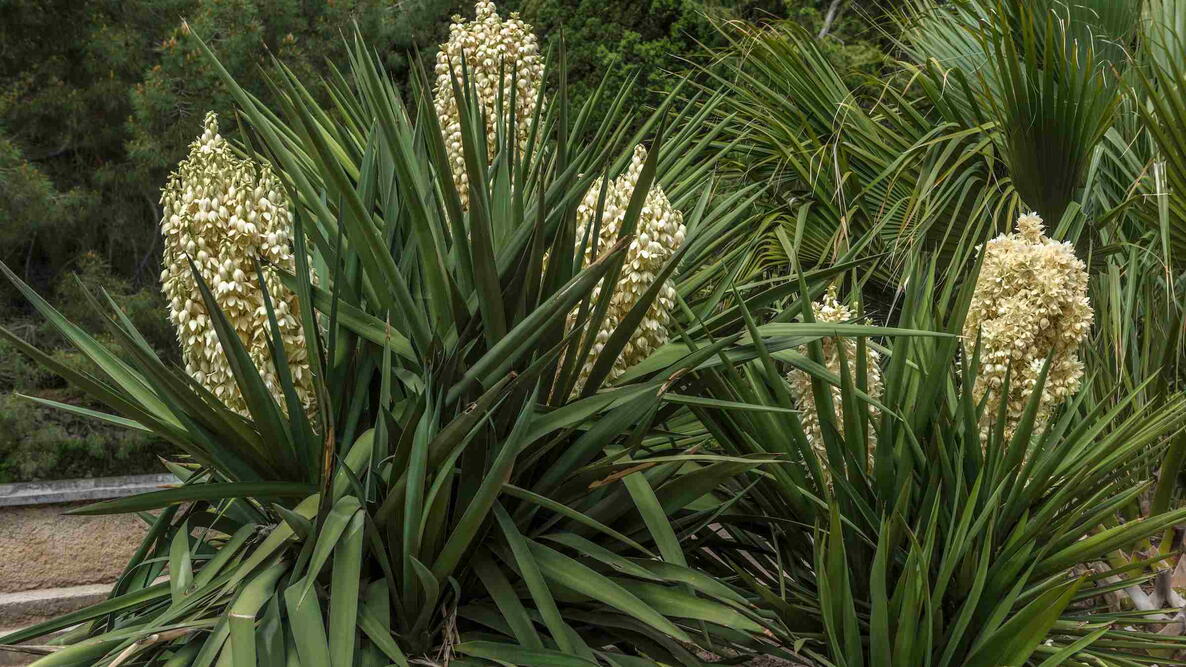
Yucca gloriosa, or Spanish dagger, with its striking white summer blooms.

Yucca-n’t go wrong growing yucca plants in your garden—or in your home as low-maintenance indoor houseplants that blend right in with cacti, succulents, and other plants with sharp, sharp style. These North American natives grow wild from Panama to Canada and can be cultivated as outdoor ornamentals in a wide range of places. Plus, small varieties thrive in pots indoors year-round. If yucca has “spiked” your interest, keep reading for the top tips I’ve learned from growing them in my home and my garden!
Today, yuccas are primarily grown for their ornamental appeal, and they also make attractive houseplants. However, these succulents are also essential pollinator plants in their native areas, and they support a wide range of wildlife, like moths, lizards, and wild birds.

I keep a potted yucca in a sunny window in my home, along with a few other cacti and succulents, and I find my yucca to be particularly easy to care for, undemanding in terms of water, fertilizer, and light. These hardy plants can also be grown outdoors in chilly zones (4 and up), or planted in pots and only moved outside for the summer. Just keep in mind that yucca may not be appropriate for every home, as they are toxic to pets and livestock, and their sharp leaves can slash skin if they’re not handled wisely.
Looking for yucca landscaping ideas or the best yucca varieties for containers? There’s a species for every space.
Planting
Whether you’re growing yucca outdoors in your garden or in pots, spring is the best time to plant them. Here are the basics you need to know!
- Choose the perfect growing spot: Yucca grows best in full sun to lightly shaded locations with sandy soil and lots of space to spread out. If you’re growing these plants in pots, choose heavy terracotta or ceramic ones, which are less likely to tip over. Select pots that are only one or two sizes larger than the container your plant is currently in.
- Check drainage: Well-draining soil is essential for yucca to grow well. Be certain you grow these plants in well-draining locations or in pots with drainage holes in the base, and add perlite or sand to the potting mix before planting to help water drain even more effectively.
- Handle with care: Yucca have sharp leaves, so you’ll want to wear sturdy gloves, a long-sleeved shirt, and potentially some eye protection when you work with them.
- Watch for invasiveness: Although plants can’t be invasive in their native area, yucca can grow aggressively in some spots. As a result, some varieties should not be grown close to houses or other structures.
- Plant it right: To plant, wiggle your yucca free from its pot and plant it in a hole that’s slightly larger than the plant’s root ball. Firm the soil around your plant’s roots, add mulch if you’re using it, and water well.

Types
With more than 50 species of yucca plants available, you can find a yucca to suit any garden or houseplant collection. Some small varieties stay under 1 foot tall, but other types of yucca, like the famous Joshua tree, grow into large shrubs or tree-like plants that can reach heights of over 30 feet. These plants all feature long, sword-shaped leaves that are often stiff with toothed margins, and they produce clusters of creamy-white flowers, summer to fall.
That said, some yucca have striped leaves, funky trunks, and other special characteristics that give them their own unique flair! Here’s a look at some of the popular types of yucca plants for indoor or outdoor spaces:
- Spineless yucca: One of the best options for indoor use, this small yucca features a bulbous base and sword-like leaves, giving the plant a sculptural appearance.
- Banana yucca: This outdoor yucca produces green to dark purple seedpods that are shaped like bananas!
- Adam’s needle: A slow-growing yucca for outdoors, this shrub-like plant is cold-hardy and produces long, attractive-looking leaves.

Potting and Repotting
How Often to Repot
Because yucca grow slowly and they don’t mind being a little rootbound, you’ll only need to repot indoor plants about once every 2 to 3 years.
When to Repot
Spring is the best time for repotting, but yucca can be repotted in other seasons if needed.
How to Repot
- Wear gloves: Wearing gloves, long sleeves, and eye protection can help you avoid scrapes with sharp yucca leaves.
- Choose a heavy pot: Yucca can be top heavy and thus grow best in heavy pots with drainage holes in the base. Select a pot that’s just one or two sizes bigger than your existing planter to avoid watering issues.
- Repot right: Carefully remove your yucca from its old pot, shake away some of the dirt around its roots, and repot the plant at the same depth it was growing in its old container. If repotting your plant isn’t doable, you can also freshen the soil by scraping out some of your old potting mix and adding fresh potting mix in its place.

Propagation
Yucca plants can be propagated from cuttings, seeds, or offsets (pups). Your choice may depend on your level of patience and your gardening goals!
- Seed: Growing yucca from seed is the most time-consuming process. Wait for the seed pods to dry on the plant, crush the pods to release the seeds, cold stratify the seeds in damp sand for 90 days in your fridge, and then plant the seeds in March about 1/8-inch deep in pots filled with seed-starting mix.
- Root division: Dividing yucca plants is the fastest way to propagate new yucca plants. Just wait until your plants mature, dig up or de-pot your yuccas in the fall, and tease apart their rhizomes to divide your plants into smaller sections.
- Pups: If your yuccas produce offsets or pups, wait until the pups turn green, and then cut the pup off the parent plant with a sharp, sterilized knife. Make sure some of the parent plant’s rhizome is attached to the pup, plant the pup in its own pot, and keep the soil lightly moist while it’s rooting.

Yucca not only adds an interesting-looking feature to a garden, but also provides nectar and habitat for pollinators and other wildlife. Credit: crystaldream

More Like This

Comments