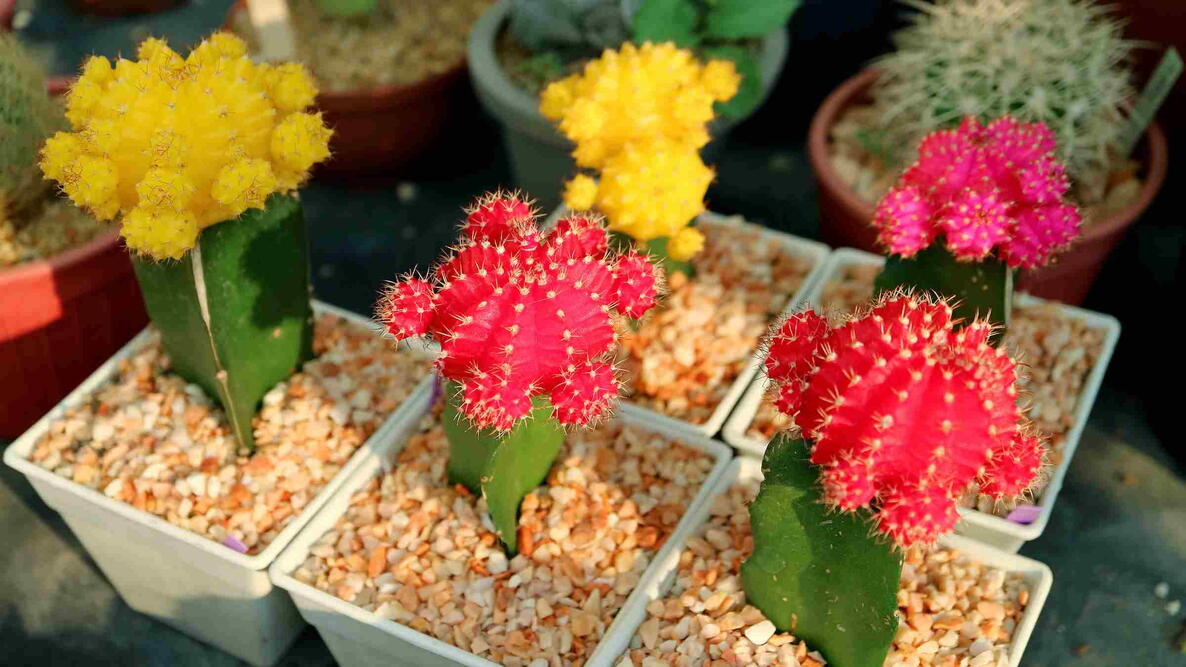
Caption
A rainbow of moon cacti! Hibotan tops in shades of red, yellow, pink, and orange make this collection a colorful delight.

If you love houseplants with big, bold color, you’ll be over the Moon for moon cactuses. These colorful characters are the product of a bit of playful plant experimentation, and while they don’t exist naturally, they may just become your new favorite indoor or outdoor addition. Here’s everything I’ve learned from years of growing and grafting them.
Caring for a moon cactus is a little different from tending their cacti cousins. The vibrant Hibotan tops of moon cactuses need a grafted base to thrive—but with the right tips on light, water, soil, and occasional grafting, you can keep your colorful plant healthy and growing. I have a soft spot for moon cactuses—they were the very first houseplants I ever grew!
About Moon Cactus Plants
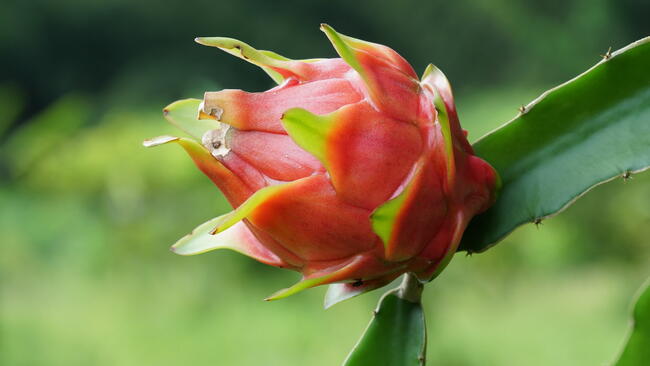
Also known as the red ball or red cap cactus, moon cacti are created by grafting two separate types of cacti together to create a small hybrid plant that’s truly one-of-a-kind! The top section of moon cacti is actually a mutated version of the Hibotan cactus, which doesn’t have the chlorophyll it needs to photosynthesize. To keep it growing, this Hibotan cactus top is then grafted onto a tall cactus base, often from a dragon fruit cactus (Hylocereus spp.), which provides enough chlorophyll to keep the Hibotan cactus top healthy.
Wild Hibotan cacti grow native throughout the arid regions of South America, but they don’t have the bright colors houseplant lovers have come to expect from cultivated moon cactuses. While store-bought moon cacti come in showy shades of pink, yellow, red, orange, and purple, wild Hibotan cacti are a grayish-green color and can photosynthesize on their own. It’s only when Hibotan cacti are carefully bred for that extra special color that they lose their ability to support themselves and require grafting.

Like other cacti, moon cactuses sport small spines that can prick your fingers, and they grow best in warm locations with well-draining soil. However, because of their special coloring, moon cacti don’t tolerate as much sun as your standard cactus plant and prefer to grow in bright, indirect light. I keep my moon cacti in a small pot in a partially shaded window, where they seem quite happy. However, these plants can also be grown in dish gardens with other cacti and succulents that have similar care needs. Additionally, they can potentially be grown outdoors in light shade in Zones 11 and 12.
Types
Moon cacti are all about color, and the “varieties” come mostly from the vibrant Hibotan tops grafted onto a standard cactus base. Each color is a little personality all its own!
- Red Moon Cactus – The classic and most common, with a bright, bold red top that instantly catches the eye.
- Yellow Moon Cactus – Cheerful and sunny, this yellow Hibotan top brings warmth to any windowsill or dish garden.
- Pink Moon Cactus – From soft blush to bright pink, these moon cacti add a playful pop of color.
- Orange Moon Cactus – Warm, energetic orange tops that make a striking contrast against green cactus bases.
- Purple Moon Cactus – Deep purple or magenta tops, less common but dramatic and elegant.
Some growers also offer variegated or multicolored tops, like red-orange blends, for a truly one-of-a-kind moon cactus. No matter the color, each moon cactus is a cheerful, low-maintenance splash of living art for your indoor or outdoor garden.
Potting and Repotting

How Often to Repot
Slow-growing moon cacti don’t need big pots and should only be repotted about once every 3 to 4 years.
When to Repot
Spring or summer is the best time to repot moon cacti.
How to Repot
- Let the soil dry: It’s much easier to repot moon cacti when the soil is dry.
- Reuse pots: Feel free to reuse your old pot as long as your moon cactus hasn’t outgrown it. These plants grow slowly and don’t need a lot of space.
- Repot right: Wearing gloves, carefully remove your plant from its pot and brush as much of the old potting mix from your plant’s root as you can. Then, fill a new pot or your old one with a well-draining cactus or succulent potting mix, locate your cactus in the pot at the same depth the plant was previously growing, firm the soil around your plant’s roots, and wait 1 week to water.
Propagation
Hibotan cactus can be grown from seed, but if you want a true moon cactus, you’ll need to graft those baby cacti onto a healthy rootstock. Grafting can also be used on moon cactus offsets or to salvage a damaged or aging moon cactus plant.

- Seeds: To grow a Hibotan cactus from seed, fill pots with a well-draining cactus potting mix, sprinkle the cactus seeds over the substrate, cover them with a light dusting of grit, and keep the soil moist and in bright, indirect light until the cacti are large enough to repot on their own. If the cacti are green, they don’t need grafting.
- Grafting: To graft a new moon cactus to a base or regraft an existing moon cactus top, use a sharp, sterilized knife to trim off the base of a Hibotan cactus. Then, cut the top off a similarly sized, rooted, column-shaped cactus, such as a dragon fruit plant. Position the two cactus pieces on top of each other so that the cut sections are overlapping as much as possible. Secure the pieces in place with a rubber band wrapped over the cactus top and pot bottom, and care for the cactus as normal until the cactus halves fuse.
- Offsets: To grow a new moon cactus from offsets, wait for your plant to produce babies or offsets and then carefully cut these offsets from the parent plant with a sharp, sterilized knife. If the offsets are colorful (rather than green), graft them onto an appropriately sized cactus base using the tips above.

More Like This

Comments