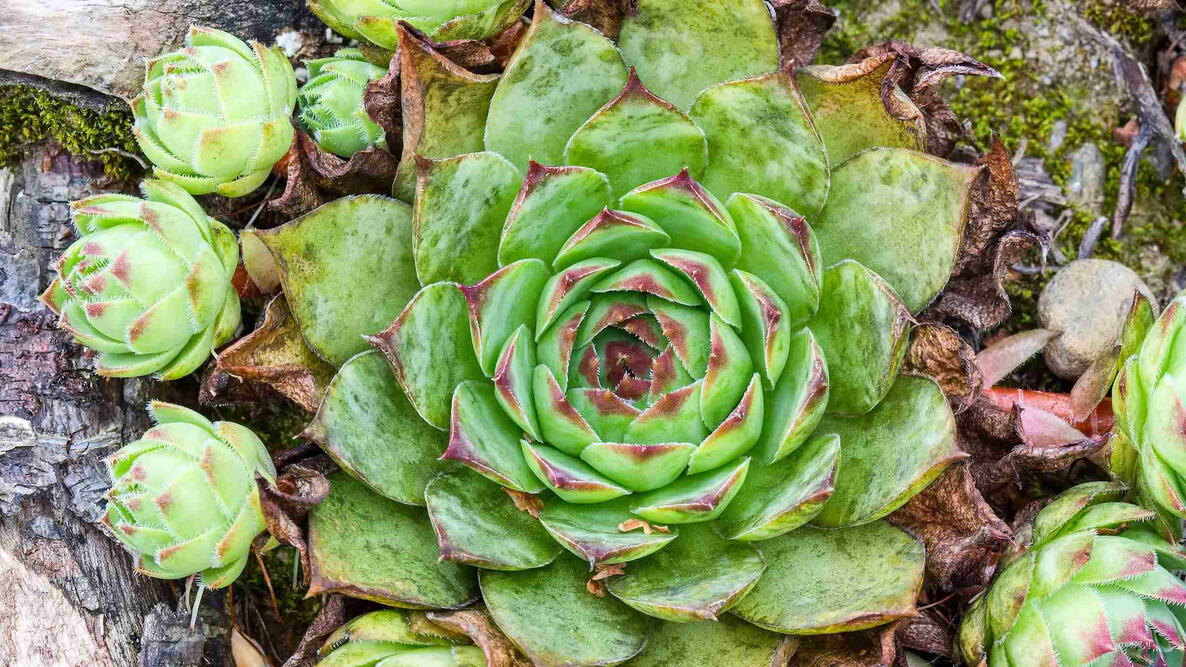
They may not lay eggs, but hen and chicks plants (Sempervivum tectorum) still multiply like mad—no rooster required! These hardy succulents thrive where other plants won’t. Easy to grow, drought- and deer-resistant, and quick to spread, they’re favorites for rock gardens, xeriscaping, containers, and dry landscapes. Read this full guide to hen and chicks plant care for my favorite tips on keeping them thriving in your garden.
While hen and chicks can be grown indoors as houseplants, I personally prefer cultivating them outdoors. They’re small-space friendly and perfect for adding a touch of green to tricky spots. Plus, these low-maintenance succulents are among the easiest plants to propagate—making them ideal for beginners and seasoned gardeners alike.

About Hen and Chicks Plants
Hen and chicks (Sempervivum), also called houseleeks or hen-widdies, get their name from their ability to readily propagate via offsets, producing new baby plantlets, or chicks, that spread over time. These ground-hugging succulents belong to the Crassulaceae family. They are native to dry, sunny regions of southern Europe and northern Africa but are surprisingly cold-tolerant, thriving perennially in USDA Zones 3 and up as long as they’re in well-draining soil and receive plenty of sun.
Although they need a bit of watering when settling in, hen and chicks grow best in dry, gravely soil, and I generally don’t water mine at all now that they’re established in my garden. This quality makes them ideal for rock gardens and xeriscapes, but they can also be grown in pots or living wreaths, tucked into crevices in garden walls, or planted in between stone pavers for an unexpected pop of color. After all, these succulents don’t just come in green; you can find them in a range of other fun shades, including burgundy, purple, red, and yellow.
Aside from their colorful and fleshy leaves, which grow in tight rosettes, hen and chicks plants also flower. However, this is usually a sign that the plant is stressed or reaching the end of its life. Not to worry: as patches die, they typically produce additional offsets that can linger long after the parent fades. This spreading habit is why I love to use hen and chicks as groundcovers around perennials that tolerate lots of sun and dry soil, such as coneflowers, goldenrod, asters, yarrow, and sedum!
Planting
Technically, hen and chicks can be grown from seed, but it’s much easier and faster to start with nursery plants or offsets from neighbors and friends. For best results, choose a sunny, well-draining location. For containers, use a shallow pot (at least 8 inches wide) filled with succulent or cactus mix amended with sand, perlite, or pumice.
When to Plant Hen and Chicks
Plant in spring after the last frost for the quickest establishment. If you plant later, avoid hot midsummer or late fall, when rooting is more difficult.
How to Plant Hen and Chicks
- Dig a shallow hole just larger than the roots. Holes will generally be quite small as hen and chick plants have shallow root systems.
- Position hen and chicks in the planting hole so that the base of the plant is level with the soil line, and backfill the hole with soil.
- Firm the soil around your plants. Water well once after planting.
- Space plants 12 to 18 inches apart—they can spread up to 3 feet wide over time!
- Consistently wet conditions can cause hen and chicks to rot. Skip wood or bark mulches that trap moisture. Use gravel or pebbles instead to reduce rot.

Growing
Although hen and chicks are native to warm, dry areas, they can grow in standard gardens as long as you place them in well-draining locations. Improve drainage by growing in raised beds or pots (if needed) or by mixing perlite, pumice, or sand into your soil before planting.
Light
Full sun is best; without enough of it, the plants can grow leggy, lose their color, and stop producing offsets. That said, growers in hot locations can keep these plants in light shade, too!
Water
Newly planted hen and chicks should be watered deeply. Thereafter, water sparingly—about 1 cup every 2 weeks at most, but they may not need any supplemental water at all. I personally never water the hen and chicks in my garden, as they rarely seem to need it, and overwatering can cause them to quickly rot.
Fertilizer
Like other succulents, hen and chicks are light feeders and may not require fertilizer. If your plants need a pick-me-up, feed them just once a year in spring with a slow-release succulent fertilizer or organic liquid fertilizer diluted to half strength.
Humidity
They are quite adaptable but prefer low humidity and temperatures ranging between 65° and 75°F.

Seasonal Care
- During the growing season, minimal pruning is required. You can clip away spent stems or dead rosettes.
- These plants also generally don’t need winter protection, but they may go dormant in cold weather or rot if they stay too wet during the colder months. To avoid this, rake away fallen leaves in autumn.
- Move containers to a sheltered spot to protect pots from freezing and cracking.
Propagating Hens and Chicks from Offsets
Growing hen and chicks from seed is slow and often doesn’t produce true-to-type plants. Propagation from offsets is quick and reliable!
- Wait for your plant to produce rooted “chicks.”
- Carefully excavate the soil around the base of the offsets and use a knife or pruners to separate the offsets from the parent plant. Keep the offsets’ roots as intact as possible.
- Transplant the rooted offsets into pots or your garden ASAP.
- Water deeply after planting and minimally afterwards.
Pests and Problems
Thanks to their spiky leaves, these hardy succulents are naturally deer- and drought-resistant, but a few issues can occur:
- Pests: Spider mites, whiteflies, mealybugs, and aphids may appear, especially indoors or if plants are overwatered. Treat with insecticidal soap if needed.
- Root rot: Caused by poor drainage or overwatering; keep soil dry between waterings.
- Flowering: A stressed or mature rosette may bloom once, then die back. Fortunately, offsets usually replace it.

Types
Here are just a few fun varieties that you may want to try in your garden, but there are plenty more to explore!
- ‘Big Blue’: This colorful beauty has bluish-green leaves that are accentuated by bright red stems.
- ‘Terracotta Baby’: A particularly colorful option, ‘Terracotta Baby’ produces reddish leaves that demand attention.
- ‘Black’: Although this cultivar’s leaves are technically purple, they’re so deep and darkly colored that they appear black in most lighting.

More Like This

Comments