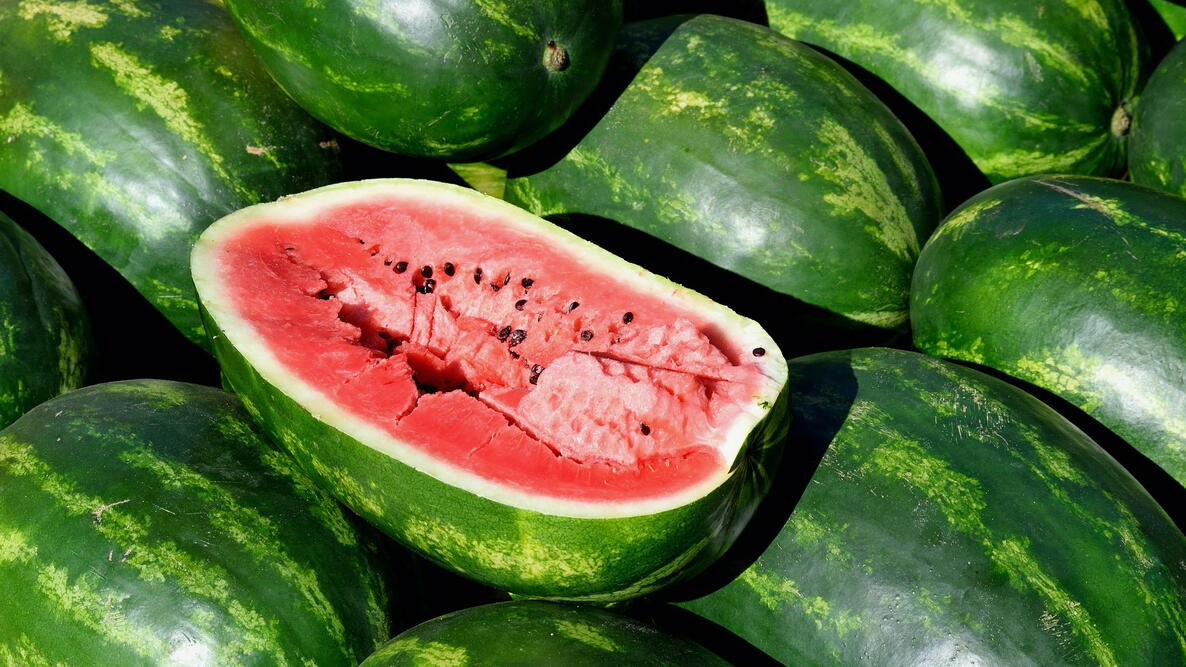
Image Credit:
Pixabay
Botanical Name
Citrullus lanatus
Grown as
Toxicity
Sun Exposure
Water Needs
Height
Spread
Soil pH
Bloom Time
Flower Color
Special Features
Resilience
Plant Type

Planting
When to Plant Watermelons
- In cool climates with short growing seasons, start seeds indoors 2 to 3 weeks before your last frost date. Plan to transplant seedlings into the garden about 2 weeks after that date or when the soil has warmed to at least 65°F (18°C).
- In warmer climates with long growing seasons, sow seeds directly outdoors 1 to 2 weeks after your last frost date, as long as the soil temperature has warmed to at least 65°F (18°C).
- Young watermelon plants can also be bought from nurseries. Plant these after there is no longer a chance of frost; they are very tender. Watch the local forecast and err on the side of caution! Consider laying black plastic over your planting area to warm the soil even more.
- Tip: Starting with young plants can result in an earlier harvest (usually up to 2 weeks earlier), so consider buying young plants, particularly if you live in a cooler climate.
Choosing and Preparing a Planting Site
- Amend soil with aged manure, seaweed, and/or compost before planting. Watermelons are heavy feeders, meaning they need soil that is fertile and has a high nutrient level. Learn more about soil amendments and preparing soil for planting.
- Watermelons do best in loamy, somewhat sandy, well-drained soil. They can struggle in soil that contains too much clay and doesn’t drain well.
- Watermelons prefer a soil pH between 6.0 and 7.5 (“slightly acidic to neutral”).
- Watermelons need A LOT of space—up to 20 square feet per plant. Their vines need room to sprawl, so plant them in a place where they won’t crowd out other crops.
- Growing the vines in raised rows, known as hills, ensures good drainage and will hold the sun’s heat longer.
- Plan to space the plants 2-3 feet apart in a 5-foot-wide hill.
- If you’re growing in traditional rows, space them at least 6 feet apart.
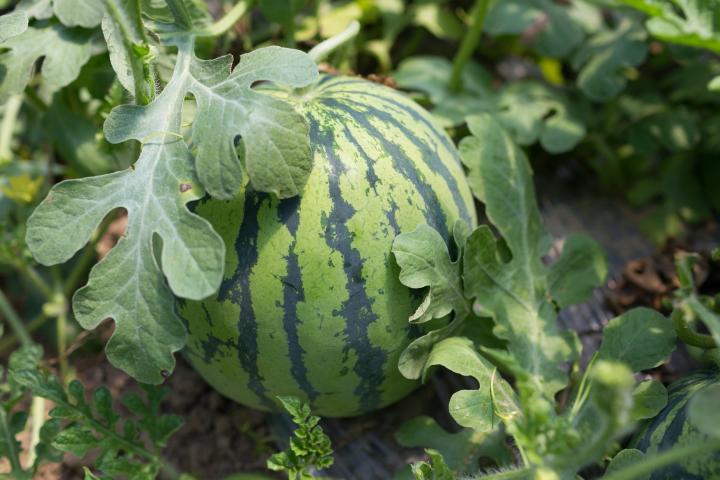
How to Plant Watermelons
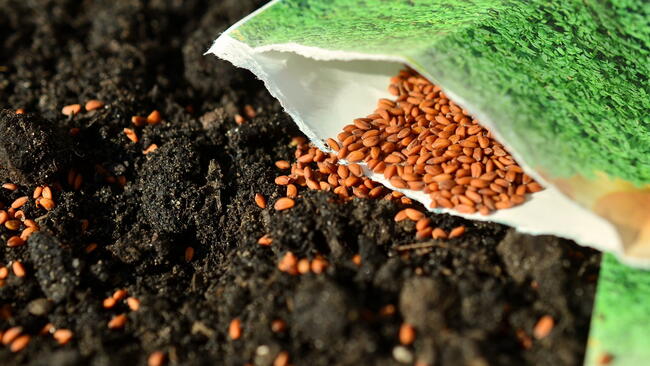
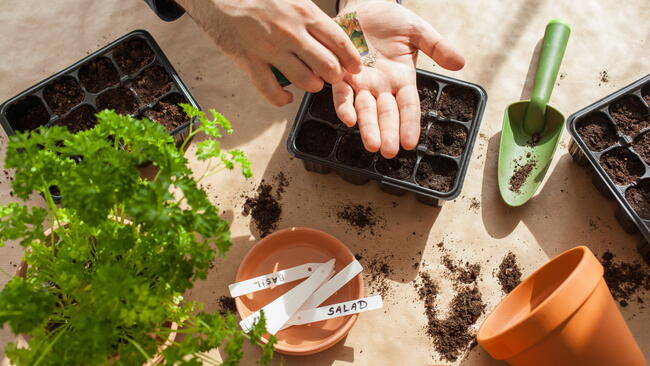
- Sow seeds 1/2 to 1 inch deep outdoors or 1/4 to 1/2 inch deep in seed-starting pots indoors.
- Tip: To allow for more root growth, use larger starting pots than you would for most seeds. Also, consider using compostable pots that can be cut away or planted directly in the garden, as this will minimize the risk of damaging seedlings’ tender roots during transplanting.
- If direct seeding outdoors, sow 4 to 6 seeds per hill, eventually thinning to 2 to 3 seedlings.
Transplanting Seedlings
- Handle watermelon seedlings with extreme care when you transplant. Their roots are very fragile, so try not to disturb the soil when removing them from pots.
- After transplanting, cover the plants with row covers to keep pests at bay. Remember to remove the row covers when you see both male and female flowers on the vine, as pollinators will need to access the flowers.
- Find even more tips for planting melons in your home garden.
Growing
Watering Watermelons
- Watering is very important—from planting until fruit begins to form. While melon plants are growing, blooming, and setting fruit, they need 1 to 2 inches of water per week.
- Keep soil moist but not waterlogged. Water at the vine’s base in the morning, and try to avoid wetting the leaves and avoid overhead watering. Reduce watering once fruit is growing. Dry weather produces the sweetest melon.
Fertilizing
- If you choose to fertilize (and many do), make sure it delivers more nitrogen than phosphorus and potassium, as this will encourage leaf and vine growth. However, after flowering begins, use a fertilizer with less nitrogen to instead encourage flowers and fruit. We like to use a seaweed-based fertilizer.
Flowering and Fruiting
- Vines produce male and female flowers separately on the same plant. They often begin producing male flowers several weeks before the females appear. Do not be concerned if the male flowers fall off. The female flowers (which have a swollen bulb at the base) will stay on the vine and bear fruit.
- Blossoms require pollination to set fruit, so be kind to the bees!
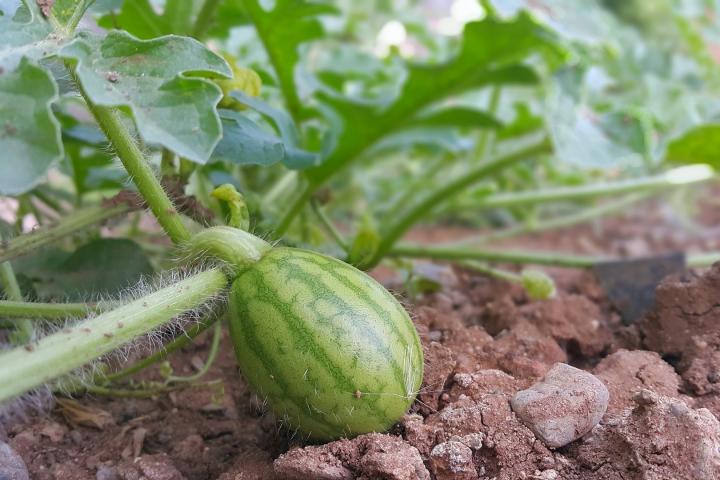
- As the fruit is ripening, prevent rotting by gently lifting it and putting cardboard or straw between the fruit and the soil.
General Watermelon Care Tips
- Mulching with black plastic or straw around the plants will serve multiple purposes: it will warm the soil, hinder weed growth, and keep developing fruits off the soil.
- Pruning generally isn’t necessary for watermelon plants, but vine productivity may be improved if you do not allow lateral (side) vines to grow and stick to the main vine. When the plant is young, just cut off the end buds as they form (before the side shoots become vines). You can also pinch off some blossoms to focus the energy on fewer melons (though it’s challenging to kill off a potential fruit).
Types
- ‘Golden Midget’: 70 days to maturity. Bears petite, yellow-skinned, 3-pound melons with pink flesh. Good for northern gardeners.
- ‘Sugar Baby’: 80 days to maturity. Produces 10-pound melons with bright red flesh. This variety of smaller fruit can be planted just 4 feet apart.
- ‘Sweet Beauty’: 80 days to maturity. A 2004 All-America Selection. Bears 6-pound, oblong melons with red flesh.

More Like This


Which of the tail tell signs is most prevalent? I'm growing Crimson Sweet and one melon shows the tendril dried and brown, has been for 2 weeks, but the bottom is still white and the bud end is still firm. Is this ready for picking or should I wait until the bottom is yellow?

Hi Dan, and thanks for your note. If the tenril is brown but the bottom of the melon remains white, our recommendation is to give it at least another week before picking. More tips and tricks for determining ripeness are included here: https://www.almanac.com/how-tell-if-watermelon-ripe
I like water melon farming
How can I get market for the products if I engage in water melon farming?
Around here in the Deep South watermelon season usually winds down around July 4th. I’ve never heard of August 3rd being National Watermelon Day. There are still watermelons to be bought but August is just too late for eating old melons.
What I have learned growing watermelon...don't buy plantlings. Watermelons do not like to be messed with once they start growing and very rarely get all the water they need causing stress from the beginning. Don't bother with seed starting. See above and also they tend to develop root rot easily. Dig a shovel deep hole. put in good compost or aged manure, cover with good dirt, make a mound, drop in 5 seeds, cover with more dirt, pat down and water gently but thoroughly. Don't let the mound dry out, don't move the long vines. You can move the new ones out of your way. Don't worry about weeds or grass, none of that will bother the melons and the more cover they have the more likely they will grow. Know your zone. My zone is 7b. It makes a big difference. Know your area. A small part seems to be in a dip and will have problems with light freezes. I found this works with all melons. Plant well , water a lot and leave the heck alone.
Each summer I take a STRAIGHT straw from a straw broom about 4 to 5 inches long and carry it in my pocket notebook which I use to check ripeness. I set the melon level and lay the straw across it on the highest part of the melon. The straw will try to turn the length of the melon. The more it turns the riper the melon. It has to do with the water content. The higher the water content , the riper the melon. It has worked for 50 plus years. Watch out for any breeze.
When we we raided watermelon patches in high school we learned to thump them:
An echo sound or hollow sound not ripe.
A solid thump sound meant ripe.
It works with this thump test even in the market. (May take big hands and fingers for true results). I thump with 2nd or long finger)
thats actually quite the opposite. if it sounds hollow, its ripe!
Kathy, it sounds like you may be describing Black Diamond watermelons. They were common in Texas when I was growing up. Not so common now. Seedless watermelons sound like a good idea, but have ruined the watermelon experience. Today's kids have no memories of what a really sweet watermelon tastes like, or of seed spitting contests.
Here are the temperature requirements in watermelon farming
The temperature requirement for watermelon germination is between 26°C -33°C, with night temperature expected not to be lower than 25.
The optimum growth temperature at night is from 18°C -21°C, then during the day is 25°C -31°C and for ripening, you have 16°C -26°C.
- « Previous
- 1
- 2
- …
- 10
- Next »
📣The Gardening Club Just Got Better! 3 Deliveries, 10% Store Discount, and more!

Comments