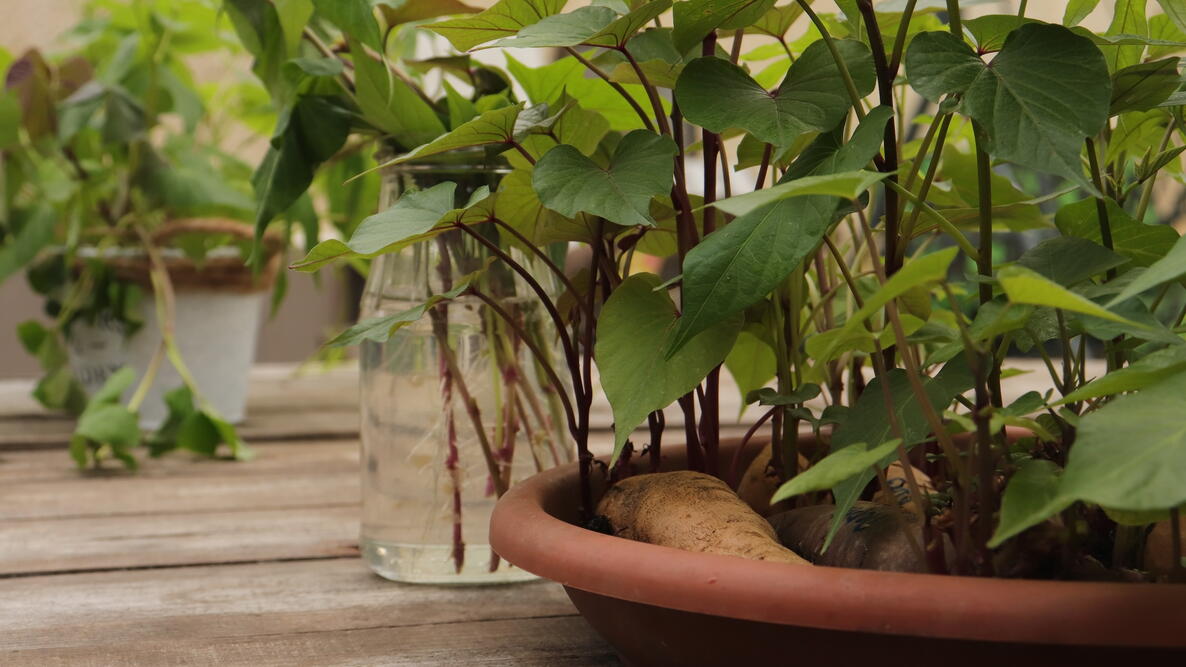

Got a sweet spot for sweet potatoes, but no place to grow? Try growing them in containers! These productive plants thrive in pots, planters, grow bags, and even buckets, making them a great option for patios, porches, and other small spaces. Containers also make it easier to provide the loose soil sweet potatoes love and simplify harvest time—just tip over the container and gather your crop.
Here’s how to grow sweet potatoes in containers, from choosing the right container size to selecting the best varieties.
Choosing the Right Container
Start with container size. Sweet potatoes need more room than many container crops because their tubers develop underground.
A good rule of thumb is to grow one sweet potato plant in a 10-gallon container or three plants in a 20-gallon container. Pots should be at least 20 inches wide and about 15 inches deep.
Container Size Tip: Not sure what size container you need? Use our Vegetable Container Size Chart to find the recommended pot size for sweet potatoes and dozens of other crops.
Once you’ve chosen the right size, you can grow sweet potatoes in plastic, terra-cotta, ceramic, or stone pots and planters, as well as wooden barrels, plastic buckets, and fabric grow bags. Whatever container you choose, make sure it’s made from food-safe materials and has drainage holes in the base.
I’m particularly fond of fabric grow bags because they provide excellent drainage and make harvesting easy. I’ve also grown sweet potatoes in upcycled animal feed bags and plastic buckets with drainage holes drilled into the bottom.
Potato grow bags are another option. These bags include harvest flaps that allow you to check tuber development.
How to Grow Sweet Potatoes in Containers
1. Pick the Right Container Size
Sweet potatoes do most of their growing underground, so it makes sense that they need roomy containers to accommodate their tubers. For the most part, using a larger pot translates into a bigger crop of sweet potatoes. But you don’t need to go overboard with massive containers!
You can grow sweet potatoes in plastic, terra-cotta, ceramic, or stone pots or planters, or keep them in plastic buckets, wooden barrels, or fabric grow bags.
I personally love keeping sweet potatoes in fabric grow bags, but I’ve also grown them in upcycled animal feed bags or in plastic buckets with drainage holes drilled into the base.
Tip: The important thing is that the containers should be made of food-safe materials, and they should have drainage holes in the base.
As far as container size goes, you can keep one sweet potato plant in a 10-gallon pot or grow bag, or you can put 3 plants in a 20-gallon container.
Pots should be at least 20 inches wide by about 15 inches deep, and I like to use containers with handles or employ a plant caddy so I can easily move sweet potato plants around as needed. You can also grow sweet potatoes in potato growing bags, which have openings at the base that allow you to assess the health of tubers and harvest without disturbing the entire plant.

2. Best Sweet Potato Varieties for Containers
When growing sweet potatoes in containers, look for bush-type varieties. These compact plants are best suited to pots, planters, and grow bags.
By contrast, traditional vining sweet potatoes can spread more than 20 feet and quickly overwhelm most containers and small gardens.
I’m particularly fond of the variety ‘Bunch Porto Rico’, a compact plant that produces orange-fleshed tubers and matures in about 100 to 120 days. Other excellent container-friendly varieties include:
- ‘Vardaman’
- ‘Georgia Jet’
- ‘Carolina Bunch’
These varieties produce vines that are easier to manage in small spaces, while still yielding plenty of sweet potatoes.
3. Preparing the Soil and Potting Mix
Sweet potatoes grow best in rich, loose, well-draining soil, which is one reason they perform so well in containers. A quality potting mix intended for edible crops provides an excellent foundation.
Before planting, I like to mix about 25% to 30% compost into my potting mix to boost nutrients and improve soil structure. Worm castings, aged manure, or an organic slow-release fertilizer can be added as well.
Avoid using garden soil in containers. Although it works well in garden beds, it tends to compact in pots, reducing drainage and limiting tuber development.
Fresh potting mix is usually best for sweet potatoes, as old mixes may harbor pests or diseases and are often depleted of nutrients.

Planting Sweet Potatoes in Containers
Sweet potatoes are heat-loving plants that should be planted only after all danger of frost has passed.
- In warm climates, slips can be planted directly into outdoor containers about 3 to 4 weeks after the last spring frost.
- In cooler regions, get a head start by starting slips indoors 6 to 8 weeks before the last frost date, then hardening them off and transplanting them outside once temperatures warm.
Sweet potatoes are usually grown from rooted cuttings called slips. Most gardeners purchase slips from garden centers or seed catalogs in spring. Avoid planting grocery-store sweet potatoes, as they may carry pests or diseases and are often treated to inhibit sprouting.
- Root unrooted slips, if necessary, by placing them in water until they develop roots.
- Fill containers most of the way with potting mix.
- Make planting holes and set the slips deep enough to cover the roots while keeping the stems upright.
- Firm the soil gently around the plants and water well.
Once plants begin growing, I like to add a layer of straw mulch around the base to help conserve moisture and suppress weeds.
Unlike standard potatoes, sweet potatoes don’t require hilling. They do, however, need plenty of sunshine. Place containers where plants will receive at least 6 to 8 hours of direct sunlight each day.

Watering
Potted sweet potatoes need more water than plants growing in the ground.
Regularly watering when the top few inches of soil feel dry helps tubers fill out and can improve harvest size. However, you’ll want to reduce watering as harvest time approaches. Too much moisture late in the season can cause sweet potato tubers to crack.
I always test the soil before watering sweet potatoes using my finger. Just stick your finger a couple of inches into the potting mix—if it feels dry, it’s time to water. A soil moisture meter can also be useful if you tend to overwater.
Tip: Although sweet potatoes like moisture, overwatering can cause tubers to rot.
Fertilizing
Sweet potatoes also need more fertilizer when they’re grown in containers. I like to blend compost into my potting mix before planting, and then I feed sweet potatoes with a liquid fertilizer—such as kelp or fish emulsion—every few weeks throughout the growing season.
Depending on your gardening style, you can also feed sweet potatoes with worm castings, aged manure, or a granular slow-release fertilizer.
Common Issues
Container growing is a smart solution, especially if you’re dealing with poor or rocky soil or want to protect sweet potatoes from underground pests such as voles. Even so, potted plants can occasionally run into a few plant problems.
- Yellowing leaves. Sweet potato leaves naturally turn yellow as plants mature and approach harvest. Earlier yellowing may indicate improper watering, nutrient deficiencies, or disease problems.
- Pests. Soilborne pests are less likely to trouble container-grown sweet potatoes than plants growing in the ground. However, wireworms and other pests can still appear if you reuse old potting mix or plant untreated sweet potatoes from the grocery store.
- Small or absent tubers. Sweet potatoes typically need 90 to 120 days to produce a harvestable crop. Poor yields can result from planting too late, overcrowding containers, insufficient sunlight, or inadequate fertilizing.

More Like This

Comments