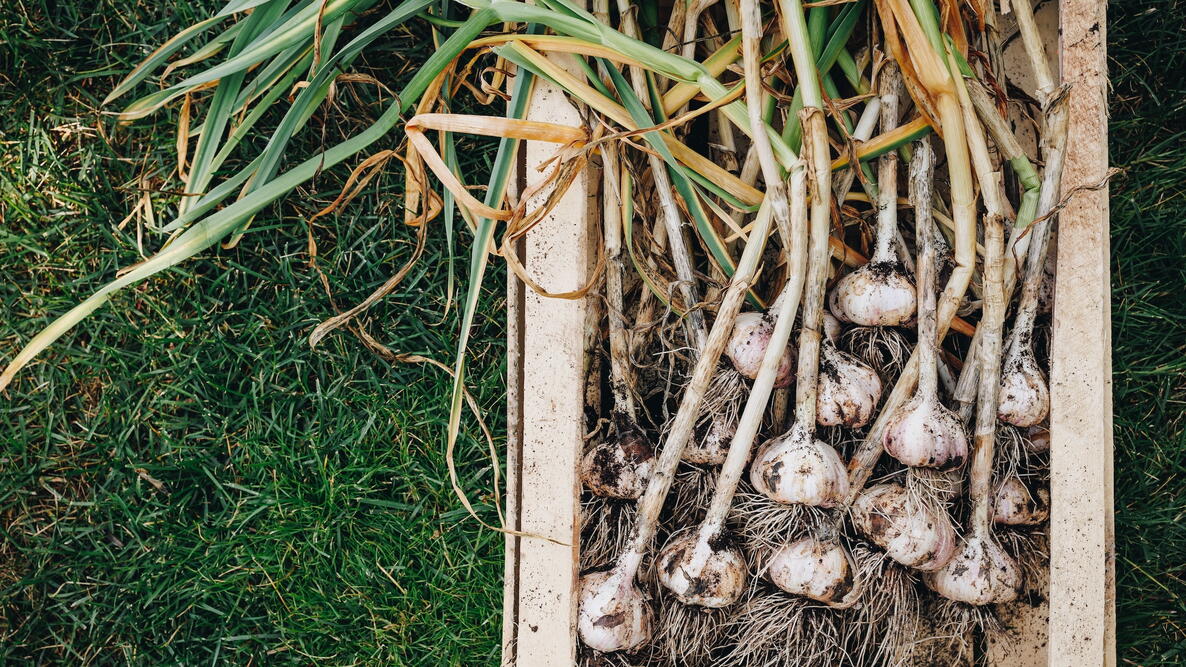

If harvesting your own garlic sounds a-peeling, but you don’t have the space to grow it in your garden, it may be time to try growing garlic in containers. As a long-season crop, this bulb can be a little trickier to manage in pots, but it’s definitely doable—even for beginners.
Here’s how to grow your own garlic in containers, from planting cloves in fall to harvesting full-sized bulbs the following summer.
Picking the Right Container
Garlic has a relatively short root system, so you don’t need super deep pots to grow massive bulbs. Instead, all you need is a container that’s at least 8 to 10 inches deep.
Pot size can vary, but I like to grow my garlic in a 24-inch-long planter, which is big enough to accommodate about five garlic plants. You can use smaller or larger containers, depending on how many cloves you want to plant together.
Garlic grows well in terracotta or ceramic pots, wooden barrels, plastic buckets, and fabric grow bags. Personally, I prefer plastic pots because they retain moisture longer and help reduce the amount of watering needed during winter.
Since garlic is generally planted in the fall and overwintered outdoors, it’s also important to choose containers that can handle freezing temperatures without cracking. Plastic pots come in handy here, too.
Best Garlic Varieties for Containers
Garlic comes in two main varieties, and both can be grown in containers:
- Softneck garlic produces smaller cloves, but more of them. It’s also more heat-tolerant, stores longer, and can be used to create garlic braids.
- Hardneck garlic produces fewer, larger cloves, yields edible scapes, and is more cold-hardy.
When selecting garlic for your container garden, choose a variety that’s hardy in your area and decide whether you’d rather harvest edible scapes or make garlic braids.
My personal favorite garlic to grow in containers or the garden is ‘German Extra Hardy,’ a tough-as-nails hardneck variety that tolerates cold like a champ and yields big, tasty bulbs and scapes. In terms of softneck garlic, I love the red striping on the cloves of ‘Inchelium Red,’ but ‘California Early’ also does particularly well in pots.
Typically, garlic is sold as “seed garlic” through seed catalogs and garden centers, but you can also grow garlic from organic bulbs purchased from a grocery store or local farmers’ market. Non-organic garlic bulbs are often treated with sprout inhibitors and may not sprout well when planted.
Preparing the Potting Mix
Garlic can be grown in any potting mix that’s intended for edible crops. Just avoid using garden soil in container gardens, as it’s too dense for pots and can cause drainage issues and rotted garlic bulbs.
I like to give my cloves a boost by adding some “goodies” into the mix before planting. Usually, I blend about 30% compost into my potting mix, but you can also use worm castings, aged manure, or a slow-release fertilizer intended for garlic.

Planting Garlic in Containers
Garlic is a long-season crop that’s typically planted in autumn and harvested in mid-summer, or about six to nine months later. A good rule of thumb is to plant garlic around the same time that you’d plant spring-flowering bulbs. This is usually between September and November, when the first fall frost has occurred, but before the ground freezes.
- Carefully separate cloves from the bulb, while leaving the papery skins intact.
- Discard any wrinkly, damaged, or undersized cloves.
- Plant just the biggest and healthiest cloves, pointed ends up.
- Bury cloves roughly 2 inches deep, or about twice as deep as the clove is tall.
- Space cloves at least 3 inches apart.
After planting, move pots into a sunny spot that receives at least six hours of daily light, water well, and continue to water until the soil freezes in fall.
I usually heap a few inches of mulch over my plants at this time too to insulate them from the cold, and then I remove the mulch when the cloves start to sprout in spring.
Tip: Garlic needs cold winter temperatures to form bulbs. Without that chilling period, plants will usually produce greens instead.
Some gardeners choose to grow garlic indoors in containers, but this can be challenging. If you want to grow full-sized bulbs indoors, you’ll need to provide a chilling period by moving containers into a garage, shed, or other unheated space for part of the winter.
Watering
Potted garlic should be watered regularly when the top few inches of soil feel dry, but cloves should never sit in soggy soil. You don’t need to water garlic when the ground is frozen, but it should be watered in spring as soon as the ground thaws.
To avoid rotted bulbs, always test the soil before watering.
Tip: Don’t water garlic if the potting mix is already damp from rain, and empty plant saucers after watering so bulbs never sit in standing water.
Fertilizing
Garlic grows best in rich soil. I like to amend my potting mix with compost, worm castings, aged manure, or a slow-release fertilizer intended for garlic at planting time.
After that, garlic shouldn’t need any fertilizer until the cloves sprout in spring. Then, feed garlic with a slow-release or diluted liquid fertilizer according to the instructions. Opt for a balanced or low nitrogen fertilizer, as too much nitrogen can cause garlic to produce large leaves and undersized cloves.
If you’re growing garlic indoors for leaves only, you won’t need to fertilize your plants at all!
Common Issues
Garlic is generally easy to grow in containers, but a few common problems can affect your harvest if you’re not careful:
- Pot damage. Terracotta and ceramic planters may break if they’re kept outdoors year-round. You can avoid this by using plastic containers, moving pots into a protected space, burying pots in the garden, or covering them with straw or leaf mulch until the cloves sprout in spring.
- Undersized or missing cloves. Garlic may not bulb out properly if it’s kept warm and isn’t exposed to the necessary chilling period. Plants may also produce smaller cloves if the soil is nutrient-deficient or if you leave garlic scapes on hardneck plants too long.
- Rot. Overwatered garlic will rot, so be sure to water your plants only as needed. Never let them sit in waterlogged soil.

More Like This

Comments