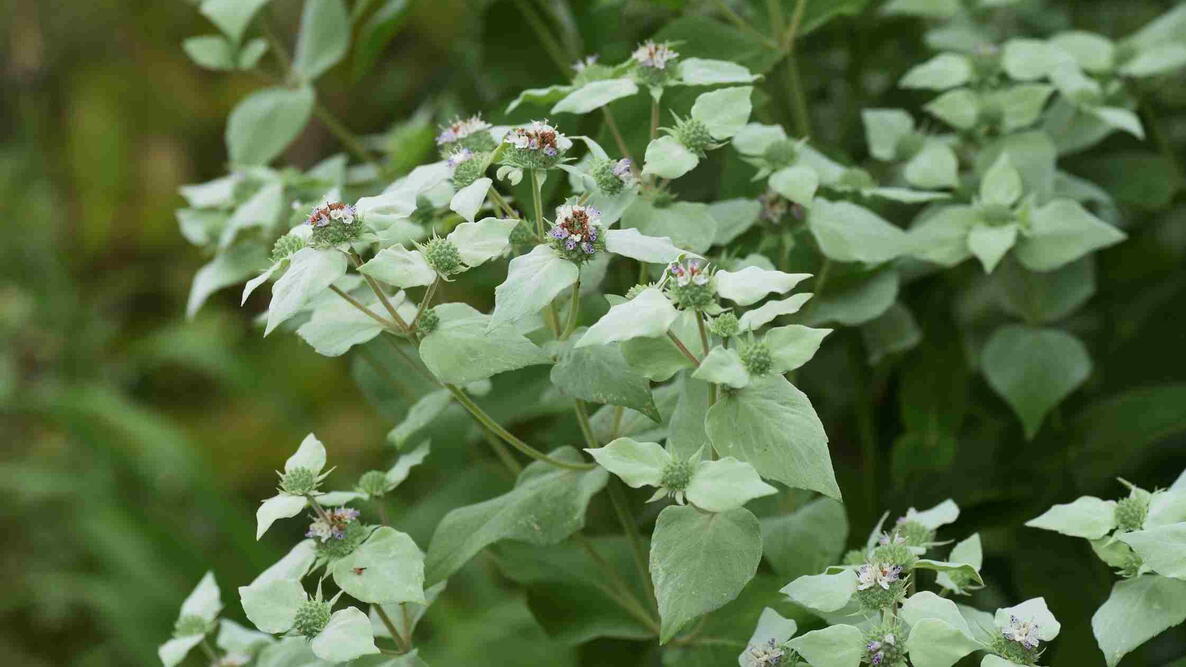
Caption
Buzz-worthy blooms: Short-toothed mountain mint (Pycnanthemum muticum) attracts bees, butterflies, and curious gardeners.

Planting

You can grow mountain mint from nursery starts or seeds, but nursery-started plants will bloom earlier. If you want to grow mountain mint varieties that are native to cold areas, you’ll get better germination results by cold stratifying the seeds before planting. However, this treatment is not necessary for mountain mint seeds that are native to warmer locations!
When to Plant Mountain Mint
Potted mountain mint plants and seeds that don’t require cold stratification can be planted outside after the last spring frost. Seeds that require cold stratification, on the other hand, should either be directly planted outside in late fall or cold stratified and planted indoors about 6 to 8 weeks before your last expected frost date.
Where to Plant Mountain Mint
Full-sun locations are best for mountain mint and encourage these plants to bloom their best. You can grow these plants in partial shade as well, but they won’t flower as prolifically.
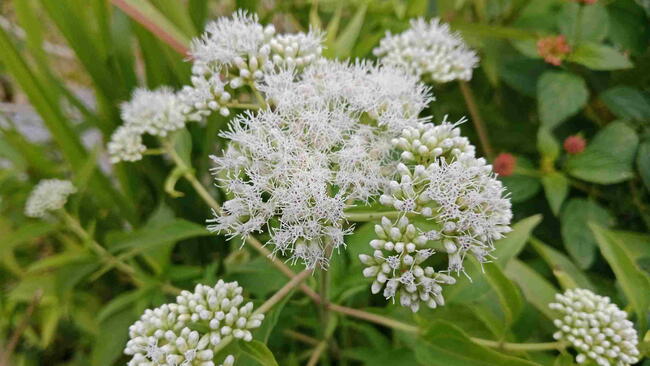
I like to grow mountain mint in drifts in my flower beds along with other native plants, such as boneset, buttonbush, and blue vervain. Mountain mint is edible, and it can be grown in herb or medicinal gardens if that suits your fancy. Both the leaves and flowers of these plants can be harvested and used like standard mints in savory or sweet dishes, cocktails, and hot or cold teas!
How to Plant
Potted Plants
Dig a hole that’s just slightly bigger than your plant’s root ball, and remove the plant from its pot. Plant mountain mint so that the plant is at the same depth it was growing in its old container. Fill in the planting hole, add mulch if you’re using it, and water well. If you’re growing multiple plants together, space the plants 1 to 2 feet apart.
Seeds (Outdoors)
Prep the planting area by raking it flat and adding a sprinkling of compost if you think your soil needs it. Then, evenly scatter mountain mint seeds over the soil, water them in, and thin out the weakest seedlings once they’ve sprouted true leaves if the plants look overcrowded.
Seeds (Indoors)
Cold stratify mountain mint seeds, if they need it, and then plant the seeds in pots or seedling trays filled with seed-starting mix. Mountain mint seeds need light to germinate, so don’t bury them deep. Just keep the seeds under a grow light, water regularly, and harden off and transplant the seedlings outdoors when the risk of frost has passed and the plants are at least 2 inches high.
Growing
Mountain mint is right at home in native plant and pollinator beds, herb and cottage gardens, and larger wildflower meadows. However, because these plants can grow quickly and spread, some gardeners may want to keep them in containers or raised beds that limit their growth.
I like to grow mountain mint in groups or “drifts” of three or more plants to achieve a more natural appearance, and I’ll often locate these plants towards the rear of my flower beds and stack shorter perennials and ground-covering plants in front of them for a layered look.

Watering
Mountain mint can tolerate a range of soil types as long as they’re well-draining and don’t stay soggy for long. These plants should be watered once a week immediately after planting, but established plants are drought tolerant and may not need any supplemental watering. If you do decide to water mountain mint, only water your plants when the top 2 to 3 inches of soil feel dry.
Fertilizing
Fertilizer is generally not needed with mountain mint and can cause these plants to develop floppy stems. You can, however, apply a light application of compost beneath your plants in spring or fall if they look like they need it.
Pruning
For the most part, mountain mint doesn’t need any pruning, but you can prune your plants’ roots with a spade if they’re spreading into areas where you don’t want them to be. If you do decide to prune the upper sections of mountain mint plants, avoid doing it when they are in bloom. These native plants have a long flowering season that stretches from mid-summer into fall, and they provide an important food source for bees and other pollinators while they’re blooming.
Seasonal Care
These plants are very cold-tolerant and should survive winters in Zones 3 and warmer without any cold protection. I still like to add mulch around the base of my mountain mint plants, though!
Dividing Mountain Mint

Mountain mint can be propagated from stem cuttings, but it’s easier to get new plants by root division. These plants should be divided every 1 to 3 years to keep them in bloom, but this will also allow you to create plenty of new mountain mint plants for your garden!
- Time it right. The best time to divide mountain mint is in early spring when new growth is just beginning or 6 weeks before fall frosts are expected.
- Dig them up. Use a shovel to dig a perimeter around the base of mountain mint plants and then lift a clump of your plants out of the soil. Although it’s always good practice to handle plant roots with care, mountain mints are quite vigorous, and you don’t need to worry much if some of their roots snap off.
- Divide into sections. Break the root clump into sections with a spade or two gardening forks back-to-back. When you’re done, each divided plant section should have plenty of roots and healthy stems.
- Replant ASAP. To minimize stress, get your mountain mint plants back in the soil as soon as possible and water them well. Divided plants should be planted at the same depth they were previously growing and spaced at least one foot apart.
Harvesting

Mountain mint leaves and flowers are edible and can be used like standard mints in recipes or blended into homemade potpourri. For peak flavor, pick the leaves and flowers in late summer to early fall, and be sure to leave plenty of flowers in place for pollinators like bees!

More Like This

Comments