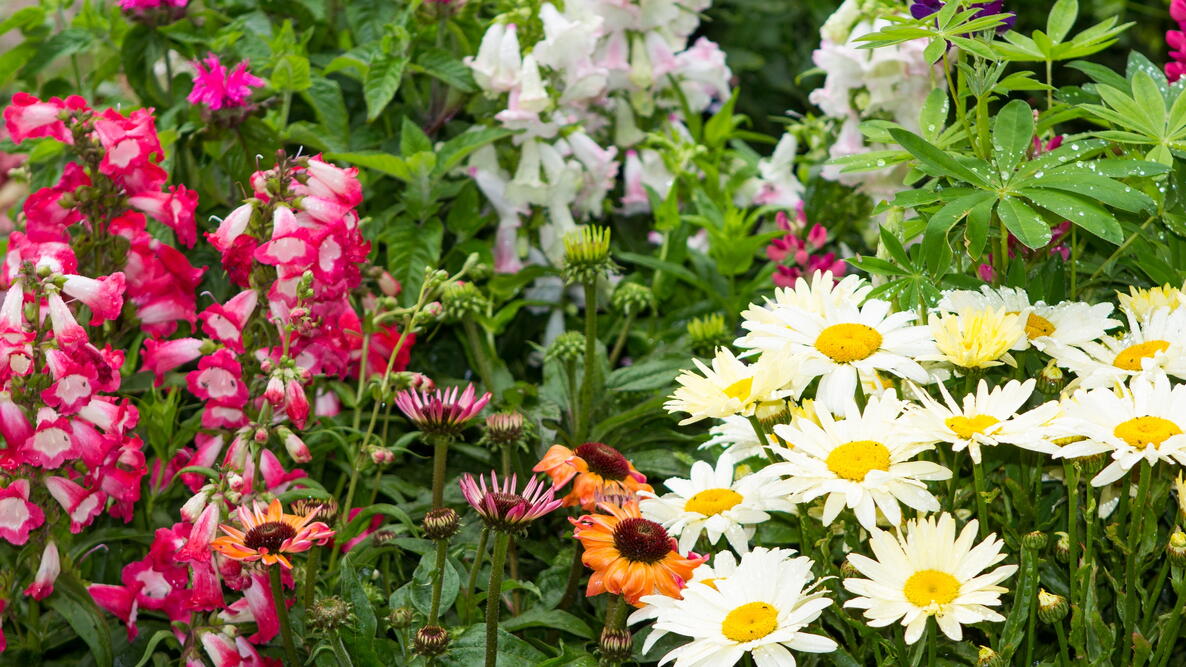

Want more flowers without spending a dime? Dividing perennials is the easiest way to fill empty garden spaces and keep your plants healthy. When perennials get overcrowded, they produce fewer blooms, have weaker growth, and can even stop flowering altogether. By splitting them, you give roots more room, improve nutrient absorption, and multiply your plants for free! Learn when to divide perennials in fall vs. spring, plus step-by-step tips for success.
Why Divide Perennial Plants?
Perennials are plants that grow back each year (versus annuals). Dividing or splitting your plant into multiple plants helps it perform better.
When plants get too crowded, they become weakened, their flowers get smaller, and some may stop blossoming altogether.
If you noticed some of your perennials did not bloom well this summer, they might benefit from division so they have more space for roots to grow and can better absorb nutrients and water.
Splitting plants is also an effective way to keep spreading plants under control and manage their size.
When to Divide Perennials
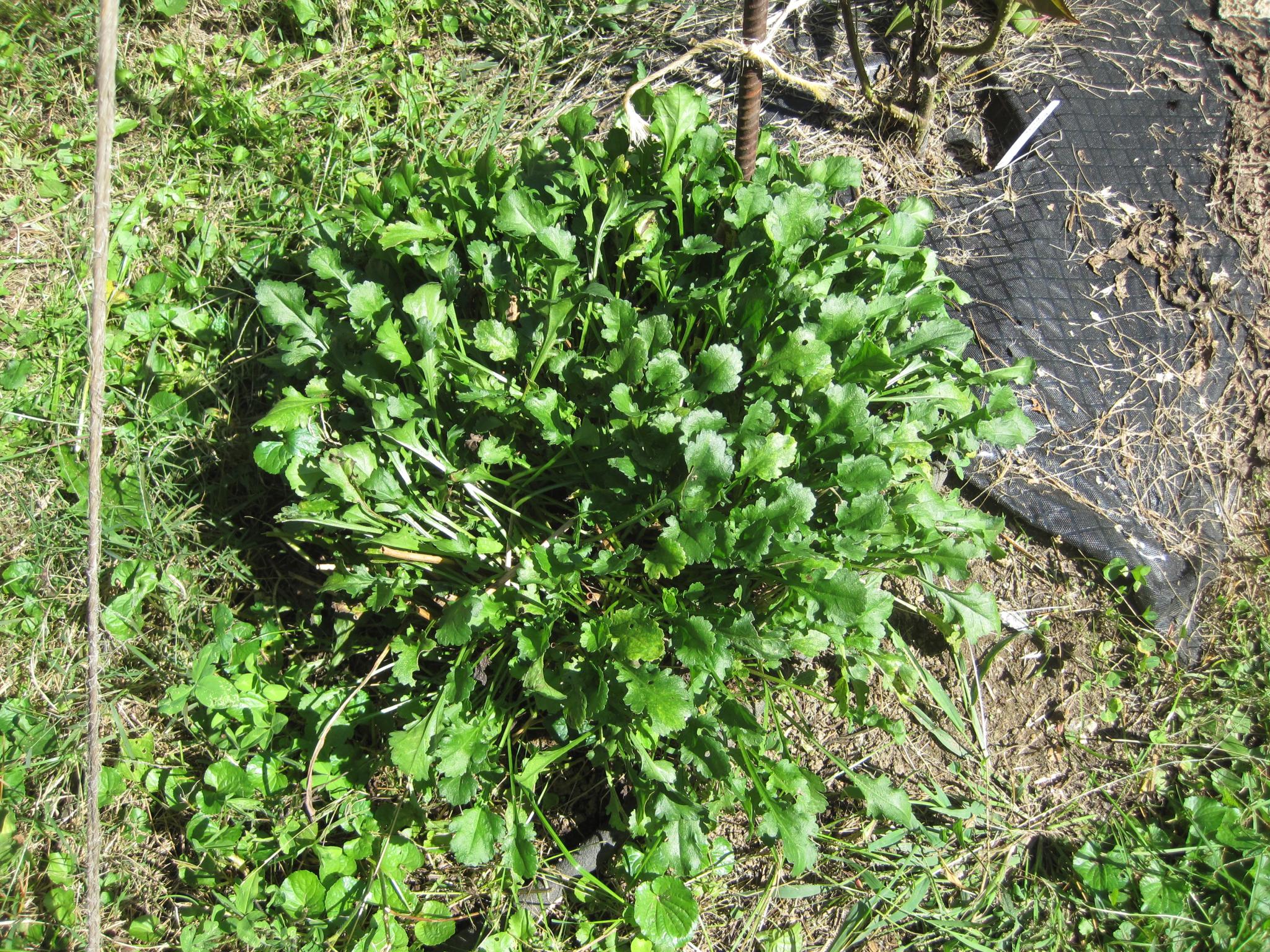
Clump-forming plants like daisies, phlox, yarrow, feverfew, salvia, chives, daylilies, hostas, ornamental grass, and many spring bloomers are easy to divide in the fall.
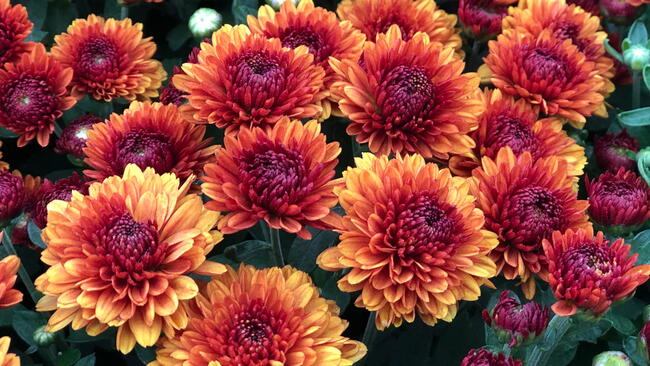
Leave autumn-flowering plants, such as asters and chrysanthemums, until spring, and never divide a plant when it is in bloom. Also, don’t divide single-stemmed or tap-rooted plants.
Common Perennials to Divide in Fall and Spring (Reference List)
Use this quick guide to know whether to divide your perennials in fall or spring to keep them thriving.
| Plant | Best Time to Divide |
|---|---|
| Allium | Fall |
| Aster | Spring |
| Astilbe | Spring or Fall |
| Bee Balm | Spring |
| Black-eyed Susan | Spring or Fall |
| Catmint | Spring |
| Clematis | Spring |
| Columbine | Spring or Late Summer |
| Coral Bells | Spring or Fall |
| Daylily | Spring or Early Fall |
| Delphinium | Spring |
| Echinacea (Coneflower) | Spring or Early Fall |
| Goldenrod | Spring or Fall |
| Hosta | Spring or Fall |
| Iris (Siberian) | Spring or Early Fall |
| Lily | Late Summer/Early Fall |
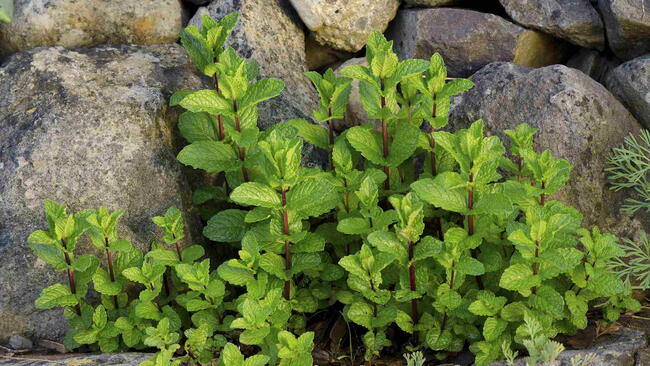
| Mint | Spring or Fall |
| Mum (Hardy) | Spring |
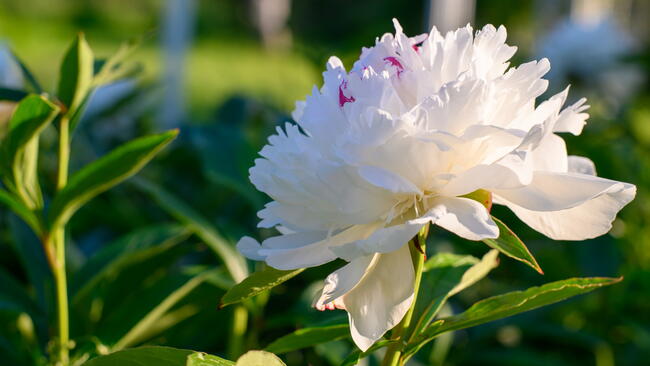
| Peony | Early Fall only |
| Phlox | Spring or Early Fall |
| Hibiscus | Spring or Fall |
| Sage (Salvia) | Spring or Fall |
| Shasta Daisy | Spring or Fall |
| Speedwell | Spring or Early Fall |
| Sunflower | Spring or Fall |
| Yarrow | Spring or Fall |
Steps to Divide Perennials (At a Glance)
- Dig up the clump – Use a sharp spade to lift the rootball.
- Split the plant – Pull apart by hand, with garden forks, or cut with a knife/saw.
- Replant immediately – Set at the same depth as before.
- Enrich soil – Add compost or amendments to planting holes.
- Water well – Keep evenly moist until the ground freezes.
Dividing perennials is one of the easiest (and cheapest!) ways to multiply your plants and refresh your garden.
Step-by-Step Guide to Dividing Perennials
1. Dig around the rootball of the plant with a sharp spade and lift the clump.
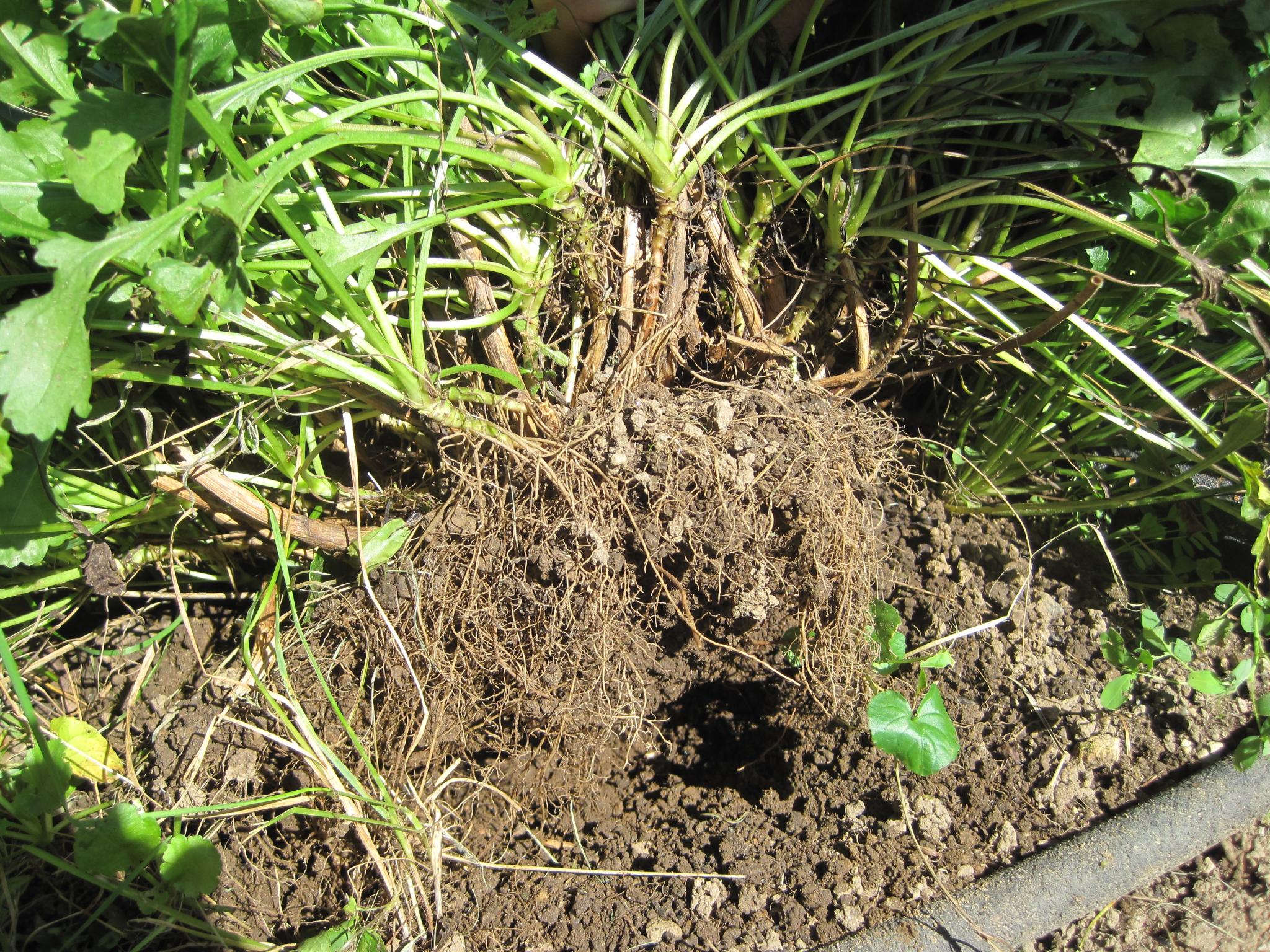
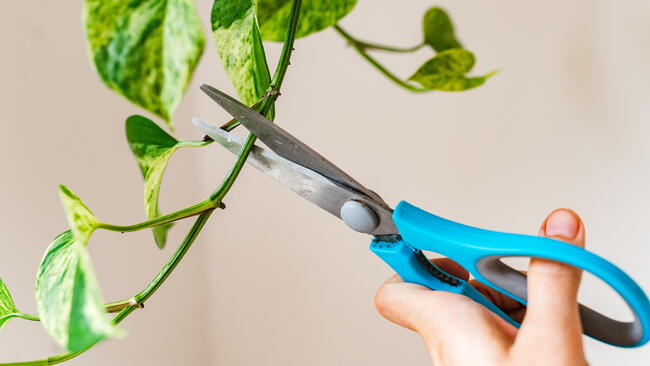
2. Pull the clump apart by hand if you can, otherwise, pry apart with 2 garden forks placed back-to-back. If that doesn’t work, cut into pieces with a sharp knife, saw, or even an axe! My friend has an electric carving knife she uses just for this purpose. (It has never seen a turkey!) Make sure each section has a good amount of roots and some top growth.
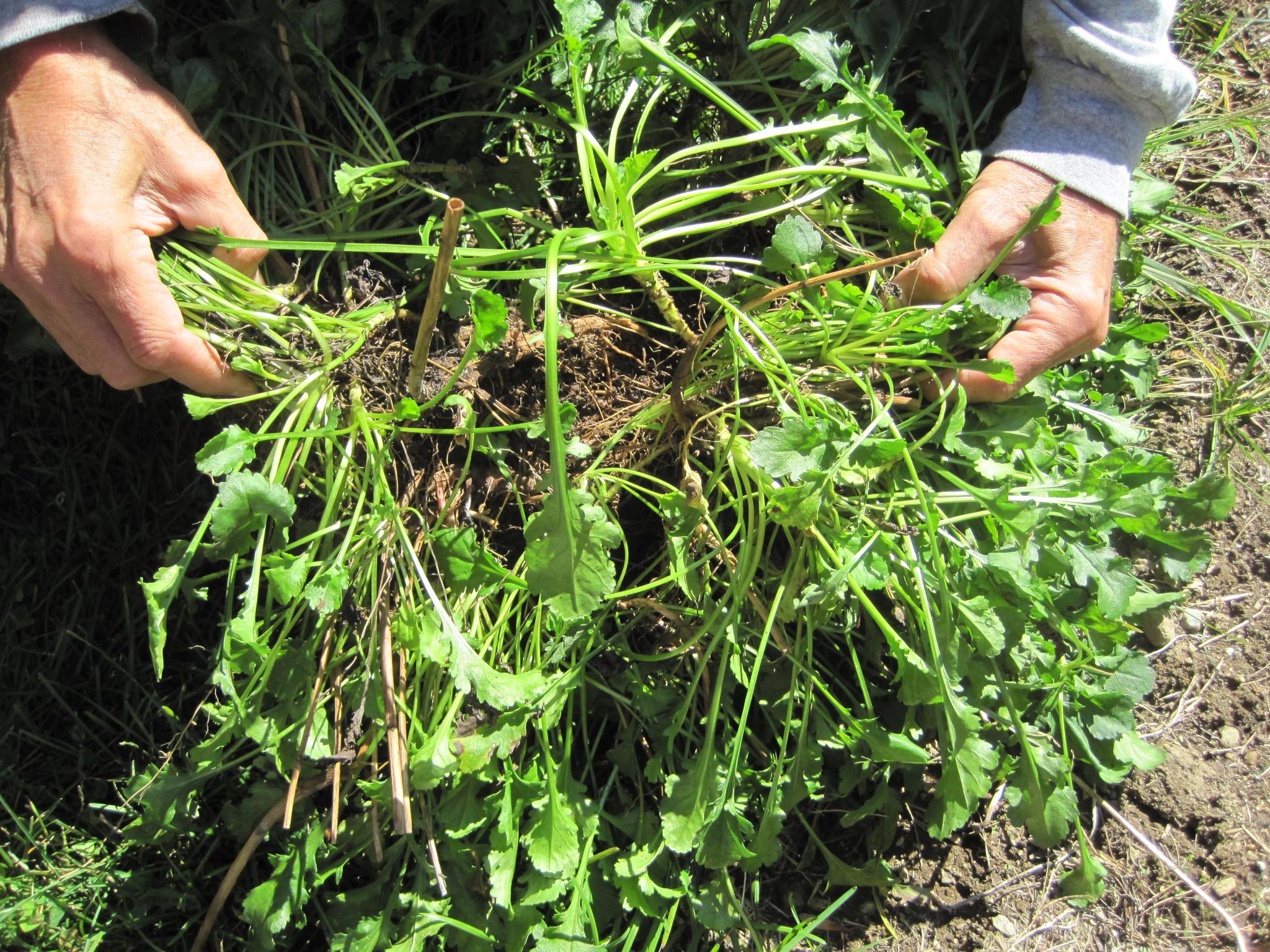
3. Replant right away. If you have to wait, keep the divisions covered with wet newspaper or wet burlap to keep them from drying out, or plant them temporarily in containers or a holding bed until you can get them into their new homes.
4. This is the time to enrich the planting holes with compost and any other needed amendments.
5. Plant the divisions at the same depth they were previously growing at. Too deep will smother the crown, and too shallow will leave roots exposed to the weather.
6. Water well to get them settled, and keep watering until the ground freezes, especially if the rains don’t cooperate.
Special Case: Plants with Rings
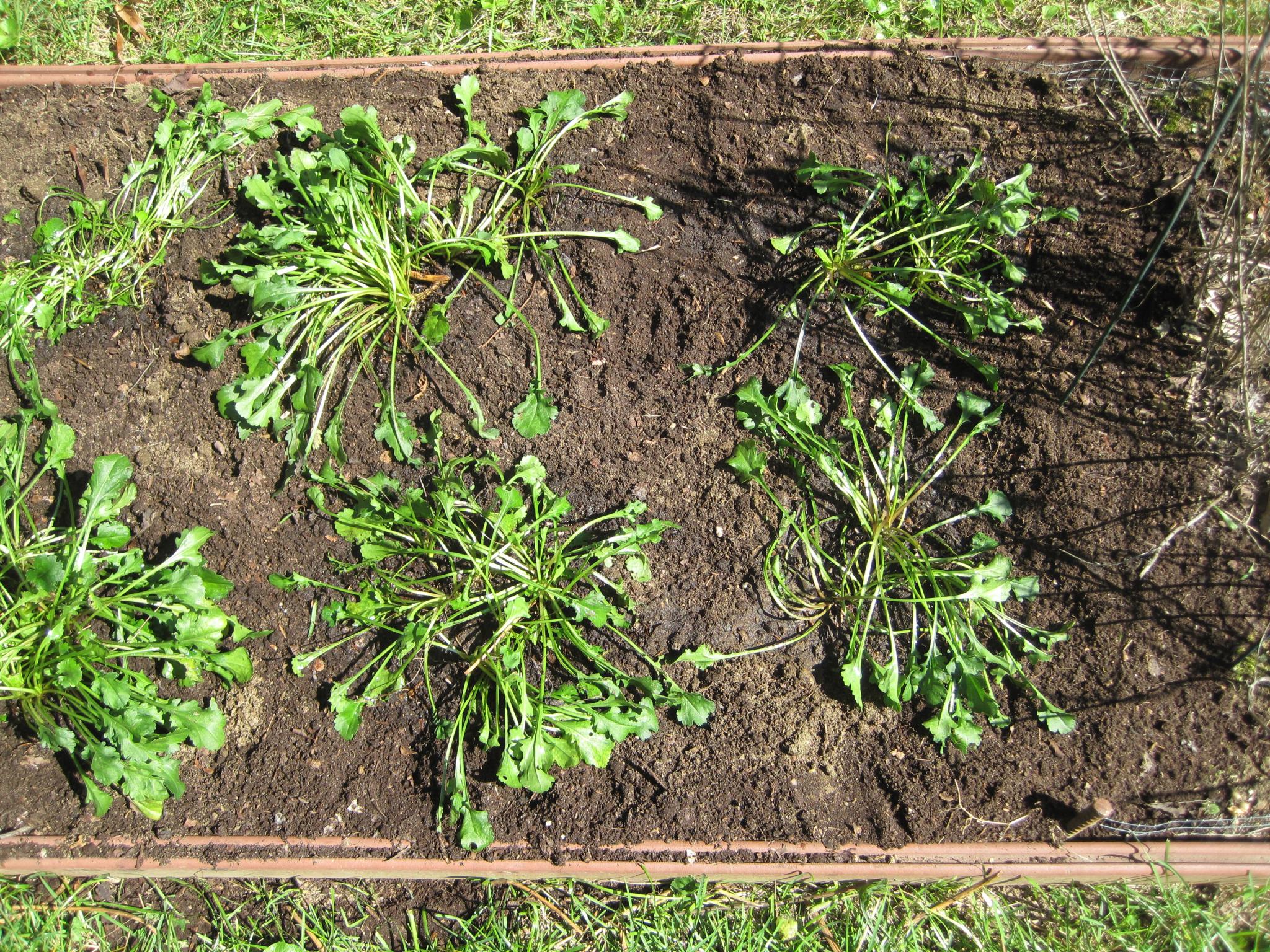
Some plants, like bee balm, Siberian iris, or astilbe, grow outward in a ring, leaving a dead spot in the center. To renew them, dig up the whole clump, shake off as much soil as possible, and split the outer ring of healthy plants into smaller sections for replanting. Toss out the woody centers and any diseased or damaged parts of the plant.
Tips for Success + Sharing Extra Divisions
Fall is a great time for strenuous garden activities like digging since the weather has cooled down, and abundant autumn rainfall helps with the chore of watering. If you act soon, there will still be time for the roots to get settled in before the ground freezes.
If you can’t use all the new divisions, offer them up to your gardening friends or trade for a plant they have in overabundance. Some of my favorite plants have come from these kinds of swaps. Multiplying your plants by division is an easy way to get something for nothing but a bit of digging!

Getting Started with Flower Gardening
Building a Raised Flower Bed Garden
Choosing Flowers
Types of Flower Gardens
Growing Flowers in Containers
Spring and Fall Bulbs
Caring for Flowers
More Like This



Comments