
How to Make Herbal Tea at Home

We always seem to have extra herbs on hand. Here’s an idea: Dry some of those leaves and use them for tea! We’ll show you how to dry herbs and make a full-bodied cup of tea.
Grow Your Own Herbs for Tea
I really enjoy growing herbs, especially what I call “calming herbs,” which help with stress and anxiety. So, it makes perfect sense to use these calming herbs in teas.
Chamomile, lemon verbena, lemon balm, and any of the mints—peppermint, orange mint, and spearmint—are all ideal for tea.

How to Dry Herbs
Before your plants are killed by frost, get a couple of last harvests in and dry your remaining leaves to use over the winter.
Ideally, you should harvest before the plants flower for the best flavor—but this is the last call!
- Harvest the leaves in the morning after the dew has dried. (When the growing season has ended, you can cut the plants right back to the ground if you wish.)
- Carefully brush off any dirt. Don’t wash off the leaves with water, as they may mold instead of drying.
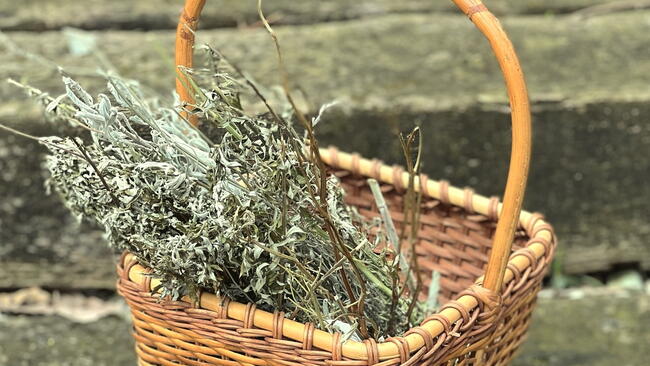
- Proper drying will preserve the leaves and concentrate the flavors. Make small bunches and hang them upside down in a warm, dry place out of direct sunlight.
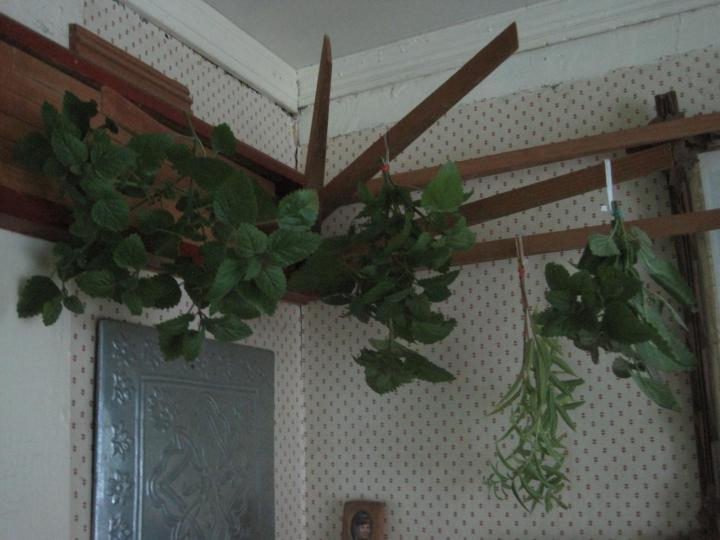
Or, you could spread the plants out on a clean screen (or paper towels laid over a wire rack) in a cool, dry spot. If you are having trouble drying in humid weather, you could resort to the oven, but that isn’t optimal for tea.
→ Learn more about how to dry and freeze herbs.
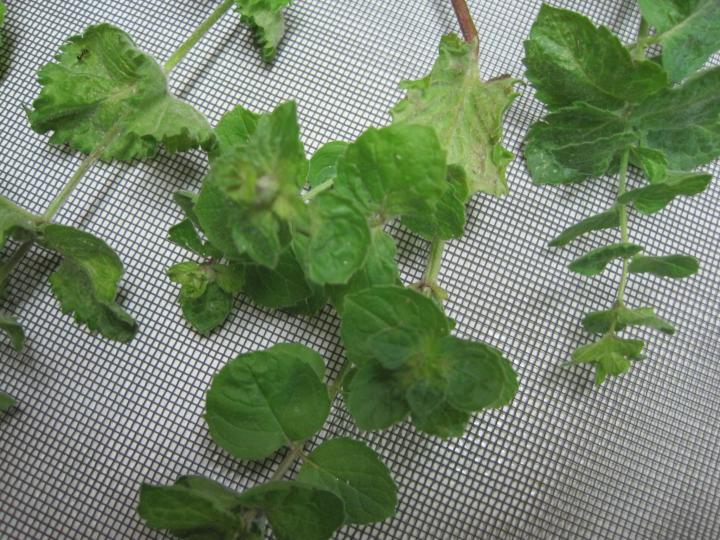
It can take up to a week or more for them to dry, depending on the humidity in the air. Temperatures that are too hot—over 85° to 90°F—will cause volatile oils to evaporate. When the leaves are fully dried, strip them from the stems and store in an airtight glass jar kept in a dark, cool place.
Put the kettle on and brew up a cup!
How to Make Herbal Tea
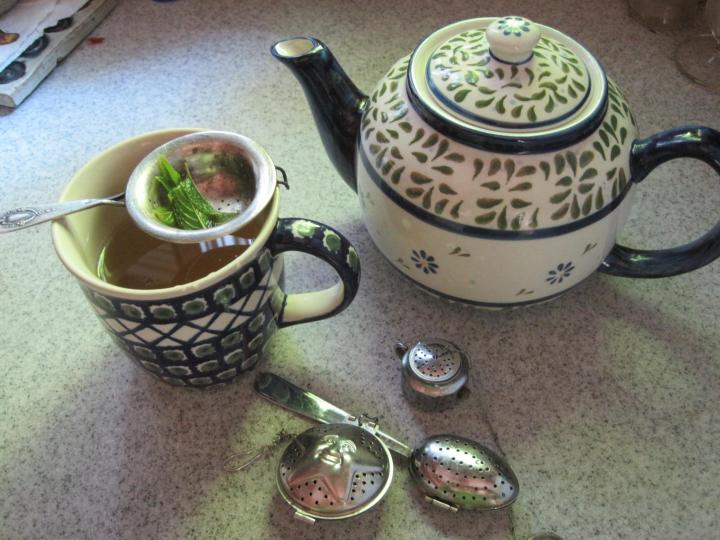
Bring the water just to a boil, add anywhere from 1 teaspoon to 1 tablespoon of dried herbs per cup of water to your teapot, and then let steep for 3 to 5 minutes, depending on how strong you like your tea. Since herb teas are naturally light in color, test by taste rather than by sight. Keep in mind that over-brewed tea can be bitter.
You can use a tea ball to keep leaves from clogging the teapot’s spout or use an infuser to brew just a single cup. Many tea aficionados don’t like to use metal strainers, claiming they give the tea a metallic taste and prevent the herbs from fully swelling and releasing their flavors. I have a friend who uses her French press to make tea.
A dry summer helps to concentrate the flavors, making for some tasty teas. The chocolate mint was extremely strong and aromatic, and the holy basil was especially sweet and fruity this year. It grew so prolifically that I couldn’t keep up! The bees appreciated the blossoms, though, and the bubblegum aroma wafted over the garden on hot days.
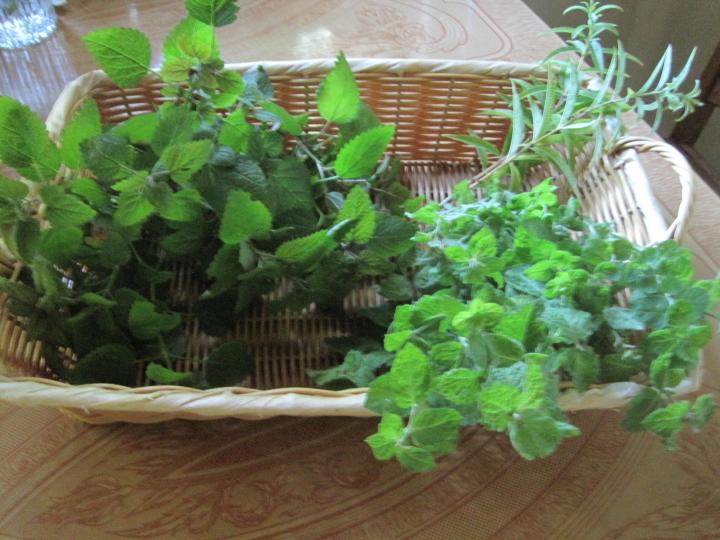
Tired of tea made from a single herb? Try these delicious combinations or experiment and make up some of your own. If you like your tea sweet, add a dried stevia leaf to each cup.
- Relaxing and Refreshing: 2 parts lemon balm to 1 part spearmint. This is my favorite combo.
- Citrus Spice: equal parts lemon basil, bee balm flowers, and orange mint.
- Luscious Licorice: equal parts anise hyssop, sweet cicely, and fennel leaves.
- Victorian Tea Garden: equal parts pineapple sage, chamomile flowers, and lemon balm.
- Mediterranean Blend: equal parts summer savory, marjoram, and rosemary. Better than bouillon!
- Calming Stress Reliever: 3 parts chamomile flowers, 2 parts lemon balm, and 1 part holy basil.
Enjoy a reminder of the garden this winter over a cup of homegrown herb tea.
Related Tea Content

Introduction to Preserving
Freezing
Making Quick Pickles
Making Quick Jams: Refrigerator or Freezer Jam
Vinegars
Water-Bath Canning
How to Can Tomatoes
How to Can Pickles
How to Can Jam and Jelly
Drying
Salting and Brining
Fermenting
More Like This





I noticed that too! Sorry for the confusion. You would remove leaves from the stems if you were drying them on a rack or in the oven or microwave.

Comments