
Types
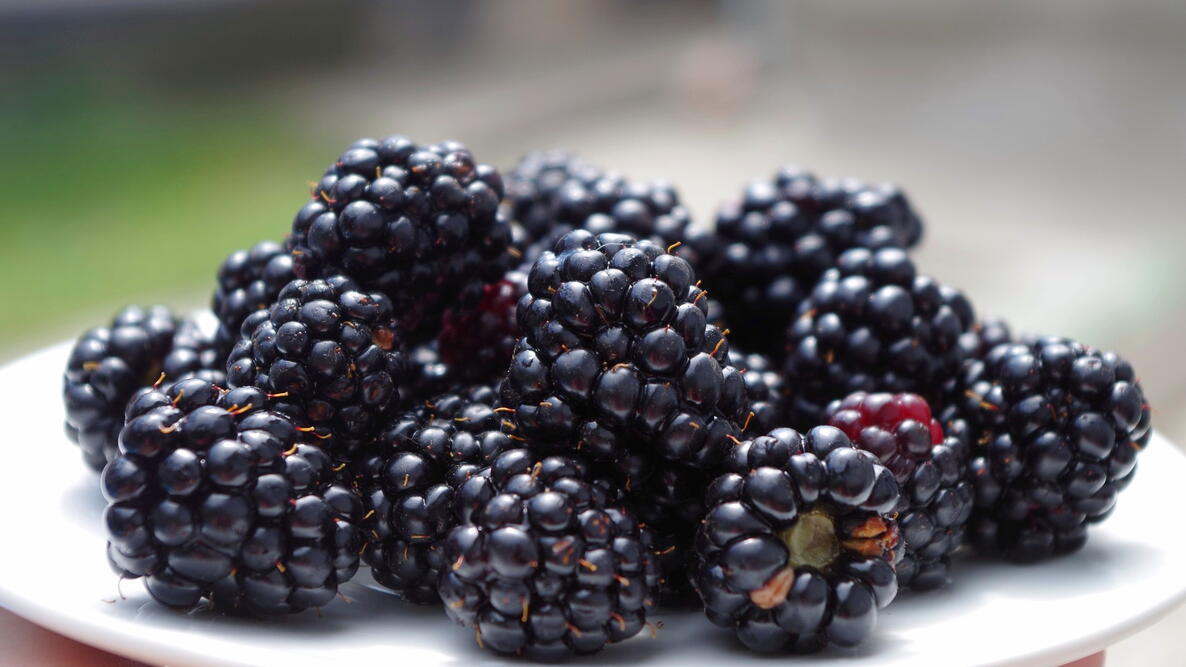
Here are some favorite blackberry varieties to investigate, but be sure to ask about varieties that fit your growing zone.
- Erect Thornless: ‘Navaho,’ ‘Arapaho’
- Erect Thorny: ‘Cherokee,’ ‘Brazos,’ ‘Shawnee,’ and ‘Cheyenne’
- Semi-erect Thornless: ‘Black Satin’
- Trailing: Olallie

More Like This

It seems as if you have received good advice already and are focused on the right things. This page from the University of Florida extension service has some good advice for successful growing in warmer zones, and is worth a look: https://edis.ifas.ufl.edu/publication/HS104

Yes, plant blackberries and raspberries in different locations to avoid the risk of different viruses. Also, keep red raspberry plants away from other raspberry varieties (black and purple). Removing any wild brambles in the vicinity is also a good idea since older brambles are more likely to carry the disease.
Hi David,
Anything you added to the soil would not increase the sweetness of your berries. If harvested too early, blackberries will be sour. Even once they have turned black, you should wait to pick them until the shine has gone away and the berries are dull. The sugar levels increase as the berry becomes a dull color.
Hope this helps!
In terms of the modern blackberries that fruit on primocanes, you could do it either way. 😄 The floricane crop will be harvested in late spring/early summer, whereas the primocane crop is harvested in late summer/early autumn. Double cropping does not reduce the yield of primocanes, and if you cut down the canes after the primocane crop, the next year you'll get a bigger primocane crop. So, for those primocane fruiting varieties, you could grow them either way and still have berries.
- « Previous
- 1
- 2
- …
- 10
- Next »

Comments