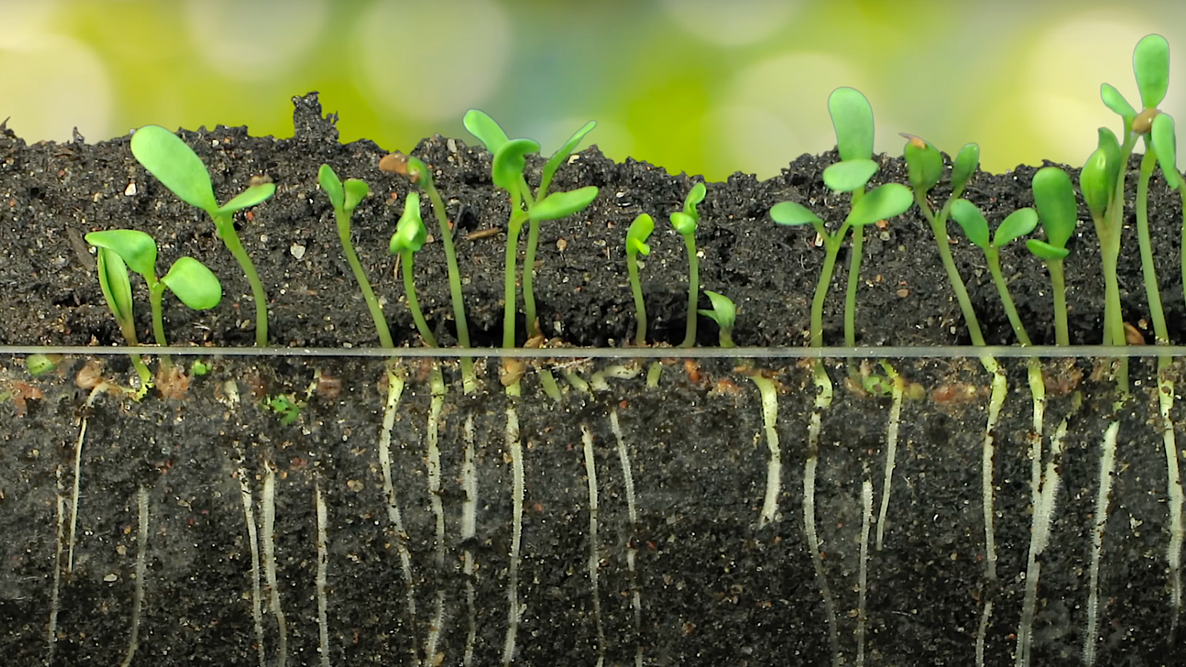

How can you ensure all your seeds germinate successfully? Whether you’re starting seeds indoors or sowing directly in the garden, germination can feel unpredictable. The good news is that with the right techniques, you can dramatically improve your success rate.
In this guide, we’ll share 10 proven seed-starting tips to help you achieve stronger, faster, and more reliable germination. You’ll also find helpful charts showing ideal soil temperatures, seed viability, and which seeds benefit from soaking—so you can start every seed with confidence.
Before diving in, let’s clear up one of the most common seed-starting questions.
Do Seeds Need Light to Germinate?
No. When it comes to sowing vegetables and herbs indoors, seeds do NOT need light to germinate. They require darkness. (Conversely, most flower seeds need light.)
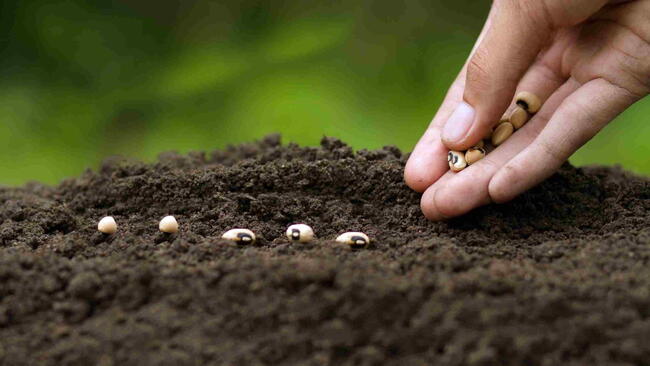
Cover the seed with the germination medium based on what the seed packet directs (usually 1/4 to 1/2 inch). Note: There are two vegetables—onions and celery—that are lightly covered with soil medium but should be as close to the soil surface as possible (not too deep in the soil).
When it comes to vegetables and herbs that are better seeded directly outside (not started inside), the same rule is true. Almost all crops are best seeded in darkness; the exception is lettuce, which should be lightly pressed into the soil but not covered.
Wondering which seeds are best started indoors versus directly sown outside? See our complete guide on how and when to start seeds indoors.
10 Tips on How to Improve Germination Success
Enjoy these tips? Follow along in Ben’s “Seed-Starting Masterclass” video below.
1. Get the Temperature Right
One of the biggest mistakes many of us make is sowing at the wrong temperature. But by sowing at the right time of year and keeping the potting mix close to the “sweet spot” for the seeds you’re sowing, you can improve germination rates—and speed.
This table shows the range of ideal germination temperatures for some of our most popular crops. You can see the dramatic difference in needs between cool-season vegetables like cabbage, parsnip, peas, and spinach and warm-season or frost-susceptible crops such as beans, melons, and peppers.
By keeping temperatures in the optimal range, you can really “up” your germination wins.
Ideal Seed Germination Temperatures for Popular Crops
| Crop | Min Temp (°F) | Min Temp (°C) | Optimum Temp (°F) | Optimum Temp (°C) | Max Temp (°F) | Max Temp (°C) |
|---|---|---|---|---|---|---|
| Lettuce | 35 | 2 | 40–80 | 4–27 | 85 | 29 |
| Onion | 35 | 2 | 50–95 | 10–35 | 95 | 35 |
| Parsnip | 35 | 2 | 50–70 | 10–21 | 85 | 29 |
| Spinach | 35 | 2 | 45–75 | 7–24 | 85 | 29 |
| Beet / Beetroot | 40 | 4 | 50–85 | 10–29 | 85 | 29 |
| Cabbage | 40 | 4 | 45–95 | 7–35 | 85 | 29 |
| Carrot | 40 | 4 | 45–85 | 7–29 | 95 | 35 |
| Celery | 40 | 4 | 60–70 | 16–21 | 85 | 29 |
| Chard | 40 | 4 | 50–85 | 10–29 | 95 | 35 |
| Pea | 40 | 4 | 40–75 | 4–24 | 85 | 29 |
| Turnip | 40 | 4 | 60–100 | 16–38 | 105 | 41 |
| Tomato | 50 | 10 | 70–95 | 21–35 | 95 | 35 |
| Sweetcorn | 50 | 10 | 60–95 | 16–35 | 105 | 41 |
| Cucumber | 60 | 16 | 60–95 | 16–35 | 105 | 41 |
| Eggplant / Aubergine | 60 | 16 | 75–90 | 24–32 | 95 | 35 |
| Beans | 60 | 16 | 60–85 | 16–29 | 95 | 35 |
| Melon | 60 | 16 | 70–95 | 21–35 | 100 | 38 |
| Pepper | 60 | 16 | 65–95 | 18–35 | 95 | 35 |
| Squash | 60 | 16 | 65–95 | 18–35 | 100 | 38 |
You can clearly see the difference between cool-season vegetables and warm-season (or frost-susceptible) crops.
Cool-Season Crops
With the optimal temperature range for most cool-season staples beginning from around 45° to 50°F or 7° to 10°C, you can see why delaying sowing in a cold spring makes sense for these veggies: Beet, Cabbage, Carrot, Celery, Chard, Lettuce, Onion, Parsnip, Pea, Spinach, Turnip
It is better to wait until the soil is consistently above those temperatures than try to start too early. Of course, this is where cloches and row covers can help because they essentially shift the whole growing season and those soil temperatures forward by as much as 2 weeks.
Warm-Season Crops
Warm-season favorites, on the other hand, need minimum temperatures more like 60° to 70°F or 16° to 21°C. It’s one reason why, in a cool or temperate climate, we need to sow these veggies indoors or with the aid of some heat: Beans, Corn, Celery, Cucumber, Eggplant, Melon, Peppers, Squash & Pumpkin, Tomato.
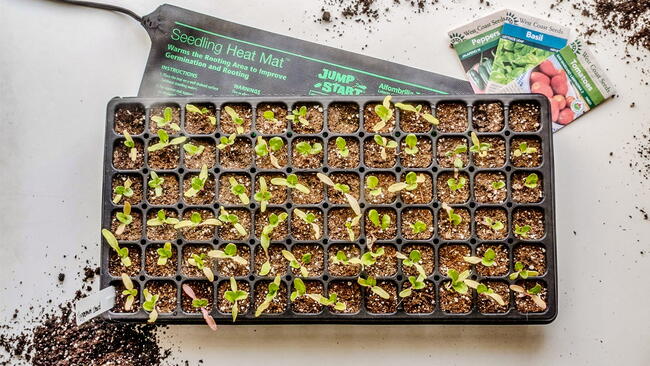
For example, if you sow chili peppers and pop them on a heat mat to germinate, they’re pretty similar in size after 1 week as chili pepper seeds were sown 3 weeks ago with no heat.
Not everyone has a heat mat or heated propagator, but there are likely to be warm areas in your home that fit the bill. Have a look around—perhaps you could place seeded pots or trays near a radiator or above a fireplace, or maybe a gas boiler, furnace, or something like that. Include a minimum-maximum thermometer in your chosen location so you can keep an eye on temperatures and check how close to those optimum temperatures you are.
Once germinated, nearly all seedlings will grow best with daytime temperatures between 65° and 70°F and nighttime temperatures a few degrees cooler.

2. Soak Your Seeds
In addition to warmth, seeds need air and, of course, moisture to germinate. Soaking before planting can soften the tough outer coating that seeds have, making it easier for that all-important moisture to penetrate and speed up germination.
Soaking is super straightforward. Take a clean jar or bowl and fill it with warm-to-the-touch water—comfortably warm but not so hot it burns, as that won’t be great for the seeds either! Drop them in, then leave for 8 to 12 hours; I find soaking overnight works well. Make sure the seeds are properly submerged; just poke them under or wrap them in a paper towel first and then pop them into the water. What the paper towel does is soak up the water, which then helps to weigh the seeds down. Sow your seeds immediately after soaking; don’t delay.
Seeds that benefit from soaking include larger seeds like squash, beans, peas, and beets, and it’s even worth soaking garlic cloves and onion sets to plump them up in preparation for planting. Sometimes, you can see the impact this has. Compare peas that have been soaked for 12 hours and drained off versus those that haven’t been soaked, and you’ll see the difference.
Seeds That Benefit From Soaking
- Beans
- Beet/Beetroot
- Cucumber
- Garlic cloves
- Onion (sets only)
- Peas Chili peppers
- Squash & Pumpkin
- Sunflowers
Soaking isn’t recommended for all seeds. While it may not do any harm, soaking tiny seeds like lettuce or basil will just cause them to clump together, making sowing fiendishly tricky!
3. Rough Up Your Seeds (Scarification)
We don’t condone violence, but a little targeted roughing up could be just what’s needed to persuade your seeds to get a move on!
Here’s another way to breach that tough seed coat.
- For larger seeds like nasturtium, try filing down or wearing down the seed coat—using something like a nail file—or roughening the seeds up between sheets of sandpaper. This process of breaking down the seed coat has got a pretty cool name: scarification. In the wild, this would naturally happen as seeds bump up against rocks or other abrasive things in the soil.
- For flatter seeds like squash seeds, just nick the rounded edge of the seed several times using nail clippers to break off some of that woody outer coating. Take care that you’re only nicking the seed coat and not damaging the interior of the seed. Create an entry point for moisture. Then, soak these seeds and sow them, dramatically hastening germination and reducing the risk of seeds just languishing and potentially rotting away.
For peas and beans, you could nick the seed case with a sharp knife, nicking it at the opposite side to the little eye you can make out here. And once you’ve scarified your seeds and soaked them, you’re good to sow … promptly so they don’t dry out.
4. Power Up with Peroxide
An alternative, perhaps unexpected, way to boost germination is to soak seeds in hydrogen peroxide. That might sound extreme—none of us like to use nasty chemicals—but hydrogen peroxide is quite benign, as you can see from its chemical formula, H2O2, which breaks down safely into little more than water and oxygen.
It seems crazy—this stuff is normally used for dyeing hair or treating wounds—but it’s awesomely effective at treating seeds, too. Let me show you.
I’ve got 2 cups of water here, which is half a liter, to which I’m adding a quarter cup (around 60 ml) of hydrogen peroxide solution. Make sure what you buy is in the range of about 1–3% concentration, which is normally how it’s sold—you don’t want it any stronger than that anyway. Now stir it all up, add your seeds, then leave to soak for just half an hour. Once the time’s up, continue soaking in plain water for up to 12 hours as usual.
You want this stuff to go far, and a great way to do that is to pop your seeds and hydrogen peroxide solution into ice cube trays—allocating one compartment to one type of seed. Just make a note of what’s in each compartment, or you could get confused and unstuck pretty quickly!
5. Moisture Matters
Some potting mixes, especially seed-starting mixes, can get dust-dry if the bags they’re in aren’t properly rolled down after each use. Seeds need moisture to germinate, so dried-out mixes need careful preparation before sowing. However, we don’t want to plunge the mix into a bucket and waterlog it either because over-wet soil can cause small seeds to rot.
Some mixes seem to positively repel moisture and stay on the surface without draining through. The simple solution is to pre-moisten dry mixes by spreading out what you need onto a tray and then watering or spraying the mix and massaging all that moisture in till you have a good, consistent moisture level.
Try to match the potting mix you use with the size of the seed you’re sowing. Larger seeds will be fine with an all-purpose potting mix, but you’re best off sieving it to leave a finer particle size for smaller seeds.
Potting mixes on heat mats or under grow lights dry out far quicker than those that aren’t, so check pots and trays every single day—no excuses—and be disciplined about keeping everything moist. Remember, if seeds have started to germinate but then can’t get enough water to continue growing, they may well falter and fail, and we don’t want that!
6. Keep Humidity High Before Sprouting
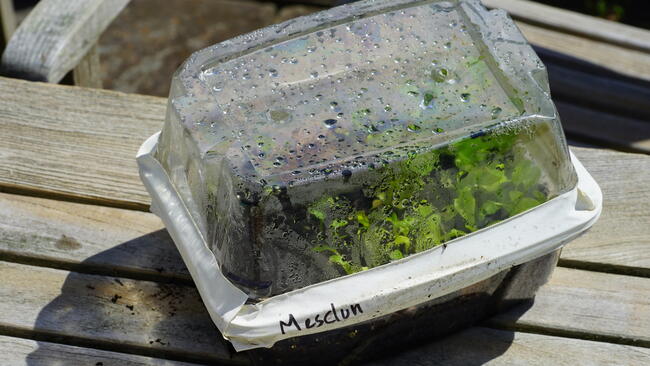
Covering seeds with a humidity dome or clear plastic wrap is a great way to retain some of that vital moisture, though this needs to be removed once the seedlings are up to reduce the risk of disease taking advantage of the humid conditions.
7. Use Warm Water
When you do water, use warm water if possible. Water that’s warm to the touch won’t shock your seeds. Particularly for warm-season crops, using warmer water will help keep that soil temperature up, so we’re not checking precious progress by suddenly cooling it with chilly water straight out of the tap. At the very least, draw your water, then leave it to come up to room temperature before using it.
8. Sow at the Right Depth
Most seeds benefit from light, which means sowing them at the correct depth so enough light can penetrate the soil or potting mix to reach the seeds beneath. In most cases, this means sowing seeds so they’re buried to the equivalent of one seed diameter’s depth. Some seeds, especially tiny ones, must be sown on the surface of the soil. If in doubt, just check the seed packet instructions.
9. Use Viable Seeds
A seed needs to be viable if it’s going to germinate. Old seeds can give patchy results, especially if they haven’t been stored properly. Check seed packets for packing and sow-by dates, which are usually displayed on the back—if you haven’t accidentally ripped it off when opening the packet! Learn more about how long seeds last.
If you’re saving your seed, bear in mind how long seeds tend to remain good for. This table will help:
Viable Seed Chart
| Expected Seed Life | Crops |
|---|---|
| 2 years | Parsnip, leek, onion, shallots |
| 3 years | Peppers, corn |
| 4 years | Beans, peas |
| 5 years | Tomato, eggplant (aubergine), beet/beetroot, chard, cucumber |
| 6 years | Lettuce, brassicas, carrot, celery, celeriac, squash, pumpkin |
10. Pre-Sprout Seeds
Many gardeners like to use this method to germinate seeds that tend to be tricky to get started, too. Pre-sprouting (also called chitting) seeds like this can improve overall germination rates, giving you tiny, ready-to-go seedlings for planting at their final spacings.
It can be hard to transplant seedlings of things like parsnips, but pre-sprouting means you know how many seedlings you’re growing and can plant them straight away without any transplant shock. It also saves having to sow thickly and then thin out.
This is a popular technique for vegetables, including parsnip, chard, cilantro or coriander, cabbage, and pretty much all warm-season crops like tomatoes, peppers, and squash.
Frequently Asked Questions
What temperature is best for seed germination?
Most seeds germinate best between 65° and 85°F, but cool-season crops can sprout in soil as low as 45°F, while warm-season vegetables often need 70°F or higher.
Which seeds benefit from soaking before planting?
Large or hard-coated seeds such as beans, peas, beets, squash, cucumbers, and sunflowers benefit most from soaking.
How long should seeds be soaked before planting?
Most seeds should be soaked for 8 to 12 hours. Avoid soaking longer, as this can cause seeds to rot.
Should I leave my heat mat on all the time?
Yes. Leave heat mats on 24/7 until seeds sprout to maintain consistent warmth.
When should seedlings be removed from a heat mat?
Remove seedlings as soon as they emerge, then move them to a bright, cooler location.
Can old seeds still germinate?
Yes, but germination rates decline over time. Proper storage extends seed life, but some crops remain viable longer than others.
We hope this will prove a handy reference as sowing gets underway this spring. If you’re craving even more seed-starting inspiration, see our complete guide on “How and When to Start Seeds Indoors.”

More Like This

Comments