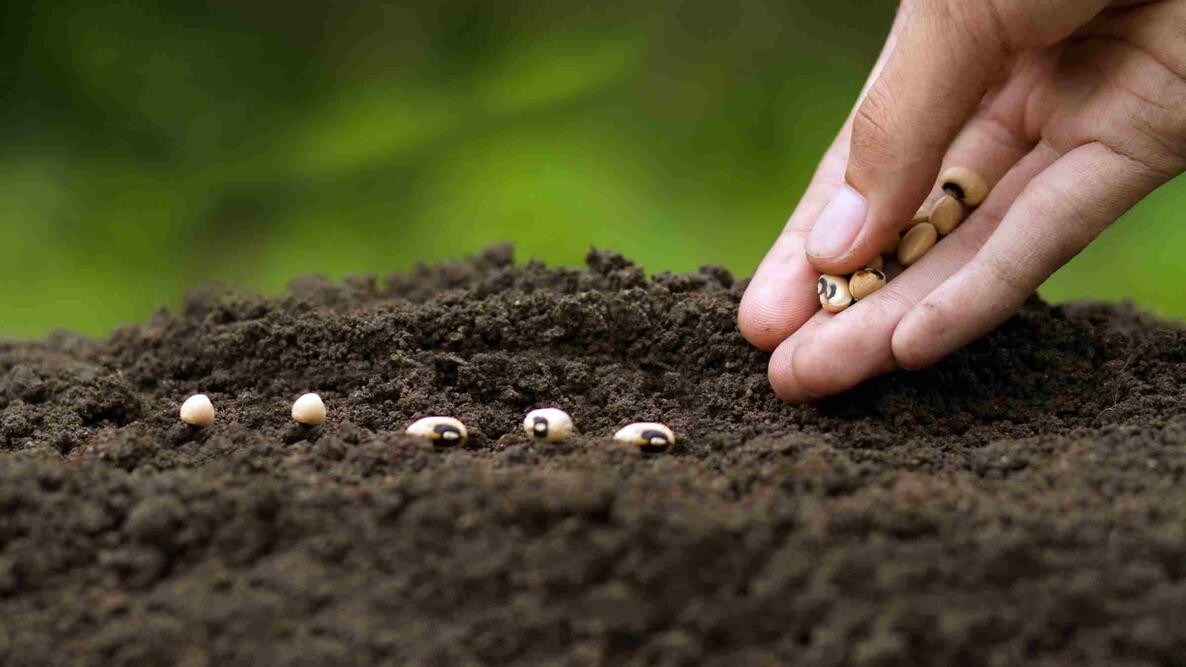

Squirrels do it. Kids can do it. If you’ve taken a seed and tucked it straight into your garden soil, you’ve done it too. That’s direct sowing—planting seeds directly into your outdoor beds instead of starting them indoors. It’s fast, efficient, and often the best method for many vegetables and flowers. In this beginner’s guide, we’ll explain when and how to sow seeds outdoors and how to care for your seedlings after they sprout.
Benefits of Direct Sowing
The benefits of direct sowing seeds right out into the spot they’ll occupy all summer are numerous. If you’re looking to make gardening a bit simpler, direct sowing can help.
- Save Time: Direct sowing is fast. With nothing to do but plunk the seeds into the ground, dozens or hundreds of seeds can be planted in a few minutes.
- Simple: There are no seed trays to fill, lights to set up, timers to fiddle with, humidity domes, or daily watering checks we deal with when starting seeds indoors.
- Inexpensive: Without all the above equipment, direct seeding comes down to the cost of the seeds, which are significantly less costly than young plants from the garden center.
- No transplant shock: Since these plants are growing from day one right where they’ll be, the roots are never disturbed by transplanting, which can be a huge advantage.

Which Crops Should Be Direct Sown Versus Started Indoors or Transplanted?
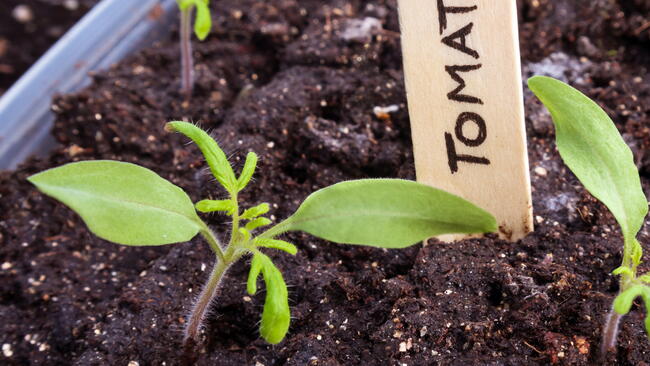
Technically, any seed can be sown directly in the garden, but many plants are often started indoors under controlled conditions. If you’ve ever had volunteer tomatoes pop up in the garden, you know that we can actually direct seed tomatoes. However, it is rarely done. But it’s an example of the idea that you can direct seed virtually anything.
As the adage goes, just because you can doesn’t mean you should, so here’s a quick list of plants that are easily started by direct seeding versus some that do better when started indoors.
| Best for direct seeding | all types of corn, cucumbers, melons, squashes (both summer and winter), pumpkins, radishes, carrots, arugula, kale, parsnips, peas, spinach, turnips, sunflowers, zinnias, cosmos, nasturtiums, poppies, flowering tobacco, Mexican sunflowers, hyacinth bean vines, morning glory, moonflower, amaranth, marigolds |
| Best for starting indoors | tomatoes, bell peppers, tomatillos, cauliflower, broccoli, hot peppers, okra, eggplant, artichokes, Brussels sprouts, cabbage, celery, collards, leeks, onions (from seed), most culinary herbs, snapdragons, petunias, salvia, pansies, impatiens, asters, statice, coneflowers, yarrow, strawflowers |
What you need (tools and materials)
One of the beautiful things about direct seeding is that you don’t need many tools or materials. At the most basic level, you need a packet of seeds and somewhere to plant them.
- Seeding tools like dibbles sometimes have marks to aid uniform planting depth when making the hole, but although I have several, I rarely use them anymore (I usually employ my index finger; see below).
- Seed dispensers, whether dial or plunger type, are helpful for small seeds that can be difficult to drop accurately. However, if you are only planting a dozen seeds, loading and then unloading the tool back into the seed packet is more effort than it’s worth.
If your seedbed was already prepared, all you really need is a few labels or some stakes and string to mark the rows and keep them straight. I don’t use stakes and string very often, and it shows. However, a crooked row here and there doesn’t bother me much, and I usually plant in blocks anyway. Labels, however, are great for remembering what you planted where and of which variety. Eventually, that information should all make it into your garden planner or garden journal.
Lastly, you’ll need a way to water them in, possibly a hoe or hand trowel for deeper planting trenches, and some mulch if desired.

When to Start Direct Seeding
Unlike starting seeds indoors, directly sowing seeds outside is dependent on soil temperature and weather. Most seeds can be separated into two camps: those that will germinate in cold conditions (and survive a light frost) and those that won’t.
Seeds of early spring crops, such as arugula, beets, kale, and lettuce can be sown 2 to 4 weeks before your last spring frost date, which is commonly referred to in gardening parlance by the phrase “as soon as the soil is workable.”
Warm-weather crops like squash, pumpkins, sweet corn, and melons need to be sown after your last spring frost. View our planting calendar, which lists dates by zip code and frost dates.

How to Direct Sow Seeds
Once the soil temperature and weather conditions are appropriate, it’s time to plant. Every packet of seeds will tell you (or should tell you) how deeply to plant them.
Remember to sow a few extra seeds, and don’t count on 100 percent germination. Assume one in three seeds will produce. As we say at the Almanac, “Sow one for the crow, one to rot, and one to eat.”
- Prepare the bed by loosening soil, incorporating compost, and raking smooth. (Try our Soil Calculator Tool!)
- Gather your seeds, stakes, string, labels, tools, and a notebook to write it all down.
- Follow the directions on your seed packet for seed spacing (how far apart to plant them) and depth.
- Make a shallow trench and drop the seeds in, or for larger seeds like beans and corn, just poke individual seeds into the soil.
- Cover the seeds with soil to the depth listed on the package, and gently firm the soil with your hand to ensure good seed-to-soil contact.
- Water gently but deeply to jump-start the seed germination process.
Thinning Seedlings
Timing: Begin thinning once seedlings have developed a couple of sets of true leaves and are about 3–4 inches tall. For the least stress on plants, do the job during a cool, overcast day or in the evening.
Method: Rather than pulling seedlings out, use clean scissors or hand pruners to cut unwanted plants at the soil surface. This helps protect the roots of the seedlings you’re keeping.
Choosing Which to Keep: Favor sturdy, compact plants with rich, green color. The strongest seedlings aren’t always the tallest—look for ones that appear healthy and well-balanced.
Aftercare: Once thinning is complete, water the area thoroughly and gently press the soil around the remaining seedlings to help settle their roots.
Caring for Seedlings
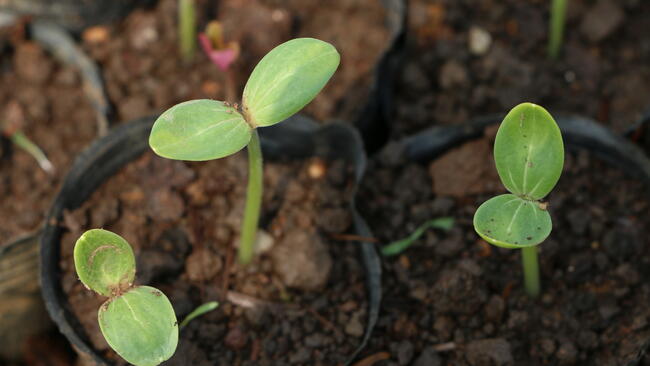
Newly sprouted seeds are fragile little beings and can be easily damaged by birds, rabbits, and other critters. Outdoors, they most commonly dry out and die before getting a chance to establish good roots, or they are overcome by weeds.
- Mark seed rows to make it easier to spot seedlings when they come up (and avoid stepping on them).
- Keep the soil moist but not soggy. Use your finger to test, and if it feels warm and dry under the surface, it’s time to water. Seedlings can’t take as much dry weather as mature plants can handle.
- Take care when weeding. Many young plants, such as corn, cosmos, and lettuce, look very similar to young weed seeds until they form their true leaves. If you’ve removed all the weeds before planting, you should be able to wait a couple of weeks to pull weeds until you can recognize your plants.

Tips for Success
- Water your seeds immediately after planting unless you planted them in wet soil. The seed coat requires water to begin softening, triggering the start of germination. Seeds planted in dusty, dry soil will either take much longer to germinate or won’t sprout at all.
- Don’t overwater. One good watering should be enough. Soggy soil can cause the seeds to rot.
- Follow the directions on the package regarding depth. A tiny lettuce seed doesn’t have enough energy to poke up if planted too deeply. Remember the general rule that small seeds are planted shallowly and large seeds are planted deeper.
- A very light dusting of mulch can help prevent the soil surface from crusting over and keep the soil moist for germination, but don’t overdo it. Apply mulch that is just barely thick enough to shade the soil, but not so thick that it prevents weeds from growing. If you can still see some soil, that’s about right.
- Label as you go! It sounds simple, but it’s important. You might not remember what got planted where next week. It also prevents you from double-planting a spot.
FAQs
Can I direct sow in containers or raised beds?
Yes! Many seeds—like radishes, lettuce, and herbs—thrive when direct sown into containers or raised beds. Just be sure the soil is loose, deep enough for root development, and kept consistently moist during germination. Read more about best soil for raised beds.
How can I tell if my seeds are still good?
Seed viability declines over time. You can check by doing a simple germination test: Place 10 seeds on a damp paper towel, fold it, and seal it in a plastic bag. After a few days to a week (depending on the seed type), count how many sprouted. If fewer than 70 percent germinate, consider buying fresh seed. Learn more about how long seeds last.
Should I soak seeds before sowing?
Some seeds—like those of peas, beans, and nasturtiums—can benefit from a short soak (4–8 hours) to speed up germination. But many seeds don’t require it, and some (like lettuce or poppies) shouldn’t be soaked at all. Always check your seed packet for specifics. Learn more about seed germination.
How do I keep birds and squirrels from stealing seeds?
Try covering newly planted areas with floating row covers until germination. You can lay down a light mesh to deter critters until the seeds sprout. Learn more about deterring birds as well as keeping squirrels out of the garden.
What if I accidentally sow seeds too close together?
No problem—just thin them out after the first true leaves appear. Whenever plants are 1 to 2 inches tall and closer than the spacing mentioned in the seed packet, it’s time to thin! Use scissors to snip extra seedlings at the soil line rather than pulling them, which can disturb neighboring roots.
Final Thoughts: Keep It Simple, Sow On
Direct sowing is one of the most satisfying ways to start a garden—just seeds, soil, and a little patience. Whether you’re planting crunchy carrots, bold sunflowers, or a patch of zinnias, there’s something special about watching those first green shoots pop up where you placed them. No grow lights, no transplanting—just nature doing its thing. So grab those seed packets, poke a few holes, and let your garden grow from the ground up. Yes, you sow can do it.
What do you find works best with direct sowing? Any questions? We’d love to hear your thoughts on this topic!

More Like This

Comments