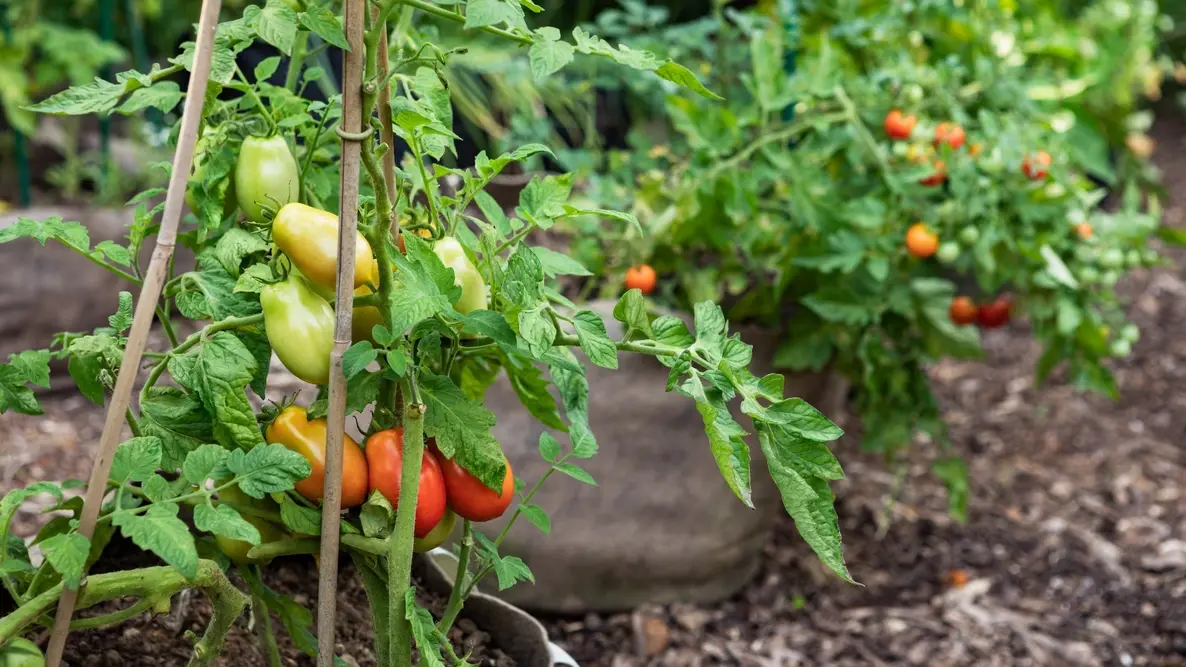
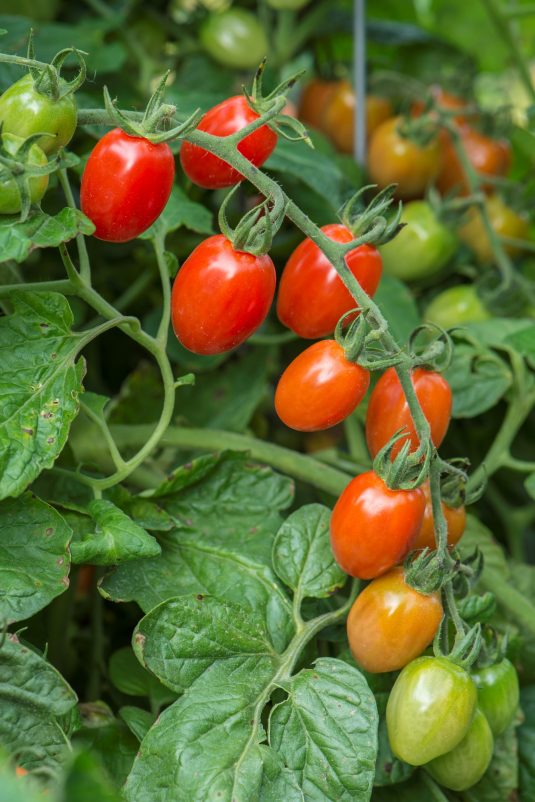
Roma paste and cherry tomatoes grow in fabric bags in a container garden.
Caption
Image Credit:
eurobanks

Wondering whether to grow determinate or indeterminate tomatoes? The biggest difference is that determinate tomato plants grow to a fixed size and produce most of their fruit at once, while indeterminate tomato plants continue growing and producing until frost. Here’s how to choose the right type for your garden.
Determinate vs. Indeterminate Tomatoes
To get to the short answer …
- Determinate plants are “bush” tomatoes and only grow until they reach a fixed size. (Think: a “determined” size.) These plants are small and bushy and tend to produce all their fruit within a few weeks.
- Indeterminate plants are “vining” tomatoes and continue to grow with no fixed size. (Think: “indefinite.”) They are huge vines, sprawling 6 to 10 feet long or more, and will keep producing tomatoes until frost hits and they die.
- Differences go beyond how they grow. Determinate and indeterminate tomatoes are different in terms of harvesting and cooking, how they are supported/trellised, how they are pruned, and garden space needs.
- For beginners, determinate tomatoes are best. They only require staking, not a complex trellising system. We’ll get more into the differences below so you can choose the option that’s best for you and understand the reasons why.
All About Determinate Tomatoes

- The size of determinate plants has been predetermined by genetics. Most varieties will grow about 2 to 3 feet tall; some may get as tall as 4 feet, but that is about tops for height.
- Most don’t require any kind of support, though they often do better if they are staked or caged.
- The plants tend to stop growing after forming fruit.
- They produce most of their fruit in one or two flushes over a short span of time. Then they are done for the season.
- Due to their compact size, they are excellent for small gardens or for growing in containers. This is one the main considerations for determinate versus indeterminate tomatoes. If you are in search of large, flavorful slicers, then indeterminates may be a better choice for you.
- If the word “bush” is in a variety’s name, chances are good that it is determinate.
- Their fruit is often the first to ripen in the garden.
- Many paste tomatoes, such as ‘Roma’ and some old favorite slicers that include ‘Rutgers’, ‘Marglobe’, and ‘Celebrity’ are determinates.
Growing Tips
- All tomatoes are sun lovers! Pick a location with 6 to 8 hours per day of direct sunshine.
- It’s always best to select disease-resistant tomatoes. It’s hard to know which diseases are concerns, so select a variety with “VFN” after the name (indicating resistance to verticillium wilt, fusarium wilt, and nematodes).
- Tomatoes are hungry plants; make sure you mix in organic matter and fertilizer when you prepare the soil. Many tomatoes don’t get enough nourishment if the soil fertility is too low. You’ll need to re-up the feeding with a balanced fertilizer after fruits set—mix this into the soil every week.
- Stake tomatoes right away to keep the fruit off the ground. Or, use a tomato cage.
- A few weeks after planting, mulch!
- Check daily for pests or diseases so you can immediately address them.
Here are our 10 best tips about growing tomatoes to avoid the pitfalls!
Pruning Tips
- Never prune down determinate plants! They form flowers and fruit only at the tips of their branches. If you prune the suckers, you will cut off your future fruits and have lower yield.
Harvesting Tips
- As mentioned above, determinate tomatoes ripen in a few weeks for a defined harvest period. This is especially helpful if you want to use tomatoes to make a sauce or other recipe.
All About Indeterminate Tomatoes
- Instead of bushy growth, indeterminate plants are huge vines sprawling 6 to 10 feet long or more.
- The vines will keep growing until killed by frost.
- Instead of ripening all at once, indeterminate tomato plants produce a steady supply of fruit throughout the growing season.
- Though their growth may slow down later in the season as daylight wanes and nights cool off, they will continue to blossom and set new fruit.
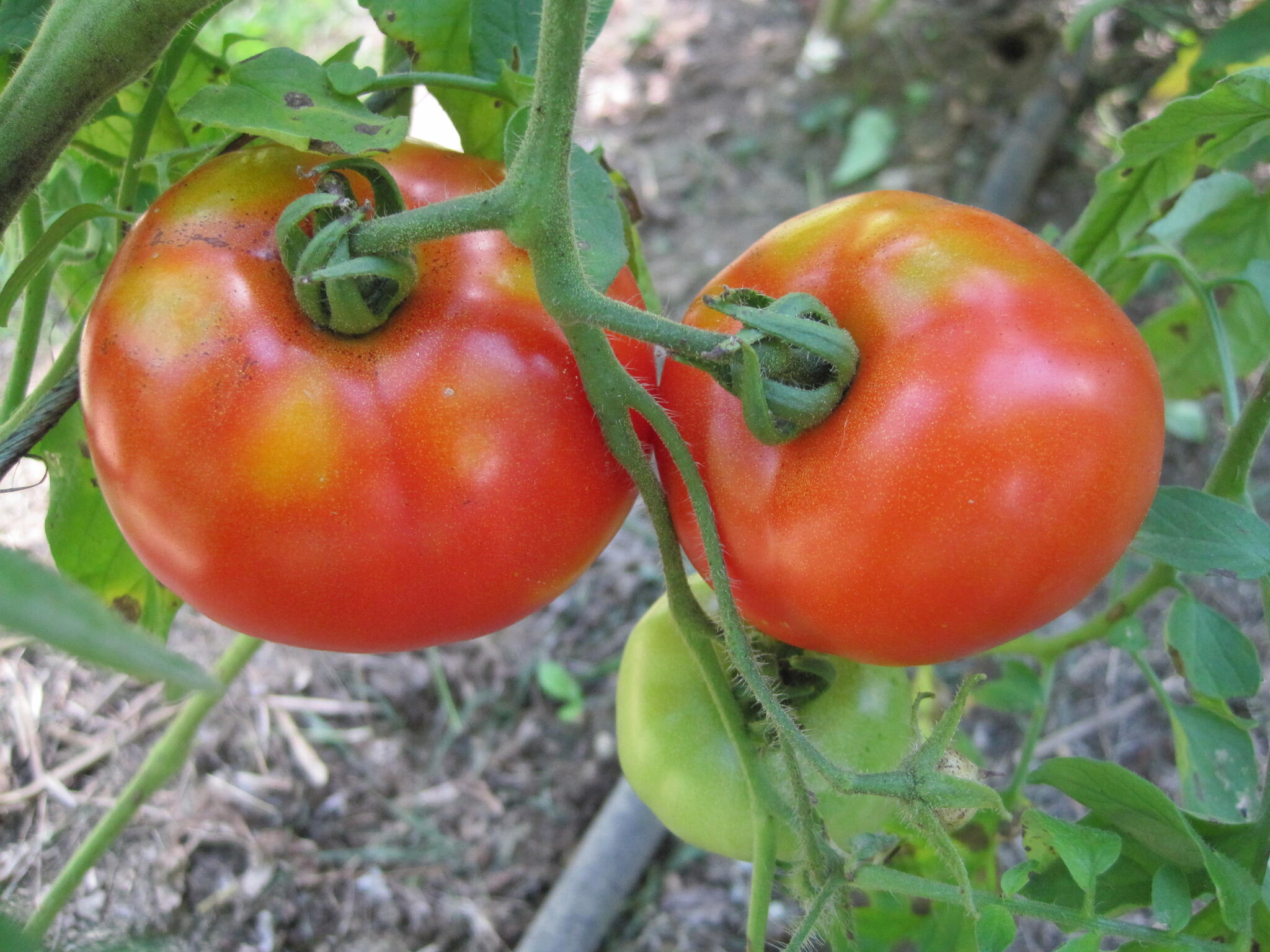
- Many are late varieties, which, if you are patient, will reward you with the largest and most flavorful fruit.
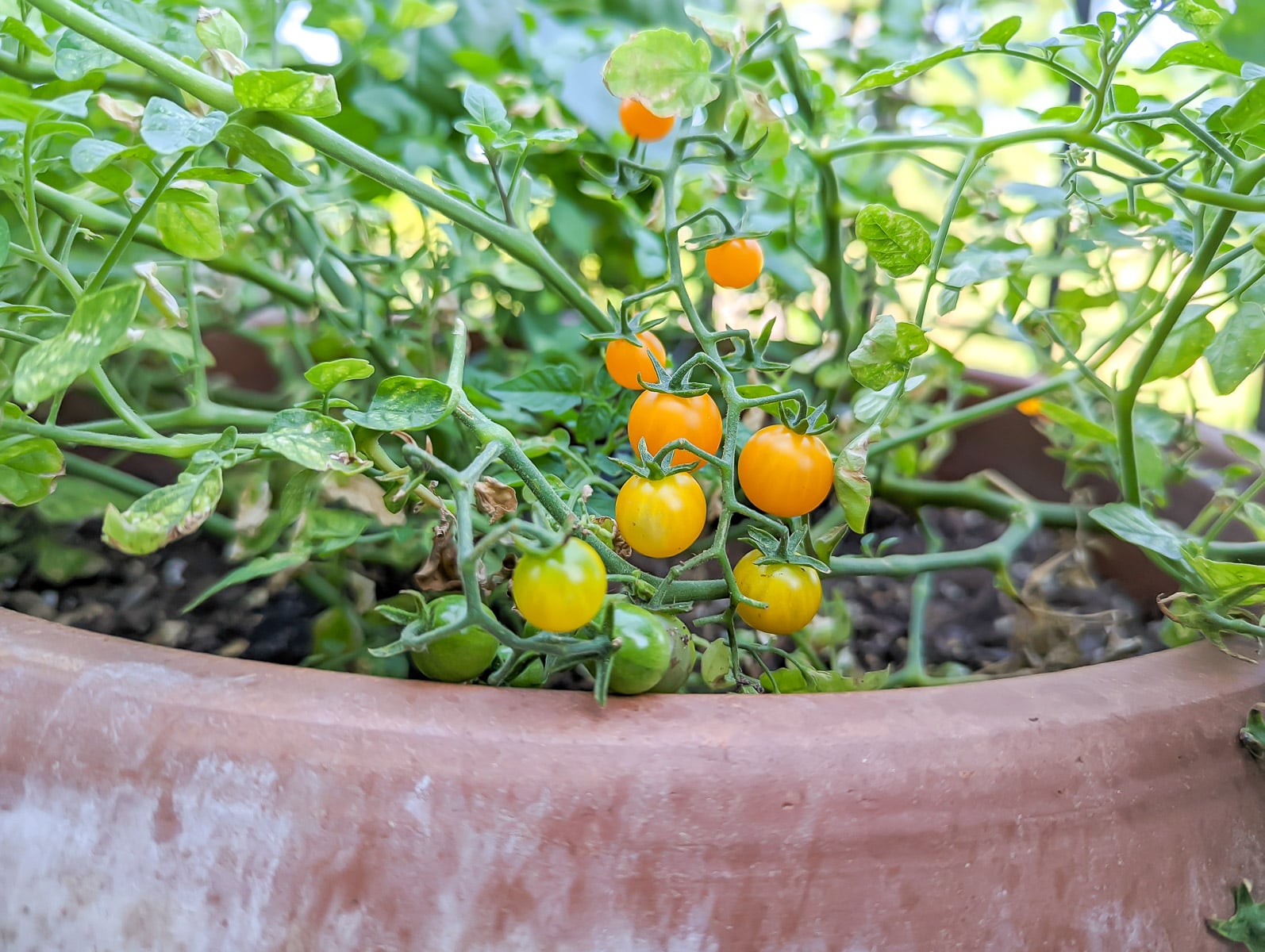
- Due to the higher leaf-to-fruit ratio and long ripening time, they have a chance to develop a sweeter and more complex flavor. According to the University of Florida Extension, most types of cherry tomatoes are indeterminate, which explains why they often have a sweeter flavor.
- Most heirlooms and open-pollinated varieties, including ‘Brandywine’, ‘Delicious’, ‘Black Krim’, and ‘Cherokee Purple’, are indeterminates.
Growing Tips
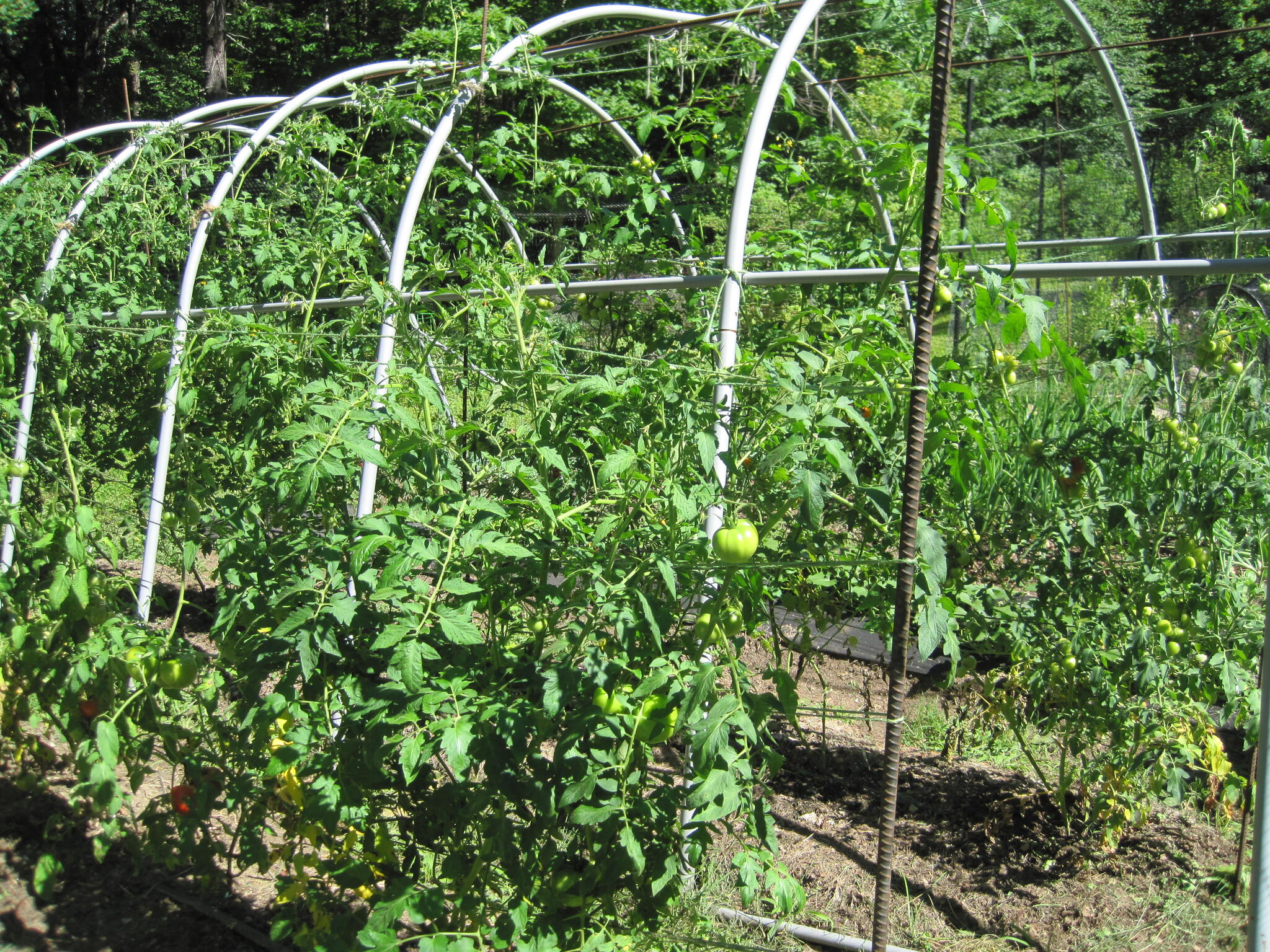
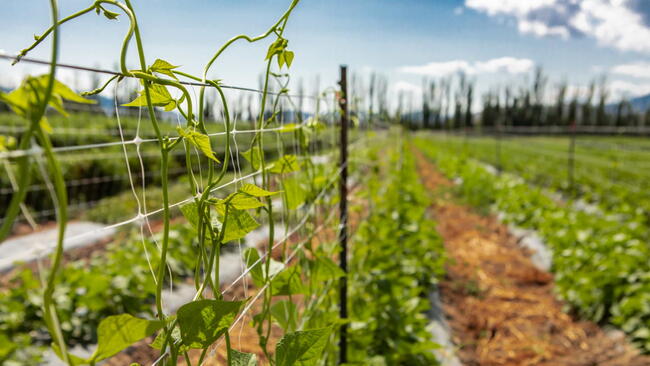
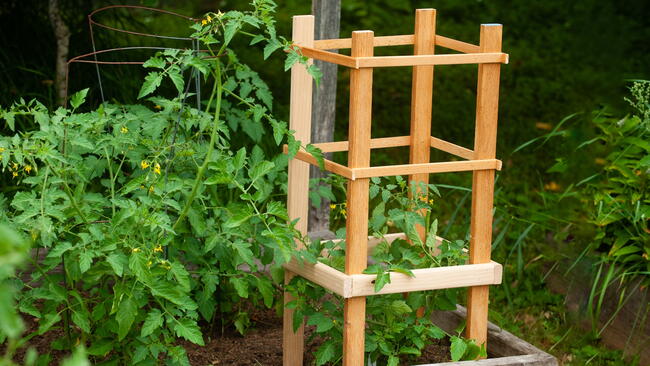
- Indeterminate tomatoes will definitely need some kind of support, such as stakes; tall, strong cages; or trellises. Look for large cages at least 4 feet tall and reinforce them with wood or bamboo stakes. Other good support materials include wooden or metal rebar stakes with additional twine or twist ties.
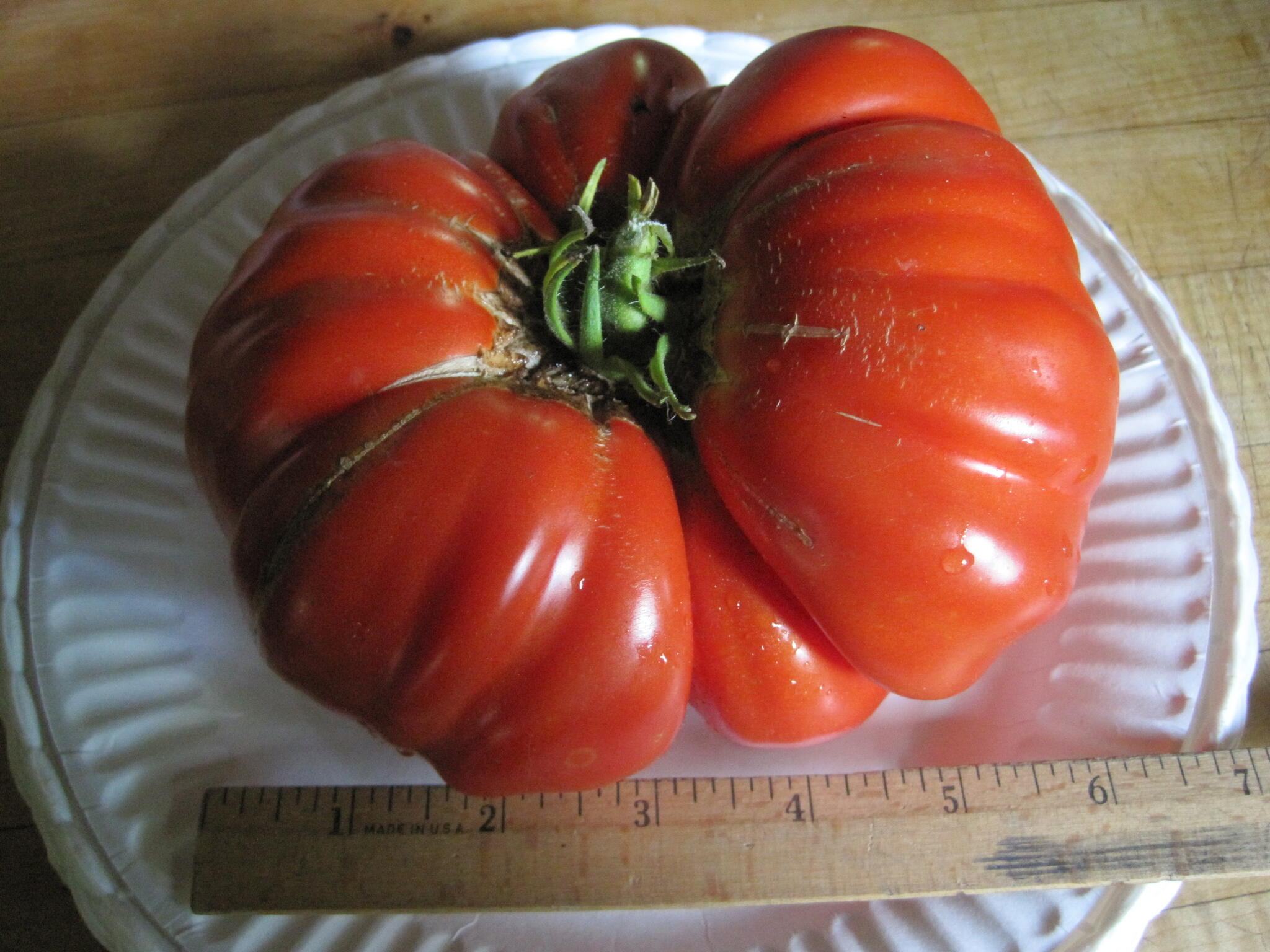
Pruning Tips
- If your indeterminate tomato plants get so high that you can’t support the plant anymore, you need to top them off.
- If you wish, you can pinch out suckers as the plants grow or prune the growing tips of the tallest vines to keep them in bounds without sacrificing all your fruit production.
- For bigger tomatoes, remove the suckers, leaving two to three suckers.
- Cut out lower branches or any branches that touch the soil.
Harvesting Tips
As indeterminate tomato plants just keep producing until fall frost kills the plant, keep harvesting regularly to keep the plants producing. Pick tomatoes when they are red or the right color and slightly soft to the touch.
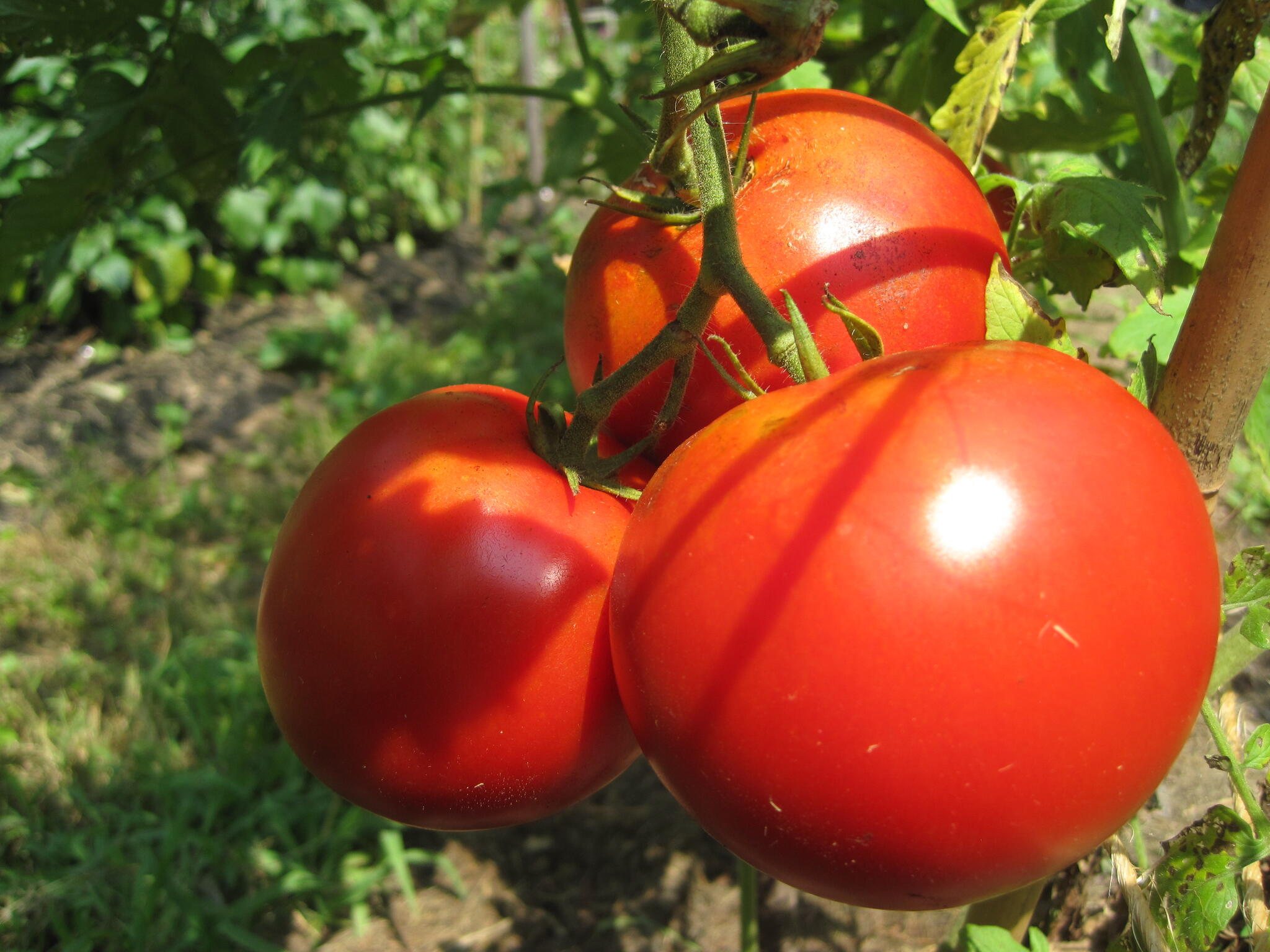
Pros and Cons
- Indeterminates have larger fruits. Determinates will have earlier fruits.
- Indeterminates are strong enough to recover from early diseases and form new growth. If hit with early diseases, determinates will not recover.
- Determinates give you an early harvest so you can pull the plants when they are done to make room for fall crops. Indeterminate fruits ripen over a long period of time and will continue to grow until killed by frost, taking up a lot of room in your garden.
- Indeterminates can be pruned if necessary. Determinates need no pruning.
What Is the Right Plant for You?
| Characteristic | Determinate Tomatoes | Indeterminate Tomatoes |
|---|---|---|
| Growth | Small and bushy, grows to a set size | Huge vines sprawling 6 to 10 feet long |
| Harvest | Produces fruit in a short period | Produces fruit continuously throughout the season |
| Size | Typically grows 2–4 feet tall | Can reach 6–10 feet or more |
| Support Needed | Minimal (staking or caging optional) | Requires strong cages, trellises, or stakes |
| Flavor | Often ripens earlier, ideal for sauces and bulk use | Sweeter and more complex, ideal for slicers |
| Best For | Small gardens, early harvest | Long harvest, large and flavorful tomatoes |
Personally, I think both indeterminate and determinate tomatoes have desirable qualities, so we grow some of each.
This includes Roma paste tomatoes to get a large quantity at once for sauces and some small determinate plants to grow in containers near the house.
When I need a tomato in a hurry, it is great to have them close at hand. Otherwise, the heirloom indeterminates are worth the wait. Their flavors are so delectable. They are the backbone of our tomato patch, giving us fruit all season long.
Still Can’t Decide?
Some tomato varieties are classified as semi-determinate or semi-bush, which have traits of both determinate and indeterminate plants.
- They bear their fruit over a concentrated period of time like a determinate, but the plants grow a bit larger.
- Since they produce more branches, they will need more support like an indeterminate but will also produce more fruit
- Some semi-determinates are ‘Homestead’, ‘Marmande’, and ‘Celano’.
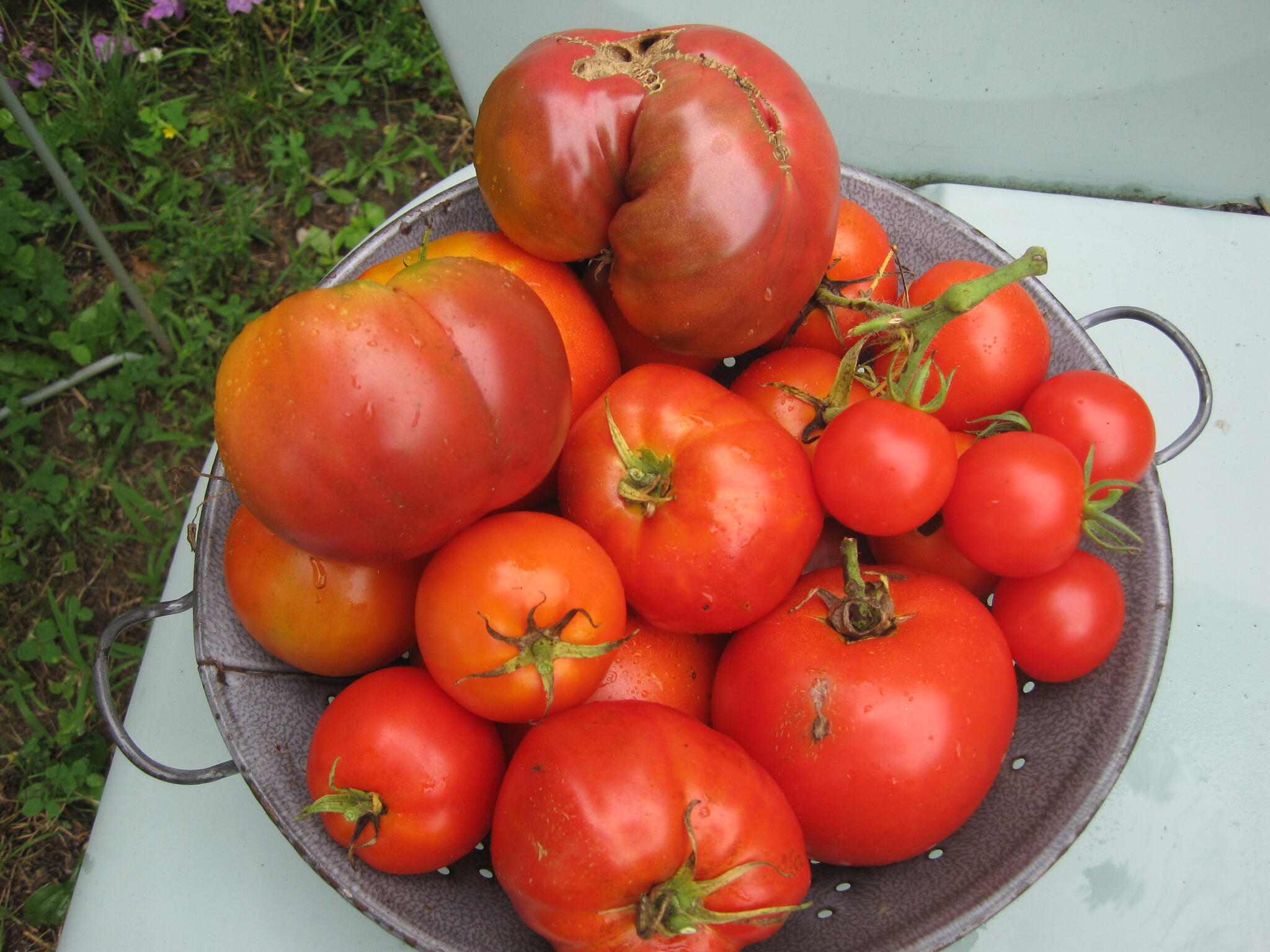
There is no single type of tomato that is perfect for everyone. If you are still undecided on the determinate versus indeterminate tomato debate, try some of each and see what works best for you!
FAQs
What is the difference between determinate and indeterminate tomatoes?
Determinate tomatoes grow to a fixed size and produce fruit over a short period. Indeterminate tomatoes continue growing and producing fruit until frost.
Are Roma tomatoes determinate?
Most Roma tomatoes are determinate, making them ideal for canning and sauce because the fruit ripens around the same time.
Are cherry tomatoes determinate or indeterminate?
Most cherry tomatoes are indeterminate, though some compact determinate varieties are available.
Which tomatoes are better for containers?
Determinate tomatoes are generally better suited for containers because of their compact growth habit.
Should you prune determinate tomatoes?
Very little. Heavy pruning removes flowering stems and can reduce your harvest.
How tall do indeterminate tomatoes grow?
Most grow between 6 and 10 feet, although some vigorous varieties can exceed 10 feet with proper support.
See more tips about choosing the right variety of tomatoes.
Whichever tomatoes you choose, they have common needs. Remember that a tomato plant needs 6 to 8 hours of direct sun a day. Water consistently to prevent issues such as blossom-end rot and cracking. The fruits are 95 percent water! Steer clear of high-nitrogen fertilizers. They will make for lots of leafy growth but few fruits. Make sure your soil has sufficient potassium. It is the nutrient that governs the amount of fruit you get when it ripens, as well as the fruits’ sugar levels.
See the Almanac’s Complete Guide to Growing Tomato Plants for more information, from planting to harvest.
More Like This
Robin, I love reading your posts/columns.
I gardened for over 50 years between Ohio and Oregon. Your advice was always relevant and appreciated. Practical and solid.
Now I live in Texas. A whole different world of gardening. Do you have advice as to how make your teachings relevant to this land of excessive heat and bugs?
Thank you
I am sold on indeterminate tomatoes; it's all I ever plant anymore. The abundant, continuous harvest is well worth the trouble of providing support (a cattle panel arch works perfect for me). It is hard to find indeterminate sauce tomatoes, but my reliable favorite is called "Gladiator Hybrid" from Burpee. Almost identical to Roma, they are large and flavorful fruits. The only drawback is that as a hybrid, you can't save the seeds. If you try, the resulting plants produce very small fruits. Tip to take advantage of the continuous production: after you start picking, keep them in the refrigerator to slow further ripening (or even freeze them) until you have enough for your desired batch size for canning. A side benefit of freezing is that is makes peeling a snap - the peels will slide off easily as the outside first begins to thaw.

For indeterminate sauce tomatoes look for heirlooms. We have grown Amish Paste, Hog Heart, Opalka, Jersey Devil, Grandma Mary, and Coure di Bue with great success, so much so that it is hard to narrow the choice down to just one ! All are open pollinated so you can save the seeds and all are meaty and delicious.
Do the seed packets say if the tomatoes are determinate, or indeterminate? Or do I need to look for the keywords?
The seed packet should tell you (sometimes it is abbreviated as Ind. or Det.) but if it lacks that bit of info, the word bush is a giveaway that it will be a determinate. Double check in a seed catalog or online just to be sure before you make your purchase.
📣The Gardening Club Just Got Better! 3 Deliveries, 10% Store Discount, and more!

Comments