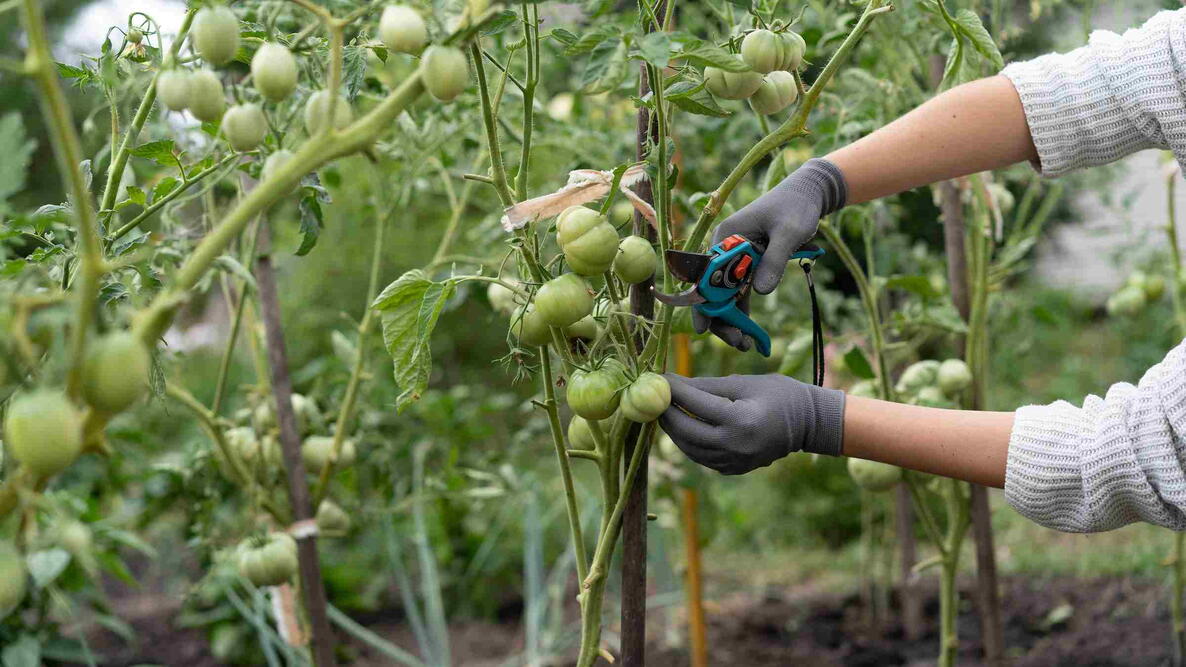
Caption
Pruning lower tomato branches helps improve airflow and prevent disease for a healthier crop.

Wondering whether you should prune your tomato plants? While tomatoes can grow without pruning, removing suckers, lower leaves, and overcrowded branches improves airflow, reduces disease, and helps many varieties produce bigger, healthier fruit. Here’s how to prune tomato plants correctly—and when to leave them alone.
Of course, you don’t have to prune your tomato plants. Millions of gardeners never prune their tomatoes and still get fruit. If life gets in the way, give them support, water, and love, and you’ll get tomatoes. But if you’re ready to advance your tomato game, it’s time to learn when and how to remove tomato suckers, lower branches, and overcrowded leaves—without hurting your plants.

Why Prune Tomato Plants?
What did those tomato plants ever do to us? Why attack them with sharp tools? Pruning tomato plants means removing lower branches, excess foliage, and fast-growing side shoots called suckers. This simple step offers several important benefits:
- Reduce Disease Risk:
Many tomato diseases on leaves thrive in damp, shady areas inside an overly bushy plant. Their enemy is good airflow and sunlight. Pruning opens the plant so breezes can reach the middle and underneath branches, helping dry the foliage after watering or rain. This minimizes fungal infections. - Prevent Soil-Borne Infections:
Removing lower branches near or touching the soil stops rain or irrigation from splashing soil pathogens onto leaves, lowering the chance of infections starting there. - Increase Yields:
Pruning helps the plant focus its energy on growing bigger, healthier tomatoes instead of producing extra leaves or fruit that won’t mature in time. - Encourage Earlier and Abundant Fruit:
By cutting back competing branches and foliage, the plant can focus its nutrients. Instead of wasting effort on extra leaves or fruit that won’t mature in time, the plant can put more energy into growing bigger, healthier tomatoes on its main stems. - Make Garden Management Easier:
Especially with indeterminate tomatoes, pruning keeps plants from becoming unruly, shading neighbors, or hiding fruit, pests, and disease symptoms.
When to Prune Tomato Plants
The answer for when depends on the why.
- Prune damaged or diseased leaves as soon as you see them. I take regular garden walks with clean snips, from a few weeks after planting until late summer.
- Pruning for shape and to remove suckers begins once summer is in full swing and the tomatoes start growing vigorously. When you notice little shoots popping up in the crook between the main stem and a side branch, it’s time to prune.
Best Tools for Pruning Tomato Plants
Tomato stems are soft, not woody, so you probably already have what you need: something to cut with and something to sanitize.
Cutting tools: I use small, sharp snips like those for cutting flowers, but a sharp knife works, too. If you use pruning shears, choose the bypass type, not the anvil kind (which crushes instead of slices). The important thing is that your tools are sharp, clean, and in good working condition, so you get a clean cut and not a ragged tear.
Sanitizing tools: Sanitizing is a must. Virtually every garden region has some sort of tomato disease lurking, even if you haven’t identified it yet. Cleaning your tools between working on different plants helps prevent spreading infections, especially since pruning often targets diseased leaves. I’ve been tempted to skip this step, but it’s just too important.
Tip: I keep a small tube next to the garden with isopropyl alcohol (70 percent), Lysol, or a 10 percent bleach solution. You can also use Lysol spray or a 10 percent bleach solution (use 1 part bleach to 9 parts water and soak the tool for several minutes). I find the alcohol to be faster to use, and it doesn’t make my tools rusty like the chlorine in bleach can.


How to Prune Tomato Plants Step by Step
Unlike pruning fruit trees or grapevines, working on tomatoes doesn’t take much artistry. It’s about as easy as spotting a sucker or a low branch and giving it a snip. There are two types of tomatoes—determinate and indeterminate varieties—with different pruning methods.
Before you start, determine whether you’re growing a determinate or indeterminate tomato plant. The two types should be pruned differently. Determinate tomatoes need only light pruning, while indeterminate varieties benefit from regular sucker removal throughout the season.
How to Prune Determinate Tomatoes
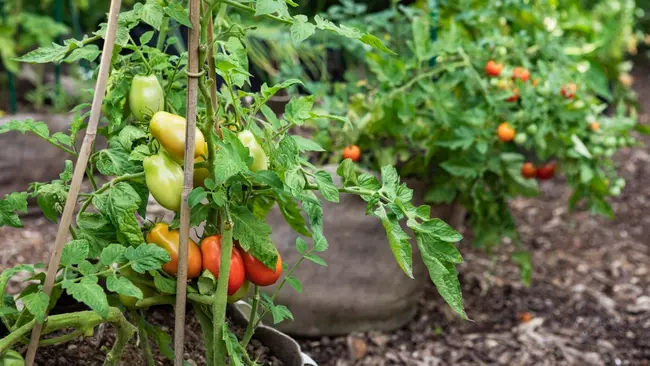
Determinate tomatoes are more compact and bushy, growing to a genetically fixed size—and they produce most of their fruit in a 2- to 3-week flush. My Roma tomatoes are determinate. They hit their peak in midsummer.
Prune mainly to remove lower branches and leaves that touch soil. Avoid cutting growing tips where fruit sets.
Start pruning lower leaves as soon as the plant is established.
Support plants with cages or stakes.
After the first flower cluster appears, remove leaves and stems below it. Your tomato should now have a pretty bare stem for the first foot or so above the ground.
Continue light pruning to maintain airflow without exposing fruit to too much sun, which can cause sunscald.
How to Prune Indeterminate Tomatoes
Indeterminate tomatoes grow like vines. If you don’t pinch out the growing tip, they’ll just keep going—up, sideways, and around the garden. In a greenhouse, they can reach the ceiling! Indeterminate varieties don’t produce a big flush of fruit all at once, but rather a steady trickle, often until fall frost. Prune them to remove suckers and maintain manageable shapes.
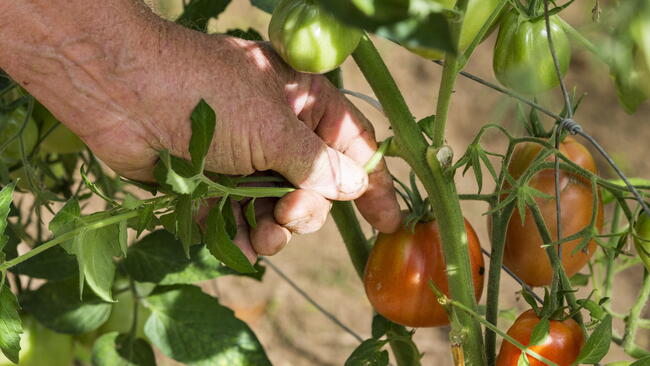
- Suckers are small shoots growing in the V between branch and stem. Removing suckers prevents the plant from becoming an unmanageable tangle that wastes energy.
- Pinch small suckers off with fingers or cut larger ones near the base with sanitized snips. Leave the lowest sucker just below the first fruit cluster.
- Remove any lower branches or leaves touching the soil or close to it. I like to be able to see underneath the plant’s branches by midseason. This not only improves airflow but also makes it easier to spot problems. Most tomato diseases will appear near the ground first, so removing any infected foliage will also raise the foliage height off the ground.
Check out this diagram from the University of Wisconsin Extension, which explains where to prune for sucker removal.


Tomato Pruning Tips and Common Mistakes
- Start early: Don’t wait until you have a tomato thicket taller than you. Keeping up with the job takes only a couple of minutes every few days and will prevent your plants from getting out of control.
- Make it convenient: Keep snips and sanitizer near the garden in a small tub with a lid, right next to your garden (or in it). You’ll be more likely to nip off suckers and other problem stems if you don’t have to go back to the house and hunt for your tools.
- Snap gently: Small tomato branches can be snapped off instead of cut. A clean snap separates the branch at a natural point, but if it won’t come off easily, use your tool to avoid tearing.
- Sanitize between plants every time. Don’t skip this step. As discussed above, this prevents spreading diseases from one tomato plant to another.
- Mind your fingers: I’ve been holding other foliage out of the way and caught the webbing between my thumb and index finger with the tip of the snips. You’d be amazed how much that hurts.
- Prune in the morning: This allows the cuts to dry faster before the high humidity and cooler temperatures of the evening.
- Don’t stress if you snipped an extra branch. Tomatoes grow quickly. Unless you cut off the main stem, it will recover.

What to Do With Tomato Prunings
Healthy prunings—like small suckers or leaves without disease—can go directly into your compost pile. You can also root healthy suckers in soil or water to grow new plants. However, if you prune diseased or blighted foliage, dispose of it in the trash or burn it. Never compost diseased tomato material, as pathogens can survive and infect future plants.
What Next?
Now that you know how to prune tomato plants, take your next step:
- Learn how to stake or cage your tomatoes for support
- Identify and treat common tomato diseases
- Choose the best tomato varieties for your garden
- See how to start tomatoes from seed indoors
And don’t forget: Those snipped suckers? Tuck a few into the soil—many will root and grow into new plants. Your neighbors might just thank you.
Tomato Pruning FAQs
Should I prune determinate tomatoes?
Yes, but lightly. Focus on removing lower branches that touch the ground and opening up the base of the plant for better airflow. Avoid cutting the growing tips, as this can reduce fruit production.
Can pruning hurt my tomato plants?
If done correctly, pruning won’t harm your plants. In fact, it can improve health and yields. Just be sure not to remove too much foliage at once and always sanitize your tools between plants.
What are tomato suckers and should I remove them?
Suckers are small shoots that grow where the stem and branch meet. Removing them from indeterminate plants can help focus energy on fruit rather than excess growth. Leave the lowest sucker just below the first flower cluster.
When is the best time to prune tomato plants?
Start pruning once the plant is growing vigorously—usually in early to midsummer. Prune in the morning so cuts can dry quickly. Avoid spreading disease by cleaning your tools between each plant.
Can you prune tomato plants too much?
Yes. Removing too many leaves can reduce photosynthesis and expose fruit to sunscald. Prune gradually and avoid removing more than one-third of the foliage at one time.
Should I remove yellow tomato leaves?
Yes. Yellow, diseased, or damaged leaves should be removed promptly to improve airflow and reduce the spread of disease.
Do all tomato plants need pruning?
No. Indeterminate tomatoes benefit the most from regular pruning. Determinate tomatoes only need light pruning to remove damaged or lower leaves.

More Like This


Comments