Why do we always see the same side of the Moon? It’s because the Moon rotates once on its axis in about the same amount of time it takes to orbit Earth. This is called synchronous rotation, or tidal locking.
That doesn’t mean we see exactly 50 percent of the Moon’s surface, however. Thanks to a slight apparent wobble called libration, we can actually see about 59 percent of the lunar surface over time.
Why Do We Always See the Same Side of the Moon?
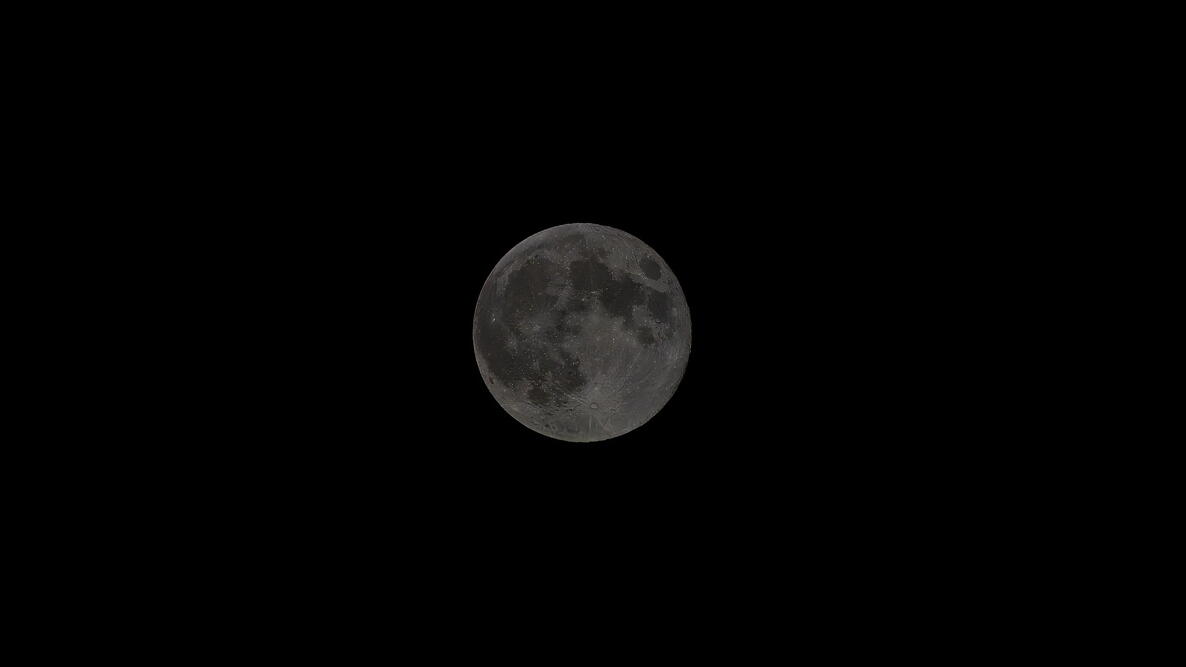
The Full Moon nearly always displays the same features to us. This is essentially because the time it takes for the Moon to rotate once on its axis is nearly identical to the time it takes for it to revolve once around Earth.
This is called synchronous rotation, or tidal locking.
If the Moon did not rotate, then we’d see one of its hemispheres when it was on one part of its orbit, and we’d see its opposite hemisphere when the Moon moved to the other side of its orbit.
Imagine a wary lion-tamer who keeps his face to the lion even as he steps all around the circular cage! The lion-tamer is always facing the lion, just as the same side of the Moon is always facing Earth.
The Moon’s rotation became synchronized with its orbit because Earth’s gravity has tugged on the Moon for billions of years, gradually slowing its rotation until the two periods matched. The Moon is not the only moon in the solar system to be tidally locked; this is a common result of the gravitational interaction between a moon and its parent planet.
Can We See the Far Side of the Moon?
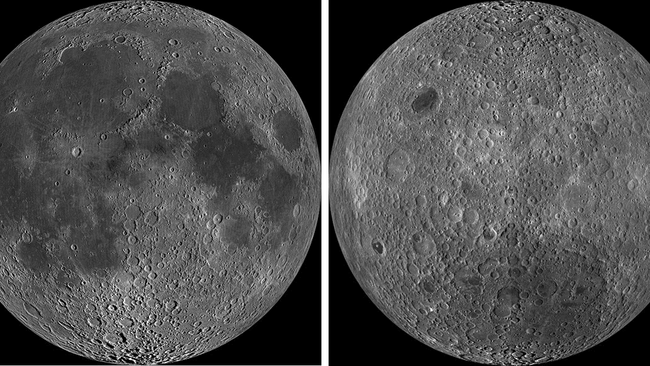
Here’s where it gets interesting. Although we always see essentially the same side of the Moon, we don’t see exactly 50 percent of its surface.
Because of a phenomenon called libration, a slight apparent wobble resulting from the Moon’s orbit and rotation, we can see about 59 percent of the Moon’s surface over time.
So, while the Moon keeps the same face toward us, its slight movements allow us to peek around the edges. We can never see the entire far side from Earth, but over time we get a better view of the Moon than we would if it simply showed us exactly half of its surface.
Learn more about the dark side of the Moon.
What Can You See on the Near Side of the Moon?
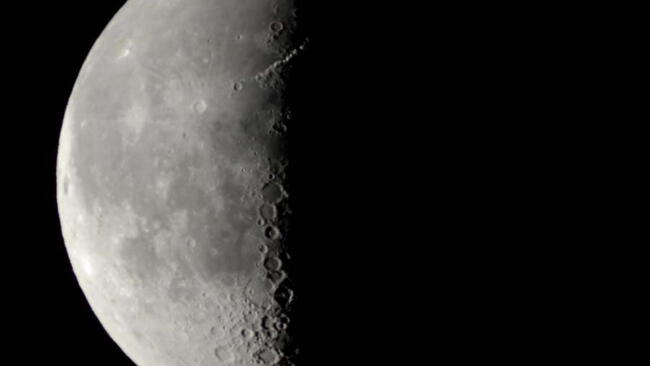
Most visible to the naked eye are the ancient lava flows that filled some of the Moon’s older craters. These enormous, smooth, dark areas are known as maria, the Latin word for “seas.”
The maria formed when large impacts cracked the Moon’s surface and allowed molten material from inside the Moon to reach the surface. The lava eventually cooled and hardened, leaving the dark patches we can see from Earth today.
With binoculars or a small telescope, many more lunar features come into view, including craters, mountains, and the boundaries between the bright lunar highlands and the darker maria.
So the next time you look up at the Moon, remember: You’re seeing the same familiar face—but not quite all of it.




Comments