Caption
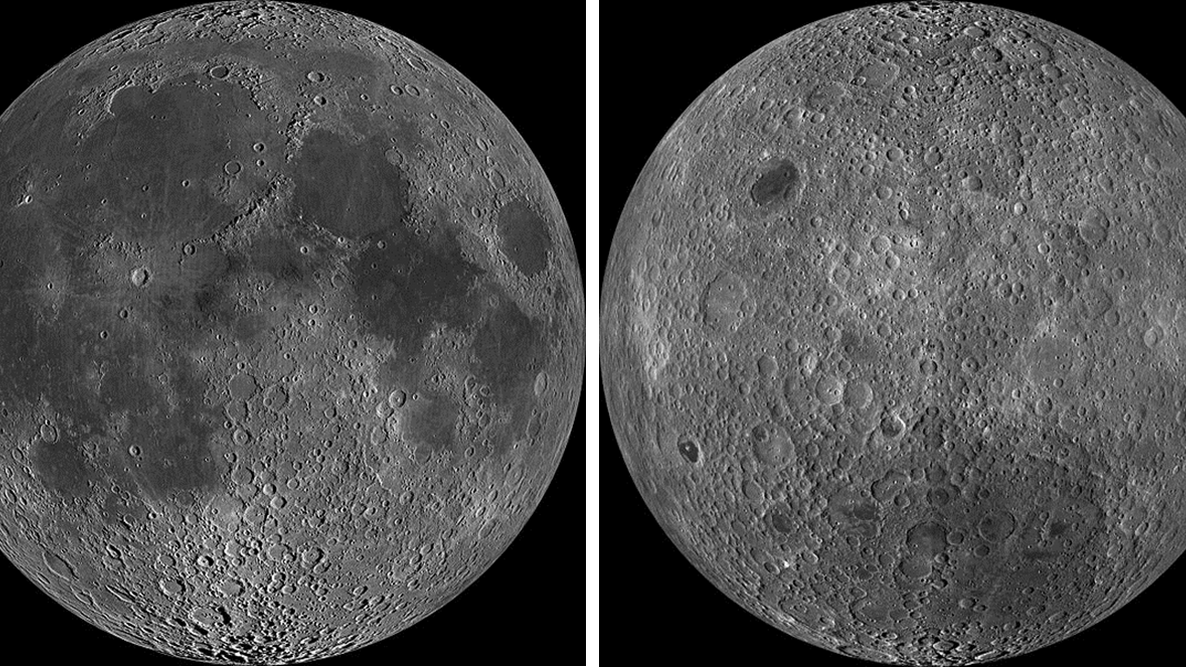
Near Side of the Moon on the left and Far Side of the Moon on the right.

We always see the same face of the Moon, but what’s hiding on the other side? Often called the “dark side,” the Moon’s far side has inspired myths, music, and misunderstandings for generations. In reality, it isn’t dark at all, and it looks surprisingly different from the side we see every night. Thanks to a phenomenon called tidal locking, the Moon keeps one hemisphere permanently turned away from Earth. Here’s what scientists have discovered about the Moon’s mysterious far side and why it matters.
Why Do We Only See One Side of the Moon?
First, it’s important to know that we always see the same side of the Moon from Earth’s surface—what we call the “near” side of the Moon versus the “far” side of the Moon.
This is because the Moon’s orbital period is the same as its rotation around its axis. Our planet’s satellite is tidally locked to Earth, which means it rotates on its axis at the exact same rate that it orbits Earth.
When Was the Far Side of the Moon First Seen?
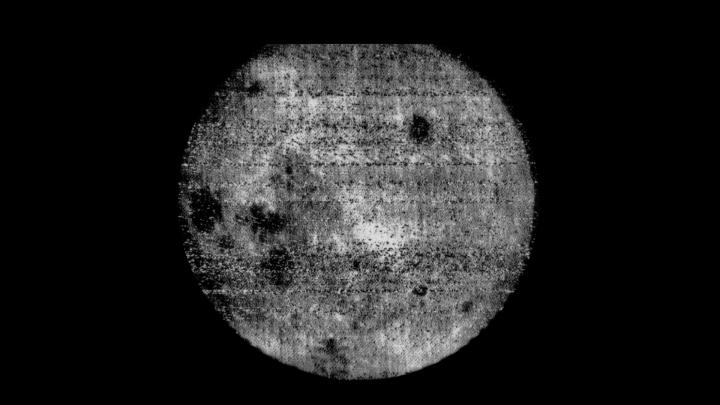
On October 4, 1959, Russia’s Luna 3 spacecraft was launched towards the Moon, where it later became the first vehicle to send back the very first images of the Moon’s far side.
Surprise!
The far side looks a lot like the near side. But not exactly:
- Like the side of the Moon we see, the far side of the Moon is also lit up by the Sun or it’s in shade. It’s not “dark” just because we can’t see it. Every part of the Moon has both day and night in half–month intervals.
- On the near side, we see large, dark seas of cooled lava, called maria, that cover a substantial fraction of the surface. But this lava is absent on the far side which, instead, features many impact craters—scars received during its first few hundred million years of life.
What Does the Far Side of the Moon Look Like?
We now know that 35% of the Moon’s Earth-facing hemisphere is covered with molten material, but only 1% made it to the far side. The far side’s crust is also significantly thicker than the near side, perhaps due to the number of impact craters.
Seeing the Far Side
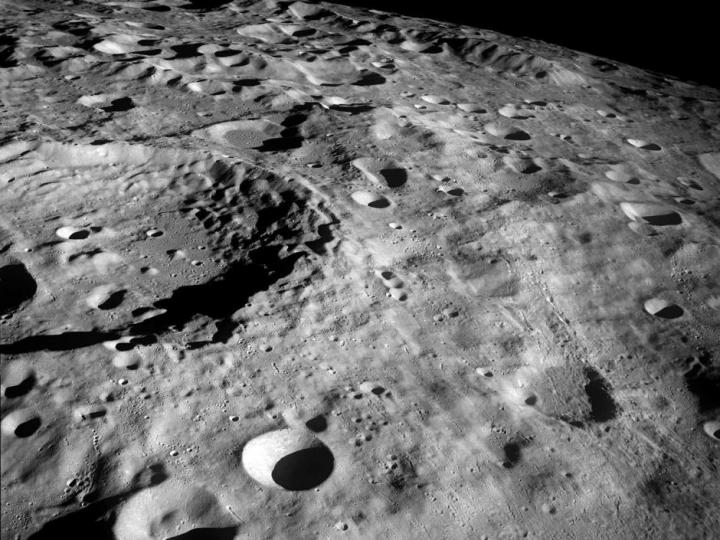
Since 1959, several missions by NASA and other space agencies have shown us more of the Moon’s far side.
In December of 1968, the Moon’s far side was finally seen with human eyes by the crew of Apollo 8 during their historic circumlunar flight.
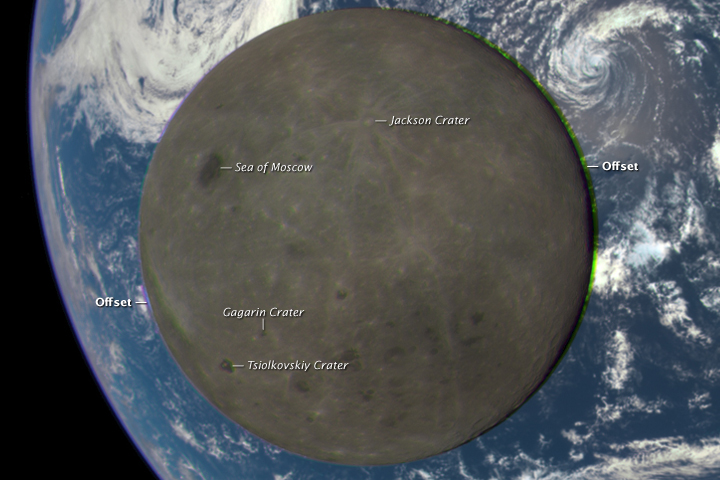
Below is another image of the fully illuminated far side of the Moon that is not visible from Earth. These were captured by NASA’s DSCOVR satellite on July 15, 2015. Twice a year, the satellite is about to capture images of the Moon and Earth together as its own orbit crosses the orbital plane of the Moon.
On the far side, you can easily see the Mare Moscoviense (Sea of Moscow) and the Tsiolkovskiy crater. Many features on the far side of the Moon retain the Russian names given to them by Soviet scientists.
Note that the Earth’s North Pole is toward the upper left, based on the angle of the satellite’s camera.
Is the Far Side of the Moon Always Dark?
Apologies to Pink Floyd: There is no continually dark “side” of the Moon.
Both near and dark sides have the “phases” of the Moon with the same cycle of illumination.
Here’s a fun fact: It’s our near side of the Moon that actually reflects less light than the far side because our side has lots of dark, smooth, low-lying plains (from ancient seas of molten magma) that do not reflect the light as well.
So, the near side is the dark(er) side! Click here to read about the “Near Side of the Moon.”
Tips on Viewing the Moon
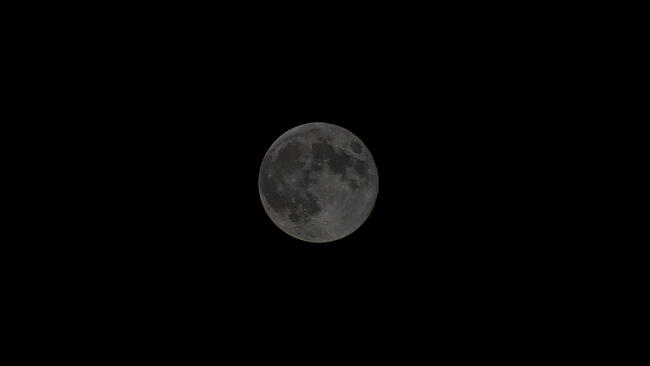
Look at the near side yourself! If you have binoculars, look at the Moon during dusk before the Moon is too bright in the dark sky. You should be able to see those dark lunar lowlands.
The best time to see the Moon is not during the Full Moon. It’s easiest to see during the Moon’s crescent or gibbous phase. See my post on the Quarter Moon.
Frequently Asked Questions
Is the far side of the Moon always dark?
No. The far side of the Moon receives the same amount of sunlight as the near side. It experiences day and night just like the side visible from Earth.
Why do we only see one side of the Moon?
The Moon is tidally locked to Earth, meaning it rotates on its axis at the same rate it orbits our planet. This causes one side to always face Earth.
What does the far side of the Moon look like?
The far side has far fewer dark lava plains (maria) and many more impact craters than the near side, giving it a rougher, brighter appearance.
Why does the far side have fewer maria?
The Moon’s far side has a thicker crust, which prevented molten lava from reaching the surface as easily as it did on the near side.
Can we ever see the far side from Earth?
No. The far side is never visible from Earth, but spacecraft and astronauts have photographed and studied it extensively.
The Moon’s far side may be hidden from view, but it’s no longer a mystery. From its heavily cratered terrain to its thicker crust and lack of lava seas, the far side tells an important story about the Moon’s early history—and clears up the myth of the so-called “dark side.” The next time you gaze up at the Moon, remember there’s an entire unseen world just beyond the edge.

More Like This

There are 2 full moons in December (2 and 31). Are each known as the Full Cold Moon? Is there a special name associated with the second full moon of a month?
A Blue Moon is the second full Moon in a month with two full Moons. A Blue Moon will occur on average every two or three years. In December, we tend to call the first full Moon the "Full Cold Moon" and the second Moon the "Full Long Nights Moon," also a name used by Native American tribes. These names, and some variations, were used by the Algonquin tribes from New England to Lake Superior.

Comments