
Amazing Moon Facts: How Big, Bright, and Fast Is the Moon?

Primary Image
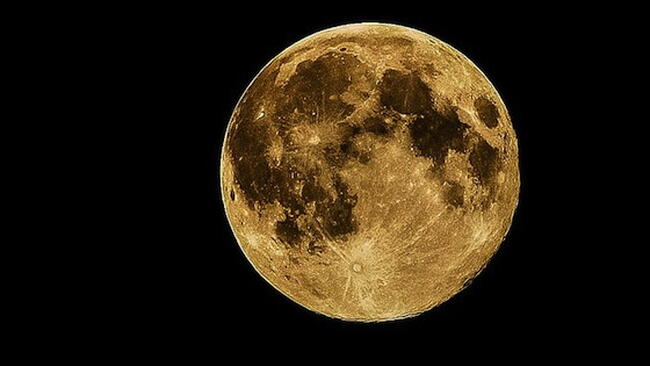
mind-blowing moon trivia, full moon on a starry night sky

Interesting Facts About the Moon You Didn’t Learn in School

Written By: Bob Berman Astronomer
Body

Will man ever return to the Moon? That remains to be seen. Until then, here are fascinating facts about our favorite celestial body—clear, quick, and worth knowing

Facts About the Moon

Each night, we glance up at the Moon, but how much do we really know about it? Here are some fast facts about our Moon:

How Big Is the Moon?

The Moon’s diameter is 2,160 miles, about the distance from Washington, D.C., to the Rocky Mountains.

How Fast Does the Moon Orbit Earth?

The Moon’s average orbital speed is 2,287 miles per hour.

That number is remarkably close to the Moon’s own diameter, making it the only known celestial body that travels through space at roughly its own width per hour.

This motion is visible from Earth—even to the naked eye—as the Moon slowly shifts against the background stars.

How Long Is a Lunar Month?

The Moon’s synodic period (lunar month) is 29 days, 12 hours, 44 minutes, and 2.8 seconds.

This is the average time between one new Moon and the next.

Why Do We Always See the Same Side of the Moon?

The Moon’s rotation period is 27 days, 7 hours, 43 minutes, and 11.5 seconds, which is the same amount of time it takes to orbit Earth.

Because of this tidal locking, the Moon always keeps nearly the same face toward us. Learn more about the far side of the Moon.

How Massive Is the Moon?

The Moon is 81.3 times smaller than Earth in mass.

Its total mass is estimated at 500 quintillion tons.

How Bright Is the Moon?

The Moon reflects only about 12% of the sunlight that strikes it. Its albedo (reflectivity) is approximately 0.12, similar to rich soil.

By comparison:

  • Snow reflects about 75%
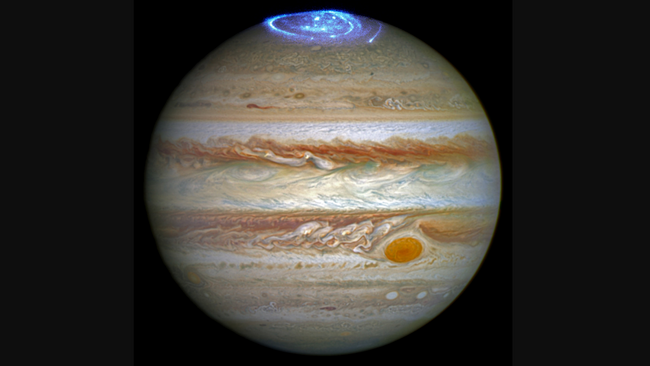
  • Jupiter reflects about 51%

How Bright Is the Full Moon?

The Moon’s apparent magnitude at full phase is –12.7. Each step on the magnitude scale is 2.5 times brighter than the next.

The full Moon is over 250,000 times brighter than Sirius, the brightest star.

The Sun is still about 400,000 times brighter than the Moon.

What Is the Moon’s Temperature?

The Moon has extreme surface temperatures due to its lack of atmosphere:

  • Daytime: typically 235°F, with highs near 273°F
  • Nighttime: can drop to –275°F

This creates a day-to-night temperature swing of about 500°F, far greater than even Earth’s harshest deserts.

How Far Away Is the Moon?

The Moon’s average distance from Earth is 238,857 miles. Because its orbit is elliptical, that distance can vary by more than 30,000 miles.

What Is Gravity Like on the Moon?

The Moon’s surface gravity is 5.3 feet per second.

An object would fall:

  • Less than 3 feet in 1 second
  • About 11 feet in 2 seconds
  • On Earth, that same object would fall 64 feet in 2 seconds.

How Fast Do You Need to Travel to Leave the Moon?

The Moon’s escape velocity is 1.48 miles per second (about 5,328 mph).

For comparison: Escaping Earth requires nearly 7 miles per second (about 25,000 mph), travel time to the Moon is typically 3 to 4 days

Isn’t our Moon grand? See more about the Moon in our Moon Phase Calendar and Full Moon Calendar.

About The Author
Bob Berman

Bob Berman

Astronomer

Bob Berman is an astronomer, author, and science communicator with decades of experience making the wonders of the universe accessible and engaging. Known for his wit and insight, Bob has captivated a...