Wildfire can travel on the wind. Long before flames reach a house, flying embers—called firebrands—can find their way into gutters, vents, cracks, and other vulnerable places.
So, where should you begin? Right outside your door. A little clearing, cleaning, and careful tending around the house can give firebrands fewer places to catch—and firefighters a better chance to defend your home.
Don’t Give Embers a Way In
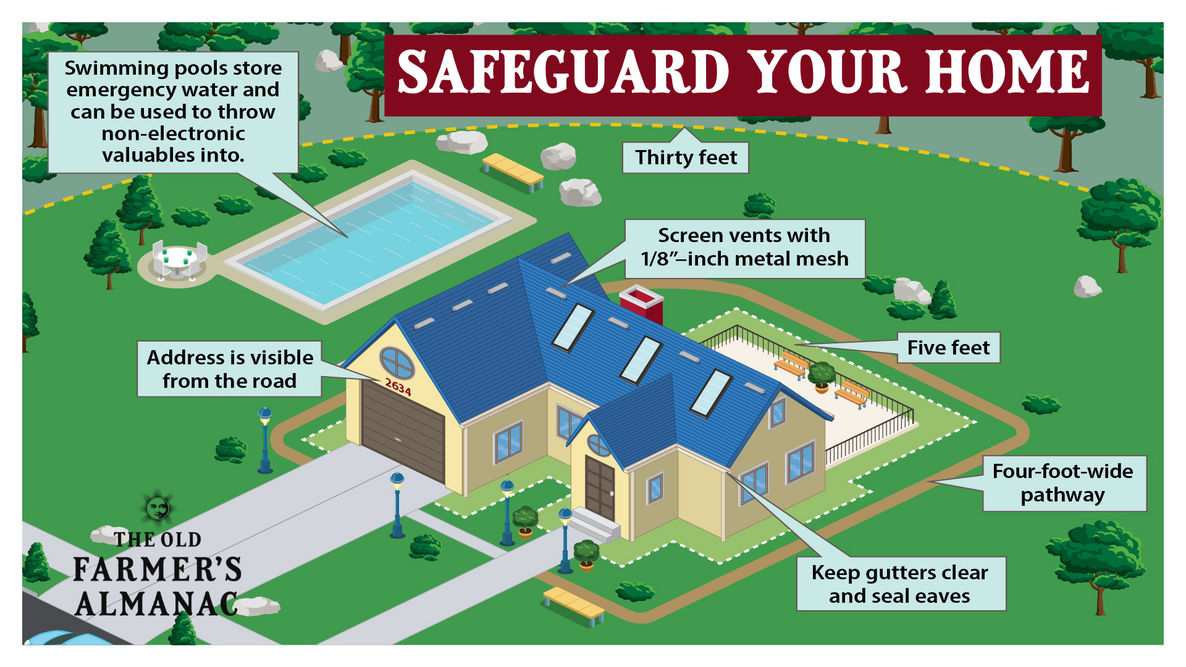
Keep gutters clear, seal eaves and overhangs with paint (fire-resistant being the best option), screen vents with 1/8-inch metal mesh, and fill any fissures in the siding so that firebrands cannot adhere.
Clear the First 5 Feet
Flames elongate and become more dangerous close to vertical surfaces. Remove anything flammable within 5 feet of your house, such as woody mulches, firewood, recycling cans, tools, storage cupboards, and combustible plants or branches.
Your home is more likely to ignite from a firebrand than from direct contact with flames.
Give Your Home Some Breathing Room
Create a defensible space to help protect your home from firebrands and intense heat and to help emergency personnel fight a fire. The first 30 feet around your home should be kept clear of clutter and fine, ignitable materials and be easy to navigate, whether by foot or by sight. Paths should be stable and at least 4 feet wide.
Looking beyond the house? See our guide to protecting your yard and garden from wildfire.
Take a Look at Decks, Fences, and Other Structures
Decks, fences, and play structures add ignitable fuel to a property, potentially producing towering flames. Maintain these features by painting, replacing, and sanding to ensure a firebrand cannot attach to a surface and ignite.
Make Way for Firefighters
During a fire, everyone is on the move. And you’ll want firefighters to be able to move onto your property to defend it.
Driveways are beacons that signal to emergency responders. An effective driveway will have a view of the structure and an address clearly visible from the street. It will be at least 8 feet wide and be free of ignitable materials along its shoulders.
This article is adapted from The Old Farmer’s Almanac 2026 Garden Guide, which also features trees and shrubs that can play a role in fire-wise landscapes.



Comments