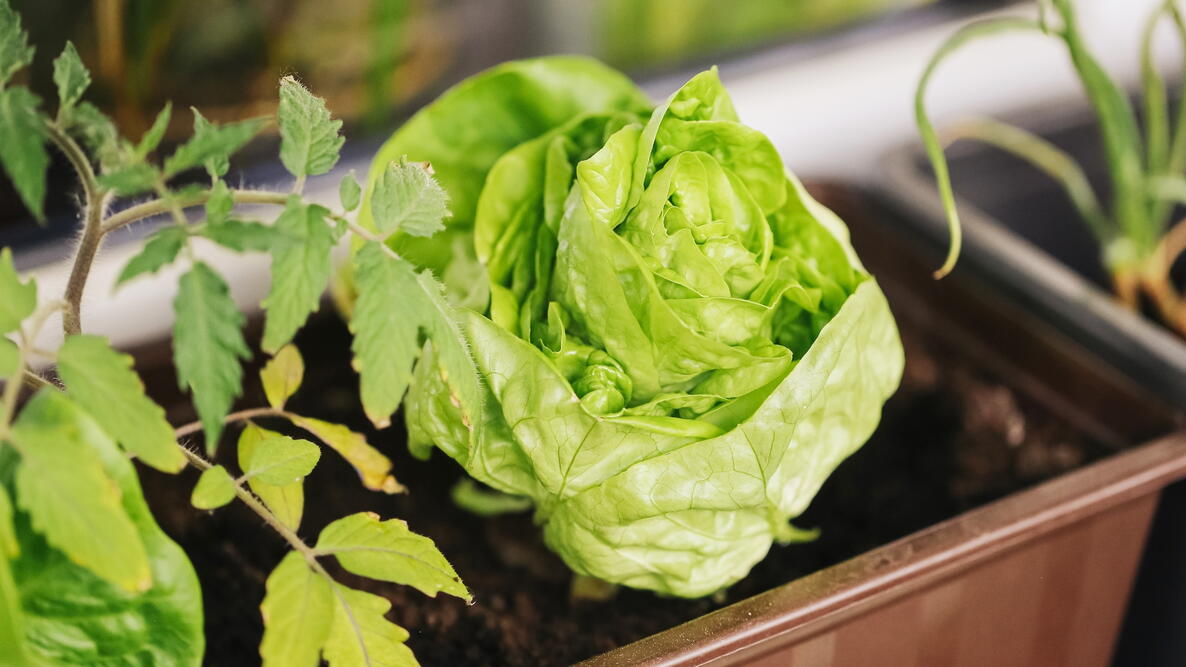
Caption
Grow lettuce in pots for a never-ending salad harvest.

Lettuce is one of the easiest vegetables to grow in containers. This fast-growing crop produces generous harvests in surprisingly small spaces, making it perfect for patios, balconies, and container gardens.
Here’s what you need to know about planting and growing lettuce in containers—from choosing the right pot and varieties to preventing bolting and enjoying weeks of fresh harvests.
Choosing the Right Container
Lettuce is one of the easiest vegetables to grow in containers because it has shallow roots, grows quickly, and doesn’t demand much space. Wide, shallow containers are best for lettuce and should be at least 12 inches wide by 6 inches deep for leaf lettuces, or 16 inches wide by 12 inches deep for heading varieties.
You can grow lettuce in terra-cotta, plastic, or ceramic pots and planters, as well as window boxes, raised planters, wooden barrels, and fabric grow bags. Heading lettuces don’t necessarily require more space, but they take longer to grow, and it’s easier to manage watering needs when cultivating in roomier containers.
Tip: Not sure what size container you need? Try our Vegetable Container Size Chart & Pot Size Calculator.
I personally grow lettuce outdoors in grow bags, but you can also keep plants indoors in pots or even in a hydroponic setup.
Make sure any container you choose is made of food-safe materials and has drainage holes in the base. Lettuce doesn’t like soggy soil, and good drainage is essential for healthy roots.

Best Lettuce Varieties for Containers
Any sort of lettuce can be grown in containers, but I have the best luck with leaf lettuces, which grow quickly and can be harvested little by little as needed. Some varieties of leaf lettuces reach maturity just 45 days after planting—or even earlier if you want to pick baby salad greens.
Heading lettuces, on the other hand, take longer to grow, with popular varieties like romaine being ready to pick about 65 days after planting, and iceberg lettuce reaching maturity around 90 days after the seeds are planted.
My favorite leaf lettuce varieties for containers are heat-resistant cultivars like ‘Muir’ and ‘Jericho’. Lettuce is more prone to bolting in pots, and these varieties don’t bolt at the first kiss of heat.
If you want to extend your growing season, you may also want to include some notably cold-tolerant varieties like ‘Rouge d’Hiver’ and ‘Winter Marvel’ in your container garden for an extended spring and autumn harvest.
Tip: For a flavor twist, you can also try keeping other “lettuce-like” plants in containers. Arugula, spinach, mizuna, and many other leafy greens also thrive in pots, have similar care needs, and are mighty tasty in fresh garden salads!
Preparing the Soil and Potting Mix
Any rich, well-draining potting mix intended for edible plants will do just fine for containerized lettuce. Just avoid using garden soil in containers, as it’s too dense for pots and can lead to drainage problems.
I like to mix a bit of compost or worm castings into my potting mix before growing potted veggies. This provides my plants with extra nutrients and helps improve drainage.
If desired, you can also blend a slow-release, balanced, or high-nitrogen fertilizer into your potting mix before planting. Extra nitrogen supports leafy growth, which is especially helpful when growing lettuce.

Planting Lettuce in Containers
Lettuce is a cool-season crop that does best when it’s planted in cool weather.
I start planting lettuce seeds outdoors in containers about four weeks before my last frost date, or when the soil first becomes workable. After that, I succession-sow seeds every 2 to 3 weeks until hot weather kicks in and then I start succession-sowing seeds again in late summer for an autumn crop of lettuce.
To sow lettuce seeds:
- Fill pots most of the way up with your potting mix of choice.
- Lightly scatter seeds over the soil surface.
- Sprinkle a dusting of potting mix on top, no more than 1/4-inch deep.
- Keep the soil well watered until the seedlings sprout.
- Position pots in bright light.
- When the seedlings emerge, thin the weakest seedlings so that leaf lettuces are spaced at least 4 inches apart and heading lettuces are 6 to 8 inches from their neighbors.
Lettuce germinates best when temperatures are between 60° and 75°F. Germination rates fall dramatically when temperatures climb above 80°F. If you want to keep planting lettuces in summer, your best bet is to start seeds indoors and keep them there, or harden them off and transplant them outside when temperatures permit.
If you’re growing lettuce indoors, you can plant seeds at any time of the year!
Watering
Watering lettuce regularly helps plants grow better, and it also slows bolting and keeps plants productive longer. Consistent moisture is one of the keys to growing tender, sweet lettuce in containers.
Potted lettuce needs more water than plants in the garden, and lettuce grown in fabric grow bags or terra-cotta pots will need more frequent watering than plants kept in plastic or glazed containers.
Lettuce requires about one inch of water per week. Feel the soil before watering, and water when the top inch feels dry.
Fertilizing
While lettuce is not a heavy-feeding plant, potted lettuce does require a little more fertilizer than plants in the garden.
I like to start my lettuce off by blending compost into my potting mix before planting and then I feed my lettuce plants with a diluted liquid kelp or fish emulsion fertilizer about once a month. You can also feed lettuce with aged manure, worm castings, and granular fertilizers.

Common Issues
Fast-growing lettuce plants are some of the most beginner-friendly veggies you can find. However, even easy-care lettuce can struggle with a few problems regardless of whether you grow lettuce in the garden or in pots:
- Bolting. Lettuce plants bolt during hot weather, which causes the plant’s stems to elongate and produce flowers and/or seeds. Growing heat-tolerant lettuces and positioning containers in a spot that receives light afternoon shade can help slow down this process. The only reliable way to extend your harvest is to succession-sow multiple plantings of lettuce.
- Pests. Even in pots, lettuce can be plagued by aphids, slugs, and snails. Adding row covers over potted plants and companion planting lettuce with chives and other scented herbs can help prevent pests.
- Bitter taste. Lettuce gets bitter when the plants are heat-stressed or under-watered and begin to bolt.
- Discolored leaves. Yellowing or browning lettuce leaves may indicate watering problems, nutrient deficiencies, or too much sun.
- No lettuce heads. Romaine, iceberg, and other varieties of heading lettuce may not form proper heads if planted too late, heat-stressed, under-fertilized, or overcrowded.

More Like This

Comments