Caption
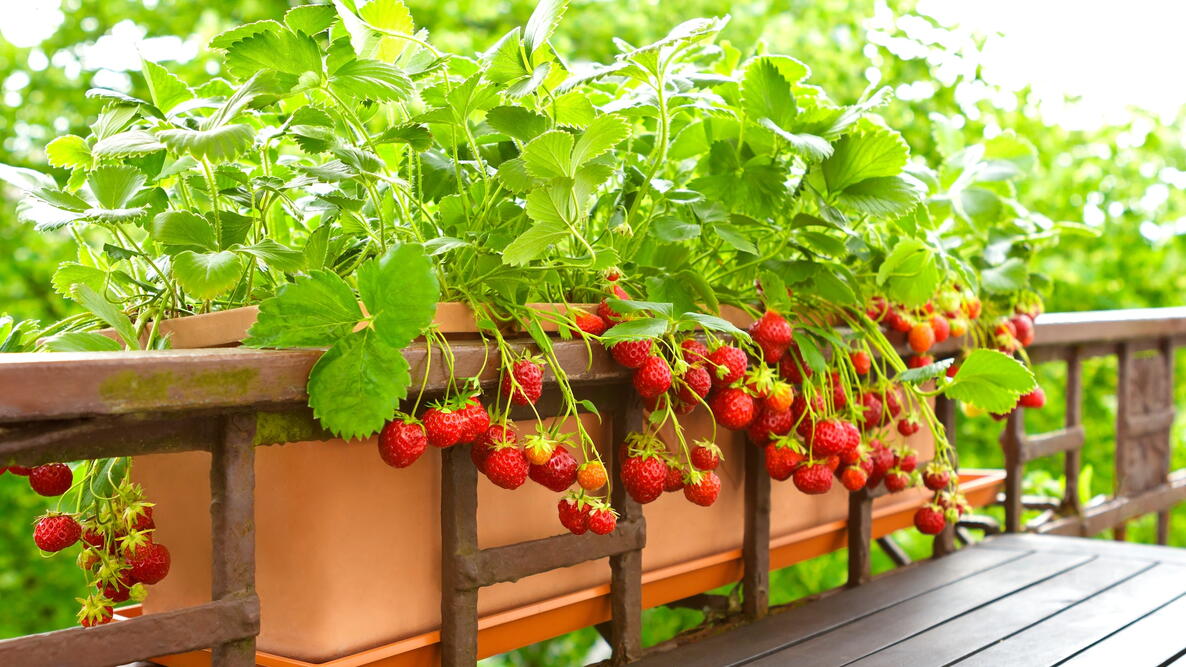
Ripe strawberries thriving in a balcony railing container planter.

Every year, we grow our strawberries in containers! If you dream of harvesting homegrown strawberries but don’t have the space for a big bed, don’t berry your ambitions. Pots of strawberries can be squeezed onto any patio or balcony, and their shallow roots make them a natural fit for container growing. Containers also keep berries cleaner and make harvesting easier.
Here’s how to grow strawberries in containers, whether you’re planting a single pot on a patio or filling an entire strawberry tower.
Choosing the Right Container
Strawberries have shallow root systems and grow horizontally via runners, which means they don’t need super deep pots to thrive. There’s little point in growing them in a deep container; it would just be a waste of potting mix.
Look for pots, planters, grow bags, or containers that are wider than they are deep. Select a container that’s at least 10 to 12 inches wide by 8 inches deep. Pots of this size can accommodate about 2 to 3 strawberry plants.
Tool: Not sure what size container you need? Use our Vegetable Container Size Chart to find the recommended pot size for strawberries and dozens of other edible plants.

I personally keep a few strawberry jars in sunny sections of my garden, with each jar holding about 8 plants. You can also save space by growing strawberries vertically in grow towers or terracotta strawberry pots with multiple planting holes.
Growing strawberries off the ground keeps berries cleaner and makes harvesting easier. Some growers even use hydroponic systems, particularly in areas with poor soil.
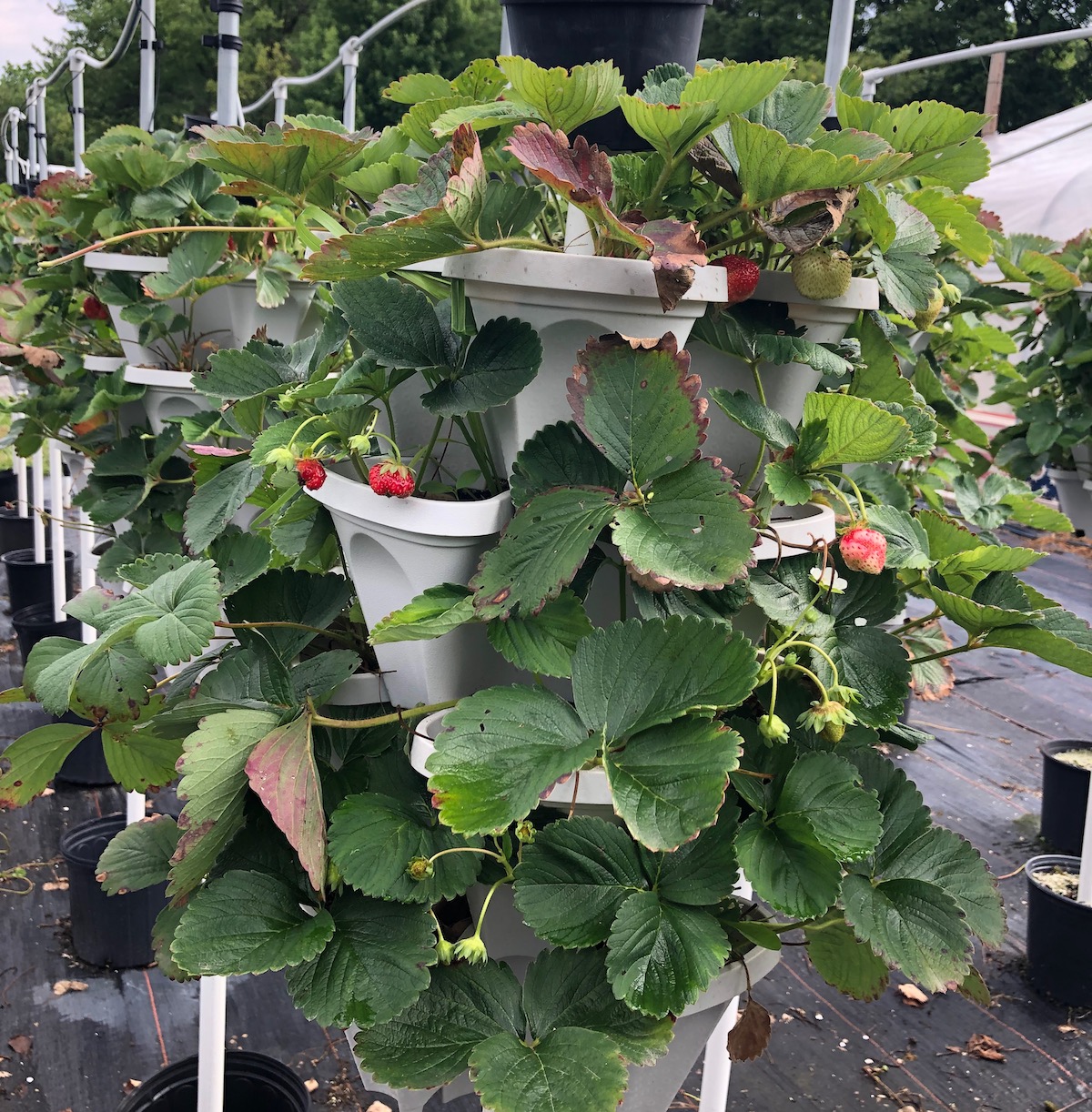
If you’re growing strawberries in standard pots, make sure that any container you choose is well-draining, or add drainage holes, so strawberry roots don’t sit in soggy soil too long.
Best Strawberry Varieties for Containers New H1 and SERP Varieties needs a total rewrite, like improvement we made to blueberries, carrots, and garlic. Not 3 classifications of strawberries but several varieties you can buy that work in containers.
Best Strawberry Varieties for Containers
All types of strawberries can be grown in containers, but varieties that produce fruit over a long season are often the best fit for pots.
If you’re not sure where to start, look for varieties such as ‘Ozark Beauty,’ ‘Fort Laramie,’ ‘Tristar,’ ‘Seascape,’ or ‘Albion.’ These strawberries remain productive over a long harvest season and are popular choices for container gardens.
Most of these varieties belong to the everbearing or day-neutral types of strawberries, which produce fruit over an extended period rather than all at once.
Gardeners who want one large harvest for freezing, baking, or jam-making may prefer a third type of strawberry: June-bearing. However, if your goal is to pick fresh berries throughout the summer, everbearing and day-neutral varieties are usually better choices.
Also, if you’re gardening in partial shade, consider alpine or wild strawberries. These compact plants tolerate lower light levels than most garden strawberries and are particularly attractive to pollinators.
Many gardeners who grow strawberries in containers treat them as annuals and replace them each spring rather than overwintering plants. However, you can also keep strawberries for multiple years by insulating containers or moving them to a sheltered location during winter.
Preparing the Soil and Potting Mix
Strawberries grow best in a rich, well-draining potting mix that has plenty of nutrients to fuel their growth. I like to use a standard potting mix intended for edible crops and blend in about 30% compost before planting.
To give plants an extra boost, you can also add blood-, fish-, and bone meal or another balanced fertilizer. If you prefer plant-based products, look for a fertilizer with slightly more potassium than nitrogen. Too much nitrogen encourages leafy growth at the expense of flowers and fruit.
Also, we never advise using garden soil in containers because it will just compact and become slow to drain, which strawberries definitely won’t like. It can lead to root and crown problems.
The goal is a potting mix that stays evenly moist but never soggy—exactly the conditions strawberries need to thrive. Something like this beautiful potting mix here is just perfect.

Planting Strawberries in Containers
Seed catalogs and plant nurseries usually sell strawberries as either potted plants or bare-root plants. Both are planted in much the same way, although bare-root strawberries should be soaked in water for about 30 minutes before planting.
If you’re planting potted strawberries, gently remove the plants from their nursery pots and use your fingers to loosen any circling roots.
Plant strawberries at the recommended time for your growing region. For more information, see our Guide to Growing Strawberries.
- Fill your container most of the way with potting mix.
- Position the strawberry plant so that the crown sits just above the soil line.
- Add more potting mix around the roots, keeping the crown exposed. Don’t bury it or it may rot.
- Firm the soil gently around the roots.
- Leave about an inch of space at the top of the container to make watering easier.
Tip: If the crown leans to one side, point it toward the edge of the container. As the plant grows, the foliage and runners will naturally spill over the rim.
I like to finish by adding a light mulch of straw around the base of my plants. Mulch helps suppress weeds, keeps berries cleaner, and reduces soil splashing. Just keep mulch away from the crown and avoid burying the foliage.
After planting, water thoroughly and move containers into a sunny location that receives at least 6 hours of direct sunlight per day.
If you’re growing strawberries indoors, place them in the brightest south-facing window available or supplement with grow lights for 12 to 16 hours daily.

Watering
The biggest challenge of growing strawberries in containers is keeping up with watering. Pots dry out much faster than garden beds, especially during hot summer weather.
Potted strawberries should be watered whenever the top 1 to 2 inches of soil feels dry. Water thoroughly until moisture runs from the drainage holes, then empty any excess water from plant saucers.
Terracotta pots dry out faster than plastic containers, so gardeners in hot climates may find plastic pots easier to manage.
If you often forget to water container plants, consider installing a drip irrigation system with an automatic timer.
Fertilizing
Strawberries are heavy feeders and produce best when they’re given a steady supply of nutrients. I like to mix compost into my potting mix before planting and then feed my plants with a diluted liquid fertilizer about once a month during the growing season.
Liquid kelp, fish emulsion, and other balanced fertilizers all work well. Follow the instructions on the fertilizer packaging and avoid overfeeding.
You can also use a fertilizer that’s slightly higher in potassium, such as a tomato fertilizer, every couple of weeks throughout the growing season. This encourages flowering and fruit production and allows strawberries to share the same feeding schedule as tomatoes, peppers, and other fruiting crops.

Common Issues
Strawberries are a natural fit for containers, but even potted plants can run into a few common problems.
- Pests. Birds, chipmunks, and other critters love ripe strawberries. Protect plants with row covers or other deterrents, but avoid bird netting, which can pose a tangle hazard for songbirds and other wildlife.
- Reduced harvests. Strawberry plants may produce fewer berries if they’re under-fertilized, overcrowded, or not receiving enough sunlight. Plants also become less productive as they age and are often replaced every 3 to 4 years. Indoor strawberries require hand-pollination to achieve a good fruit set.
- Dry pots. Containers dry out much faster than garden beds, especially during hot weather. If plants wilt frequently or berries remain small, check soil moisture more often and consider adding drip irrigation.
- Discolored leaves. Yellowing or spotted leaves may indicate overwatering, underwatering, nutrient deficiencies, or fungal diseases.
See our full Guide to Growing Strawberries from Planting through Harvest for more information about these delicious berries.

More Like This

Comments