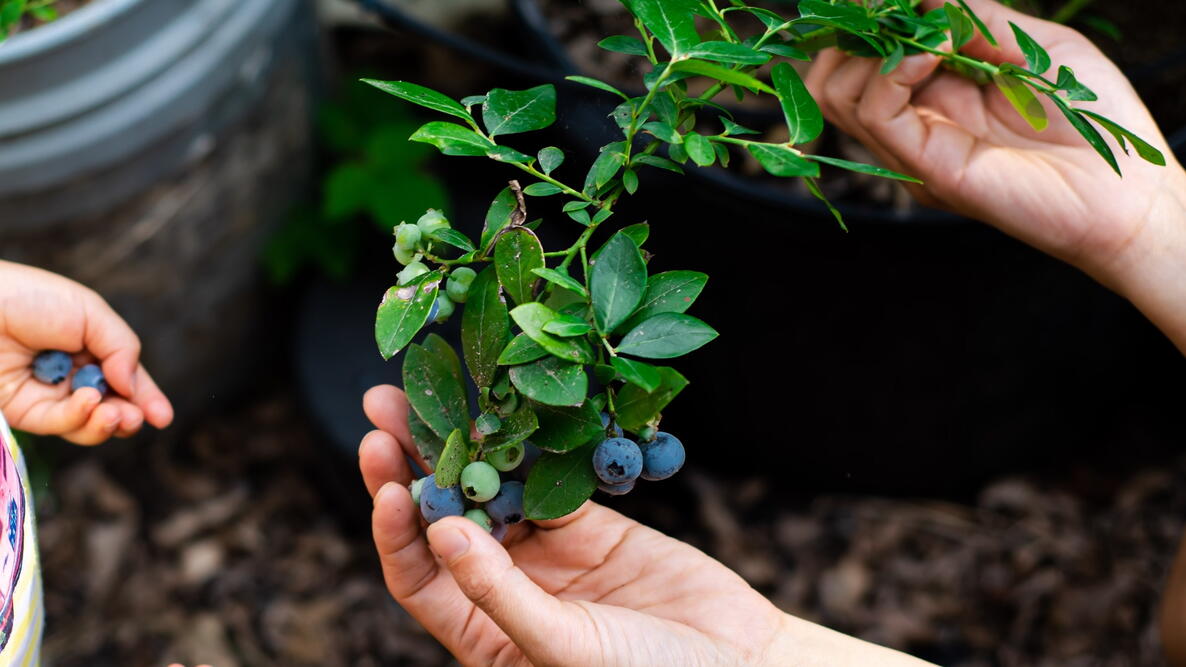

Keeping blueberries happy in a garden can be a bit of a challenge. These acid-loving plants are particular about their soil, and getting conditions just right can be frustrating. Fortunately, growing blueberries in pots and containers can be a simple solution.
Here are the basics of planting and growing blueberries in pots—from choosing the right varieties and potting mix to keeping plants healthy and productive for years.
Growing Blueberries in Containers
Container Size and Type
Before you can start growing blueberries in containers, you’ll need to track down the right planters. And when it comes to keeping blueberries happy, bigger pots are usually better!
In the past, I have started blueberries in fabric grow bags, but I moved them into larger wooden half-barrels as they grew and kept my plant pots on wheeled caddies to make them easier to move around when needed.
Small, young blueberry plants can be grown individually in 5-gallon containers at least 18 inches deep, but they will need to be repotted into larger containers later on. Grow bags, terracotta or ceramic pots, wooden barrels, and sturdy plastic planters can all be used for growing blueberries.
How often you’ll need to repot blueberries depends on the variety of plant you’re keeping. A good rule of thumb is to check your plants at least once a year and repot them when the roots are visible through the pot’s drainage holes, the plant’s growth slows, or the potting mix starts to degrade.
Tip: Most blueberries need a winter chilling period to produce fruit. Plants sold at local nurseries are usually selected for your region’s climate.

Best Blueberry Varieties for Containers
All blueberries can technically be grown in pots, but the best varieties for the job are lowbush and half-high blueberries that naturally stay on the smaller side.
Highbush blueberries can be grown in containers, too, but they’ll need bigger planters and more space to grow.
- If you’re not sure where to start, compact varieties such as ‘Top Hat’, ‘Northsky’, and ‘Sunshine Blue’ are particularly well-suited to container growing.
- ‘Top Hat’ and ‘Northsky’ are excellent choices for colder climates, while ‘Sunshine Blue’ is more heat-tolerant and performs well in warmer regions.
Aside from plant size, choosing blueberry varieties well-suited to your growing zone is key to helping your plants thrive. Lowbush and northern highbush blueberries are notably cold-tolerant and the best choices for cold growing regions.
On the other hand, southern highbush blueberries and rabbiteye blueberries are more heat-tolerant and are recommended for southern gardens.
Tip: Most blueberries need a winter chilling period to produce fruit, so always choose varieties suited to your growing region.
Potting Mix
One of the hardest parts about growing blueberries is providing the right soil pH for these acid-loving plants. This task is much easier if you start them out with the right growing media.
When kept in containers, blueberries thrive in potting mixes designed for acid-loving plants, which you can typically find at garden centers and plant nurseries. You can also grow blueberries in a standard potting mix if you adjust the soil pH by adding sulfur or an organic fertilizer intended for acid-loving plants.
Blueberries prefer a soil pH of between 4.0 and 4.8 and can develop issues in overly alkaline conditions. Fertilizing blueberries with products intended for acid-loving plants or adding elemental sulfur when necessary should keep pH levels from climbing too high.
Even if you are growing blueberries in containers, it’s wise to invest in a soil test kit and to test your soil pH regularly.

I find that blending some compost and sand into potting mixes before planting blueberries helps my plants settle in better, but this is optional.
Planting Blueberries in Containers
Ideally, blueberries should be planted in containers in spring, or at least a few weeks before the expected frost in fall.
- To plant potted blueberries, add several inches of potting mix to the base of your growing container.
- Grasp the plant’s stems in one hand and gently wiggle the blueberry plant out of its nursery container. If the pot sticks, press on the sides of the plastic container to loosen the soil, or run a gardening knife around the pot’s edge to free the roots.
- Once the blueberry is out of its pot, use your fingers to gently tease apart any encircling roots.
- Locate the plant in its new container at the same depth it was growing in its nursery pot.
- Fill in around the base of the plant with more potting mix until the pot is full, ensuring that there’s at least 1 inch of space between the soil line and the pot’s rim so the pot doesn’t overflow when watering.
- Water your blueberry plant well.
- Move your plant into an area that receives at least 6 to 8 hours of full sun per day.
I like to add 2 inches of mulch around the base of my blueberry plants to insulate the soil and reduce soil evaporation rates, but this isn’t required.
If you’re growing potted blueberries on your driveway or on another solid surface, keep the plants on plant caddies or place bricks under the pots to ensure they drain properly.
In hot climates, locating blueberries in a spot that receives light afternoon shade can reduce plant stress and make the plants a little easier to maintain.
Overwintering Container Blueberry Plants
During winter, potted blueberries need some protection to keep their roots from freezing and to prevent pot breakage. I find that covering my plants’ roots with several inches of straw mulch in autumn helps.
Some growers bury potted blueberries in the garden for the winter to insulate plant roots, but you can also move your plants against the side of your home or into another sheltered area where they will stay cool but be protected from drying winter winds.
Watering
Potted blueberries need to be watered more often than plants in the ground, but watering rates vary throughout the year.
During the growing season, blueberries require about 2 inches of water per week and should be watered when the top inch of soil feels dry. These plants have relatively shallow root systems and prefer frequent, light waterings over deep drinks!
During fall and winter, blueberries should be watered more sparingly, but they should never be allowed to dry out fully.
In any season, make sure blueberry plant pots drain properly. Blueberries can’t stand soggy soil and will rot if their roots stay wet too long.

Fertilizing
Blueberries don’t crave tons of nutrients, but they do need fertilizing from time to time, and potted plants need more fertilizer than plants in the garden. To ensure a good fruit set, feed blueberries with a slow-release organic fertilizer intended for acid-loving plants about 4 weeks after planting.
Top-dress your plants once a year in early spring according to the instructions on your fertilizer packaging.
If your blueberries look like they need a pick-me-up, you can also top-dress potted plants with a light layer of compost in spring. Just remember to check the soil pH of potted plants from time to time, as some fertilizers can alter pH levels.

Common Issues
Although blueberry shrubs are quite hardy, even these tough plants can struggle with a few common issues that you’ll want to be aware of!
- Birds. Thwart birds by covering blueberry plants while they’re fruiting with floating row covers or by using natural bird deterrents. At my local berry farm, the blueberries are grown in containers inside a walk-in netted enclosure. I recommend avoiding bird netting draped directly over shrubs, as it can pose a tangle hazard for songbirds.
- Pests. Fruitworms, aphids, and thrips can also attack blueberry bushes. Treat infestations with an organic insecticidal soap spray according to the label instructions.
- Yellowing leaves. Yellow leaves with deep green veins typically indicate that the soil pH is off. You can fix this by testing your soil and adding amendments as required.
- Root-bound plants. Blueberries can outgrow their containers over time. If roots are circling the inside of the pot, growing through drainage holes, or the plant’s growth has slowed, it may be time to repot into a larger container with fresh potting mix.
- No fruit. Blueberries usually take 3 to 5 years to fruit well after planting, so you may need to wait a bit longer if your blueberries aren’t producing big harvests. Although most blueberry varieties are self-fruitful, growing multiple plants together can increase pollination rates and fruit set.

More Like This

Comments