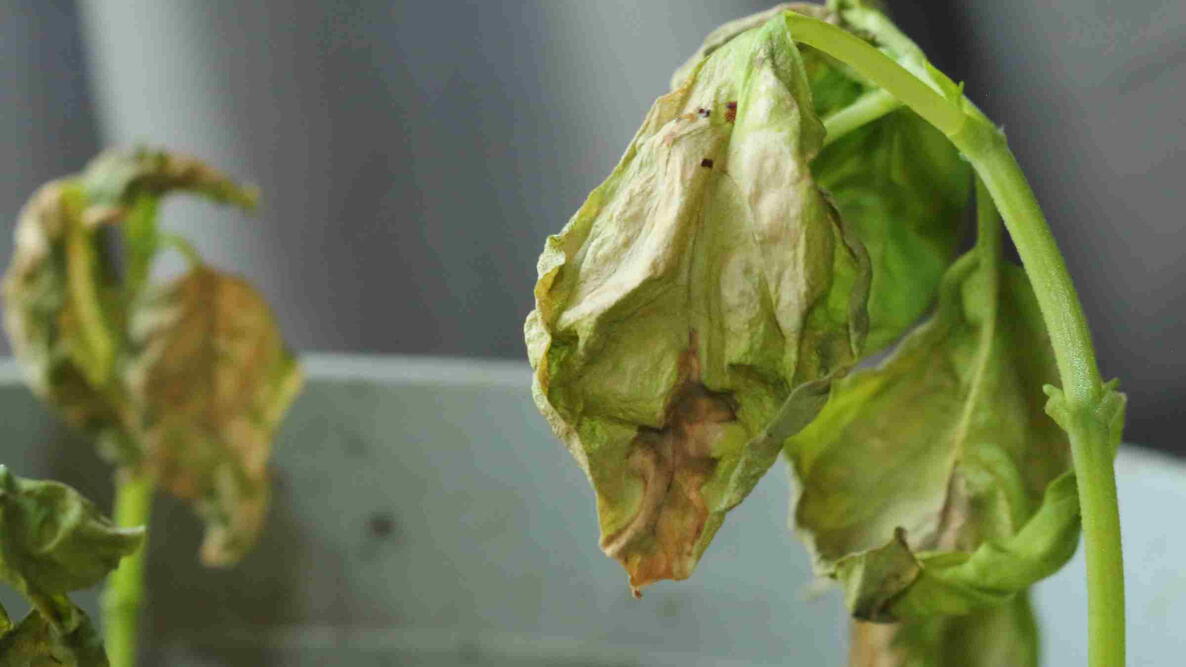
Caption
Verticillium wilt causes gradual yellowing and wilting in infected plants.

Identification
Identifying Verticillium Wilt
Often, gardeners have a hard time narrowing down which of the various wilts and root rots is causing a declining plant. The symptoms are often similar, and in fact, can be indistinguishable for Verticillium wilt and Fusarium wilt in the field. Actual identification can only be done by diagnosing the sample of infected material in a lab.
But there are symptoms to look for. Verticillium wilt causes foliage to fade from green to yellow and then brown, and often occurs in scattered parts of the plant instead of the entire crown at once. A unique and classic characteristic to look for is wilting or yellowing on only a single branch, or only on one side of the plant.

Additionally, slow or stunted growth and smaller-than-normal leaves can be signs to key in on.
Another potential clue, in the vegetable or flower patch, is the wilting of one plant while its neighbors appear fine. This pattern is helpful for ruling out a problem with soil moisture, herbicide drift, or soil toxicity.
For woody plants, take a look underneath the bark of an infected branch, peeling away the top layer. If there are brown, purple, or gray streaks (that don’t appear on a normal branch), it may be Verticillium wilt.
The above symptoms all point to an unhappy plant, but together, they can narrow down your diagnosis from “sick plant” to a potential wilt disease problem.
Control and Prevention
The soil-borne fungi are difficult pathogens to control, and fungicides are not generally effective or practical. Management is mostly good gardening practices, like rotation and planting resistant varieties.
Limit Pathogen Introduction
Limit possible sources of Verticillium in your garden by keeping broadleaf weeds under control. Weeds like lambsquarter and pigweed, both very common in our gardens, can serve as host plants.
If you have an infected tree in your yard, don’t use those leaves for mulch. Gather all vegetative material from suspected infected plants and burn it (if allowed in your area) or dispose of it in the landfill; don’t compost it.
Cultural Practices to Manage Verticillium Wilt
- Look for resistant varieties. Many cultivars have been created that offer significant resistance to Verticillium wilt. Choosing a highly resistant variety is likely your most effective tool to combat this disease.
- Choose varieties that mature early. Verticillium wilt takes time to affect the plant, and an early-maturing variety may allow a harvest before the plant is stunted or killed.
- Rotation of highly susceptible crops, such as tomatoes, can be helpful. Verticillium is a soil-borne pathogen, and levels can build up in the soil. While true garden crop rotation is difficult for those with small plots, any rotation you can do will help with this issue, although it is unlikely to provide complete control due to the long viability of this fungus in the soil.
- The University of California reports that soil solarization, when done properly, can be effective at killing fungal pathogens that cause Verticillium wilt and others. They have an excellent free guide to soil solarization for gardeners.
- These wilt-causing fungi can spread on contaminated garden tools. To reduce the problem, clean all loose soil off of your tools and treat them with a spray of 70% isopropyl alcohol or soak them for a minute in a 10% bleach solution. If using bleach, rinse off, dry, and oil the tools to prevent rusting.


More Like This

Comments