Clubroot in Cabbage: Why Roots Swell and Plants Wilt

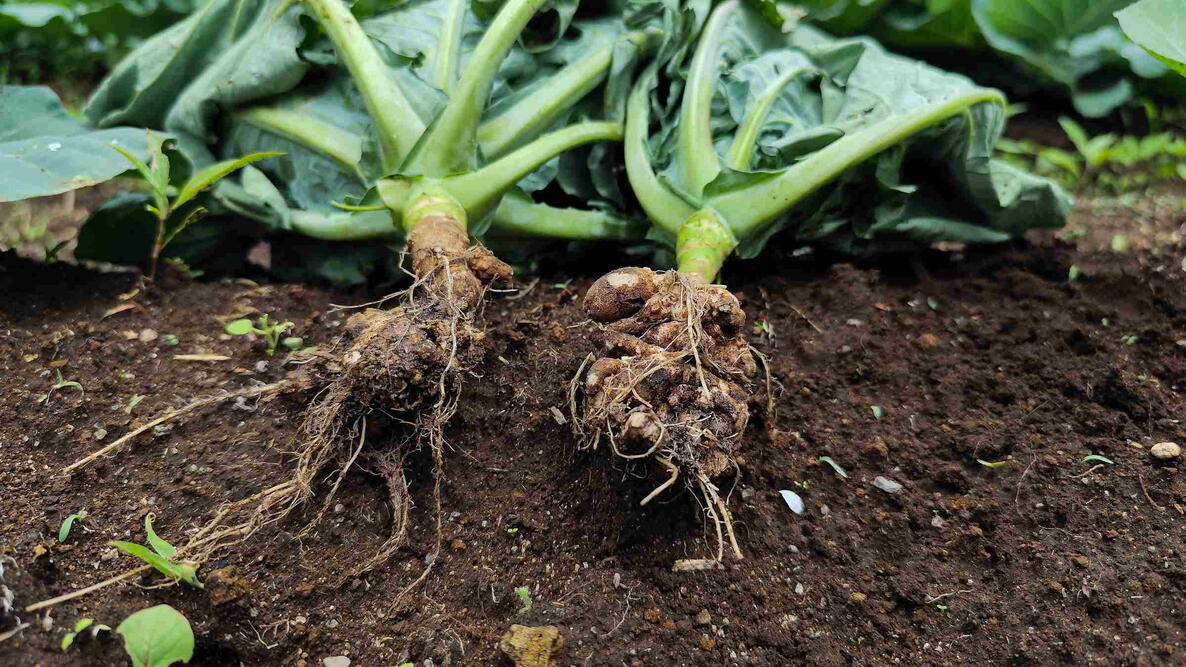
Cabbage plants showing symptoms of clubroot disease (Plasmodiophora brassicae), characterized by swollen, deformed roots,a serious soil-borne disease affecting Brassicaceae crops

Caption

Clubroot causes swollen, misshapen roots that prevent cabbage plants from absorbing water and nutrients.

Photo Credit
Sipayungta
Subhead

Learn how to recognize clubroot in cabbage and other brassicas—and how to manage it.

Written By: Andy Wilcox Master Gardener and Gardening Contributor

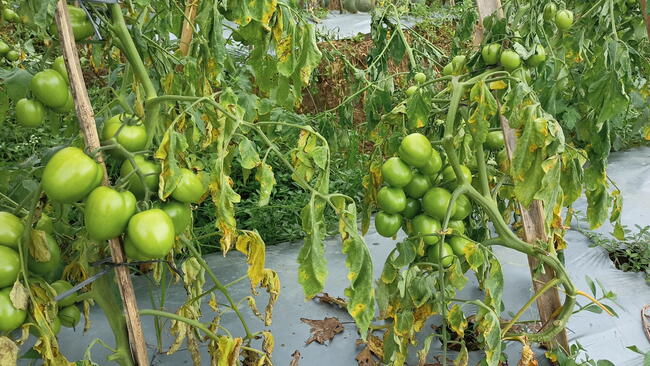
The cabbages are looking lethargic. The broccoli leaves are yellowing and wilting — even though the soil is moist. Your turnips look stunted and strange. What’s going on? If your brassicas are wilting despite adequate water, you may be dealing with clubroot.

What is Clubroot?

Clubroot is not a fungus, although it appears to be one from its symptoms, and in fact was previously classified as a fungus years ago. It isn’t a virus or a bacterium either. Clubroot is a disease caused by a protist (a microscopic parasite), specifically Plasmodiophora brassicae. This protist is an obligate parasite, meaning it needs a living host to multiply and develop. It infects our brassicas, but can also feed on several species of weeds, such as shepherd’s purse and those in the mustard family.

Unfortunately, the clubroot-causing organism can survive as a resting spore in the soil for 10 years or more, making it extremely difficult to get rid of. When conditions are right, these resting spores germinate to form zoospores, which are mobile in the soil and can latch onto the fine root hairs of their host plants. Warm soil and higher soil moisture favor germination, and the organism does best in acid soil conditions. 

The clubroot parasite infects the roots of plants, primarily brassicas, causing them to swell and become distorted. Like a thumb hit with a hammer, the swelling prevents the roots from doing their primary job. Infected roots cannot take up water and nutrients. While cabbage is severely infected, all the brassicas are susceptible, including cauliflower, broccoli, kale, turnips, mustard, collard greens, and even radishes and Brussels sprouts.

Identification

The most common symptoms of clubroot in cabbage and other brassicas are wilting despite moist soil, yellowing leaves, stunted growth, and swollen, distorted roots.

Clubroot affects root function, and a primary clue that your brassicas might have clubroot is if they wilt easily, when other nearby plants do not.

If you have an area of wilted brassicas, first check the soil moisture. If it feels damp an inch down, indicating sufficient moisture, choose the worst of the wilted plants and pull it up (it likely won’t survive or thrive anyway). Check for the characteristic swelling and galls on the roots. Clubroot may be well advanced below ground before symptoms are visible on the rest of the plant. Choosing a plant to sacrifice can help you rule out other problems, like cabbage maggots.

Clubroot disease on Brussels sprouts roots
Severe clubroot damage causing swollen, distorted roots on Brussels sprouts. Credit: Chad Hutchinson

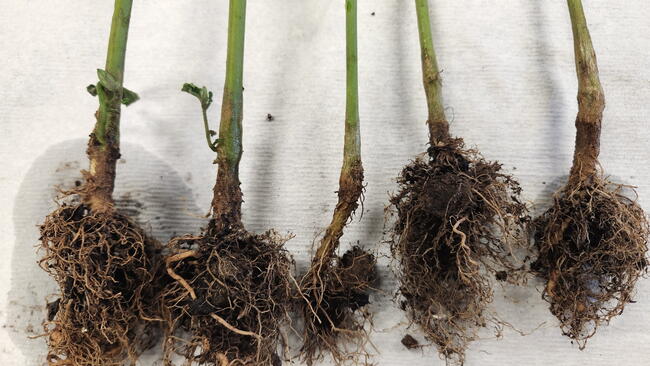
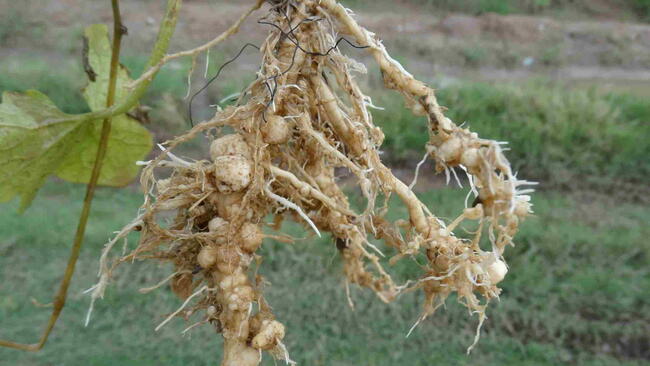
A plant with clubroot has roots that are obviously distorted.  I think it looks like a sci-fi monster the crew of a spaceship might find trying to attack the propulsion engine and feed off the energy. Well, maybe a bit less dramatic than that. The main idea is that the roots won’t look normal at all. They’ll be covered with warts, bumps, galls, and knobs. As a whole, the root system resembles the end of a club, hence the name.

Since the plants are suffering from impaired root function, the symptoms often include wilting, stunted growth, and leaf yellowing. If brassicas are starting to wilt but the soil moisture is adequate, it’s time to start thinking about clubroot.

In early stages, plants may wilt during the heat of the day and seem to recover overnight—even when the soil is moist—before eventually declining permanently.

Younger plants may be killed by clubroot, while older plants may look poor and fail to produce a head or sufficient foliage.

How does clubroot look different from root-knot nematode problems?

First, consider the plant with the problem. A tomato won’t suffer from clubroot, but a cabbage will. If it’s a brassica, then:
Above-ground symptoms may look the same, since both impede root function. You’ll have to pull up a plant.

Look at the pattern of root distortion. If the roots are grossly swollen and distorted into something you could use in self-defense, it’s likely clubroot. If the distortions are small and can be viewed as separate swellings, they may be root-knot nematodes

Severe root-knot nematode infections can resemble clubroot, so if you aren’t sure, you can send a piece to your University Extension for testing for a nominal fee.

Control and Prevention

Unfortunately, the clubroot-causing organism can survive as a resting spore in the soil for 10 years or more, making it extremely difficult to get rid of. Fortunately, clubroot is not carried on seeds, and it is not an insect-borne pathogen. Our best chance to avoid problems is to be cautious, inspect any purchased transplants closely, and buy compost from reputable companies. Clubroot usually gets into our gardens on infected transplants or from compost that wasn’t properly heat-treated.

To reduce clubroot problems, follow these steps:

  • Remove all soil from garden tools. Scrub down and sanitize tools used in a suspected infected area with a 1:9 bleach solution or 70% strength rubbing alcohol.
  • Use only compost that was properly heated if you are buying from an outside source.
  • Grow brassica plants from seed by starting them indoors (clubroot is not seed-borne).
  • Rip out and bury infected plants or dispose of them in the trash. Home compost piles rarely reach the hot temperatures (greater than 148℉ throughout the pile) needed to kill the pathogen.

Crop rotation, given the long residence time of clubroot, is ineffective in solving the problem. While a rotation of 4-7 years will reduce the presence of spores, many can persist for over 10 years. At ten years, you’ve probably moved or found a different place for your brassicas.

If you have a clubroot issue, you can grow other crops in that area the next year, but take extreme caution to avoid transferring any soil from an infected area into other areas of your garden. Spores can hitchhike on tools, fall off roots when pulling up dead plants in the fall, or even be transferred by the mud on your gardening shoes. You might be better off planting some perennial flowers in that area and then growing brassicas in a new raised bed.

Finally, there are a few resistant cultivars. A few clubroot-resistant varieties are available, and while they aren’t immune to clubroot, they can continue to grow and function longer than non-resistant varieties.  

Clubroot FAQ

Can you cure clubroot?

No. There is no cure for clubroot once it is in the soil. Management focuses on preventing spread, improving soil conditions, and growing resistant varieties.

How long does clubroot live in soil?

Clubroot spores can survive in soil for 10 years or more. Because of this long lifespan, short crop rotations usually don’t eliminate the problem.

Does lime prevent clubroot?

Lime can help reduce clubroot severity by raising soil pH. The disease is most aggressive in acidic soils, so maintaining a neutral to slightly alkaline pH may help suppress it.

Can you eat cabbage with clubroot?

Yes. Clubroot affects the roots, not the cabbage head. However, infected plants are often stunted and may not produce well.

About The Author
Andy Wilcox

Andy Wilcox

Master Gardener and Gardening Contributor

Andy Wilcox is a freelance writer, flower farmer, and master gardener with over 25 years of experience in gardening, horticulture, and forestry. He is the co-owner of Stone’s Throw Flowers, a business...