Caption
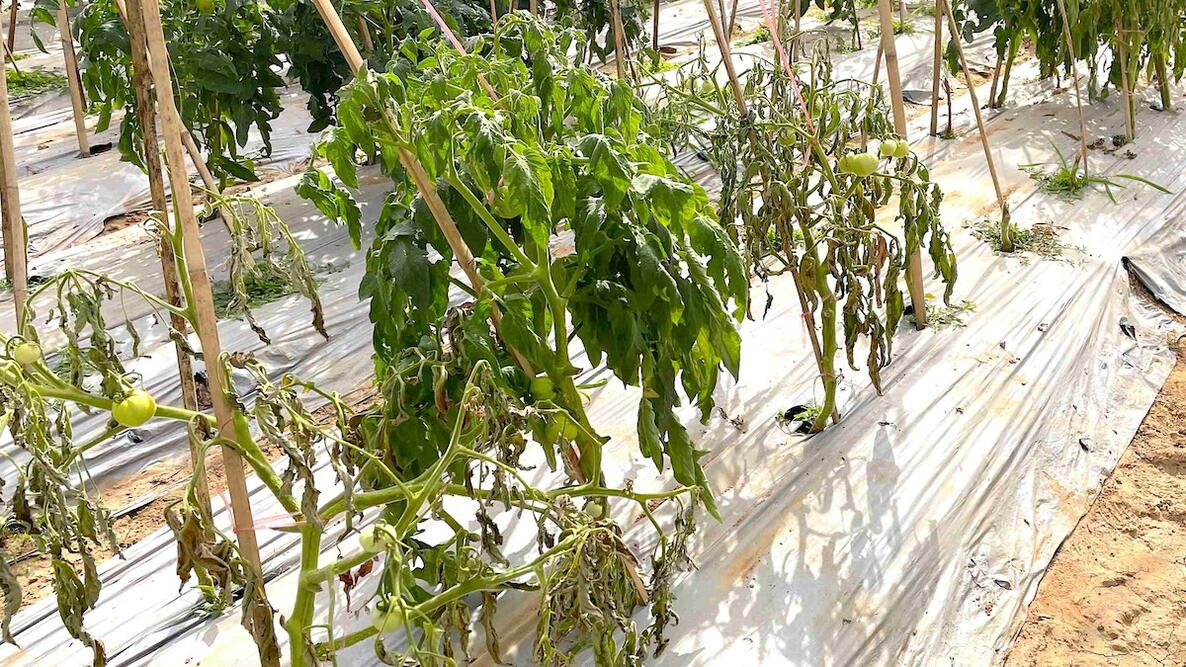
Bacterial wilt causes sudden wilting in garden plants.

Wilting plants on a hot summer afternoon aren’t anything new. Sometimes a little water is all they need. But if it’s your tomatoes or cucumbers that keep wilting—even when the soil is moist—it could be bacterial wilt, a serious plant disease that affects common garden crops.
Bacterial wilt can cause plants to collapse quickly and never recover. Learning how to recognize the symptoms early can help you remove infected plants and protect the rest of your garden.
What is Bacterial Wilt?
Bacterial wilt is a plant disease caused by bacteria, and it occurs in two different forms in home gardens. One affects tomatoes and other nightshade plants. The other affects cucurbits, such as cucumbers, melons, and squash.
In tomatoes and other members of the nightshade family—including peppers and eggplant—bacterial wilt is caused by Ralstonia solanacearum. You may also see it listed under its older name, Pseudomonas solanacearum. The tomato family is called Solanaceae, which matches the species name of the bacterium and can help make it easier to remember.
In cucurbits—especially cucumbers, cantaloupe, and honeydew—bacterial wilt is caused by a different bacterium, Erwinia tracheiphila. This disease is spread by striped and spotted cucumber beetles. It is most common in cucumbers and melons and less common in pumpkins and squash.

Although the bacteria are different, the damage they cause looks much the same. Ralstonia lives in the soil, while the cucurbit pathogen relies on an insect vector, but both interfere with the plant’s ability to move water. The bacteria clog the water-conducting tissues inside the stem, causing plants to wilt even when the soil is adequately moist. A wilted plant may look thirsty, but watering will not help.
Bacterial wilt caused by Ralstonia has a very wide host range. It can infect nearly 200 plant species! As well as the nightshade family, it affects sunflowers, hollyhocks, zinnias, dahlias, and more. Erwinia bacterial wilt affects only cucurbits—but that still includes many garden favorites, such as cucumbers, summer and winter squash, and pumpkins.
Whether it’s your tomatoes or your cucumbers, the symptoms and management actions are the same.
How does bacterial wilt get into your garden?
Bacterial wilt of tomatoes and other tomato family plants is most often introduced through infected transplants. The disease thrives in warm, wet conditions and can be spread by contaminated tools, diseased plant stock, and irrigation water.
This tomato pathogen is more common in the Southeast but can show up in other regions through contaminated greenhouse transplants. Although nursery growers work hard to prevent it, the disease can occasionally slip through. Once introduced, the bacteria can survive in the soil, making it difficult to eliminate.
Unlike tomato wilt, Erwinia tracheiphila does not survive in the soil. The bacteria overwinter inside cucumber beetles. During the growing season, the disease is spread by striped and spotted cucumber beetles. They pick up the bacteria when feeding on infected plants, and then transfer them to the next plant they feed on.

Identification
The first symptom is usually just a few wilted leaves. Often, it’s the youngest or newest leaves that wilt first, while the rest of the plant still looks normal. That’s an important clue. When a plant is underwatered, it tends to look droopy. With bacterial wilt, only a few leaves wilt at first, and the early wilting happens without yellowing.
As the disease progresses, plants may wilt during the afternoon, then appear to recover overnight. This pattern makes sense. The afternoon is when plants need the most water due to heat and sun. If the plant’s water-conducting system is beginning to fail, that stress shows up first during the hottest part of the day.
As evening temperatures cool, the plant’s remaining ability to move water may be enough for the leaves to look normal again. The next afternoon, even with adequate soil moisture, the plant wilts once more. Over time, the leaves turn yellow and brown, the plant stops recovering, and eventually dies.
Other symptoms of bacterial wilt include brown discoloration on and inside the stem. If your plant shows these signs, you can try a simple garden-level test to help confirm the diagnosis.

Quick Garden-level tests
If you suspect a plant is infected, there are a couple of field tests you can try.
- This bacterial streaming test for tomato bacterial wilt can help you identify the culprit. Take a cleanly cut section of the diseased stem and suspend it in a glass of water. If you see a milky white stream leaving the stem after a few minutes, that’s the Ralstonia bacteria and their slime.

- The “cut-stem string test” can help you identify bacterial wilt caused by Erwinia in your cucurbits. To learn how to perform it, see this guide from Iowa State Extension.
Look-alike diseases
Bacterial wilt can be confused with Fusarium wilt, Verticillium wilt, and other tomato diseases. If the leaves yellow before wilting, it might be one of these and not bacterial wilt.
For cucurbits, check soil moisture and inspect the base of the plant for squash vine borer holes, which can cause similar wilting symptoms.

More Like This

Comments