Leaf Spot Diseases: How to Identify and Treat (Before They Spread to Other Plants!)

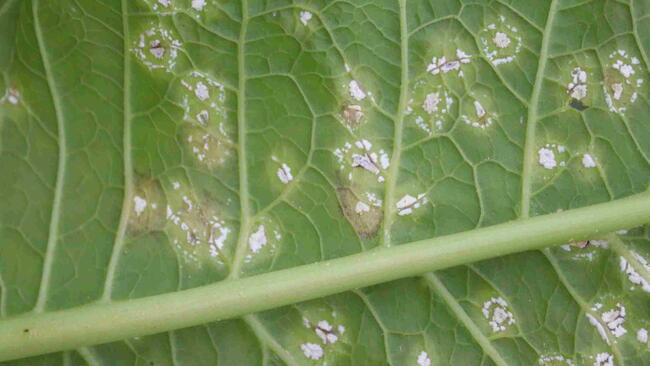
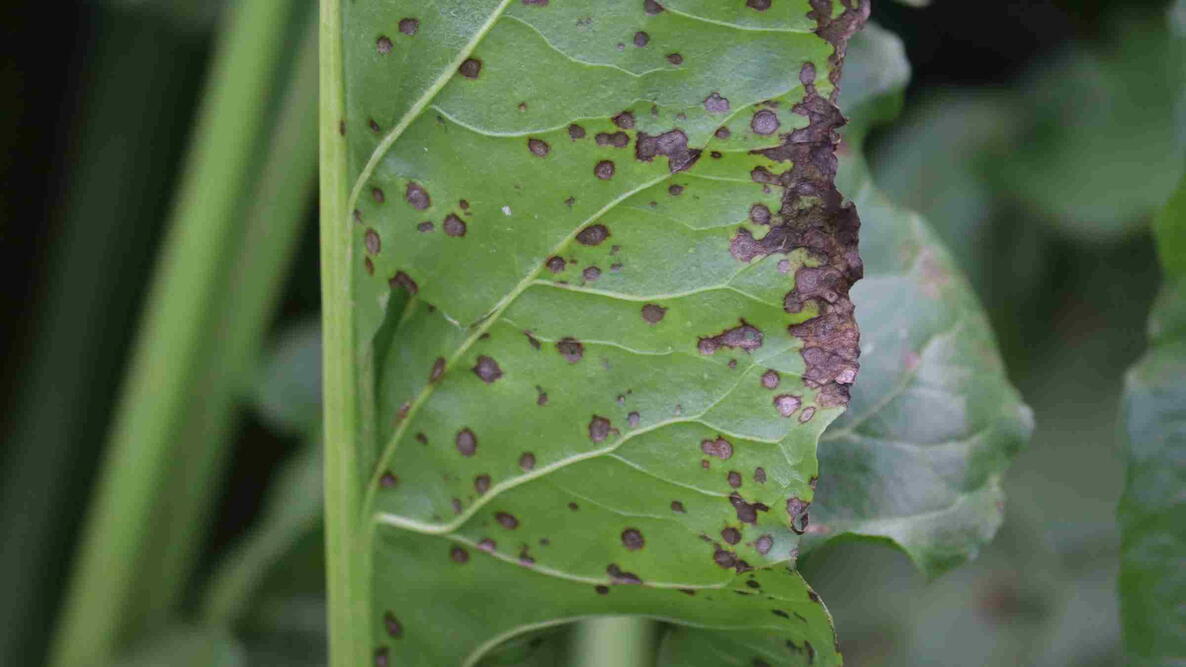
Cercospora leaf spot (Cercospora beticola).

Caption

The telltale target-like spots of Cercospora leaf spot mark this sugar beet leaf—a reminder of how quickly fungal diseases can spread in humid gardens.

Photo Credit
Kazakov Maksim
Subhead

What Is Leaf Spot and How Does It Affect Your Garden Plants?

Written By: Andy Wilcox Master Gardener and Gardening Contributor

Polka dots look great on scarves or Dalmatians, but when it comes to our garden plants, spots are a warning sign of leaf spot disease. Leaf spots are among the most common plant diseases, and nearly every plant species has a leaf spot pathogen. While minor infections usually cause little harm, severe fungal leaf spot can stress plants, reduce yields, and even cause defoliation.

What is Leaf Spot?

A leaf spot is exactly what it sounds like—brown, gray, black, or yellow spots on the leaves instead of healthy green foliage.
Most leaf spot diseases are caused by fungal pathogens, though bacteria and certain insects can create similar damage. Because fungal leaf diseases are the most common, we’ll focus on those here.

Each leaf spot fungus is typically host-specific: the one that infects tomatoes, for instance, won’t spread to crabapples.
Leaf spot infections range from mild to severe. In annual vegetables, they can destroy crops or reduce yields. On shrubs and ornamental trees, they rarely kill the plant outright but can cause defoliation if severe infections occur for several seasons.

Identification

How to Identify Leaf Spot

Identifying leaf spot can be tricky since symptoms vary between species. The good news? Treatment and leaf spot control methods are similar for most pathogens. If you’d like to narrow it down for pure morbid curiosity, start with the host plant, then look at not only the spots and their internal patterns, but also whether they appear on only the leaves, the leaves and stems, and the fruit.

Leaf spot symptoms on a leaf
Leaf spot symptoms on a Brassica leaf, showing brown and yellow lesions caused by common fungal plant diseases. Credit: Lertwit Sasipreyajun

Leaf Spots on Beets, Spinach, and Chard

If your leafy greens like beets or spinach show grayish-white, irregular spots with dark edges, you’re likely dealing with Cercospora leaf spot (Cercospora beticola). This fungal disease also affects Swiss chard and common weeds such as lambsquarters and pigweed, which serve as alternate hosts. Spots may merge, causing yellowing leaves and eventual withering. The centers often show concentric rings, like a target — a classic symptom of Cercospora leaf spot.

Leaf Spots on Broccoli, Cucurbits, and other Brassicas

Members of the Alternaria fungus group are responsible for many brassica leaf spot infections. Several species commonly affect our garden crops, with A. brassicicola and A. brassicae frequently bothering our favorite brassicas, such as kale, broccoli, and cabbage. On susceptible plants, spots caused by Alternaria often appear as brown spots with yellow halos. Eventually, on older spots, the central brown portion may crack. The disease usually first shows up on older, lower leaves. Check out this page from Cornell University for some great pictures to help you identify Alternaria problems.

Symptoms of alternaria blight in Mustard crop
Symptoms of alternaria on mustard leaves, showing brown spots with yellow halos. Credit: Rupinder Singh

Leaf Spots on Tomatoes

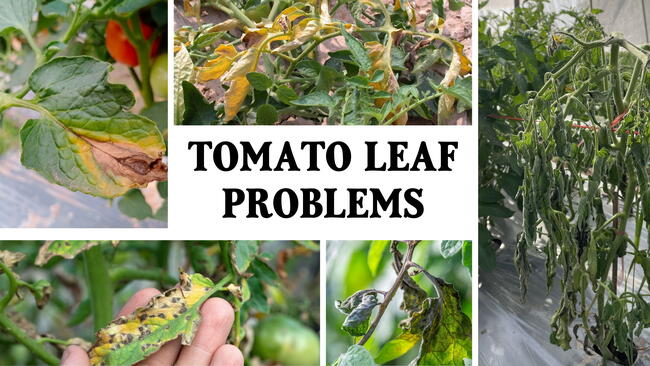
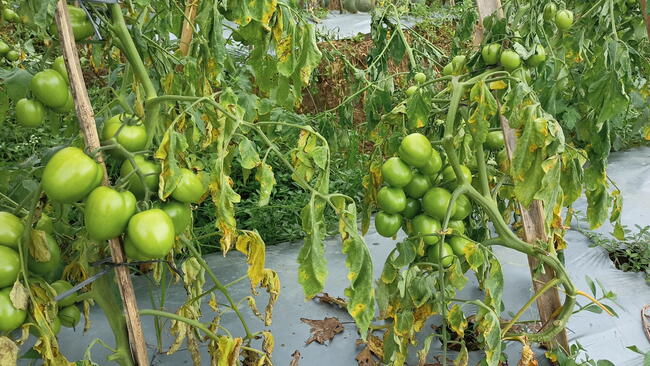
One of the most frequent tomato leaf diseases is Septoria leaf spot, caused by Septoria lycopersici. This fungal leaf spot overwinters in infected debris, so garden sanitation in autumn is crucial. Symptoms usually appear when the first fruit sets — small spots with gray centers and brown edges that merge over time. Unlike some other tomato spotting diseases, Septoria typically doesn’t affect the fruit, so if your fruit is also showing symptoms, it’s likely a different problem. 

Control and Prevention

How to Control and Prevent Leaf Spot

Leaf spot control focuses on limiting spread during the season and reducing overwintering spores afterward. During the growing season, most of our fungal leaf pathogens are spread by wind, splashing rain, or irrigation. They are most active and easily spread in high humidity and warm temperatures. Many fungi overwinter in the soil or in plant detritus. When conditions become favorable again, they are dispersed to find new sites on plant tissues. Once they’ve gained a foothold, they can continue to spread to uninfected adjacent plants.

Gardening Practices to Limit Leaf Spot Disease

  • Clean up infected plant debris in fall — many pathogens overwinter on dead leaves.
  • Avoid overcrowding when planting to ensure air circulation and reduce humidity. Crowded plants are more susceptible to the spread of pathogens.
  • Proper pruning allows sunlight and airflow into dense foliage, especially for tomatoes. Pruning is especially beneficial for tomatoes and can also help control unruly plants and improve yields.
  • Water from the base, if you can. For small gardens, use a long watering wand to reach below the foliage and apply water at the base without bending over. Larger gardens can use drip tape or soaker hoses.
  • If you water overhead with a sprinkler, do so in the morning to allow the foliage to dry during the day, reducing humidity in the leaves quickly.
  • Prune regularly to allow sunlight and airflow into dense foliage, especially for tomatoes. Just like us, vigorous and healthy plants are better able to shrug off disease, or grow faster than it kills them.
  • Fungicides are rarely needed in home gardens and work best as preventatives, not cures.
  • Rotate crops where possible and always sanitize garden tools to avoid transferring fungal spores.
  • Choose leaf spot–resistant plant varieties when available for long-term protection.

Admittedly, crop rotation can help with limiting disease buildup, but it is challenging at the home garden scale. Many of us simply don’t have enough space. To make it harder, we often unintentionally transfer soil from one location to another on our tools, spill diseased plant material out of our wheelbarrow, or forget to sanitize our garden pruners. By all means, practice rotation when you can, but more important for fungal leaf spot diseases is good fall garden sanitation and planting of resistant varieties where available.

Final Thoughts on Managing Leaf Spot in the Garden

Leaf spot diseases are frustrating but manageable. By combining good garden hygiene, proper watering, and resistant varieties, you can keep most fungal leaf spot problems under control—protecting your garden’s beauty and productivity all season long.

About The Author
Andy Wilcox

Andy Wilcox

Master Gardener and Gardening Contributor

Andy Wilcox is a freelance writer, flower farmer, and master gardener with over 25 years of experience in gardening, horticulture, and forestry. He is the co-owner of Stone’s Throw Flowers, a business...