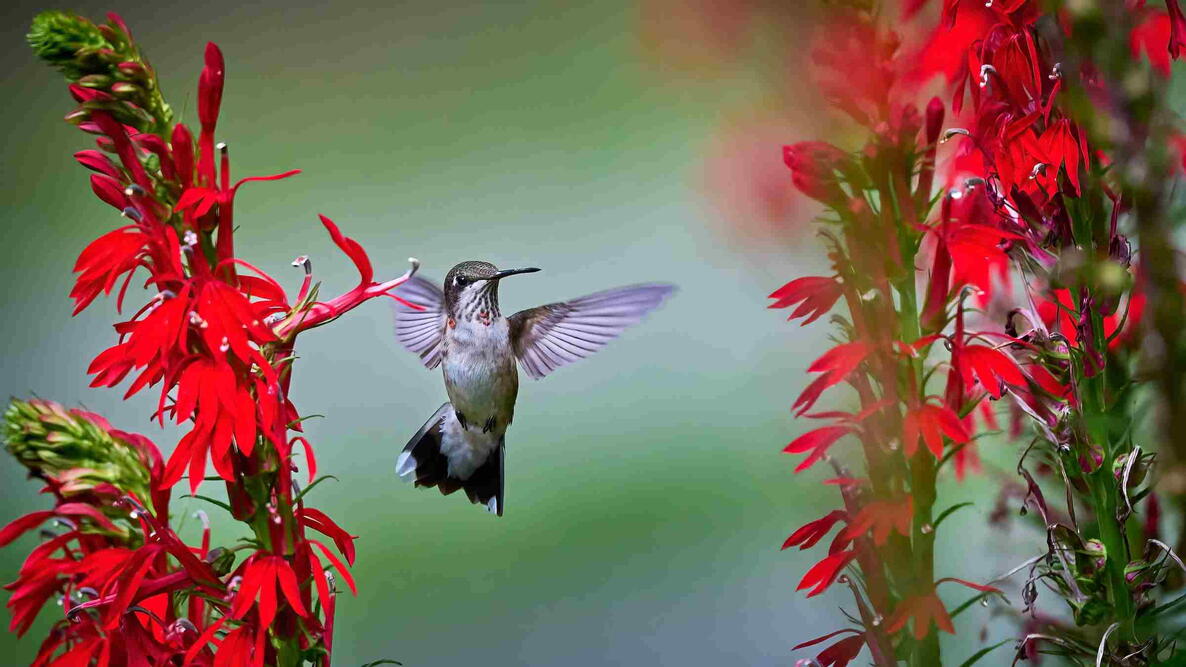
Caption
The vivid blooms of Lobelia cardinalis attract hummingbirds of all ages, including this juvenile male Ruby-throated.

Planting

Cardinal flowers can be grown either from potted nursery plants or seeds, and they’ll often bloom in their first year. I recommend not growing cardinal flowers in pots, as they have high water needs and tend to dry out too quickly in containers. Here’s how to plant them!
When to Plant Cardinal Flower
Potted cardinal flower plants grow best when they’re planted in spring, after the risk of frost has passed. Seeds, on the other hand, should be planted outdoors in the fall or cold-stratified indoors for 60 days before spring planting.
Where to Plant Cardinal Flower
In the wild, you’ll often spot these perennials growing on damp streambanks and along pond edges, or in marshes, bogs, and forest margins that stay damp. Cardinal flowers thrive in woodland gardens, wildlife habitats, and rain gardens, too, and they can be grown near or even in ponds and other water features!
How to Plant Cardinal Flower
Seeds in Fall
Prepare the planting site by removing weeds and raking the area flat before the ground freezes. If needed, blend some compost or aged manure into the soil too. Once the ground freezes solid, lightly scatter cardinal flower seeds over the soil, cover the seeds with a light dusting of straw mulch, and only water the plants when they sprout in spring.
Seeds in Spring
Place cardinal flower seeds on a damp paper towel, seal them in a Ziploc bag, and keep the bag in your fridge for 60 days. Then, fill seedling trays or pots with pre-moistened seed starting mix, scatter the seeds over the soil line, and keep the seeds evenly moist and in bright, indirect light. Once the seedlings sprout true leaves and are a few inches tall, harden them off over a period of 1 to 2 weeks and then plant them outside when the risk of frost has passed.
Planting Potted Plants
Dig a hole that’s slightly larger than your plant’s root ball and amend the soil with compost or aged manure if needed. Then, plant your cardinal flower at the same depth it was growing in its nursery container, add mulch, and water well.
Growing

Cardinal flowers are much easier to care for if you plant them in an area that stays naturally damp. These plants can even be grown in areas that flood regularly, or along pond margins where the plants are partially submerged. If you keep these plants in standard garden beds, make sure to add mulch to keep the soil insulated, and water them often and well! You can use a mulch calculator to quickly estimate how much mulch to use.

Dividing Cardinal Flowers
Cardinal flowers are short-lived but self-sow readily and produce offsets that can keep plant colonies going for decades. If you leave the old flowers in place, these plants will naturally self-sow, but you can also divide cardinal flowers using the following tips:
- Time it right — The best time to divide cardinal flowers is in autumn, about 4 to 6 weeks before frost is expected. You can divide plants when they look overgrown or about once every two to three years.
- Divide correctly — Use a shovel to dig a circle a few inches out from the base of your plants, and then lever the plant’s root ball up from the soil with your shovel blade. Use a spade or two gardening forks back-to-back to cut the cardinal flower clump into sections that each have a clump of roots and healthy stems and leaves.
- Replant quickly — Replant the divided cardinal flowers at the same depth they were previously growing as soon as possible, then water them in and add mulch. If you’re planting multiple plants together, space each cardinal flower plant about 1 to 2 feet from its neighbor.
Fertilizing Cardinal Flowers
Amending your garden beds with compost before planting cardinal flowers will give these plants the boost they need to bloom and grow. After that, top-dress the soil with an annual application of compost in spring or fall, and skip the fertilizer entirely. Like other native plants, cardinal flowers can develop floppy stems if they get too much fertilizer!
Winter Care
Winter hardy in Zones 2 or 3 and warmer, cardinal flowers are very cold-tolerant plants and generally don’t need winter protection.
Although cardinal flowers don’t need winter protection, adding mulch around the base of your plants can prevent frost heaving that disturbs plant roots. Pruning is usually not needed with these plants, but you can cut away old leaves and stems throughout the year and cut dead stems down to the ground in spring before cardinal flower starts growing. If desired, you can also deadhead old flowers to trigger plants to rebloom and pinch back leggy stems to a leaf node to make plants a little bushier.

More Like This





Comments