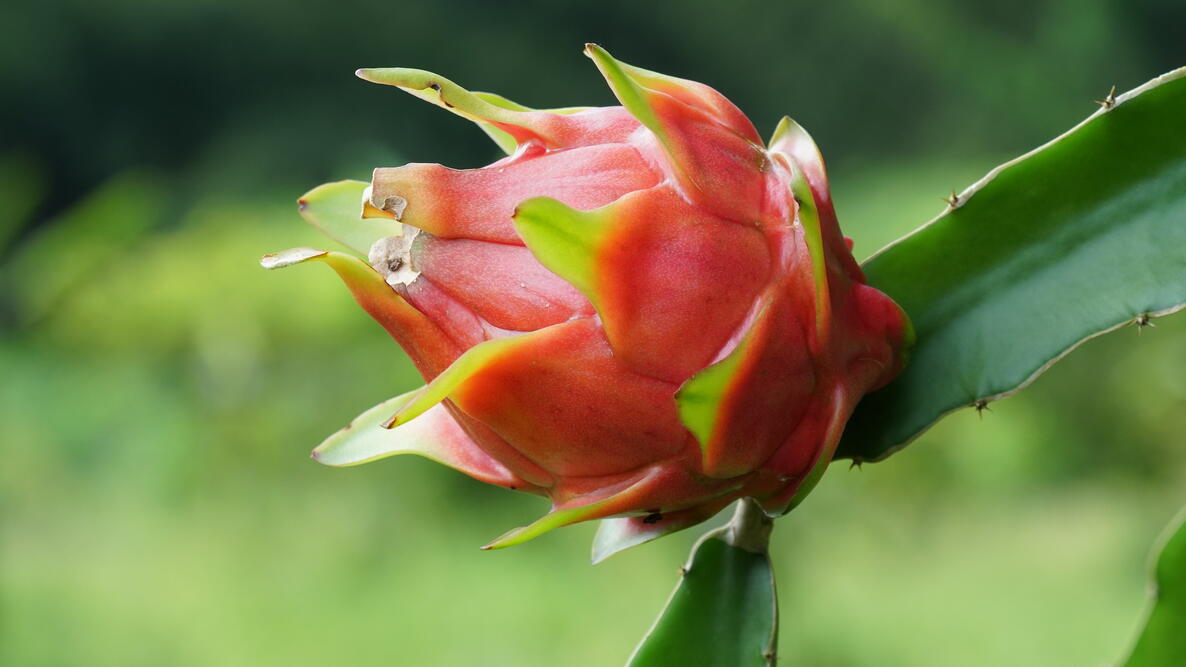
Caption
Up close and exotic: the vibrant red dragon fruit, ready to wow your taste buds and your garden.

Want to scale up your garden or houseplant collection with an unusual and edible plant that’s easy to care for? The dragon fruit cactus may look fierce, but this tropical beauty makes an excellent low-maintenance indoor plant, and it can be grown outdoors in many areas, too. Over the years, I’ve grown dragon fruit plants on their own and as a method for propagating hybrid moon cactuses, and here are the tricks I’ve used to get my plants to grow, bloom, and fruit!
About Dragon Fruit Plants
There are around 20 different species of dragon fruit cactuses, which vary in size and color. Some species stay relatively small and are appropriate for indoor growing, while others stretch up to 20 feet high and work best in the garden or in spacious planters that can be moved indoors in winter. But despite that diversity, all types of dragon fruit have a few things in common:
- They produce long, trailing stems that are covered in prickly spines.
- They often climb using their aerial roots and benefit from trellising.
- Their fragrant, night-blooming flowers last just one day.
- And mature plants may yield curiously shaped fruit with funky spikes that bring to mind the leathery skin of a dragon!

If you’ve ever spotted a dragon fruit in the grocery store, you know these tropical fruits always stand out. The most common type of dragon fruit has pink skin and a sweet, fleshy white interior that’s packed with tiny, black seeds. But some varieties of dragon fruit taste delightfully sour rather than sweet, and they may have yellow or red skins with red or white interiors.
Also known as the pitaya, pitahaya, or strawberry pear, dragon fruit is native to Mexico, Central America, and South America, and it prefers more humidity and water than your average cactus. If you live in growing Zones 10 through 12, you can often keep these plants in the garden year-round. But in chilly New England, I keep dragon fruit as a houseplant and only move it outside during summer when the weather is nice and mild.

Harvesting
Dragon fruit can produce edible fruit multiple times a year. You’ll know the fruit is ready when the skin is the mature color for the type of dragon fruit you’re growing, and the spikes on the fruit skin begin to look a little withered. Ripe fruit should also wobble a bit when you gently shake a dragon fruit branch, and it should be easy to twist off the plant with your fingers. If the fruit falls off on its own, though, it’s likely overripe!

After picking, dragon fruit should stay fresh in the fridge for about 2 weeks. Alternatively, it can be flash-frozen and stored in the freezer for up to 3 months. When you’re ready, you can eat dragon fruit as-is or use it in smoothies and other dishes. Dragon fruit flowers are also edible and sometimes brewed into hot or cold teas.
Pests and Problems
Indoor and outdoor dragon fruit are relatively hardy plants as long as they’re provided with the right care. However, these plants can sometimes be plagued by a few problems like:
- Pests, such as mealybugs, thrips, and spider mites, may occasionally feed on dragon fruit; however, these pests can be managed with organic soap or horticultural oil sprays. Larger critters, like rodents, birds, and raccoons, may also nibble on dragon fruit when it’s grown outdoors, but deterrent sprays and fruit protection bags should foil these critters.
- Fungal issues can cause dragon fruit plants to develop dark spots and lesions on their stems and fruit, and potentially cause plants to turn mushy with rot. This typically occurs when plants are overwatered or grown too closely together, and can be managed by following proper watering and spacing guidelines, as well as regularly pruning your plants.

Types
There are lots of dragon fruit varieties to choose from, which vary in size and fruit color. Here are a few top picks you may want to try!
- ‘Zamorano’: This plant stays on the small side and makes an excellent houseplant.
- ‘Natural Mystic’: Produces red-skinned fruit with bright red interior flesh that’s perfect for adding color to your cooking.
- ‘Yellow’: Most dragon fruit has pink skin, but this variety has bright yellow skin and pure white flesh.

Potting and Repotting
How Often to Repot
Dragon fruit grows quickly and should be repotted regularly when the plants outgrow their containers or get unwieldly.
When to Repot
Spring is the best time to repot!
How to Repot
- Choose the right pot: When repotting dragon fruit, select a heavy and well-draining pot that’s one or two sizes larger than your existing growing container. I find that heavy ceramic or terracotta containers work best with these plants.
- Use a rich potting mix: Unlike most cactuses, dragon fruit prefers to grow in a rich potting soil rather than a succulent or cactus potting mix blend.
- Handle with care: Be sure to handle dragon fruit carefully when repotting to avoid broken stems and roots, and to protect your fingers from sharp prickles. Then, repot the plant at the same depth it was growing in its old container, add a supportive stake or trellis if your plant needs one, and water well.

Throughout the year, mature dragon fruit plants should be pruned regularly to remove dead, damaged, or overcrowded stems, thereby opening up the center of the plant to light and air. This should help your plants flower and fruit better, and also prevent fungal issues. When pruning, be sure to use a sharp, sterilized knife or a set of pruners, and save your cuttings for propagation if desired.
Propagation
Dragon fruit can be grown from seed, but this requires a lot of patience as plants generally won’t flower or fruit for at least 7 years. For faster results, try stem propagation instead!
- Take your cutting: Using a sharp, sterilized knife, cut a 6- to 12-inch section from a healthy dragon fruit stem.
- Let it callus: Place the cutting to the side in a warm, dry spot for 7 to 10 days, allowing the cut stem end to callus over and reducing the risk of rot.
- Plant: Dip the cut stem end in rooting hormone and then plant it upright about 1 to 2 inches deep in a rich potting mix. Keep the plant in bright indirect light and water just enough to keep the soil lightly moist.
- Repot if needed: Once roots form and the cutting cannot be easily lifted from the soil, move your new plant to a bright location and care for it just as you would the parent plant. You can repot or move rooted cuttings outdoors when the cuttings are about 4 to 6 months old and the weather is warm enough.

More Like This




Comments