
Planting

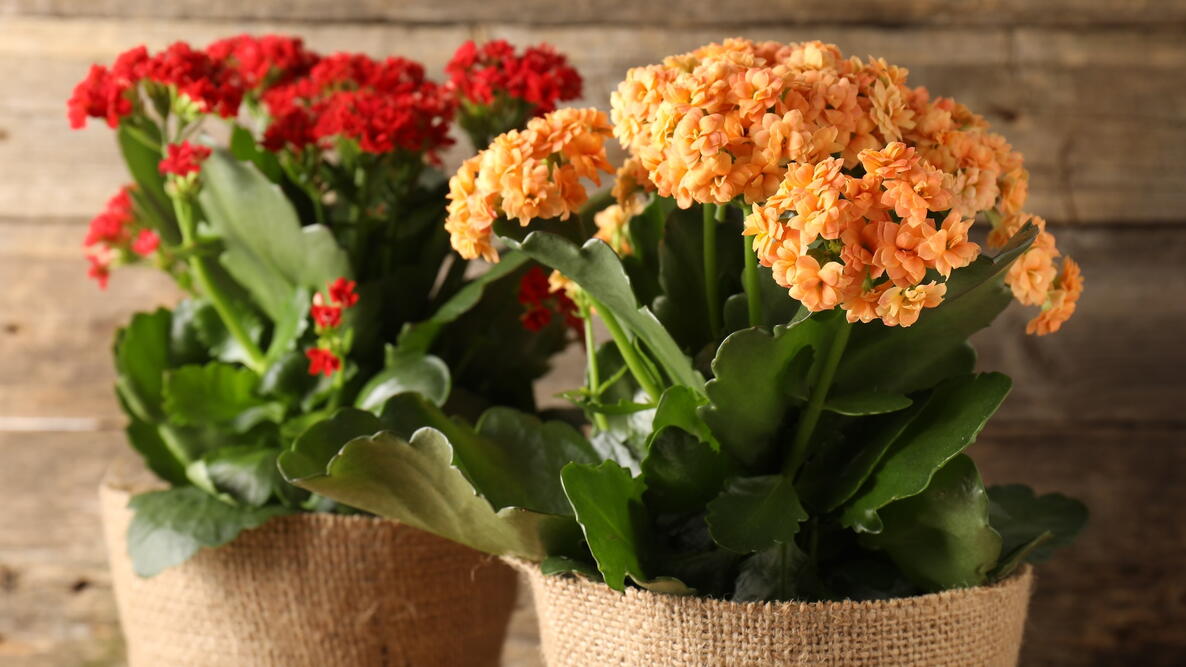
I like to repot houseplants as soon as I bring them home, and this is particularly true for succulents like kalanchoe. Often, nursery containers are made of plastic, which can hold onto water and make succulent roots more likely to rot. Repotting new plants also gives you the chance to check them over for potential pests and plant them in pretty new containers that match your home’s décor!
- Remove the old pot: Gently remove your kalanchoe from its old container while supporting the plant’s stems and leaves so they don’t break. If the pot isn’t budging, run a butter knife around the pot’s rim to gently loosen the soil.
- Choose the right pot. Kalanchoe don’t like to be root-bound, but repotting them into an oversized container can increase the chances of overwatering your plant. For best results, choose a terra-cotta pot with drainage holes in the base; select a container that’s just 1 inch larger than your plant’s nursery pot.
- Use well-draining soil. Well-draining soil is essential for succulents, so I usually grow kalanchoe in a store-bought potting mix intended for succulents. You can also grow these plants in a mix of 1 part potting soil and 1 part cactus soil, or blend plenty of perlite or sand into a standard potting mix to increase drainage.
- Handle leaves carefully. Kalanchoe leaves are filled with water and break easily with rough handling.
- Plant correctly. To repot, gently wriggle your kalanchoe out of its nursery container, tease apart the roots, and place at the same depth it was growing in its old container. Fill in the empty space around the plant’s roots with more potting soil, water well, and use sharp scissors to nip away any damaged leaves or spent flowers.
Growing

Kalanchoe grows well in windows that receive bright light throughout the day. But if you want to prompt your plants to rebloom, you’ll need to deprive them of light in autumn—much like how you’d trick poinsettia into turning red!
Since kalanchoe blooms according to day length, move your plant into a location that stays completely dark for about 14 hours a day starting in October. Depriving kalanchoe of light in the evening for about 4 to 6 weeks should prompt these plants to set flower buds and start blooming in January or February. However, if you’d like your kalanchoe to bloom at Christmas, you’ll need to start depriving your plant of light a few weeks earlier.
Kalanchoe Plant Care
You can keep kalanchoe in bloom a bit longer by moving them into a cool room that stays between 45° and 65°F when the plants start flowering.
Types
Most indoor kalanchoe grow to around 6 to 12 inches high, but some varieties can stretch up to 20 feet tall outdoors. If you’re on the hunt for a new kalanchoe, here are some of the most popular species and what makes each stand out.
- Florist’s Kalanchoe or ‘Widow’s Thrill’ (Kalanchoe blossfeldiana): One of the easiest to find, ‘Widow’s Thrill’ has glossy leaves with scalloped edges and produces brightly colored clusters of flowers in midwinter.
- Panda Plant (K. tomentosa): A favorite with children, the panda plant is easily recognized by its silvery leaves that have brown dots at the edges and are coated in a delicate, velvety fuzz.
- Mother of Thousands (K. daigremontiana): If you want to propagate houseplants, mother of thousands is one of the best plants for the job. This kalanchoe grows to about 3 feet in height and produces countless baby plants along the margins of its toothed leaves.
Propagation

Although kalanchoe can be grown from seed, it’s much easier to propagate kalanchoe plants from stem cuttings collected in late spring to early summer.
- Take the cuttings: Take 4-inch-long cuttings from kalanchoe stems at a leaf node. Use a sharp, sterilized knife or pair of scissors to do this.
- Let them dry: Place the cuttings to the side in a warm, dry area for a few days to allow the cut stem ends to callus over.
- Pot them up: Dip the cut stem ends in rooting hormone and plant the cuttings 2 inches deep in pre-poked holes in pots filled with potting mix.
- Wait for roots: Move the cuttings into bright, indirect light and don’t water the cuttings for 1 month. After this time, the cuttings should have rooted, and you can safely care for them just like the parent plant.

More Like This

Comments