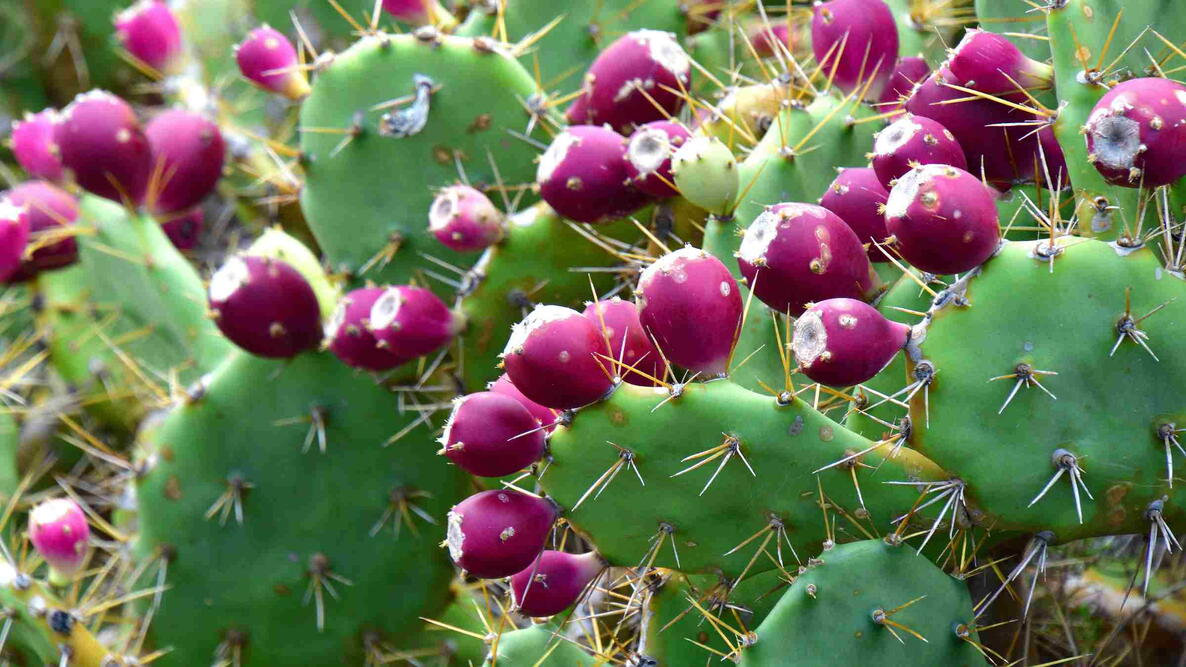
Caption
Prickly perfection: stunning paddle-shaped stems, blooms, and even edible pads!

Whether you keep them indoors or out, prickly pears are un-pear-alleled plants with stunning good looks—and they’re edible! Although most cactuses crave the heat, prickly pears are among the most widespread and cold-tolerant cactuses you can find, with some species able to overwinter in areas as cold as Zone 4. Even in chilly New England, I’ve successfully grown prickly pears in my garden, and I’ve also cultivated them as houseplants—so I’ll share all my favorite growing tips right here!
About Prickly Pear Plants
Like most cactuses, prickly pears are native to the Americas; however, unlike many other cactuses, prickly pears have a wide geographic range and grow wild as far north as Canada. Some varieties are surprisingly cold-tolerant, while others prefer warm, dry conditions. That means in the southern and western U.S., prickly pears often thrive outdoors in xeriscapes and rock gardens, while in colder regions, they’re more often enjoyed indoors as easygoing houseplants.
No matter where you grow them, prickly pears are impressively hardy as long as they’re planted in well-draining soil and get plenty of sun. Their flat, paddle-shaped stems make a striking silhouette, and once mature, they’ll reward you with big, showy flowers, pollinator visits, and even sweet fruit. On top of that, most varieties have edible paddles (nopales), which are famously used in tacos and other tasty fare.

Although some prickly pears grow up to 15 feet tall, others stay much shorter, and common varieties, like the bunny ear cactus, can be kept as small houseplants. I’ve grown a few prickly pear plants in a bright window in my home and was pleased to find them very easy to care for and undemanding in terms of water and fertilizer. But if you’d rather grow prickly pears outside, these plants look stately in xeriscape beds along with coneflowers, yucca, agave, and other plants that don’t need much water, or they can be grown along property lines as a handy natural fence.
Harvesting
Slow-growing prickly pears can take 3 to 4 years to produce fruit and flowers, but most plants yield edible cactus paddles even earlier. When harvesting, always wear gloves and use a sterilized knife to cut the fruit and stem paddles between their segments. Prickly pear fruit should be peeled before eating, while paddles will need their spines stripped away carefully before you cook them up.

Types
Most types of prickly pears are edible, but the Opuntia ficus-indica is the most common variety used in cooking. Depending on your plant interests, you may also enjoy these relatively easy-to-find options:
- O. microdasys: Also known as the bunny ears cactus, this small prickly pear grows up to 2 feet high and is commonly cultivated as a houseplant.
- O. humifusa: A ground-hugging option for outdoors, this prickly pear grows 12 inches high, produces yellow blooms in summer, and is winter hardy in Zones 4 and up.
- O. macrohiza: At 6 to 12 inches high, this cold-hardy prickly pear can be grown indoors or outside in rock gardens.

Potting and Repotting
How Often to Repot
Indoor prickly pears don’t need to be repotted often and only require a pot upgrade if they become rootbound or top-heavy.
When to Repot
The best time to repot prickly pears is in spring and summer.
How to Repot
- Let the soil dry: Cactus pots are easier to remove when the soil is dry. Don’t forget to wear gloves!
- Remove the old pot: Holding the cactus in one hand and the pot in the other, carefully wiggle the plant pot free. If the pot sticks, use a butter knife to loosen the soil from the pot’s rim.
- Use a well-draining potting mix: Select a potting mix specifically designed for cactuses and a well-draining pot, and plant your cactus at the same depth it was growing in its old container. Firm the soil around the plant’s roots and wait at least one week before watering.

Propagation
Prickly pears can be grown from seed, but this is an act of patience and will take years to yield a plant that’s big enough to flower. To speed things along, most growers propagate prickly pears from paddles instead, which can be harvested from the plant in spring or summer.
- Use a sharp knife: Remove a paddle cutting by cutting between the segmented cactus paddles with a sharp, sterilized knife.
- Let the paddle callus: Place the cutting to the side in a warm, dry spot for a few days so it can callus over.
- Plant it right: Plant the cut paddle end in a pot filled with a well-draining cactus potting mix and water it just once immediately after planting. Watering more than this can lead to rot.
- Repot: Once the cactus paddle has formed roots and can’t be easily lifted from the soil, repot it into a larger pot if needed, or plant it outdoors after the risk of frost has past.


More Like This

Comments