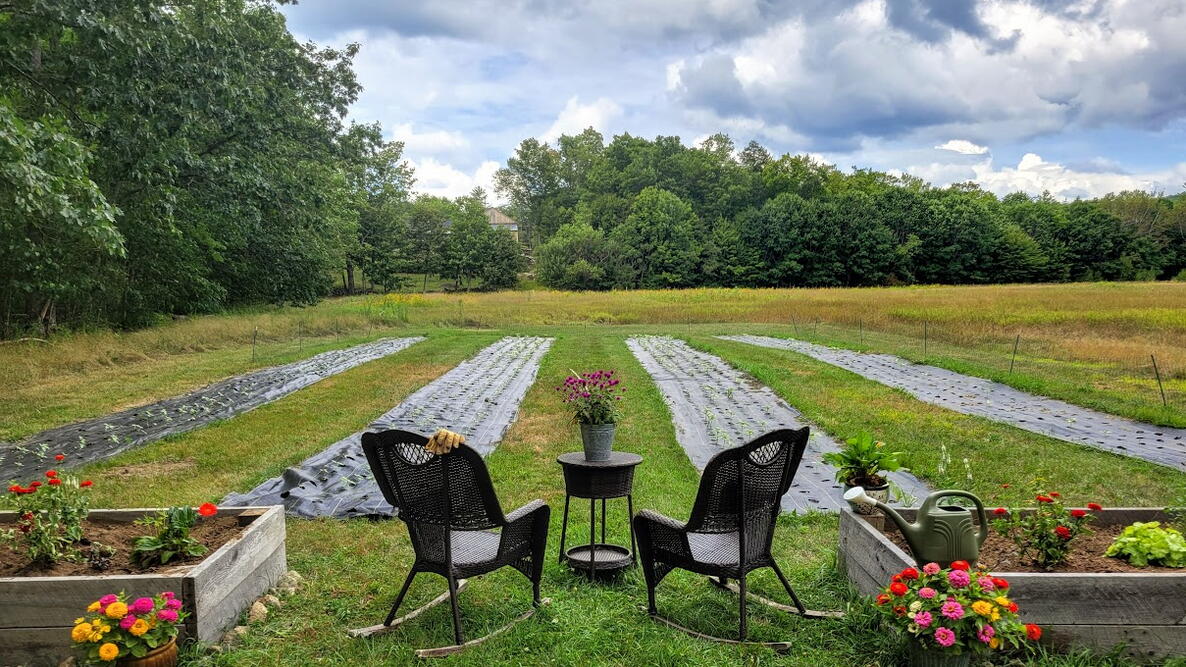

This season, we’re all about flowers! Ready to join us? Think of this guide as a starting place for beginner flower gardeners. We’ll cover where to get plants or flower seeds, what supplies you will need, how to plant flowers to maximize their lifespan so they bloom with radiant color!
We’re going to get right to the part where we get our hands in the soil and start planting! In my previous blog posts, we’ve chosen the appropriate growing site, learned how to build a raised flower bed, and also filled the bed with some great soil. We also chose the flowers we plan to use. Later, you can go back and read these posts if you’d like. But let’s get to the work of planting so we can reap the benefits of the beauty of flowers!
Where to Get Seeds and Plants
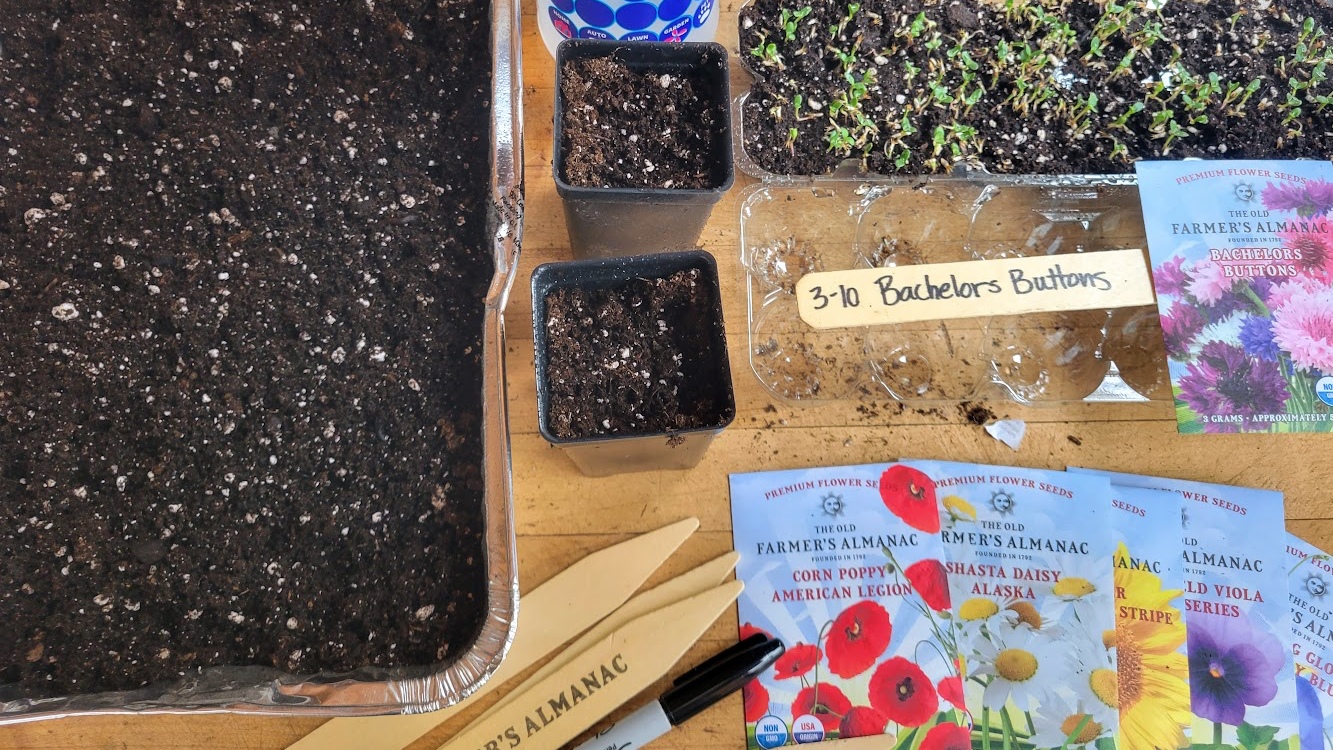
Seeds: I have a cut flower farm where I start thousands of seeds each season under grow lights. We’ll talk below about how to start seeds.
Seedlings: But I also order in some of the really hard-to-grow plants that we call plugs, basically seedlings that have had a good jump start on their root growth but aren’t quite fully grown yet. They are like adolescents in the plant world. You can also buy seedlings.
Plants in Pots: Even still, when I drive by a nursery or just want to spend time looking at different varieties of flowers and shrubs, I inevitably end up taking home a few plants that look lonely. I’m a sucker, and I won’t deny it!
See my Top 10 Easy Flowers to Grow From Seed.
How to Start Seeds and Plants
- Start Your Own Seeds Inside: If you are planting your beds in the springtime, then you will have a lot of options. You can plan ahead and start your seeds inside your home under grow lights so that, depending on the hardiness of your plant choice, you can get those seedlings tucked right in as soon as we pass the safe planting date in your zone. In this way, you give them a great head start and get a jump on the growing season. This is especially helpful if you live in a cooler growing zone that has a short season of sufficient light and temperatures.
- Start Your Own Seeds Outside: Directly sowing your seeds right into the soil is a perfectly fine option, though it can be a little bit trickier and I find it less dependable. If you choose to directly sow into your flower beds, be sure to plant according to the package instructions, water often, protect from birds looking for an easy food source, and keep vigilance and patience close at hand. Many flower seeds are small and have tough seed coverings; it can take some time for them to sprout. When seedlings are young, they require daily attention.
- Buy Local: At local plant nurseries, they have started the seeds for you. By early spring, the plants have surpassed the plug or seedling stage and entered early adulthood. They are a bit stronger now. Whenever I go to a nursery I ask for their native plant section. For starters, I like to see what options there are that I haven’t come across before, and I think it’s also important to let the nurseries know that I am interested in buying native plants, not just the imported ones. Our native plant species are the ones best suited to our climates, as they have co-evolved within our ecosystem. They also are the basis for the local food web and what our pollinators and birds rely on as a food source—and for some, a habitat. Whether you go in looking to browse or go in seeking something specific, if you are anything like I am, you will not leave empty-handed!
- Plant Trades: Swaps with friends, plant groups, or neighbors can be a great way to share the “florabundance.” You can also divide from other plants in your flower beds or source from other parts of your property where the plants have spread beyond their boundaries. Where I live there are many church and civic groups that offer plant sales early in the springtime—and again sometimes in the fall. Usually some of the community members who represent years of gardening experience and have a plethora of plants in the garden divide up and sell their cuttings to raise funds for their particular groups. There are also a number of gardening clubs in the area where trades are par for the course among plant lovers. One of the most fascinating aspects of plant growing for me is the abundance of wealth one can garner from one humble bloom upon one beautiful flower. Plants might just be the best ROI (return on investment) if you are one to dig into the numbers.

Gathering the Goods: Supplies You Need
Over the years, I’ve gotten a bit better at managing my almost-predictable need (as soon as I start a project) to have to run back to the barn or to the house for a specific tool, plant, or bathroom break. Four decades into living, I’m now learning a thing or two! A mental walk through the steps that you will be taking will help you foresee what it is you might forget if you simply lead with zeal alone, grab the plants, and head outdoors.
- Plants (of course!)
- Water (We fill up a large tub of water from the house and dip into it for watering.)
- Gardening shovel, trowel, or hori-hori knife
- Garden gloves—or go gloveless; up to you
- Bark mulch or straw to cover

Spacing for Optimal Growth
Resist the temptation to overload! The above pictures were taken about 2 months apart. Your garden bed will likely look rather sparse when you start. That is normal. As the plants grow and mature throughout the season they will fill out—and up and over—and eventually spread into and wind through each other. Plants want to grow, and they will! Witnessing the meandering vines and voluptuous blooms as they twist and twirl upward and outward, seeking sunshine, soil, or some space to spread, is one of the simplest joys of gardening! If you overfill to begin with (and trust me, it’s hard not to add “just one more!”), then your plants will be competing for nutrients and water and might even throw shade over one another. A little space for optimal growth between both plants and people is always a good rule of thumb in my book.
Spacing for each plant is usually listed on the tags if you purchase plants from a nursery or can easily be looked up in a handy reference guide such as The Old Farmer’s Almanac Flower Gardeners Handbook. In general, though, I usually give at least 18 to 24 inches between plants when starting out in a garden bed of this type.
If you find that your flower bed looks too sparse for your liking after you have planted, then you can always add a focal point—such as a potted flowering annual, a trellis, or a spinning ornament—to provide a little visual interest. Yard and estate sales or thrift and consignment stores can be fun places to wander around and score unique garden treasures!
Breaking Up the Root Ball
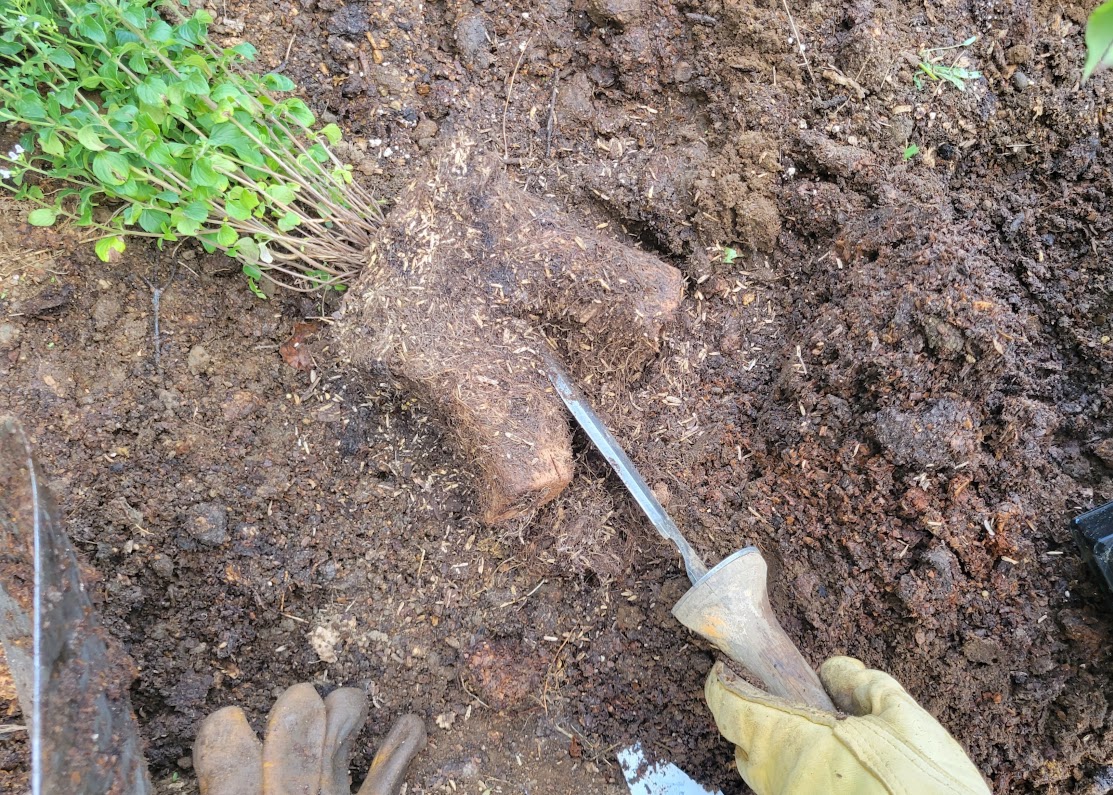
If you purchase your plants from a nursery, then chances are, regardless of how healthy they look on top, they have established a closed root system within the pot they are in and might just be a dense, tangled knot of roots. Before planting, it is important to loosen up that root ball to allow the roots to spread outward and seek the necessary water and nutrients rather than stay all balled up within itself and continue to grow in circles as it has done in the pot, searching for life outside of the plastic container. To tease them apart, you can either use your hands and gently rough them up a bit, allowing for the roots to fall free, or water the root ball by setting it in a large bucket of water. This can help break up the dense soil that has become hardened in there. Another—and often my preferred—way to break up a root ball is to simply cut it up. With the hori-hori knife, I will either cut it in half or in quarters, depending on how dense the root system is. It feels harsh, but I have seen the resilience of plants that have had their roots cut time and time again and believe they thrive on just a bit of tough love.

Watering What You Want to Grow
In planting a garden, you take on the new role of “water bearer.” You must water whatever it is that you want to grow. Water is essential, especially at the start, when your garden is just beginning and the plants are in transition. In order to set root and settle in, the need for water daily—and even twice a day if extremely dry—is crucial. In an extremely dry summer season, to the point where grass is drying and dying and you feel it under foot, you will be watering your plants daily unless you have an irrigation system set up or are in an area with lots of rain. Early mornings and early evenings are the best times to water—and an aspect of gardening that I look forward to throughout the growing season. Enjoying the morning mist, seeing dew drops adorning leaves, and noticing sleepy pollinators in the wee hours—bookended by the most stunning sunsets, cricket-song serenades, and bats swooping overhead in the evenings—creates calming moments that are filled with beautiful, grace-filled transitions, as you pour life into the roots of your blooms.

Welcoming the Pollinators
As soon as I planted this Veronica (V. longifolia) into the flower bed, a few bumblebees and a monarch butterfly showed up right away to inspect and collect. They both seemed to appreciate the placement of the plant and started to forage for nectar. Hearing the buzz of the bees and seeing the flapping of orange-hued wings around a newly planted perennial is evidence enough for me that the work of gardening heaps more rewards than I could ever measure.
Planting for Tomorrow
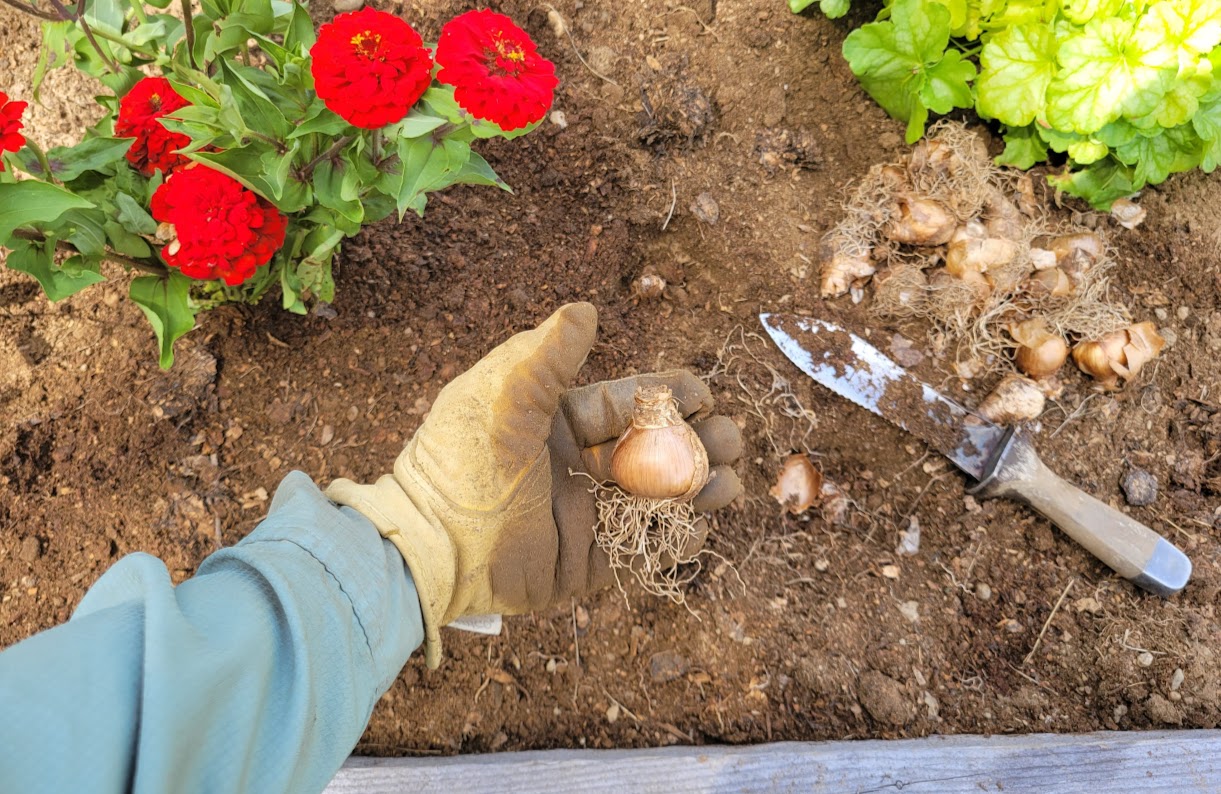
Bulbs, tucked down deep into the dark holdings of Earth, will rise forth in due time. These are magical gifts for tomorrow if we can simply trust their seasoning process. Life will return renewed and abloom, and just when we need it most. Bulbs are a favorite of mine. Each year I tuck in more and more of these wondrous beauties in and around the farm, nestled up against old rock walls and down along winding, walking paths, underneath the old oak trees and right up in front by our front door at home. Nowhere is spared from a spring-blooming patch of posies. Our winters are long, and I know that each bulb I tuck away in the fall will return and reward me five-fold come early thaw. Our CSA begins in early spring here, with fancy tulips and fragrant narcissus bringing lots of folks to the farm to pick up their flowers. This year, I have already tucked in hundreds of bulbs around the barn and within the boxes to bring a pop of colorful delight to the early flower beds and the farm surrounds.
.jpg)
Enjoying the Scenery
Once the flower beds are planted, the next best thing to do is to sit a spell and watch the clouds slowly meander along while listening to the hum and buzz of the happy bumblebees finding the newest source of nectar and pollen. Regular waterings, a topping of aged bark mulch if you choose (to help retain water), and an occasional weeding here and there should be all that you will need to help the flower beds grow. Spend time looking at the plants and how they are growing. Pay attention and keep curiosity close while you watch the ways in which they change daily, as the sun-loving leaves reach, stretch, and grow upward and outward and invite in pollinators with their catchy colors and fragrant foods. Your plants, just like the gardener, are an important thread weaving beauty and joy and abundance within the ecosystems of our lives.
Browse more of my articles about flower gardening and flower farming here!

Getting Started with Flower Gardening
Building a Raised Flower Bed Garden
Choosing Flowers
Types of Flower Gardens
Growing Flowers in Containers
Spring and Fall Bulbs
Caring for Flowers
More Like This

Comments