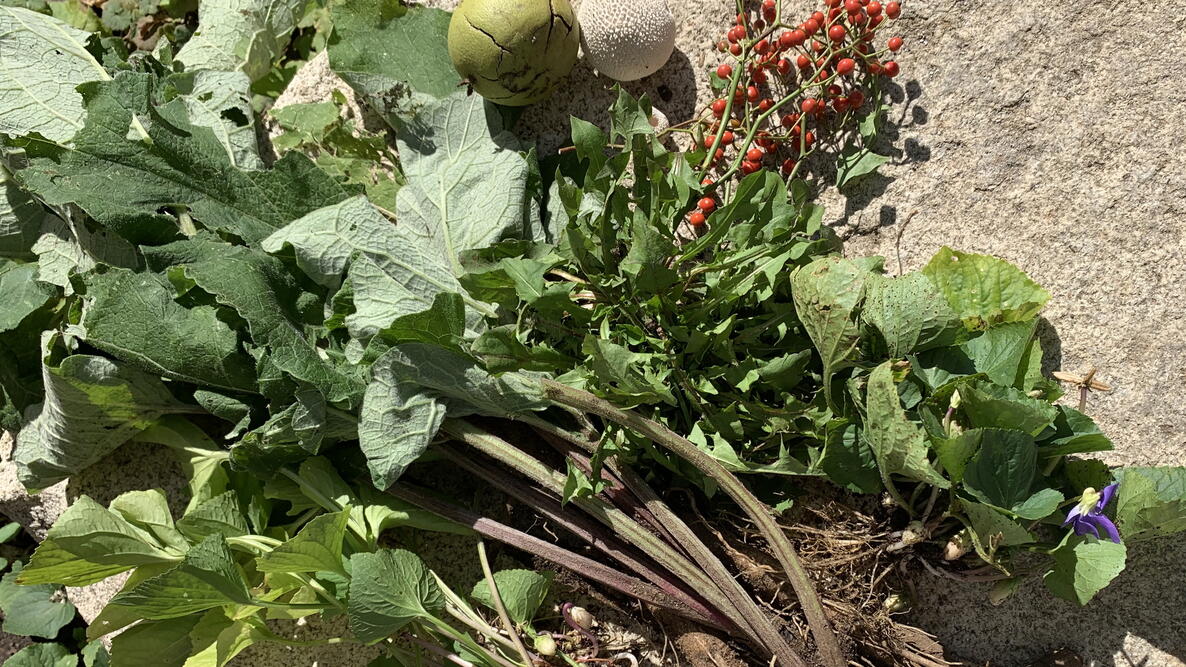
Caption
Gatherings from my fall foraging walk.

Fall is a wonderful time to forage for wild fruits, nuts, roots, and greens. Depending on where you live, autumn may bring crabapples, rose hips, sumac, black walnuts, burdock roots, dandelion greens, and even late-season berries. Come along on an October foraging walk through my little patch of northern New England and see what Nature’s Pantry has to offer!
What is Foraging?
Foraging means searching for and gathering foods that grow in the wild. Think wild blackberries, nuts, greens, fruits, roots, and fungi. While our ancestors relied on foraging for survival, today it offers a fun way to get outdoors, exercise, and become better acquainted with the natural world.
I do most of my wild-food foraging during the spring and summer growing seasons, in and around the vegetable gardens, fields, and forest edges surrounding them. My usual finds include dandelion greens, lamb’s quarters, amaranth leaves, purslane, wild mustard, blueberries, blackberries, and Concord grapes.
But what could I find in fall?
Foraging Safety
Never eat a wild plant, fruit, nut, or mushroom unless you can identify it with complete confidence. This article is meant to inspire—not serve as a plant-identification guide.
If you’re new to foraging, learn from an experienced local forager and consult several trusted field guides. Always get permission before gathering on private property and check the rules before foraging on public land. Avoid roadsides, sprayed lawns, polluted soil, and other places that may have been treated with pesticides or herbicides.
Take only what you need, leaving plenty behind for wildlife and for the plants to reproduce.
What to Forage in Fall
I set out on a gorgeous October morning—bright sunshine, maples and other hardwood trees resplendent in fall foliage, and weather cool enough for a fleece jacket.
I wasn’t looking for lunch. I was simply challenging myself to see what edible treasures I could find.
Your part of the world may offer different discoveries, but here are a few wild foods that may be available in fall.
Wild Apples and Crabapples
I usually collect enough wild apples and crabapples from trees along property boundaries to make a couple of batches of deep-pink applesauce.
Wild apples may be small, misshapen, or blemished, but sound fruit can still be useful for sauces, jellies, and cider. Be sure you have the landowner’s permission, and avoid fruit growing beside busy roads or in areas that may have been sprayed.
See the Almanac’s recipe for crab apple jelly.

Wild Mint, Sumac, and Rose Hips
Tramping around, I discovered several beverage possibilities: wild mint growing along the edge of our small pond, stands of staghorn sumac bearing deep-crimson fruit clusters, and a broad swath of invasive multiflora roses behind my raspberry patch.
Those rosebushes have ferocious thorns! They drew blood as I waded through them to collect some of the thousands of tiny rose hips.
Rose hips can be used for tea, syrup, jelly, and other recipes. Remove the seeds and irritating hairs inside the fruit before using them, and gather only from plants that have not been sprayed.
Staghorn sumac’s red fruit clusters have long been used to make a tart, refreshing drink sometimes called “sumac lemonade.” However, positive identification is essential. Never gather a plant simply because it resembles one shown in a photograph.
Mint leaves, properly identified edible sumac, and rose hips can each be brewed separately into flavorful hot or cold drinks. I prefer learning the flavor of each plant before experimenting with blends.
See the Almanac’s recipe for rose hip jam.
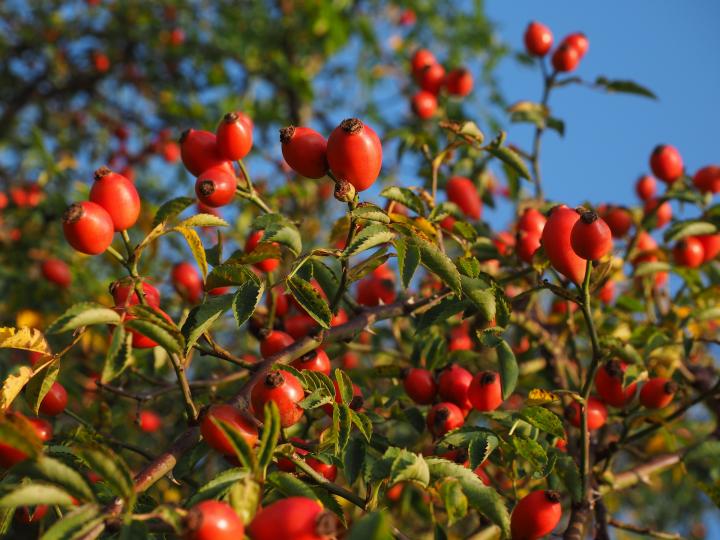
During World War 2, this was an important way to supplement vitamin C intake since citrus wasn’t widely available.
Black Walnuts
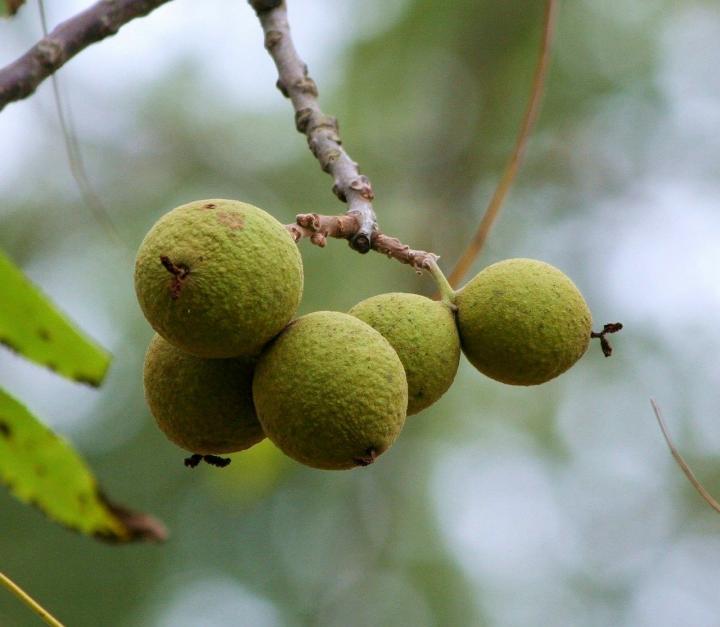
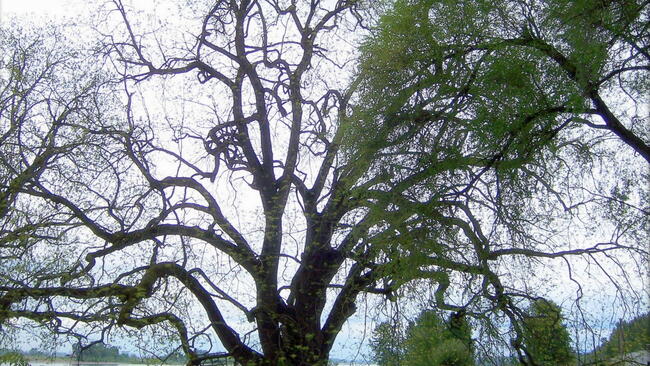
Black walnuts generally ripen and fall from the trees in autumn. I rummaged around beneath our three trees, but the walnuts were sparse. I suspect that the dozens of gray squirrels and chipmunks running around the property had already made off with most of them.
Even when we collect a bumper crop in five-gallon pails, getting at the nutmeats is a considerable challenge.
Wear gloves and old clothing when handling black walnuts because their green outer hulls produce a dark stain. Remove the hulls before curing the nuts in their shells in a dry, well-ventilated place. Once cured, those hard shells may require a sturdy nutcracker, vise, or carefully wielded hammer. Safety glasses are a good idea, too!
Pliers or a nut pick will help remove the delicious nutmeats.
See the Almanac’s article on how to harvest and eat black walnuts!
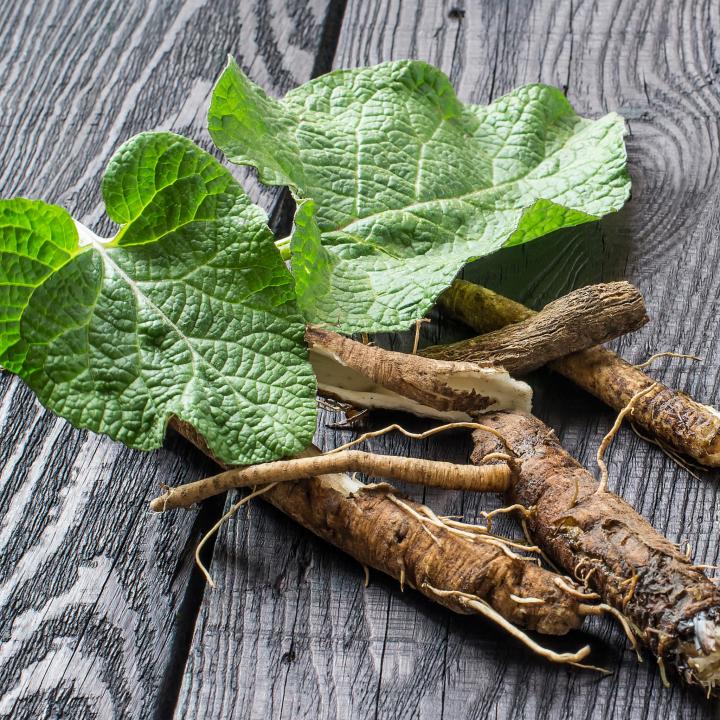
Burdock Root
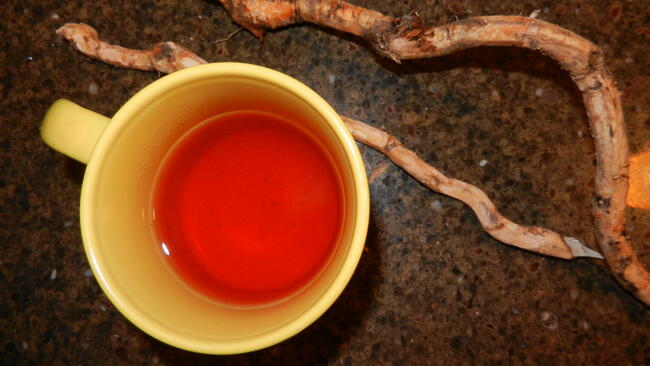
Wild burdock prevails as a primary invader in my raspberry patch. In fall, I noticed dozens of first-year rosettes alongside second-year plants bearing dry, prickly fruits called burrs.
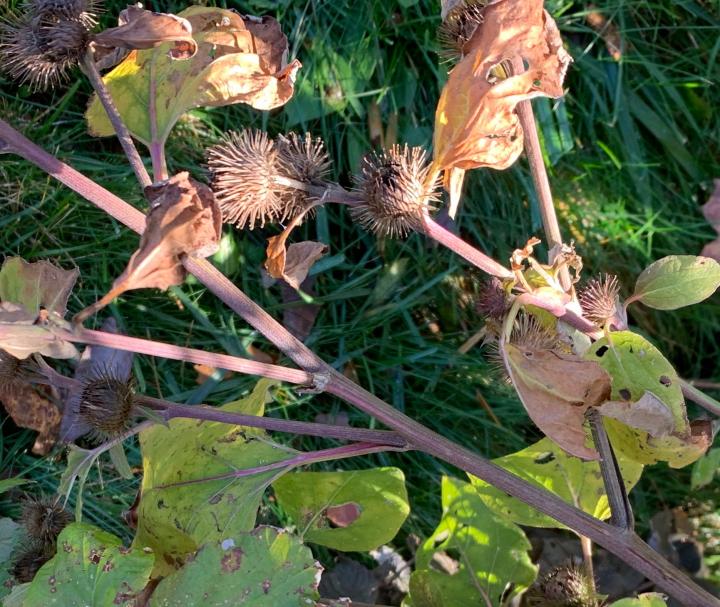
Fall is a traditional time to dig the long, tapered roots of first-year burdock plants. Second-year roots are generally woody and less desirable. Proper identification is especially important before digging or eating any wild root.
Scrubbed, peeled, and cooked, burdock roots can be prepared somewhat like carrots or parsnips and added to soups and other dishes.
Using a garden fork and a long spade, I dug and dug and dug, pulling out rocks wedged against the slender roots. Forty-five minutes of digging netted me four small, broken roots—perhaps a modest contribution to my next soup.
Dandelion Greens and Wild Violets
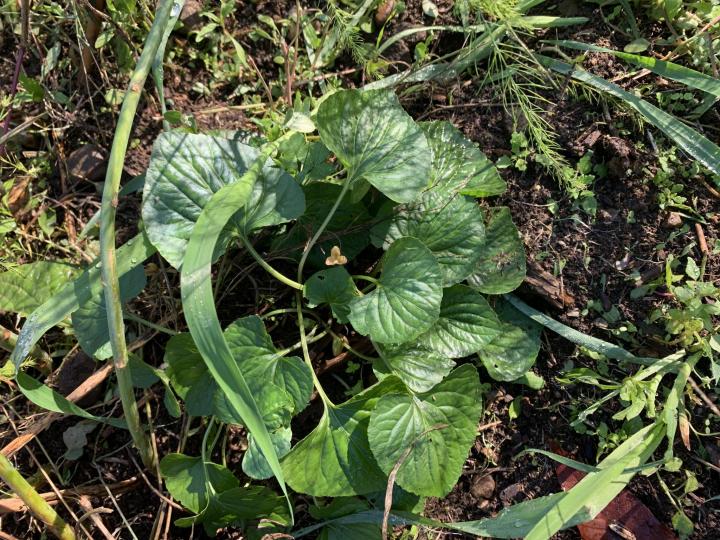
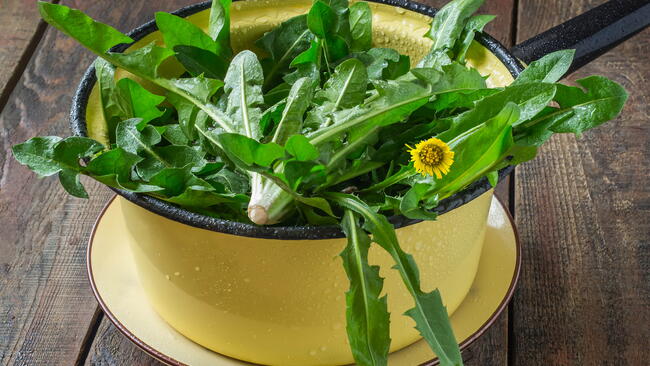
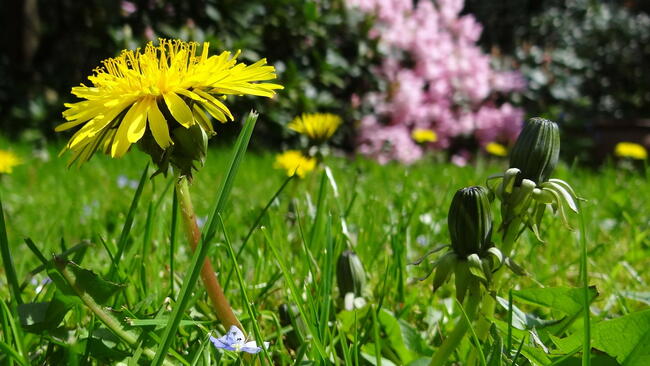
I noticed dandelion greens all over the lawn, along with more than a few wild violets.
I usually gather these greens in spring, when they are young and tender, but fall can produce a fresh flush of leaves after cooler weather arrives. Dandelion greens often become bitter after flowering, although cold weather may improve their flavor.
After positively identifying the plants, young dandelion and violet leaves can be added to soups, salads, or stir-fries. Gather them only from untreated areas free from pesticides, herbicides, roadside pollution, and pet waste.
Late-Season Raspberries
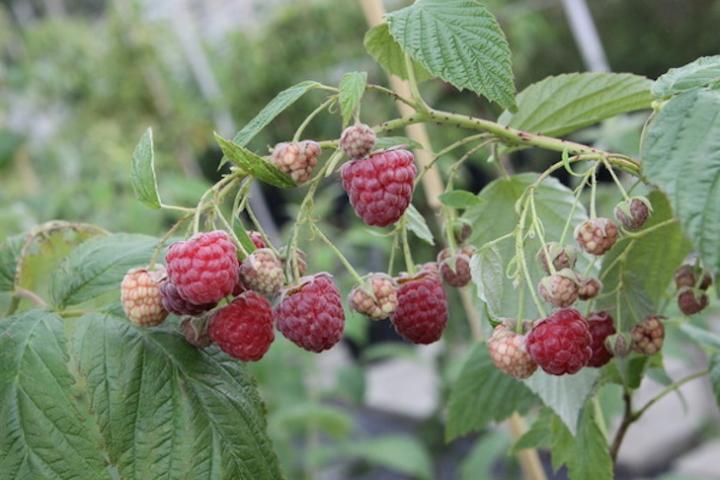
The best find of the day was a big handful of ripe raspberries that had matured on first-season canes. They were not technically wild, but they were surely foraged—and delicious!
We added them to some blackberries from the freezer for lunch.
What About Wild Mushrooms?
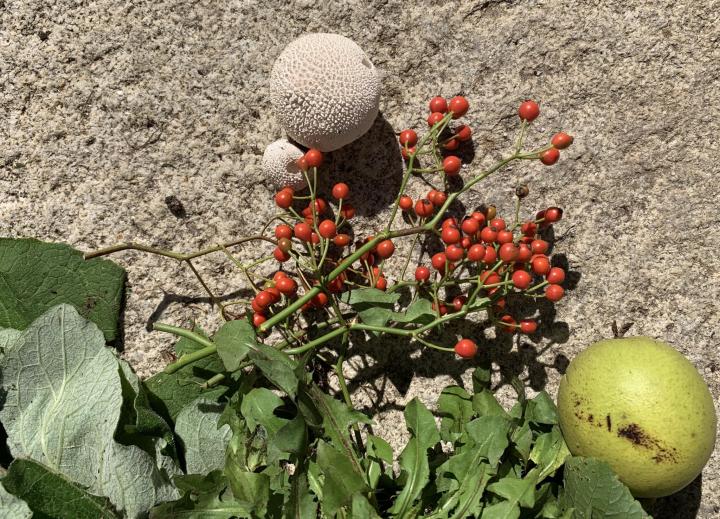
On my way back to the house, I spotted two small puffball-like mushrooms, the first I had seen that season.
I don’t forage for or eat wild mushrooms because mistaken identity can be deadly. Even mushrooms that appear familiar may have dangerous look-alikes. Photographs and apps are not enough to confirm that a mushroom is safe to eat.
Anyone interested in mushroom foraging should learn in person from a qualified local expert. When there is any doubt, leave the mushroom where it is.
The best find of the day was a big handful of ripe raspberries that had matured on our summer raspberries’ primocanes (first-season canes that generally bear the following year). They were not wild but surely foraged—and delicious! We added them to some blackberries from the freezer for lunch.
Fall Walk Worth Taking
I would characterize this fall-foraging exercise as a lot of fun, but—umm—more about the exercise than the food.
Still, foraging isn’t only about filling a basket. It encourages you to slow down, observe the landscape, and notice which plants grow around you. Even when I return with only a few roots and a handful of berries, I come home knowing my natural foodscape a little better.
If you’re eager to learn more, look for regional field guides and classes led by experienced foragers. Euell Gibbons’ Stalking the Wild Asparagus, first published in 1962, also remains an entertaining classic about gathering and preparing wild foods.
I’ll be foraging again in spring, when Nature’s Pantry offers a fresh selection of edible greens and other discoveries!
Have you ever foraged in the fall? Tell us about your favorite foraging finds!

More Like This

Comments