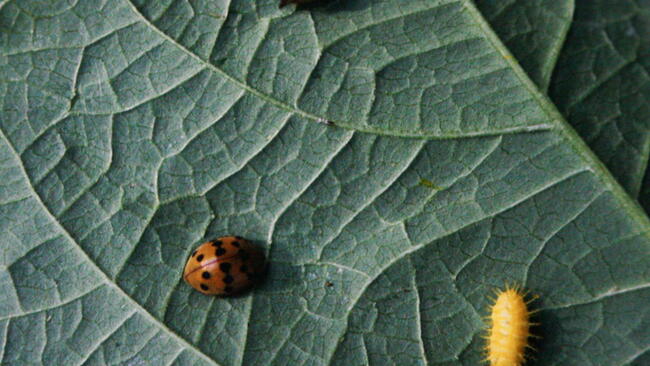
Ladybugs are among the most beneficial insects in the garden. Both adults and larvae feed on aphids and other soft-bodied pests, making them valuable allies for natural pest control. Here’s how to identify every stage of their life cycle and create a garden they’ll love.
Beneficial and harmless bugs found in gardens vastly outnumber insect pests, so it pays to adopt a nature-friendly approach to gardening. Scour the bushes, look among the vegetables, or dig down into the soil, and you’ll discover beneficial bugs. Our personal favorite? The ladybug, whose jazzy wing markings are always a delight to see.
You probably know an adult ladybug when you see one, but what about their eggs, larvae, and pupal stages?
How to Identify Ladybugs
There are many different species of ladybugs, often named according to the number of spots on their wing cases. For example, the two-spot ladybug, the seven-spot ladybug, the 14-spot, and the seriously funky-looking 22-spot ladybug.
The harlequin ladybug is invasive in both North America and Europe and will eat the eggs and larvae of other ladybugs when food is scarce. But they’re not all bad—they eat lots of pests too.
Also, not all spotted bugs are ladybugs. Our video shows you what they look like. Avoid the lookalikes such as the Mexican Bean Beetle.
The ladybug life cycle consists of four distinct phases (which we show in the video too).
Ladybug Eggs
Tiny eggs, typically laid on the undersides of leaves in batches of anything from 5 to 40 eggs. Nettles are a firm favorite for egg-laying, so it’s worth leaving a few patches of nettles to keep these aphid-munching beetles close by.

Photo: Protasov AN
Ladybug Larvae
Ladybugs eat lots of aphids. As soon as the eggs hatch, the formidable-looking, spiky larvae begin gorging on any aphids they can find. Their voracious appetites will see them devour 50 or more aphids a day (overall, a ladybug may eat 5,000 during its lifetime). They eat other soft-bodied pests, too, including whiteflies, mites, and scale insects, making them one of the long-suffering gardener’s very best friends.
Ladybug Pupae
After a series of molts, the larva pupates. Often yellow or orange, with black markings, this pupal stage lasts for around 1 to 2 weeks, during which time the magical transformation from larva to adult beetle occurs.
Adult Ladybugs
Then, finally, the adult beetle emerges. The brightly colored beetles hibernate over winter, usually in groups or aggregations, before mating soon after waking up again in spring, ready to start the life cycle all over again.
Ladybug Life Cycle
| Life Stage | What It Looks Like | What It Does |
|---|---|---|
| Eggs | Tiny yellow or orange clusters | Hatches in a few days |
| Larvae | Black with orange or yellow markings, spiky appearance | Eats large numbers of aphids |
| Pupae | Attached to leaves, orange or yellow with black markings | Transforms into adults |
| Adults | Red, orange, yellow, or black beetles with spots | Continues feeding and reproducing |

Photo: Protasov AN
How to Attract Ladybugs Naturally
In addition to leaving some nettles, avoid spraying pesticides, as this can have a knock-on effect on predators, such as ladybugs. It’s tempting to panic at the first sign of aphids, but a little restraint often pays off with a visit from these hungry bugs.
Ladybugs can also be attracted to your garden with pollen-rich blooms. Flat-topped flowers, such as yarrow, angelica, fennel, and dill, are great, along with common companion plants like calendula, sweet alyssum, and marigold.
Offer ladybugs somewhere to overwinter too. They usually hibernate in hollow stems and other nooks and crannies, so delay cutting back old stems till spring. Or why not make your own ladybug hotel by stuffing straw and a bundle of wide bamboo sections into an old pot, tied together to keep them all in place. Stuff more straw around the sides for insulation, and position the ladybug house 1 to 3 feet above the ground in a sheltered, sunny spot.
Ladybugs aren’t the only “good bugs.” Read more about beneficial insects in the garden!
FAQs
Are ladybugs good for your garden?
Yes. Ladybugs are beneficial insects that help control aphids, whiteflies, mites, and other soft-bodied pests naturally.
What do ladybug larvae look like?
Ladybug larvae are elongated with black bodies and orange or yellow markings. They have a spiky appearance and are often mistaken for pests.
How many aphids does a ladybug eat?
A single ladybug larva can consume 50 or more aphids per day, while adults also feed heavily on aphids throughout their lives. Estimates say a single ladybug can eat 5,000 aphids during its lifetime.
How do you attract ladybugs?
Grow pollen-rich flowers and plants such as alyssum, calendula, dill, fennel, marigolds, and yarrow. Avoid broad-spectrum pesticides and provide shelter for overwintering.
Where do ladybugs spend the winter?
Many ladybugs overwinter in leaf litter, hollow stems, tree bark, rock crevices, or sheltered garden structures.

More Like This