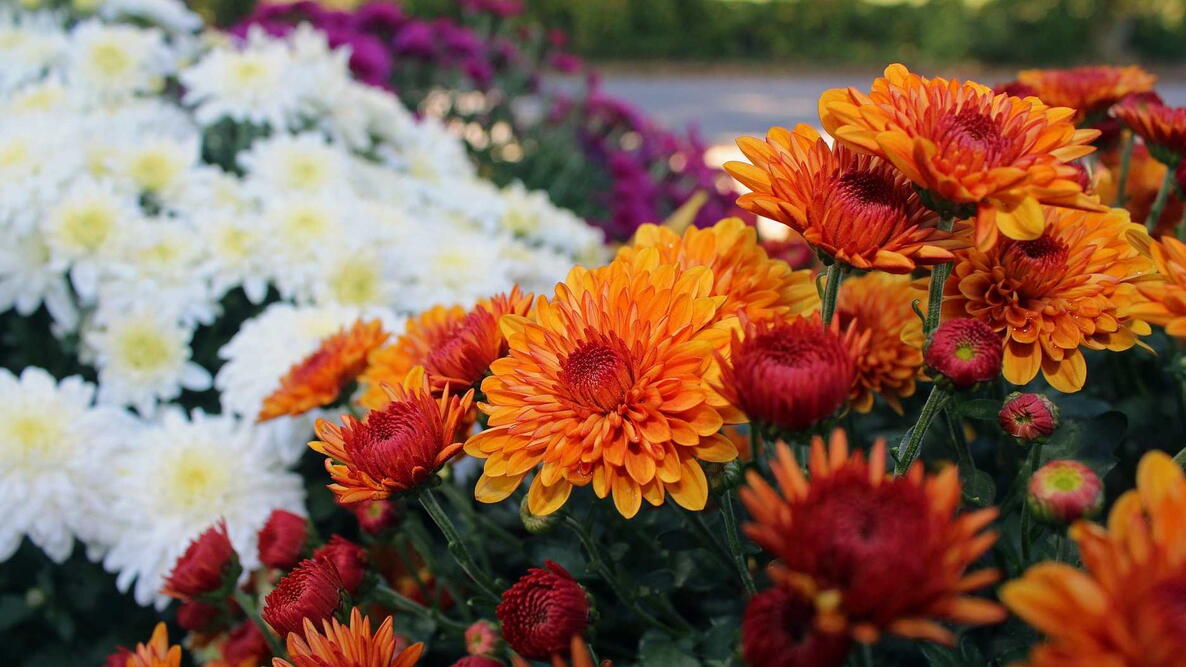

Are mums perennials or annuals? It depends. Find out which mums keep coming back year after year and how to ensure your mums come back.
Are Mums Perennials or Annuals?
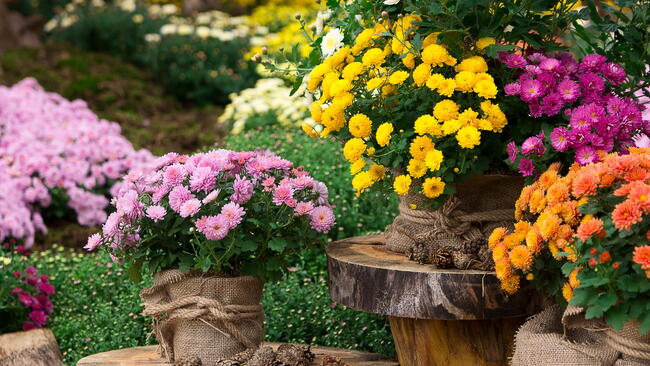
There are two different types of mums: 1) “Garden” mums (found at garden nurseries) are hardy perennial plants. 2) “Florist” mums (often found at grocery stores and flower shops) are treated as decorative annuals and not grown to survive the winter. What is the difference between an annual and a perennial?
Want to read more about mums? Check out our Growing Guide for Chrysanthemums for growing and care tips.
Fun fact! Mums are the birthflower for November!
1) Perennial Garden Mums, aka Hardy Mums
These mum varieties are hardy in Zones 4 to 9 and will grow stolons underground as they get established, returning year after year.
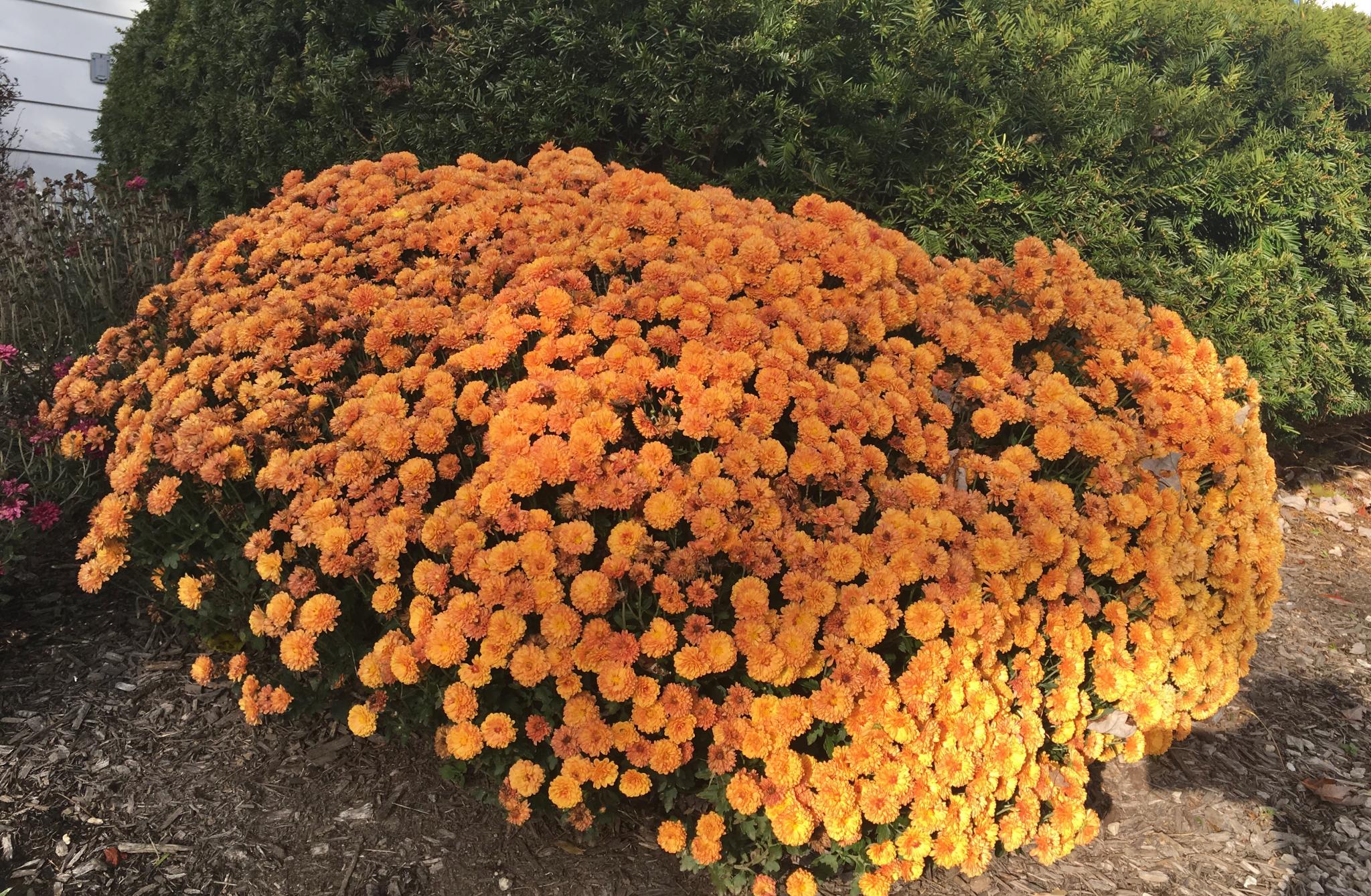
With perennial mums, both the flowers and lovely green foliage will be visible; with florist mums, foliage is largely sacrificed for flowers. Perennial mums have many flowers, but the blooms are usually smaller.
Mums are “photoperiodic,” which means they will set buds when the days get shorter in late summer! Then, they will bloom from late summer to fall for about eight weeks.
Note that both “early season” and “late season” mum varieties are bred, in case you wish to time your flowering or have a mix of both types for a more extended season!
You may keep your hardy perennial garden mums in the pot, but they’re genuinely happiest and grow better in the ground (which is where you should plant them if you want them to survive winter). In the ground, mums can grow up to 1 to 3 feet tall and 1 to 2 feet wide in one season.
2) Annual “Florist” Mums
The annual mums in the florist pots are only hardy in USDA Zones 7 to 9. You usually find them at grocery stores, home improvement stores, and florists. Think of them as disposable holiday decor, along with the pumpkins you buy for Halloween or otherwise.
Annual mums like huge Football chrysanthemums, delicate Spiders, and Spoons are generally not good choices for landscapes. However, we love them for fall containers! They have shallow roots, so they are not well-equipped to survive winter. They are not bred to be hardy; their form, color, and size are prized.
Most florist mums are already in full bloom with beautiful autumn jewel-hued colors. Also, they’re usually ALL blooms with very little foliage, as it’s secondary. (Once the flower is in full bloom, it’s past its peak and already declining, so pick plants with smaller buds if you want them to last longer.)
| Feature | Hardy Garden Mums | Florist Mums |
|---|---|---|
| Winter survival | May return when suited to the local zone | Usually treated as seasonal décor |
| Hardiness | Depends on cultivar | Generally tender |
| Best planting time | Spring | Usually displayed in fall |
| Identification | Check cultivar and hardiness label | Often labeled “florist mum” |
| Best use | Beds and perennial borders | Containers and indoor displays |
| Winter care | Well-drained soil, mulch, stems left standing | Usually discarded or composted |
Do Garden Mums Come Back Year After Year?
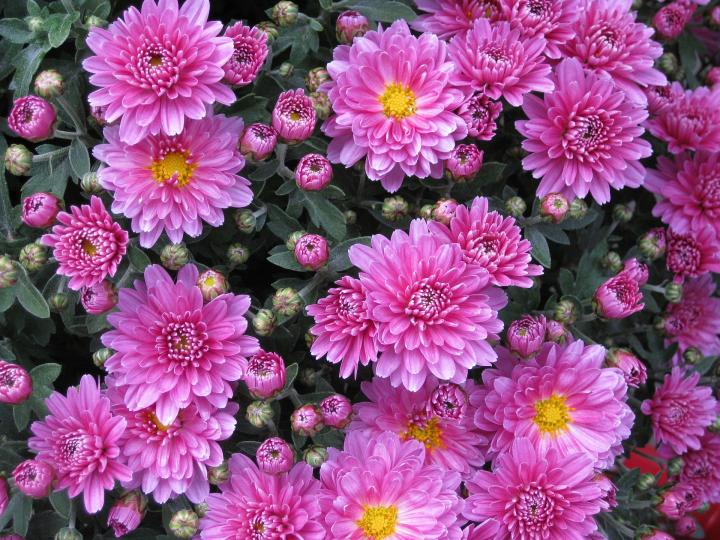
Only garden mums are perennials. However, you also need to plant these mums in the ground at the right time.
Ideally, the best time to plant perennial garden mums is in the spring. It gives the plants plenty of time to put down roots. You’ll probably need to order online because most local nurseries don’t carry mums in the spring.
If you plant them in the fall, it can be too late because they’re not building roots; they’re putting energy into blooming. That doesn’t mean it’s impossible to plant them in autumn and have them return next year. It just takes a little extra work.
Planting Mums in the Ground
- Get those garden mums in the groundat least six weeks before the ground typically freezes. (If it’s too late, try it, and you may have a mild winter!)
- Besides planting your perennial mums in the soil, you can change the odds in your favor by leaving the dead foliage on mums (and asters) instead of shearing them down for neatness.
- An Iowa State University study found that unpruned plants survive much lower temperatures than pruned plants; the foliage acted as extra insulation.
- Plant mums in an area with full sun (6 hours or more) so their roots can survive.
- Choose a location with good drainage and no standing water.
- If possible, plant in an area more sheltered from wind, such as the south-facing side of your home or near a wall.
- Dig a hole slightly larger than the pot and just as deep as the root ball. Don’t put them in too deep, which is a common mistake. Water well.
- Add 4 to 6 inches of mulch after the ground has frozen for even more protection. (Yes, at least 4 inches!)
When the plants appear next spring, feed them with a granular slow-release fertilizer and pinch off the tips of each branch (just an inch or so) a few times before July to encourage bushiness.
After that, stop pinching, or you’ll remove flower buds. If you don’t feel like pinching, you don’t have to; they’ll still bloom but with a more carefree, floppy sort of appearance.
Pinching off spent blooms (deadheading) will encourage new flowers.
Frequently Asked Questions
Do mums come back every year?
Hardy garden mums can return every year when planted in a suitable hardiness zone and given well-drained soil and winter protection. Florist mums are less cold-hardy and are generally treated as seasonal plants.
How can you tell if mums are perennial?
Check the plant label for the cultivar name and USDA hardiness zones. Look for terms such as “hardy mum” or “garden mum.” Where the plant is sold, its flower size, and its foliage are not reliable indicators.
Will potted mums come back next year?
They might, but mums have a better chance of surviving winter when planted in the ground. Pots expose their shallow roots to colder temperatures and repeated freezing and thawing.
When should perennial mums be planted?
Spring is the best time to plant perennial mums because they have an entire growing season to establish strong roots. If planting in fall, get them into the ground at least six weeks before it typically freezes.
Is it too late to plant mums in October?
That depends on your climate and expected first freeze. In warmer regions, October planting may be successful. In colder climates, mums planted that late may not have enough time to establish roots before winter.
What USDA zones are best for perennial mums?
Many garden mums are hardy in USDA Zones 5 to 9, although some cultivars can survive in Zone 4. Always check the plant label because cold tolerance varies by variety.
Should mums be cut back in the fall?
Leave healthy mum stems and foliage standing over winter. They can help trap leaves and snow around the plant’s crown for insulation. Cut the dead growth back in spring when new shoots appear.
How do you winterize mums in the ground?
Plant mums in well-drained soil, continue watering until the ground freezes, and leave their stems standing. After the ground freezes, apply 2 to 4 inches of loose mulch over the plant’s crown.
Why didn’t my mums return?
Common causes include planting too late, poor drainage, an unsuitable hardiness zone, and winter temperature fluctuations. The plant may also have been a tender florist mum rather than a hardy garden variety.
Can florist mums be planted outside?
Yes, but they are unlikely to survive winter in colder climates. Florist mums are best enjoyed as temporary container plants or indoor displays rather than dependable garden perennials.
Want to know how to overwinter mums? See our article on how to keep mums alive over winter.

Fall Flowers and Foliage
Fall Vegetable Gardening
Fall Garden Cleanup
Garden Soil Preparation
Fall Nature
More Like This



So happy that this was helpful, Matthew!
It would seem like you could plant them now. Early spring is recommended . . . but with care, and continued mild weather, you might be ok. Or, plant some now and some later. If you plant, Do not cut back mums. The dead growth insulates the roots. Cut off the dead stems and leaves when you see the first green shoots in spring. After the ground has frozen, spread 4 to 6 inches of mulch around the plant.
If you know the plant names, you may feel more confident. The following are extra-hardy mums. These will survive in frigid climates: ‘Betty Lou’ Maxi Mum; ‘Burnt Copper’; ‘Centerpiece’; ‘Grape Glow’; ‘Lemonsota’; ‘Maroon Pride’; ‘Mellow Moon’; ‘Minnautumn’, ‘Minnpink’, ‘Minnruby’, ‘Minnwhite’, and ‘Minnyellow’; ‘Rose Blush’; ‘Sesqui Centennial Sun’ ‘Snowscape’
- « Previous
- 1
- 2
- …
- 10
- Next »

Comments