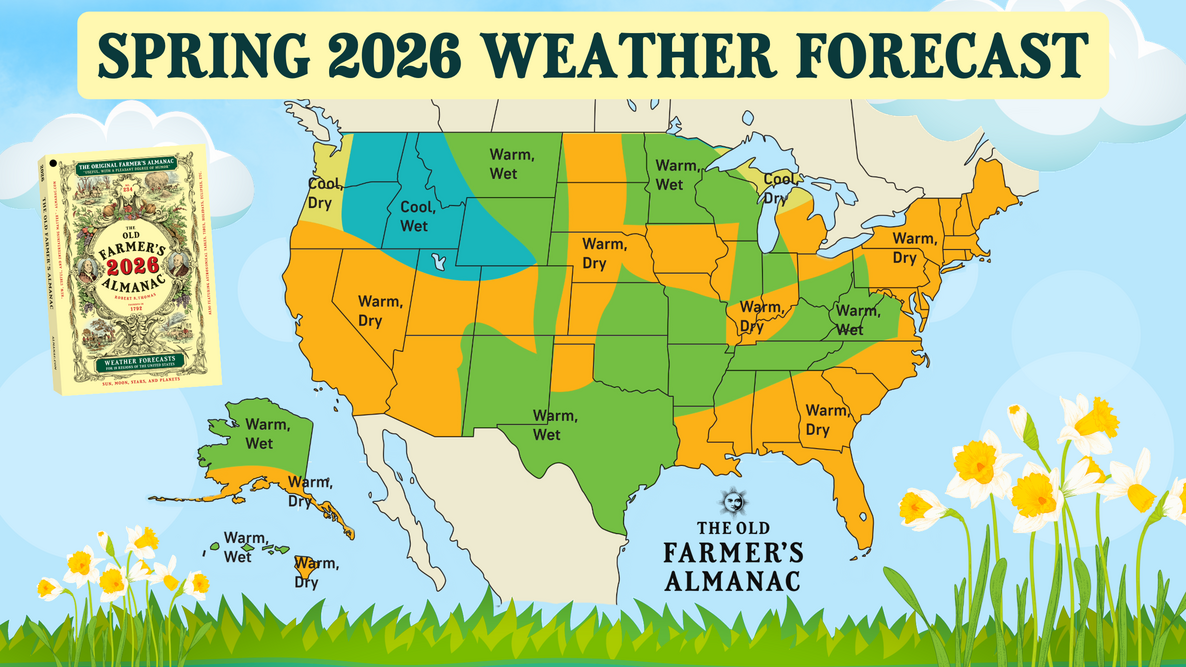
Announcing the Spring 2026 Weather Predictions from The Old Farmer’s Almanac! Will it be a chilly or warm spring? Wet or dry? Below are our long-range forecasts for 18 regions of the United States, covering April and May, along with colorful seasonal weather maps.
Spring is a time of renewal across the country. Seasonal weather patterns play a key role in everyday planning—from agriculture and gardening to travel, outdoor projects, and events. Understanding temperature and precipitation trends over time can help individuals and communities prepare for the months ahead.
Before you dig in to spring, take a look at what the long-range outlook suggests for 2026.

What is a Long-Range Forecast?
The 2026 Old Farmer’s Almanac predicts weather conditions over a period of time—a seasonal outlook, not a specific daily forecast. This makes long-range forecasts especially useful for planners, including farmers, gardeners, landscapers, homeowners, travelers, event organizers, and many others.
As outlined in the 2026 Almanac, our forecasts are based on three scientific disciplines:
- Solar science
- Climatology
- Meteorology
Temperature and precipitation levels are compared to historical averages to determine expected departures from normal. Learn how we predict long-range weather.
Spring 2026 Temperatures
The spring outlook predicts warmer-than-normal temperatures across much of the United States, with a few exceptions. Parts of Washington, Oregon, Idaho, and areas of Montana and Colorado are expected to see temperatures closer to or below seasonal averages.
Spring 2026 Precipitation
Much of the country is forecast to experience drier than normal conditions. However, wetter conditions are expected in:
- Upper Alaska
- Texas–Oklahoma
- Northern Appalachians
- High Plains
- Upper Midwest
- Intermountain region
Regional Highlights for April and May
Our long-range weather predictions for April and May are divided into 18 U.S. regions.
Northeast (Region 1):
Temperatures will be warmer than average, especially in May (3°F above normal). Precipitation is expected to be below average in both April and May. No significant snowfall is forecast.
Atlantic Corridor (Region 2):
From Boston to Richmond, temperatures will be warmer than usual, with the northern region expected to be 3°F above average in May. Rainfall will be below normal in April and normal in May.
Appalachians (Region 3):
Spring temperatures in this mountainous area will be slightly warmer than usual, and precipitation will range from below-normal rainfall in the north to above normal in the south.
Southeast (Region 4):
Along the Carolinas and Georgia, temperatures will be warmer than usual. April will be drier than usual, while May will be slightly wetter than normal.
Florida (Region 5):
Florida will be warmer than normal in April and average in May. Rainfall will be below average in April but should return to normal levels in May.
Lower Lakes (Region 6):
Temperatures will be warmer than normal overall across Michigan and the surrounding Great Lakes states. Rainfall will be below normal in the east and above normal in the west.
Ohio Valley (Region 7):
In April and May, the region will experience above-average temperatures. Precipitation will be above normal in the east and below normal in the west.
Deep South (Region 8):
The Deep South will see warmer-than-normal temperatures, with April 4°F above average and May 1°F below average. Precipitation will be above normal in the north and below normal in the south.
Upper Midwest (Region 9):
During April and May, it will be cooler and drier than normal in the east, while the west will be warmer than normal, with above-normal precipitation.
Heartland (Region 10):
In Iowa, Missouri, and eastern Kansas and Nebraska, expect a warm spring (5°F above average in April). Rainfall will be below normal in the north and above normal in the south.
Texas-Oklahoma (Region 11):
April will bring warm temperatures (5°F above average), while May will cool off slightly (2°F below average in the north, 1°F above average in the south). Rainfall will be above normal. Watch for a tropical storm in late May.
High Plains (Region 12):
The Plains, from Bismarck to Amarillo, will experience warmer-than-normal temperatures, especially in April (5°F above average). Expect periods of extreme heat through the summer. Rainfall will be below normal in the east and above normal in the west.
Intermountain (Region 13):
From Spokane to Reno, east to Salt Lake City, and south to Flagstaff, temperatures will be cooler and wetter than normal in the north, and warmer and drier than normal in the south.
Desert Southwest (Region 14):
April will be warmer than usual in the desert areas of New Mexico, Arizona, and southeastern California, and May will have average temperatures. Rainfall will be above normal in the east and below normal in the west.
Pacific Northwest (Region 15):
From Seattle to Eureka along the coast, temperatures will be average in April. May will be cooler than normal in the north and warmer than normal in the south. It will be drier than usual.
Pacific Southwest (Region 16):
Temperatures will be above normal in April and May. Rainfall will be below normal.
Alaska (Region 17):
Spring will bring warmer-than-normal temperatures and above-normal precipitation in the north. The South will see below-normal precipitation.
Hawaii (Region 18):
Expect warmer-than-usual temperatures for the state this spring. The east will see below-normal rainfall, while the central and western regions will see above-normal amounts of rainfall.
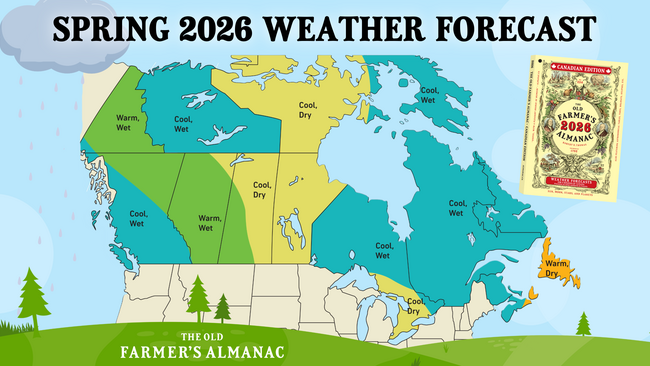
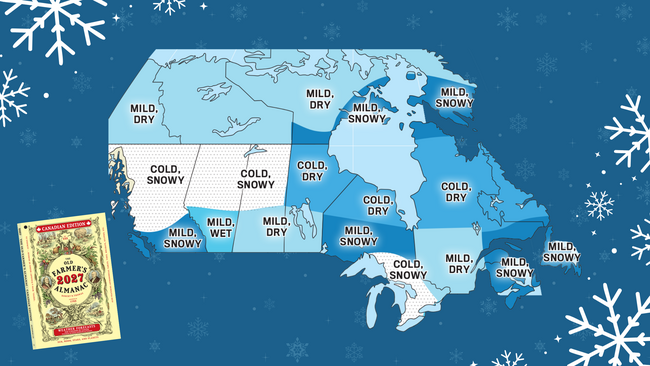
Planning to visit Canada in 2026? See the spring forecasts for Canadian provinces.

What This Could Mean for Gardeners
While seasonal forecasts affect many aspects of daily life, they are especially useful for gardeners who plan weeks or months ahead. Long-range weather trends can help gardeners think about timing, soil conditions, moisture management, and plant selection—without replacing local forecasts or day-to-day weather monitoring.
Below are some general gardening considerations based on the Spring 2026 outlook.
Cooler-Than-Normal Regions
In areas expected to be cooler than average, gardeners may want to keep in mind:
- Slower soil warming, which can delay germination and early growth
- Later planting windows for heat-loving crops such as tomatoes, peppers, and squash
- Cold, damp soil conditions can stress young plants
Helpful strategies
- Consider raised beds or mounded rows, which warm and drain faster than flat ground
- Wait for soil temperatures—not calendar dates—before planting warm-season crops
- Use row covers or cold frames to protect seedlings and retain warmth early in the season
See our article on different ways to warm the soil for spring planting.
Warmer-Than-Normal Regions
In regions forecast to be warmer than average, spring may arrive earlier, but gardeners should watch for:
- Faster soil drying, especially in exposed or sandy soils
- Early growth spurts that may need extra care
- Stress on young plants during warm spells if moisture is limited
Helpful strategies
- Monitor soil moisture closely and water deeply when needed
- Apply mulch to help retain moisture and moderate soil temperatures
- Be prepared to shade or protect young plants during early heat waves
Drier-Than-Normal Areas
Where rainfall is expected to be below normal, moisture management becomes especially important:
- Soil may dry out quickly early in the season
- Young plants may struggle to establish strong roots
- Water efficiency becomes a key factor. See when to water your garden.
Helpful strategies
- Consider simple irrigation solutions, such as soaker hoses or drip lines, to deliver water efficiently
- Use mulch or compost to reduce evaporation and improve soil structure
- Choose drought-tolerant or heat-resistant varieties when possible.
See more waterwise garden tips for dry weather.
Wetter-Than-Normal Areas
In regions with above-average precipitation, gardeners may encounter:
- Waterlogged or compacted soils
- Cool, wet conditions that slow germination
- Higher risk of fungal diseases
Helpful strategies
- Improve drainage with raised beds or amended soil
- Avoid working the soil when it’s wet to prevent compaction
- Space plants well and encourage airflow to reduce disease pressure
- Keep an eye out for early signs of mildew, rot, or leaf disease
Turning Forecasts Into Preparation
Long-range forecasts aren’t about predicting exact planting dates—they’re about anticipating conditions. By understanding broader trends in temperature and precipitation, gardeners can plan ahead, adjust expectations, and respond more confidently as spring unfolds.
For gardeners ready to put the forecast to work, these Almanac tools can help:
- 2026 Vegetable Planting Calendar by ZIP Code – Find the best planting dates for vegetables, herbs, and fruit based on your local climate.
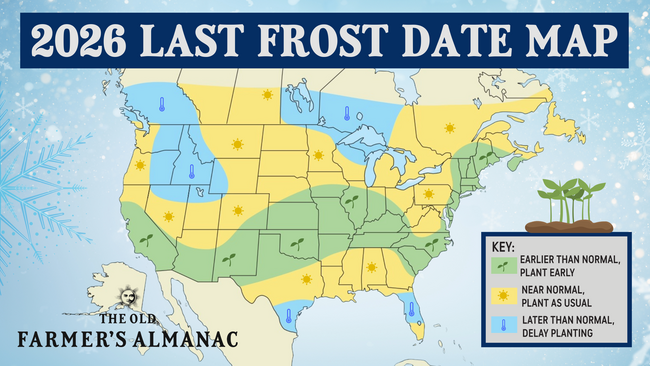
- 2026 Last Frost Date Map – See when your area typically experiences its final spring frost.
- How to Protect Plants From Late Spring Frosts – Practical ways to safeguard tender plants during cold snaps.
With Spring 2026 weather predictions in hand, now is a good time to look ahead and prepare—whatever the season may bring.
Start the 2026 Season Off Right!

If you’re a gardener or nature lover, how about a vibrant garden on your wall?
The Old Farmer’s Almanac 2026 Gardening Calendar is our perennial best-seller—nearly 50 years running—thanks to its stunning, hand-illustrated botanical artwork and practical, day-by-day gardening guidance.
Inside, you’ll find:
- Best planting dates
- Gardening proverbs and plant facts
- Insightful quotes and seasonal tips
- Time-tested gardening wisdom you can use all year long
It’s a simple, beautiful way to stay connected to the seasons and keep gardening plans on track throughout 2026.
Take a look inside the 2026 Gardening Calendar in our Almanac store or on Amazon.

More Like This
- « Previous
- 1
- 2
- …
- 10
- Next »

Comments