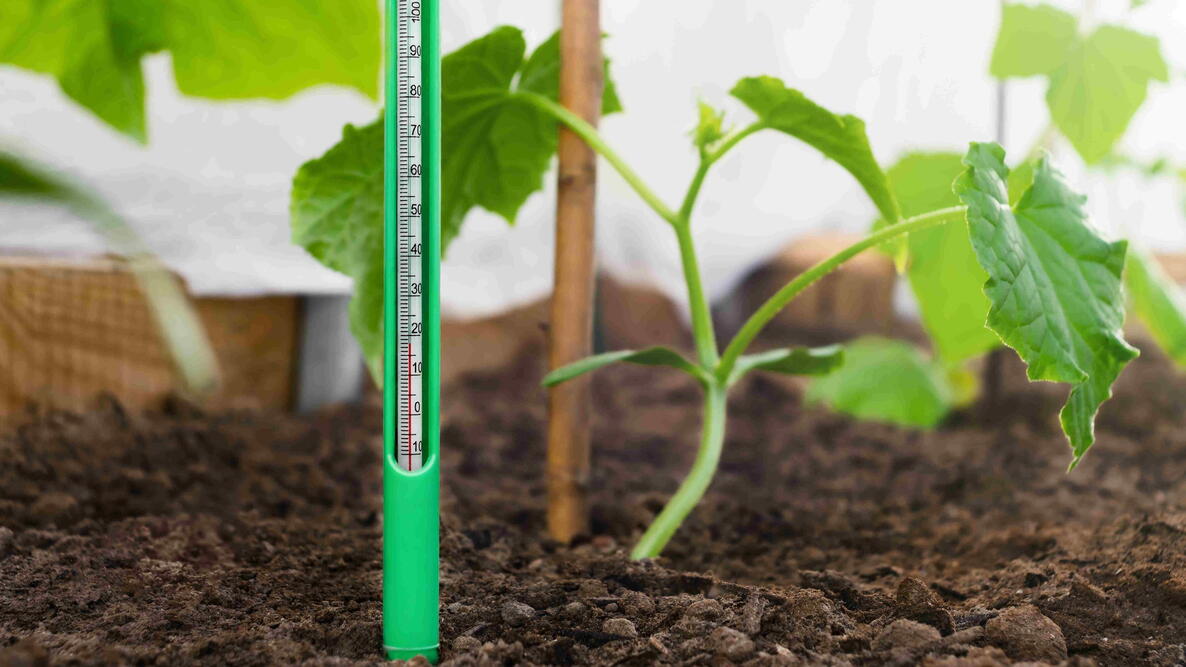
Caption
Checking soil temperature before planting helps ensure strong germination.
Soil temperature—not the calendar—is the real signal for when seeds will sprout. And if you’ve gardened for any length of time, you know the soil doesn’t always warm up as quickly as the weather suggests.
Don’t let a warm week fool you. Sunshine may be calling your name, but the soil often tells a very different story.
Best Soil Temperature for Starting Seeds
Use this soil‑temperature chart to find the minimum, optimum, and maximum germination temperatures for common vegetable plants. Aim for the optimum range whenever possible for the fastest, strongest germination.
| Crop | Min | Optimum | Max |
|---|---|---|---|
| °F | °F | °F | |
| Bean | 60 | 60–85 | 95 |
| Beet / Beetroot | 40 | 50–85 | 85 |
| Cabbage | 40 | 45–95 | 85 |
| Carrot | 40 | 45–85 | 95 |
| Celery | 40 | 60–70 | 85 |
| Chard | 40 | 50–85 | 95 |
| Cucumber | 60 | 60–95 | 105 |
| Eggplant / Aubergine | 60 | 75–90 | 95 |
| Lettuce | 35 | 40–80 | 85 |
| Melon | 60 | 70–95 | 100 |
| Onion | 35 | 50–95 | 95 |
| Parsnip | 35 | 50–70 | 85 |
| Pea | 40 | 40–75 | 85 |
| Pepper | 60 | 65–95 | 95 |
| Spinach | 35 | 45–75 | 85 |
| Squash & Pumpkin | 60 | 65–95 | 100 |
| Sweet Corn | 50 | 60–95 | 105 |
| Tomato | 50 | 70–95 | 95 |
| Turnip | 40 | 60–100 | 105 |
For a quick overview of the minimum temperatures seeds need to sprout, use the guide below.
Quick Reference: Minimum Soil Temperatures
Most vegetable seeds require a minimum soil temperature of 36° to 60°F (2° to 16°C) to germinate. Below that, seeds may sit, rot, or sprout very slowly.
- 36° to 45°F (2° to 7°C): spinach, lettuce, peas
- 45° to 55°F (7° to 13°C): beets, carrots, cabbage
- 55° to 65°F (13° to 18°C): beans, corn, squash
- 65° to 75°F (18° to 24°C): tomatoes, peppers, eggplant, melons
Why Soil Temperature Matters
Gardeners know the feeling: a stretch of warm days arrives and suddenly we’re excited to get seeds in the ground. But soil warms far more slowly than the air. In early spring, uncovered beds may barely reach 40°F, while a cold frame or covered bed can be 10 to 15 degrees warmer—a difference that determines whether seeds sprout or simply rot in cold, wet soil.
Many gardeners start seeds by counting back a few weeks from their last frost date. It’s a helpful starting point—and you can find yours quickly with our #1 Frost Date Calculator. But frost dates are only a guide. Spring weather shifts every year, and seeds don’t sprout just because the calendar says they should.
That’s why soil temperature is such a reliable indicator of when seeds will germinate. A simple soil thermometer can dramatically improve germination rates, reduce seed loss, and help you avoid planting too early in cold soil. Seeds sitting in cold (and often wet) spring soil may rot or sprout unevenly.
And as tempting as it is to dream about tomatoes the moment the sun comes out, it’s still too early for heat‑loving crops. If you plant cold‑tolerant vegetables now, be sure you have a plan to protect them from sudden cold snaps. For more help with outdoor planting, see Direct Sowing Made Easy.
How to Measure Soil Temperature
- Depth: Insert a soil thermometer 2 to 3 inches deep, where seeds will sit.
- Timing: Take readings in the morning, when soil is coolest.
- Consistency: Check for three consecutive days to be sure the soil has warmed.
- Bed type: Raised beds usually warm earlier than in‑ground beds.
- Exposure: South‑facing beds warm faster than north‑facing ones.
- Mulch: Pull mulch aside before measuring to get a true reading.
A basic soil thermometer is inexpensive and available at any garden center.

Cool‑Season vs. Warm‑Season Crops
Different vegetables sprout at different soil temperatures. Cool‑season crops like spinach, lettuce, and cabbage germinate in cooler soil, while warm‑season crops such as tomatoes, peppers, cucumbers, and eggplant need much warmer soil to get going.
For example, parsnips germinate best around 50°–70°F, while peppers prefer 64°–95°F. Planting warm‑season crops into cold soil often results in rot, slow germination, or weak seedlings.
If you’re new to planting seeds outdoors, you may also like How to Sow Seeds in the Vegetable Garden.
Tips for Better Germination
- Warm the soil: Use black plastic, cloches, or row covers to warm cold soil before planting.
- Start indoors: Begin warm‑season crops indoors if your outdoor soil warms slowly in spring.
- Avoid soggy soil: Cold, wet soil encourages seeds to rot instead of sprout.
- Use raised beds: Raised beds and containers usually warm faster than in‑ground beds.
- Choose the right spot: Sunny, sheltered locations warm more quickly than low, shady areas.
When in Doubt, Trust the Soil
Frost dates are helpful, but soil temperature is more precise. If your soil is still cold—even after your last expected frost—wait a few days. Seeds planted in warm soil sprout faster, grow stronger, and often catch up to or surpass those planted earlier in cold ground.
For more timing help, pair the soil‑temperature chart with our Frost Date Calculator and Vegetable Planting Calendar to plan your best‑timed garden yet.
More Like This

Comments