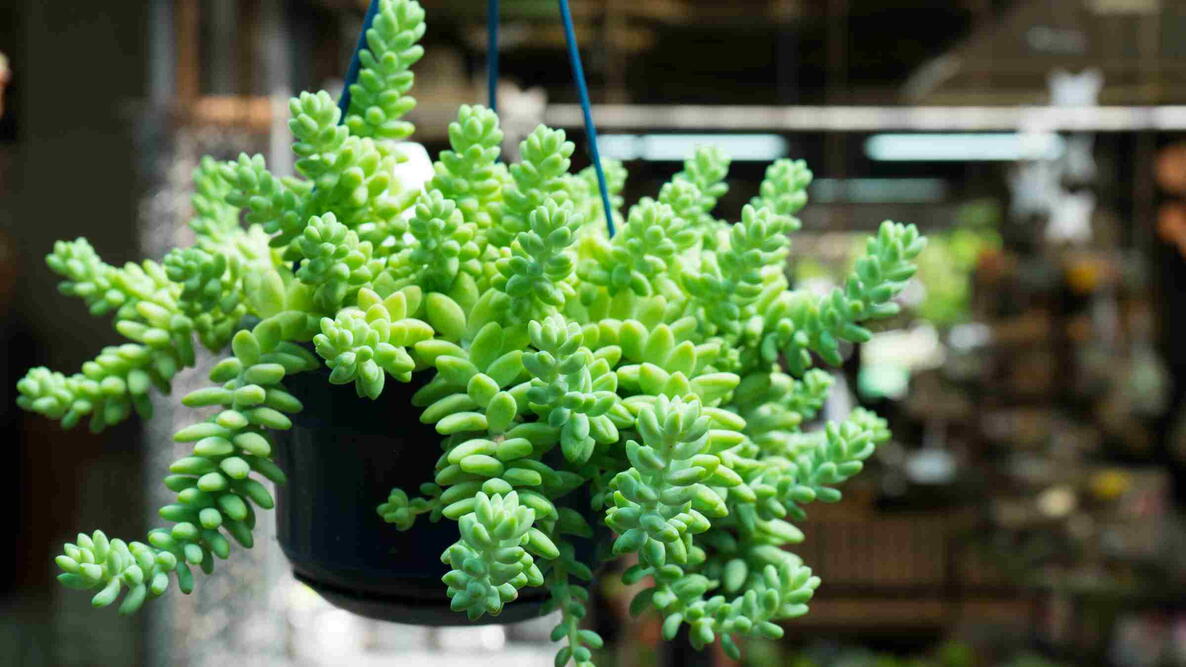
Burro’s Tail Plant Care: How to Grow Donkey’s Tail Succulents

Sedum morganianum (donkey tail or burro's tail)

Caption

Burro’s tail: a trailing succulent with no donkey business, just easy charm.

Photo Credit
Chun photographer
Botanical Name
Sedum morganianum
Plant Type
Sun Exposure
Bloom Time
Flower Color
Hardiness Zone
Subhead

Easy tips for planting, watering, and keeping this trailing succulent happy

Written By: Lauren Landers Master Gardener and Contributing Writer

No donkey business—burro’s tail is one of the easiest succulents you can grow, yet it’s showy enough to steal the spotlight in any houseplant collection. With bluish-green leaves packed along long trailing stems, it looks just as good spilling over a pot as it does in a hanging basket. I often recommend burro’s tail to new plant parents because it thrives on a bit of neglect, but even seasoned gardeners will appreciate its beauty and resilience. In this guide, I’ll walk you through everything you need to know—from planting and potting to long-term care—so you can enjoy this quirky, eye-catching succulent for years to come.

About Burro’s Tail Plants

Also known as donkey’s tail, burro’s tail is a perennial succulent that’s native to southern Mexico and Honduras, but can be grown outdoors in USDA zones 10 and 11. For the rest of us, burro’s tail works best as a year-round houseplant or a plant that only summers outside. But it’s sure to impress, no matter where you grow it!

Most plant lovers are first attracted to burro’s tail’s trailing stems, but this plant also produces star-shaped flowers in summer if it’s grown outside or receives lots of indoor light. Just be aware that burro’s tail is more sensitive to direct sun than many other succulents and usually fares best in bright locations that receive some light shade in the afternoon. Pet parents don’t need to worry much about keeping these plants indoors, though—burro’s tail is non-toxic to pets.

 Closeup of a succulent flower. Burro's tail flower.
A delicate burst of star-shaped blooms on burro’s tail (Sedum morganianum). Credit: Verediana Hille

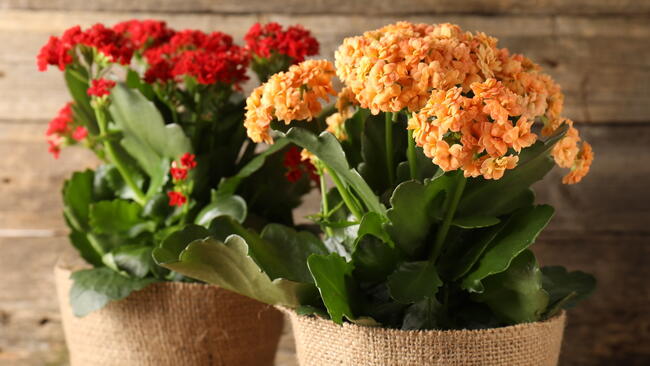
Like other sedums, burro’s tail belongs to the Crassulaceae family, which includes other popular houseplants like houseleeks and kalanchoe. In my home, I like to display burro’s tail in a simple terracotta pot and allow its long stems to trail over the pot’s rim. However, growing these plants in hanging planters with a simple hook can make it even easier to move them outdoors in summer and back inside in fall.

Planting

Burro’s tail is usually easy to find at plant nurseries, but it can be grown from stem cuttings if your plant-loving friends are willing to share some with you. Here are some tips to help new plants settle in fast!

  • Check for pests: Before bringing any new houseplant into your home, check it over carefully for signs of pests. Although burro’s tail is usually pest-free, these plants can sometimes harbor mealybugs and aphids.
  • Choose the right pot: Any well-draining pot can be used for burro’s tail, and pot size will vary depending on the size of your plants. I keep my burro’s tail in terracotta pots, which wick moisture away from the plant’s roots and help prevent rot.
  • Use succulent soil: Succulents like burro’s tail need well-draining soil with plenty of sand, perlite, or pumice to prevent root rot. A quality succulent or cactus potting mix should do the trick!
  • Know how to plant: Burro’s tail stems and leaves break easily, so be sure to handle these plants with care when repotting. When planting succulents in new pots, position the root ball at the same depth the plant was growing in its nursery pot.
  • Find a good position: Brightly lit windows are ideal for burro’s tail, although these plants may need a little protection from scorching afternoon sun in hot climates.
edum morganianum (lamb's tail, burro's tail, horses tail) in pot hanging.
Sedum morganianum: one plant, many nicknames, endless trailing charm. Credit: 

Growing

Burro’s tail is an impressively long-lived succulent, and well-maintained plants can last for decades with minimal fuss. Although it thrives in bright light, this houseplant is surprisingly low-maintenance, tolerating a little neglect. In fact, if you want these plants to grow well, it’s best to plant them and “forget” them. The easiest way to damage these plants is to handle them roughly, or water them too often or too much!

Sedum morganianum Burro's Tail Donkey's Tail Lamb's Tail in white pot
Burro’s tail thrives on a little neglect—less watering often means happier stems! Credit: Bozhena Melnyk

Water
Less is more when it comes to watering burro’s tail, and these plants like to dry out nearly completely in between waterings. You may only need to water these plants once a month in summer, and even less during their winter dormancy period. But if your burro’s tail leaves start to wrinkle or get puckered, it’s a sign they need more water.
Light
Burro’s tail is usually happiest in full sun locations that receive at least 6 hours of bright light per day; however, these plants may need some afternoon shade in hot climates. If your plants appear leggy or start dropping leaves, provide them with more light.
Humidity
Burro’s tail can handle a range of humidity levels and is not bothered one bit by dry indoor air.
Temperature
Although these succulents are more cold hardy than some tropical plants, they should still be protected from frost and drafty windows. If you place burro’s tail outdoors in summer, bring your plants back inside before temperatures dip below 40°F and aim to keep your plants at a cozy 65 to 75°F year-round.

Fertilizer

Light feeding burro’s tail may not need any fertilizer at all. But if you want your plants to grow a bit faster, feed them once or twice a year in spring and summer only with a liquid organic fertilizer diluted to ¼ strength.
Toxicity
A fine pick for pet-friendly homes, burro’s tail is non-toxic to pets and is a great alternative to plants like euphorbias, which aren’t pet-safe.

Pests/Diseases

If you purchase new plants or keep burro’s tail outdoors in summer, make sure to check your plants over for signs of pests before bringing them inside, and watch for these potential problems too.

  • Pests, like mealybugs and aphids, will sometimes leave a sticky residue on burro’s tail leaves, while slugs and snails may nibble holes in outdoor plants. Handpicking is the best solution for larger pests, while small pests can be treated with weekly applications of organic soap spray.
  • Yellowing or wilted leaves and leaf drop usually indicate that burro’s tail plants are struggling from watering problems. However, these plants may also look bleached out if they get too much direct sun.

Potting and Repotting

How Often to Repot

Burro’s tail leaves and stems are quite brittle and can be easily knocked free with rough handling or repotting. Luckily, these plants don’t need to be repotted often and are actually happier if they’re a little rootbound. If you do need to repot these plants, keep it to a minimum and repot them only once every 3 to 5 years.

When to Repot

As with other houseplants, burro’s tail adapts more readily if you repot it in spring. Your plants may need a bigger pot if you notice that their roots are showing through the pot’s drainage holes; however, I only repot my burro’s tail if the soil its growing in starts to look worn out or drains poorly.

How to Repot

  • Handle with care: Supporting burro’s tail stems carefully as you remove the old pot can help you avoid plant damage. This may be a two person job!
  • Plant at the right depth: Repot burro’s tail in a well-draining container that’s only slightly larger than the original pot, use a quality succulent potting mix blend, and bury the plant’s root ball at the same depth the plant was growing in its old container.
  • Withhold water: After repotting burro’s tail, skip watering your plant for a week or so, and then only water lightly.

Propagation

Don’t throw out stems and leaves that get dislodged from burro’s tail when repotting. These plants can be easily propagated from both!

  • Stem propagation: Take healthy stem cuttings that are few inches long and trim the end of the cutting with a nice clean cut. Remove the lower leaves on the cutting and set the cutting aside for a few days in a warm dry spot to allow the cut stem to callous over. Then, plant the cutting in succulent potting mix, use pins to hold the cutting in place if needed, keep the cutting in bright, indirect light and water lightly until roots form in a few weeks.
  • Leaf propagation: Leaves should be healthy, plump, and whole for propagating. Once you’ve collected leaves from burro’s tail, place them on a plate in a warm, dry spot for a few days to callous over. Then, scatter the leaves on top of a succulent potting mix, press them in, and water enough to keep the soil barely damp. Place the leaves in bright, indirect light and repot them in their own containers when roots sprout.
baby burro tail plants
To propagate by stems, just pop a few clippings from the mother plant into soil!

Seasonal Care

Burro’s tail doesn’t need much pruning, but you can clip leggy or sparse stems back to a leaf node or the plant’s crown throughout the season if needed. These plants need more water in summer and less water in winter, and they shouldn’t be fertilized at all during the colder half of the year. If you want to trick burro’s tail into blooming, keep your plants outside in summer and position them in a cool, frost-free location in winter that stays between 50 and 60°F.

Wit and Wisdom

Burro’s tail is sometimes called lamb’s tail or horse’s tail—but it’s all the same plump, trailing succulent. Here are some interesting facts about this houseplant:

  • In summer, outdoor plants can produce tiny star-shaped flowers along the stems.
  • Native pollinators include bees and butterflies (and even bats in Mexico).
  • Its fragile leaves easily drop, but each one can grow into a new plant—making it a natural propagator.
  • Burro’s tail symbolizes endurance, resilience, and stability, perfect for thoughtful gifts.
  • Historically, succulents like burro’s tail were used in traditional Mexican gardens for both decoration and erosion control on slopes.
  • Because of its trailing habit, some gardeners call it a “living curtain” when displayed in hanging planters.
  • Its bluish-green leaves can change color slightly in bright light, offering a subtle visual treat over the seasons.

Burro’s Tail Frequently Asked Questions

Q. Is burro’s tail toxic to pets?

No. Burro’s tail is non-toxic to cats and dogs, making it a safe choice for pet-friendly households. 

Q. How often should I water burro’s tail?

Water sparingly. Allow the soil to dry almost completely between waterings. In summer, this may mean watering once a month; in winter, even less.

Q. Does burro’s tail like sun or shade?

Burro’s tail prefers bright light but can scorch in strong afternoon sun. A sunny windowsill with indirect light or a spot with morning sun and afternoon shade works best.

Q. How big does burro’s tail get?

The trailing stems can reach 2 to 4 feet long when mature, making it one of the most impressive cascading succulents for pots and hanging baskets.

Q. Can you propagate burro’s tail from leaves?

Yes! Both leaves and stem cuttings can be propagated. Simply let the pieces callous over for a few days, then place them in a succulent soil mix until roots form.

About The Author
Lauren Landers

Lauren Landers

Master Gardener and Contributing Writer

Lauren is a gardener, writer, and public speaker with over a decade of experience helping others learn about gardening, homesteading, and sustainable living.She combines years of practical gardening a...