
Planting
When to Plant Lupines
- Plant in cool temperatures; lupine can not tolerate heat, humidity, or drought.
- Lupine seeds are sown in early spring or in the fall. Many gardeners prefer to plant in fall to enjoy them mid-spring.
- If starting seedlings indoors, you can transplant them when they are about 4 to 6 weeks old. At this age, they haven’t developed a long tap root and will have a better chance to survive.
Where to Plant Lupines
Lupines prefer full sun; they’ll grow in light shade but won’t flower as profusely. They also prefer sandy, well-draining soil and can’t survive waterlogged conditions. Also, they cannot tolerate heavy soils, so be sure to loosen the soil up before planting.
How to Plant Lupines
- First, just loosen the soil for the lupines’ long tap roots to grow. Loosen to a depth of about 1 to 1-1/2 feet; amend with organic matter and grit for good drainage.
- Before planting, soak seeds in a bowl of warm water for 24 to 48 hours to soften the tough seed coat, and then you can “scarify” the seeds to allow moisture to reach the seed; this means roughening the seeds between two sheets of sandpaper before planting. Scarifying the seeds greatly improves the odds of germination.
- To sow seeds, dig a hole 1/2 inch deeper than the seedling pot and twice as wide. Space seedlings for smaller varieties about 1 foot apart and larger varieties about 2 to 3 feet apart.
- Tamp down the seeds, ensuring good soil contact. Water, and if the weather is dry, water lightly until germination, which can take up to 10 days.

Types
Lupinus includes hundreds of species, many native to North America! You’ll see them both in the wild and in gardens—from California to Maine. These usually have blue, white, or yellow flowers.
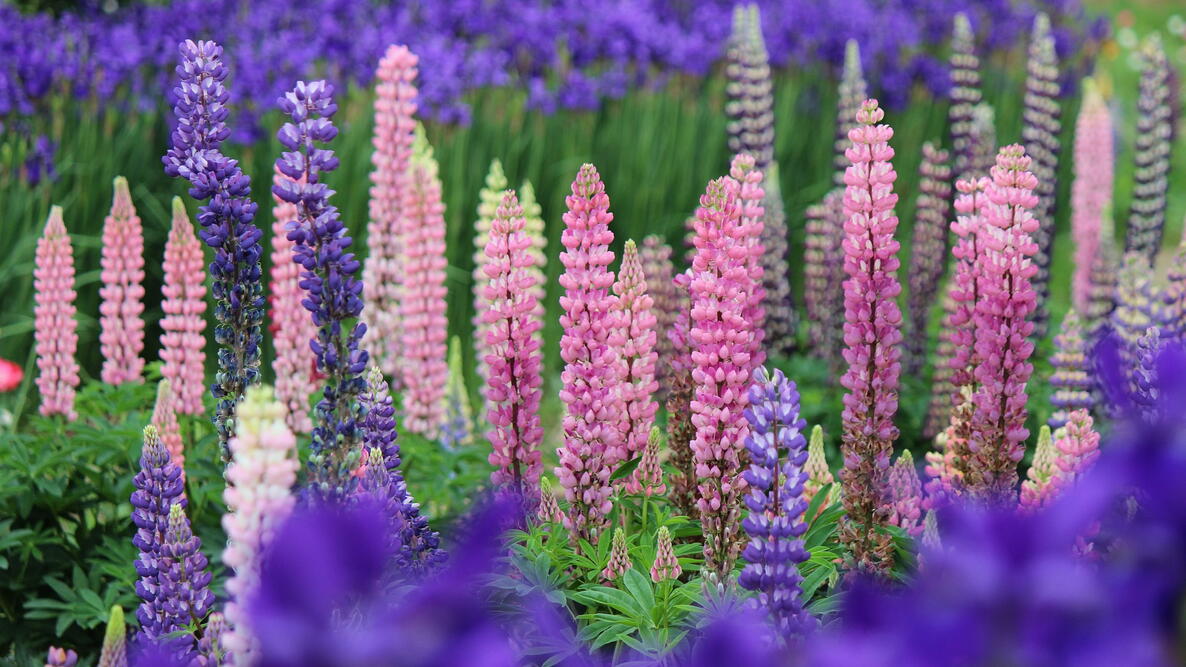
Garden lupine (Lupinus polyphyllus), aka big-leaved lupine: blue, pink, and purple flowers; native to much of western North America; prefers moist environments.
Wild lupine (L. perennis) is a blue perennial plant that grows in the eastern half of North America.
Texas bluebonnet (L. texensis) is an annual plant with dark blue flowers with white markings that cover fields and roadsides in Texas every April.
Russell hybrid lupines (L. polyphyllus), also called garden lupines, have been the basic perennial group from which all new hybrids are created. Be patient; it can take a year to begin its abundant blooms.
The Russell Lupine Mix seeds are easy to grow, and the tall flowers bloom in a variety of colors.
Lupine Woodfield hybrids are perennial plants that come in deeper shades and beautiful bi-colored blooms.
Dwarf hybrids ‘Dwarf Lulu’ and ‘Minarette’ grow only to 1½ to 2 feet tall. Excellent for small gardens, containers, or the front of beds and borders. Plants grow to 20 inches tall. Winter hardy to Zone 4.

More Like This

Hi Denise,
You want to start soaking lupine seeds in warm water. The key is to make sure you are not starting with cold water. The water will cool down over the soaking time, so keep it in a location that is warm. If you feel that the water has cooled down significantly you can certainly freshen with warm water during the soaking time.
- « Previous
- 1
- 2
- …
- 10
- Next »

Comments