How to Grow Loofah Plants in Your Garden for Natural Sponges

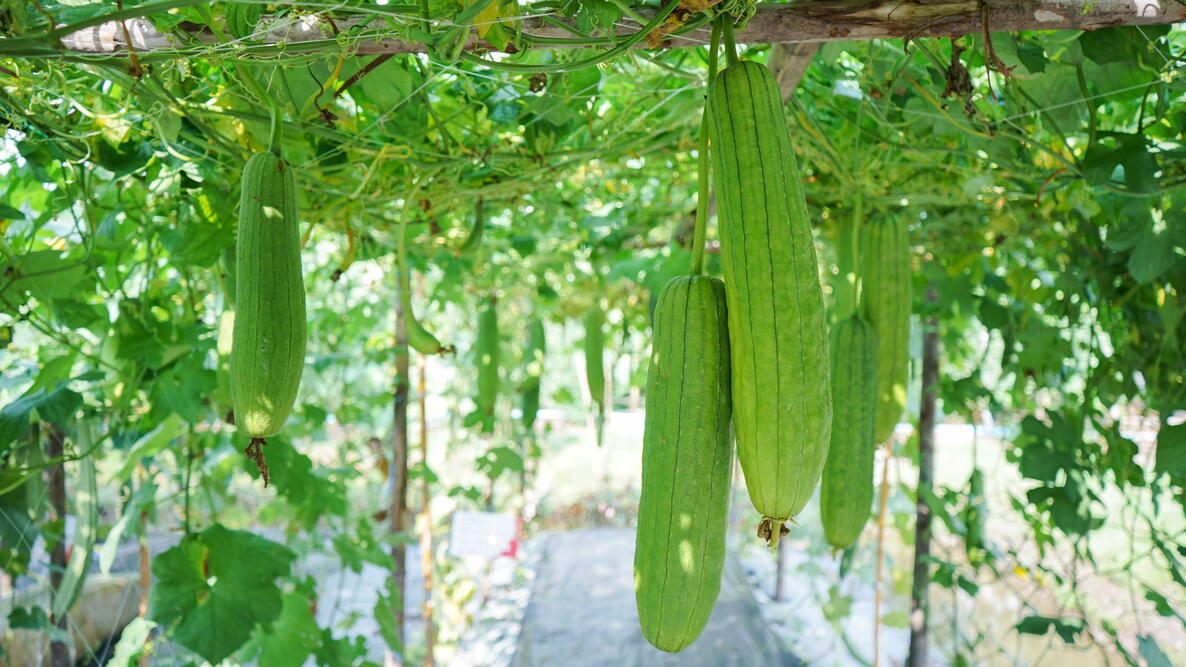
 Sponge gourd or luffa hanging from a tree growing ready to be harvested in the vegetable garden

Caption

Luffa cylindrica or sponge gourd in the vegetable garden.

Photo Credit
Mr.Anuwat Rumrod
Botanical Name
Luffa cylindrica syn. L. aegyptiaca and Luffa acutangula
Plant Type
Sun Exposure
Bloom Time
Flower Color
Subhead

From seed to sponge, learn how to grow, care for, and harvest loofah gourds at home.

Written By: Andy Wilcox Master Gardener and Gardening Contributor

Bet you didn’t know your shower scrubber grows like a cucumber! That’s right—those spongy loofahs (also called luffas) are plants, specifically the dried fruit of a climbing vine. Not only do they make fabulous eco-friendly scrubbers, but the young fruits are also a tasty treat in stir-fries and curries.

Loofahs need a long growing season, so many gardeners start seeds indoors. With a sunny spot and something to climb, you can grow your own loofah sponges right at home. They’re quirky, useful, and surprisingly easy to cultivate.

What Is a Loofah Plant?

First things first: is it loofah or luffa? The answer is both. The names are used interchangeably, and either is correct. Two species are commonly grown—Luffa cylindrica (syn. L. aegyptiaca) and Luffa acutangula. Both are vigorous climbing annual vines that can reach 30 feet long and require sturdy support.

Loofahs are prized for their inner fibrous structure, which, when dried, becomes the familiar natural sponge. Many plastic scrubbers mimic the interwoven mesh of a real luffa sponge—but unlike plastic or stainless steel scrubbers, natural loofahs are biodegradable, plastic-free, and won’t rust.

Loofah sponges are useful throughout the home, from washing dishes to scrubbing hard-to-reach bits in the shower (mount it on a stick) to cleaning gardening tools. And loofahs aren’t just practical—they’re edible, too. When harvested young and tender, the fruits can be cooked like summer squash and are commonly used in Southeast Asian and Indian cuisine.

Growing loofahs is similar to growing cucumbers or melons. They’re best trained vertically on a trellis, which keeps vines manageable and makes harvesting easier. Mature fruits resemble oversized cucumbers or jumbo zucchini, reaching up to 2 feet long and 4–5 inches in diameter.

A single loofah fruit hanging next to a metal fence.
A loofah plant. Credit: ZCFei

Planting

Where to Plant Loofahs

Loofah plants thrive in full sun, needing at least 6 hours of direct sunlight daily. Choose a location with plenty of space—these vines grow large and leafy. Position the trellis so the plants won’t shade nearby crops as they climb and spread.

Loamy, well-drained soil with a pH below 6.5 is ideal. Like other cucurbits, loofahs readily sprout from seed when soil temperatures are warm.

When to Plant Loofahs

Loofahs have a long growing season. Seeds can be sown outdoors around your last frost date or about a week after. Transplant young plants outdoors when it’s time to plant tomatoes—roughly 2–3 weeks after the last frost, once soils have warmed.

Young loofahs can be harvested for eating in 90–100 days, but fruits grown for sponges may take 150 days or more to fully mature. In regions with short summers, start seeds indoors about 4 weeks before your last frost.

How to Plant Loofahs

For direct sowing, plant seeds ¾ inch deep, cover lightly, and water well. Sow several seeds per hole, then thin to the strongest plant. Space plants 3–4 feet apart, with wide spacing along trellises.

To start seeds indoors, plant 2–3 seeds in a 4-inch pot filled with premoistened seed-starting mix. After germination, thin to one plant per pot and provide at least 10 hours of bright light daily.

Growing

Loofah plants are cared for much like other garden vegetables.

  • Water consistently, checking soil moisture with your fingers—if it’s dry an inch below the surface, it’s time to water. Mulch around the base of the plants to retain moisture and suppress weeds.
  • Remember: Install the trellis at planting time to avoid damaging roots later. Supports must be sturdy—cattle panels, heavy fencing, or strong posts with wire work well. Training vines upward improves air circulation and keeps fruits straighter and cleaner.
  • Feed loofahs regularly with compost or a balanced fertilizer to support vigorous growth and fruiting.

For seed saving, allow fruits to fully mature and dry on the vine. Viable seeds are dark, hard, and rattle freely inside.

Harvesting

Loofahs can be harvested either young for eating or fully mature for sponges.

When to Harvest Loofahs for Eating

Pick fruits when they’re under 7 inches long. Young loofahs can be eaten raw or cooked like summer squash.
When to Harvest Loofahs for Sponges

Harvest loofahs for sponges once the fruits turn brown, the skin toughens, and seeds rattle inside. If frost threatens, pick any firm fruits with hardened skins.

Mature, brown loofahs in a basket
Loofah in a basket. Credit: Zchumpon

How to Make a Loofah Sponge

  • Harvest the fruits when they are mature, the skin has turned a bit wrinkly and brown, and the seeds rattle inside. If you are running up against the frosts, you can pick any firm, hard loofahs with skins that have started to toughen.
  • Roll, squeeze, or otherwise apply pressure to the outside of the loofah, loosening the skin (if your loofah is brown and hard, whack it on something solid like a bench a few times).
  • At the flower end opposite the stem, there will be a small circle of skin that can be twisted off like a top. Pop it off.
  • Shake out the seeds. If the loofah wasn’t quite dry, you may have to wash it out and rinse off any soft material.
  • Lay the sponges out to dry after cutting the loofahs into smaller pieces if desired.
A mature, brown loofah with its skin sliced open
If you can’t loosen the skin, peel by cutting a slit down the side of the loofah with a boxcutter or similar tool. Credit: Nature lapse

Pests/Diseases

Like other cucurbits, loofahs can be affected by common garden pests and diseases.

  • Powdery mildew may appear in late summer; good airflow and resistant varieties help reduce issues.
  • Leafminers can damage foliage but are usually cosmetic and rarely fatal.

Healthy plants grown in full sun with proper spacing are less prone to problems.

Wit and Wisdom

  • Loofah sponges have been used for centuries. In ancient Egypt and throughout Asia, dried luffa gourds were valued as natural bath sponges and household scrubbers long before plastic alternatives existed.
  • The word loofah comes from the Arabic lūf, reflecting the plant’s long history of cultivation across the Middle East and Asia.
  • In many cultures, loofah gourds are grown as much for food as for sponges—the young fruits are a common vegetable in Southeast Asian and Indian cooking.
  • Loofah vines make an attractive summer screen or shade plant, offering both beauty and utility in the garden.
  • Real loofah sponges can be reused multiple times. If they get dirty or smelly, they can be sterilized in boiling water. When you’ve used them up, toss them in the compost. Zero waste!
  • If you planted too many and are drowning in loofahs, they make great stocking stuffers.

Cooking Notes

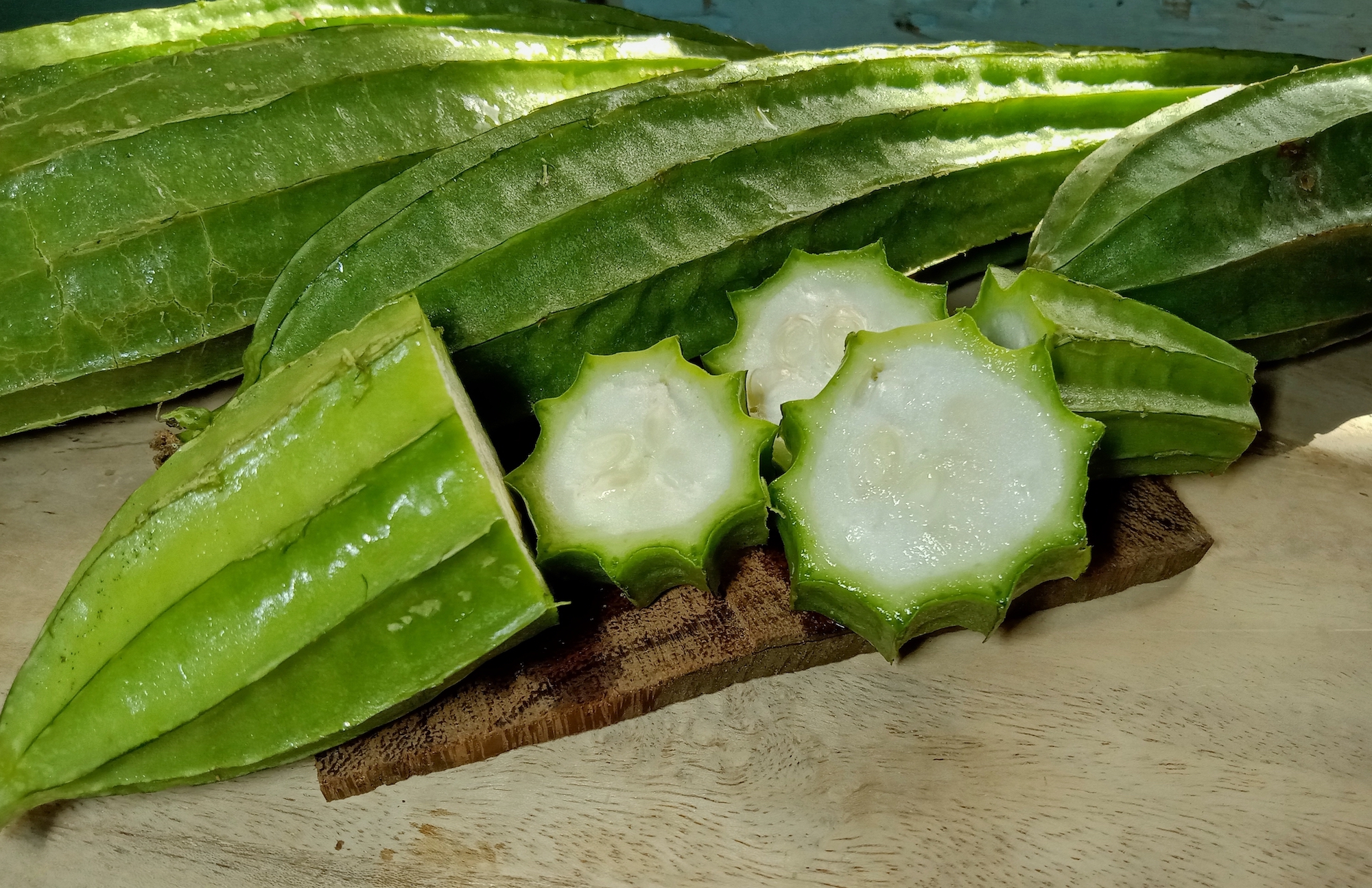
Luffa acutangula sliced on a cutting board.
Luffa acutangula, a popular Asian vegetable. Credit: Yumi ya

About The Author
Andy Wilcox

Andy Wilcox

Master Gardener and Gardening Contributor

Andy Wilcox is a freelance writer, flower farmer, and master gardener with over 25 years of experience in gardening, horticulture, and forestry. He is the co-owner of Stone’s Throw Flowers, a business...