Caption
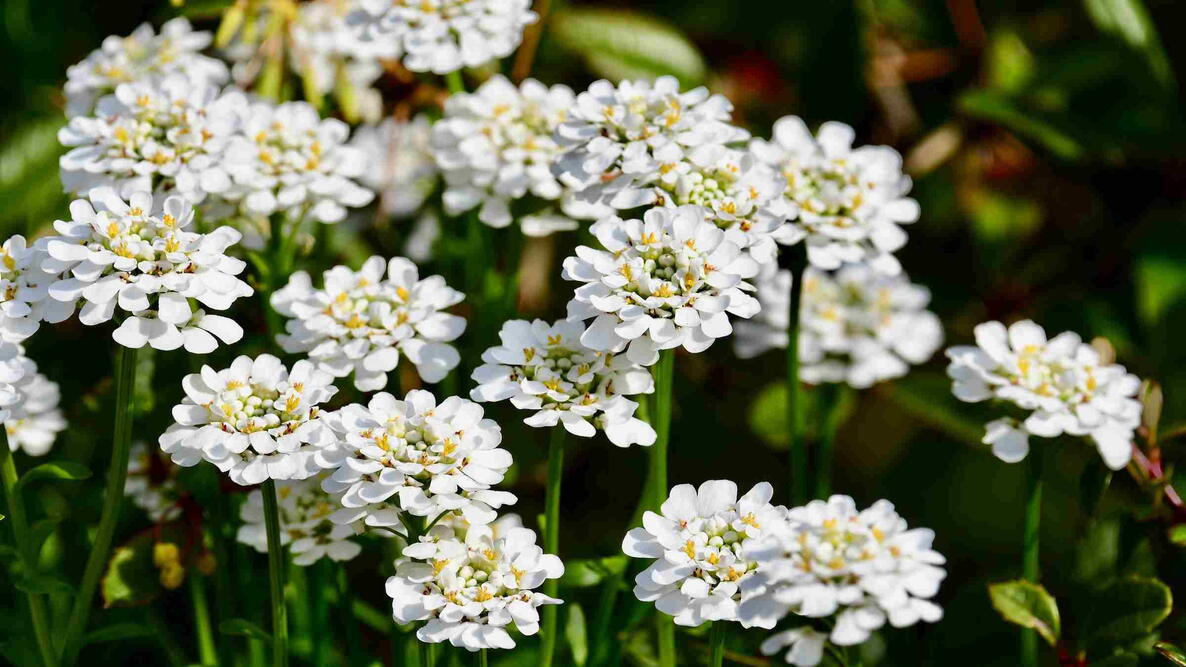
White-blooming flower (Iberis sempervirens) seen in early spring.

Sugar, spice, and everything nice—candytuft has it all. This evergreen, flowering groundcover (Iberis sempervirens) brightens gardens with its late-spring blooms, tolerates drought, attracts pollinators, and thrives in sunny, well-draining spots. Over the years, I’ve grown these charming plants in flower beds, rock gardens, and containers, and you’ll find all the top tips for growing and caring for candytuft below.
About Candytuft Plants
It may come as a surprise, but candytuft (Iberis sempervirens) actually belongs to the Brassica family and is related to broccoli, cabbage, and other brassicas. That said, this ornamental plant isn’t edible and can be toxic if ingested. But it has tons of uses in the garden—primarily as an evergreen flowering groundcover, but also in borders, rock gardens, mixed perennial beds, and containers.

Prized for its low-growing, spreading habit, candytuft grows no taller than 12 to 18 inches and spreads 12 to 18 inches, forming dense mats of dark bluish-green foliage. From late spring to early summer, it delights with a profusion of tiny clustered blooms, usually white but sometimes in shades of purple, pink, and red. These candytuft flowers attract butterflies and other pollinators, while the plant’s foliage provides an attractive backdrop for annuals and perennials that bloom later in the season.
A drought-tolerant perennial, candytuft prefers the lean, gravelly soils of its native Mediterranean. I often use it as a flowering groundcover around perennials that tolerate dry soil, like sedums, coneflowers, and Veronica. It’s not suited for poorly draining gardens with heavy clay and isn’t recommended for humid regions, such as the southeastern United States. However, as a hardy plant in Zones 3 to 9, it tolerates cold with ease.

Growing
Thanks to its drought-tolerant nature, candytuft is well-suited for rock gardens and xeriscapes, but it can be grown in other places, too. When selecting plants for my Moon garden, I included a few candytufts since the white or pastel flowers show up nicely after dark. These plants can be grown in containers too, but I don’t recommend it as they can look a little drab once they stop flowering.

Light
Candytuft grows and flowers best in full sun locations that get at least 6 to 8 hours of unfiltered light per day. In hot climates, candytuft can be grown in light afternoon shade as well.
Water
Newly planted candytuft should be watered regularly to help the plants settle in, but watering should be reduced as the plants establish themselves. Once they’ve matured, candytuft usually won’t need any supplemental water except during periods of prolonged dry weather.
Fertilizer
Fertilizer is not required with candytuft. However, these plants will grow and flower better if you mix compost or a low nitrogen, slow-release fertilizer into the soil around their roots once a year in spring.
Humidity
Although cold weather is no problem for candytuft, these plants can develop powdery mildew during extended periods of highly humid weather. Spacing plants out properly and watering at the soil line can reduce mildew problems.
Candytuft Care
Candytuft doesn’t require pruning, but you may be able to trick your plants into producing a second flush of flowers by trimming the plants’ stems back by 1/3 after the first period of flowering ends. You can then leave the stems in place through winter and prune candytuft to 3 to 4 inches above the ground in early spring before the plant leafs out. This will cause candytuft to produce bushier growth and prevent legginess over time.
Thanks to its hardy nature, candytuft generally doesn’t need winter protection in most areas. However, growers in Zones 3 and 4 may want to apply a loose layer of mulch over candytuft roots in autumn to keep them cozy through winter.

Propagation
Candytuft can root in any place its stems touch the ground, but it still spreads slowly and can take a while to fill in garden beds. If you’d like to generate new candytuft plants faster, root division is the way to go. Most of the candytuft plants you’ll find at nurseries are hybrids, and their seeds won’t grow “true to type” if you attempt to plant them.
- Every 3 to 5 years, dig up candytuft plants in autumn, about 4 to 6 weeks before frost is expected.
- Use your fingers, a shovel, pruners, or gardening forks to divide the root clump into 2 to 3 pieces. Each rooted section of the plant should have a few healthy stems in addition to a nice clump of roots.
- Plant the divided candytuft as soon as possible in your garden, and space multiple plants at least 12 inches apart.
Types
Most candytuft plants have white flowers, but some cultivars bloom in pastel shades and may vary in height and bloom time. Here are just a few candytuft varieties for gardens that you may want to try, along with reasons why each stands out:
- ‘Pink Ice’: This candytuft is just too cool with its pale pink flowers that often rebloom with deadheading.
- ‘Little Gem’: A dwarf option for small spaces, this white-flowered candytuft only grows to about 6 inches in height.
- ‘Alexandra’s White’: An early-blooming cultivar, ‘Alexandra’s White’ produces white blooms that are bigger than most candytuft flowers.

Wit and Wisdom
- According to the Victorian language of flowers, candytuft symbolizes indifference, so it may not be the best choice for bouquets meant for a sweetheart! See more flower meanings.
- The name candytuft isn’t a nod to sugary treats. Instead, it comes from Candia, the former name of a city on the island of Crete, reflecting the plant’s Mediterranean roots.
- Candytuft may not look like broccoli, but its family ties are easy to detect: give it a sniff, and you’ll notice a faint cabbage-like scent, a reminder that this ornamental plant belongs to the Brassica family.


More Like This

Comments